On the Road – The Stories Behind the Pens
Six days in Germany, from Faber-Castell and Pelikan to independent workshops and Montblanc: the people, discoveries and personal moments behind On the Road.


On the Road – The Stories Behind the Pens
You can lock your phone and keep listening.
Six days in Germany, from historic factories to independent workshops, and a closer look at the people behind the writing instruments I love.
The idea began last winter, with a daydream that was perhaps a little ambitious even by my standards: travelling across Europe in one trip and visiting every pen brand along the way.
I let it sit for a while. By spring, I had arrived at a more realistic version: a road trip to Hamburg and back, with the rest of Europe saved for another time. Nuremberg, Hanover, Hamburg. Three cities, a notebook full of possibilities, and quite a lot of organising ahead of me.
What I wanted was simple. I wanted to see the world of writing instruments beyond my own desk. I spend so much time using, collecting and photographing pens that I wanted to go a little further: to the places where they are made, and to the people whose work I usually encounter only as a finished object in my hand.
Planning began in March. I chose October to give myself enough time to arrange the visits properly, and I am very glad I did. There was considerably more work involved than I had imagined. As the brands began replying and the appointments fell into place, the trip slowly became real.
Originally, I had intended to keep it fairly private and simply enjoy it. But the more I planned, the more I wanted to bring you along. Even if I could share only a little of what it felt like to be there, it seemed worth doing. I started approaching partners, and Follow My Pen — On the Road gradually took shape.
Over six days, my wife and I visited Faber-Castell, Pelikan, Phillip Landsiedel, Elbwood, Jan Zander and Montblanc. We stepped into enormous production facilities and small workshops making only a few hundred pens a year. We saw modern machinery, historic equipment, archives, prototypes and private collections, and spoke with people who had spent decades learning their craft.
After years of collecting fountain pens, I thought I knew this world reasonably well. Several times during the trip, I had to reconsider that.
12 October · Faber-Castell, Stein

There is more to a pencil than I thought
Our first visit took us to Stein, near Nuremberg, and the home of Faber-Castell. With more than 260 years of history, the company has a presence you can feel as soon as you enter the grounds. Historic buildings, the castle and the production facilities tell the story of generations working in the same place.
We began beside an Atlas cedar planted in 1926. Exactly one hundred years old this year. I liked that detail very much: a living piece of history standing outside a place devoted to making objects from wood. Our guide also spoke about cedar and its suitability for pencil making.
Then came a private tour of pencil production lasting around two hours. It exceeded my expectations considerably.
A pencil is such a familiar object that I rarely stop to think about how it is made. Watching the process, I realised how much work I had been taking for granted.
It begins with the core. We learned how graphite is processed, why it is mixed with clay, and how the proportions influence the way a pencil writes. Coloured cores involve a different approach, with pigments, waxes and their own production methods. Even before the wood enters the picture, there is already quite a lot to understand.
We watched grooves being precisely milled into wooden slats, the cores being placed inside, and the pieces being glued, pressed and shaped. The speed and accuracy of the machinery were remarkable. Then came the finishes: successive coats of lacquer, the familiar visual details, and processes I had never considered. The dots on a Grip pencil, for example, involve their own technology. Seeing how they are applied made me appreciate a detail I had previously barely noticed.

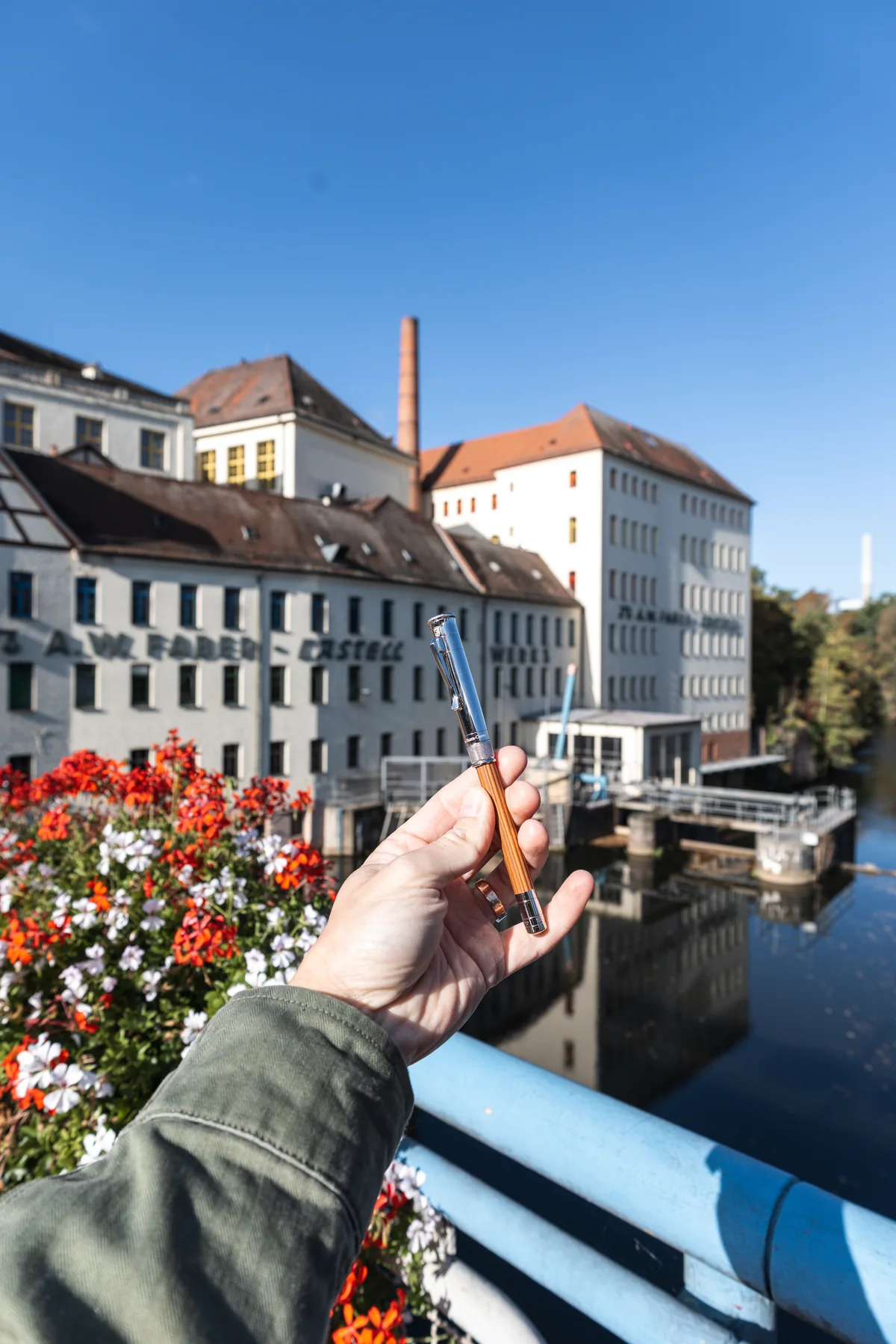


Quality control was equally interesting. At those production speeds, camera systems can identify imperfections that a person would have no chance of catching with the naked eye.
What stayed with me was how much knowledge goes into something so ordinary. Every material choice and small production step affects the finished pencil, even if the person using it will never think about any of them. I certainly had not thought about most of them before this visit.
Photography and filming were not permitted during the production tour, so I could only photograph the exterior. Afterwards, we explored the grounds, admired the castle and residence, and inevitably ended up in the factory shop. Our tour came with a discount, which gave us a very reasonable excuse to buy a few things for the children.
I also wanted the Graf von Faber-Castell elephant for my desk. My wife reminded me that there was already quite enough on it. She was probably right, although I still slightly regret leaving the elephant behind. At least I had the chance to see the newly introduced Graf von Faber-Castell collections before we left.
13 October · Pelikan, Hanover

History, told by someone who was there
In Hanover, we stayed at the Sheraton within the historic Pelikan complex and visited the Pelikan TintenTurm. There we met Willi, whose connection with the company goes back to 1972.
Knowing that the person in front of me had experienced more than fifty years of Pelikan's history gave the visit a very different feeling from the beginning.
Willi worked in marketing and product development, including during the renewed focus on fountain pens in the 1980s. Although he is now retired, he remains closely connected to Pelikan. He showed us the historic rooms and opened archives containing early inks, advertising materials, fountain pens and products that many collectors would probably never associate with the brand.
Through his stories, I began to understand more clearly how a company making inks and office supplies became such an important name in fountain pens.
Naturally, we spent quite a while discussing the pens themselves. Willi explained the origins and development of Pelikan's piston filling mechanism, along with some of the connections between manufacturers we now tend to think of as competitors. One detail that particularly interested me was the use of Montblanc nibs in some early Pelikan pens. The histories of these brands overlap more than their separate identities might suggest.
The striped barrels were another revelation. I knew the material was distinctive, but I had not understood how much preparation it required, or why the process could take months. I also came away with a greater appreciation of Pelikan 4001 ink and its long history. I have an older version at home, which made that part of the story feel especially close.

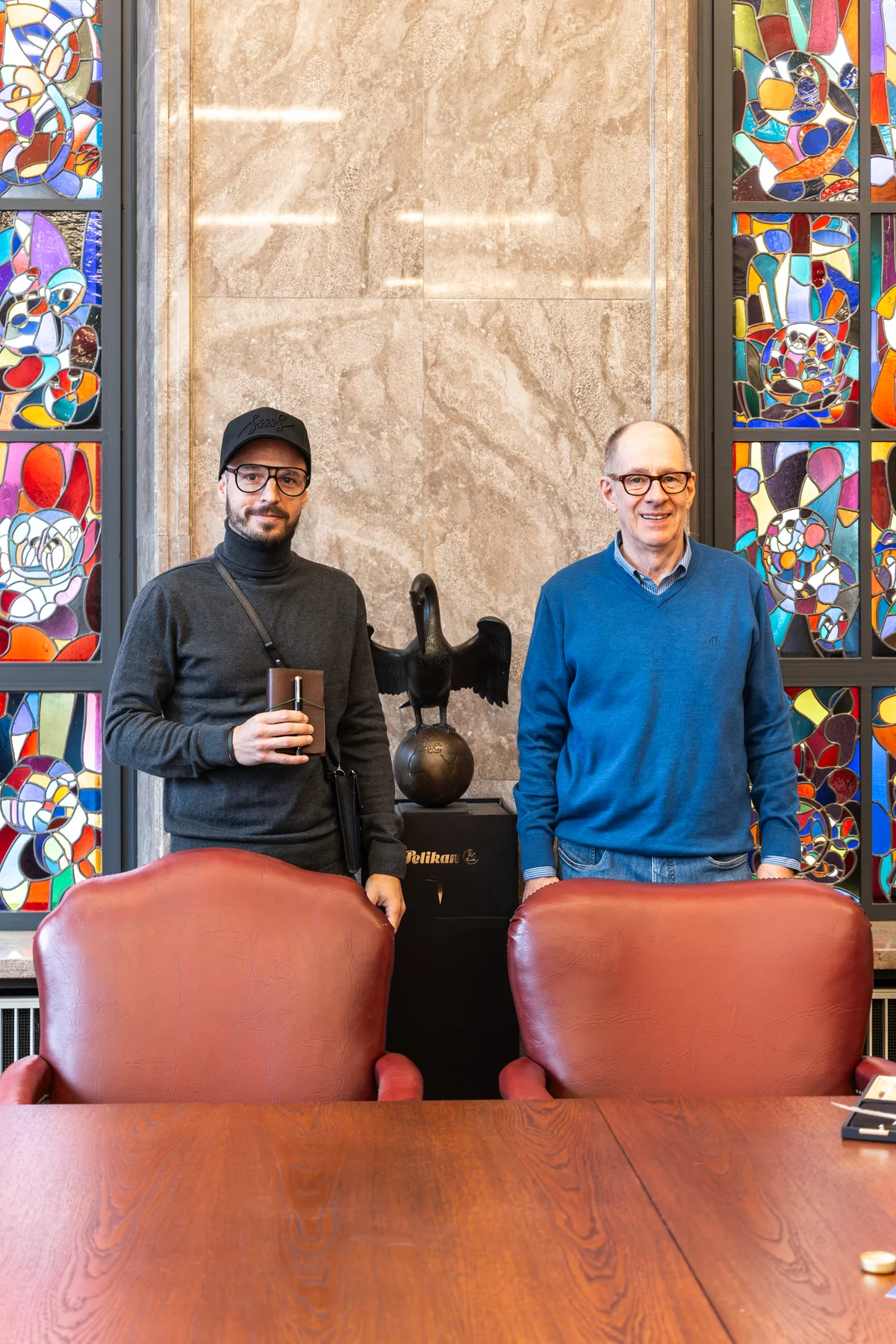
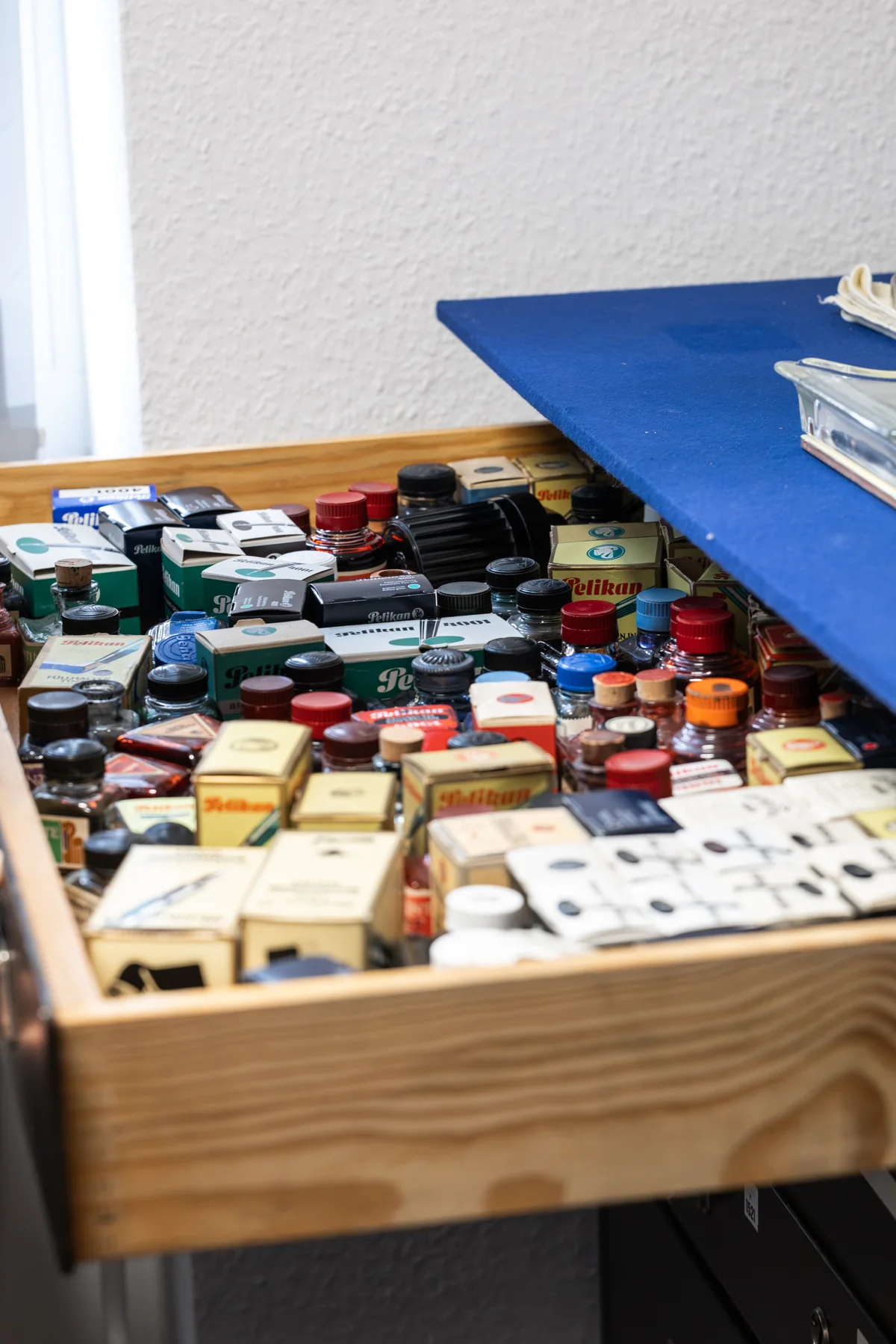

We talked about the company's approach to its employees around 1900, including healthcare, social support and other benefits that were unusually progressive for the period. The buildings told part of that story too: historic interiors, stained glass and unexpected architectural details that made me want to keep looking around.
There were also the maki-e and raden editions. As someone who loves these techniques, I was particularly interested in how a German manufacturer came to work with traditional Japanese craftsmanship. Willi shared some of that background, along with a wonderful assortment of historical curiosities: unfamiliar products, unusual ways of selling ink, and inventions I would never have connected with Pelikan.
I will save those stories for the dedicated article. What I most want to convey here is how much Willi brought to the visit. He could connect an object with the people who had worked on it, and explain its place in the company's life. I could happily have listened for much longer.
I left feeling closer to Pelikan as a brand. I also left wanting one of the more exceptional M1000 models even more than before, which was perhaps an inevitable consequence. Thank you, too, for the books and gifts I was given. There will be plenty to return to at my desk.
Before we left Hanover, we followed Willi's suggestion and visited the Neues Rathaus. Its unusual inclined lift was an experience in itself. From inside, it felt as though someone had decided on the route as they went along. My inner perfectionist was slightly unsettled, but I enjoyed it. The detailed models showing Hanover at different points in its history were another highlight.
Then we continued to Hamburg, checked into the Empire Riverside Hotel and headed out for an evening at the Elbphilharmonie.
An evening at the Elbphilharmonie
On our first visit to Hamburg, we had experienced the Elbphilharmonie as tourists: up the seemingly endless escalator, a very good coffee, a look at the view, and back down again.
This time, we went to a performance. I realised how little of the building we had experienced before.
If you visit Hamburg, I would certainly recommend seeing a performance, ideally in the Grand Hall. The architecture, sound and atmosphere become part of the same experience. I find it difficult to describe properly, which is probably a good reason to stop trying and simply say that I am very glad we went.
Our temporary home in Hamburg

For a trip with this many appointments, location mattered. The Empire Riverside Hotel put us close to the Elbe, the harbour promenade and the historic tunnel beneath the river. We could walk towards the city centre and the Elbphilharmonie, and public transport made the rest of Hamburg easy to reach.
The Bernhard-Nocht-Straße and St. Pauli Hafenstraße bus stops were about one and two minutes away on foot. Reeperbahn S-Bahn station and St. Pauli U-Bahn station were roughly seven to eight minutes away, while getting to Montblanc Haus by public transport took around 35–40 minutes. Those connections were very useful with our schedule.
But it was the people and atmosphere that made the hotel feel like home. We had come from the Sheraton in Hanover, and for us the Empire Riverside felt like a considerable step up. The staff were exceptionally kind, helpful and attentive throughout our stay.
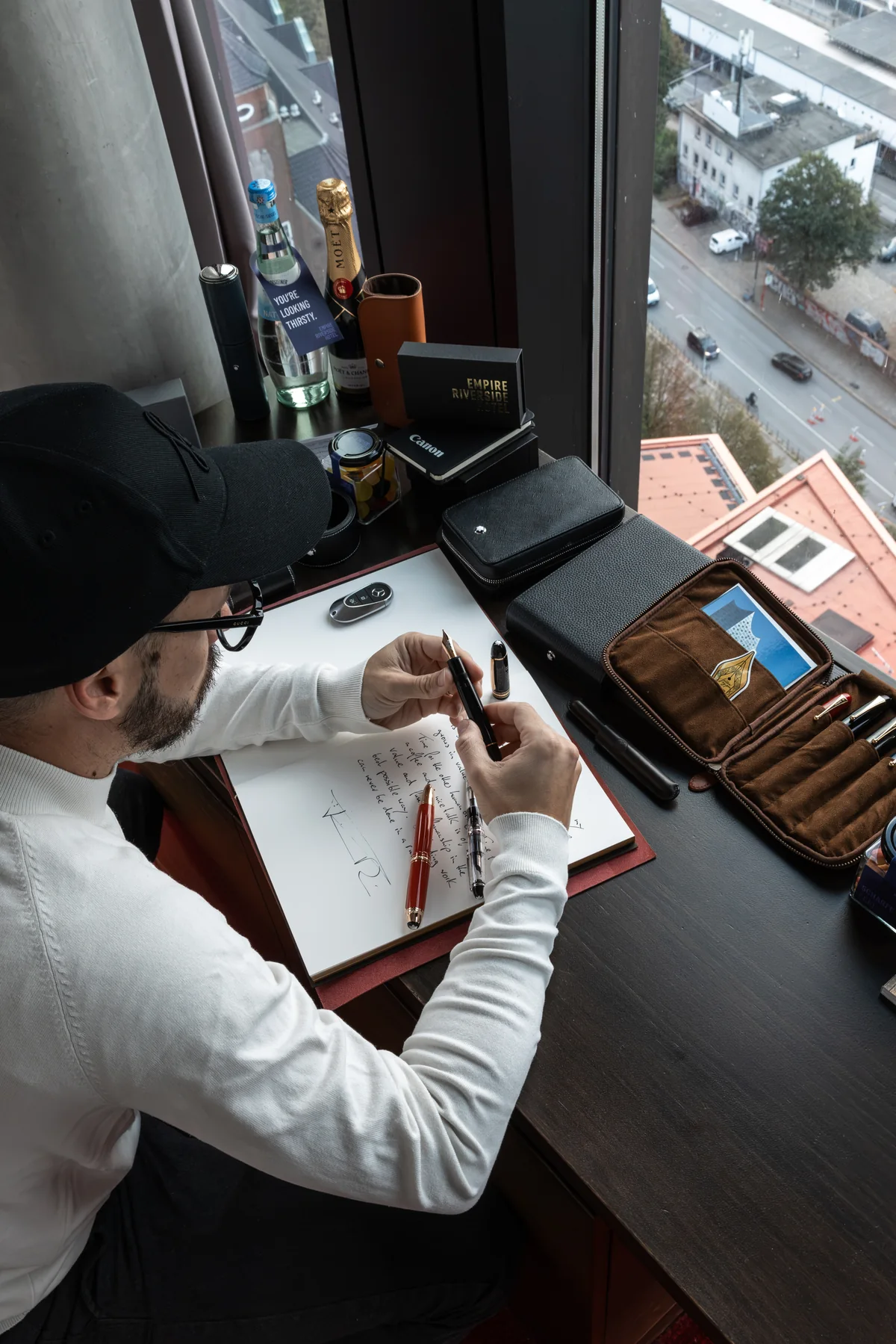
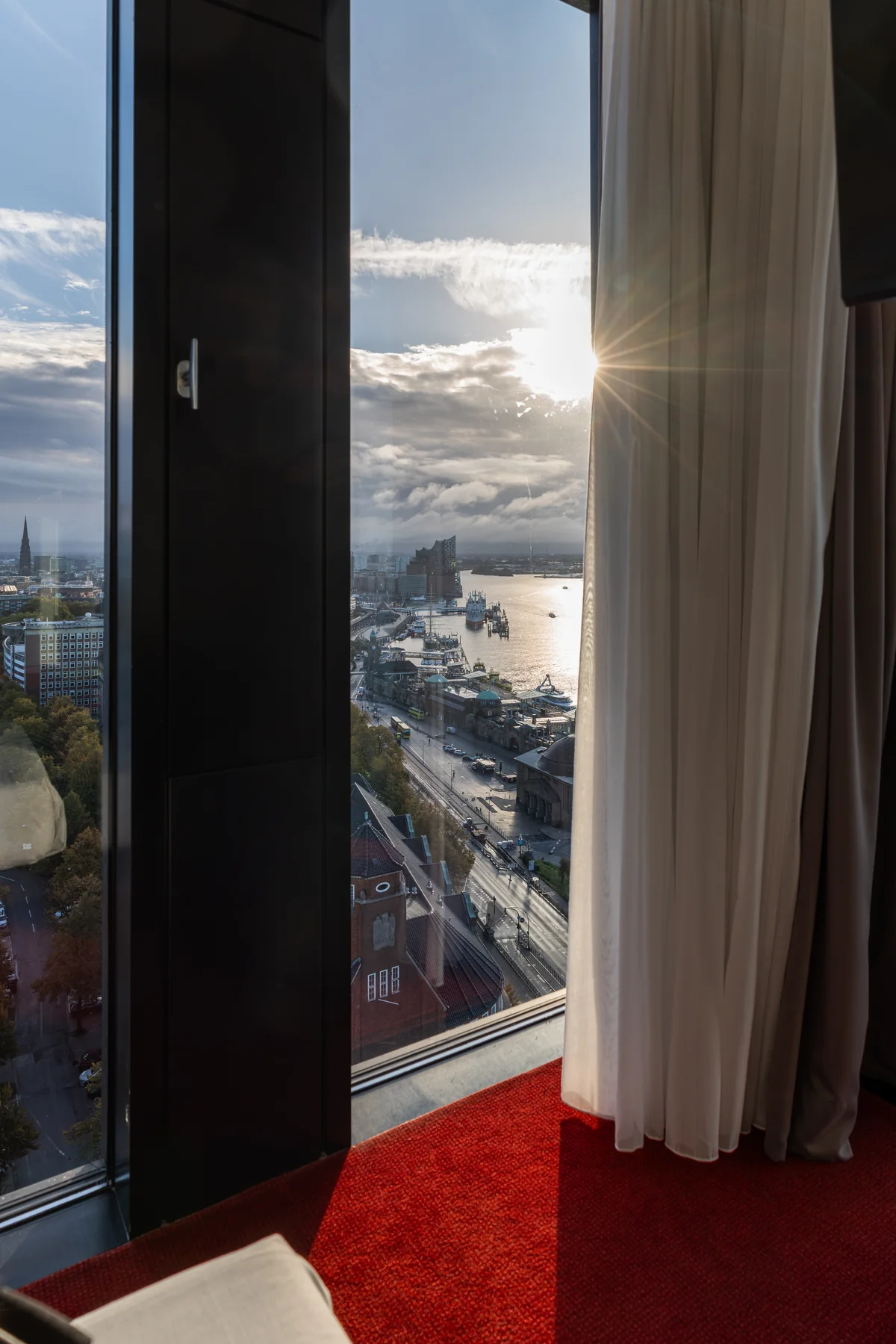
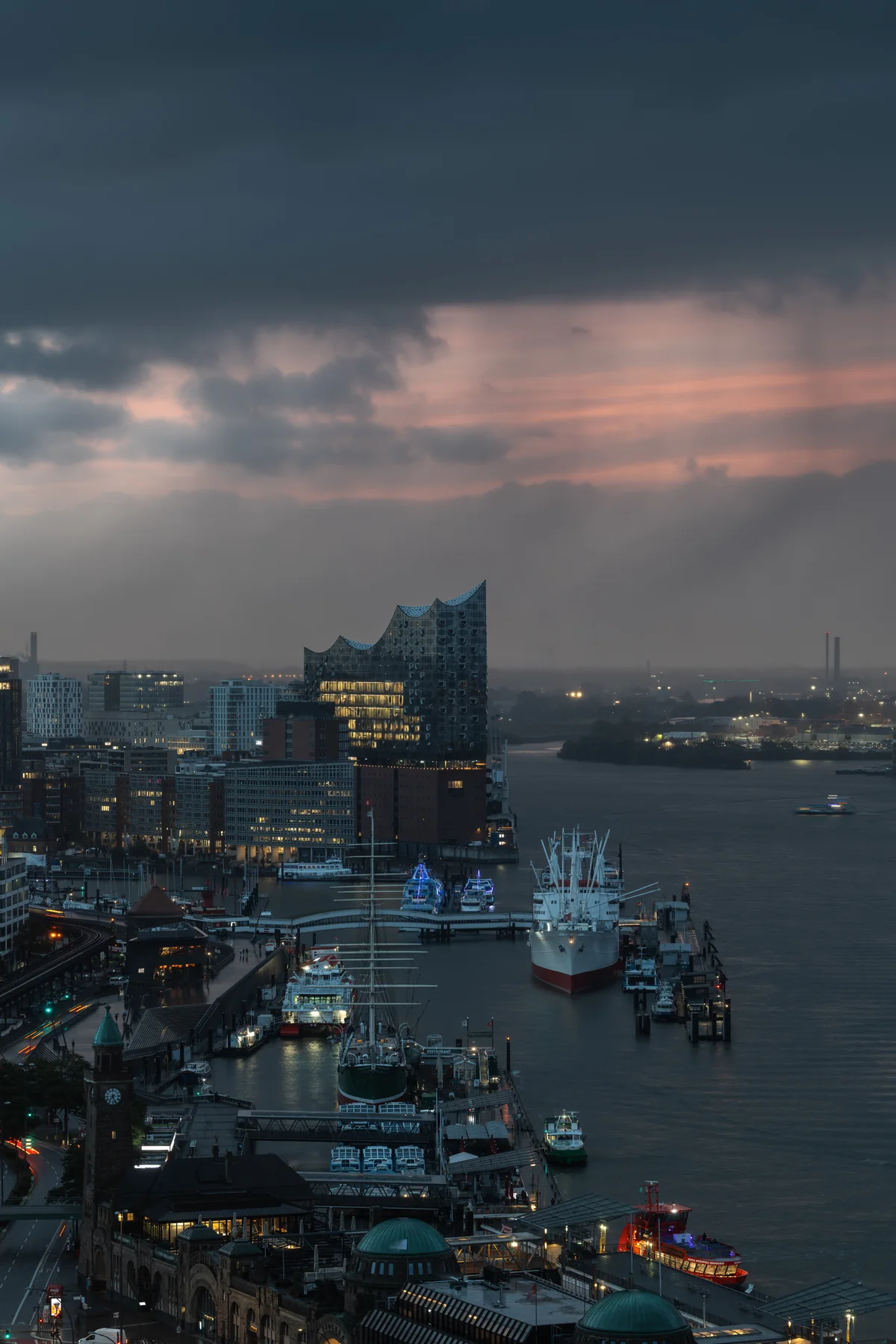
Our spacious room had enormous panoramic windows overlooking Hamburg. I could have stood there for hours watching the weather move across the city. There was also a generous writing desk, which I immediately claimed as my temporary workspace. Each evening, it became the place where I worked through photographs and wrote down the day's experiences.
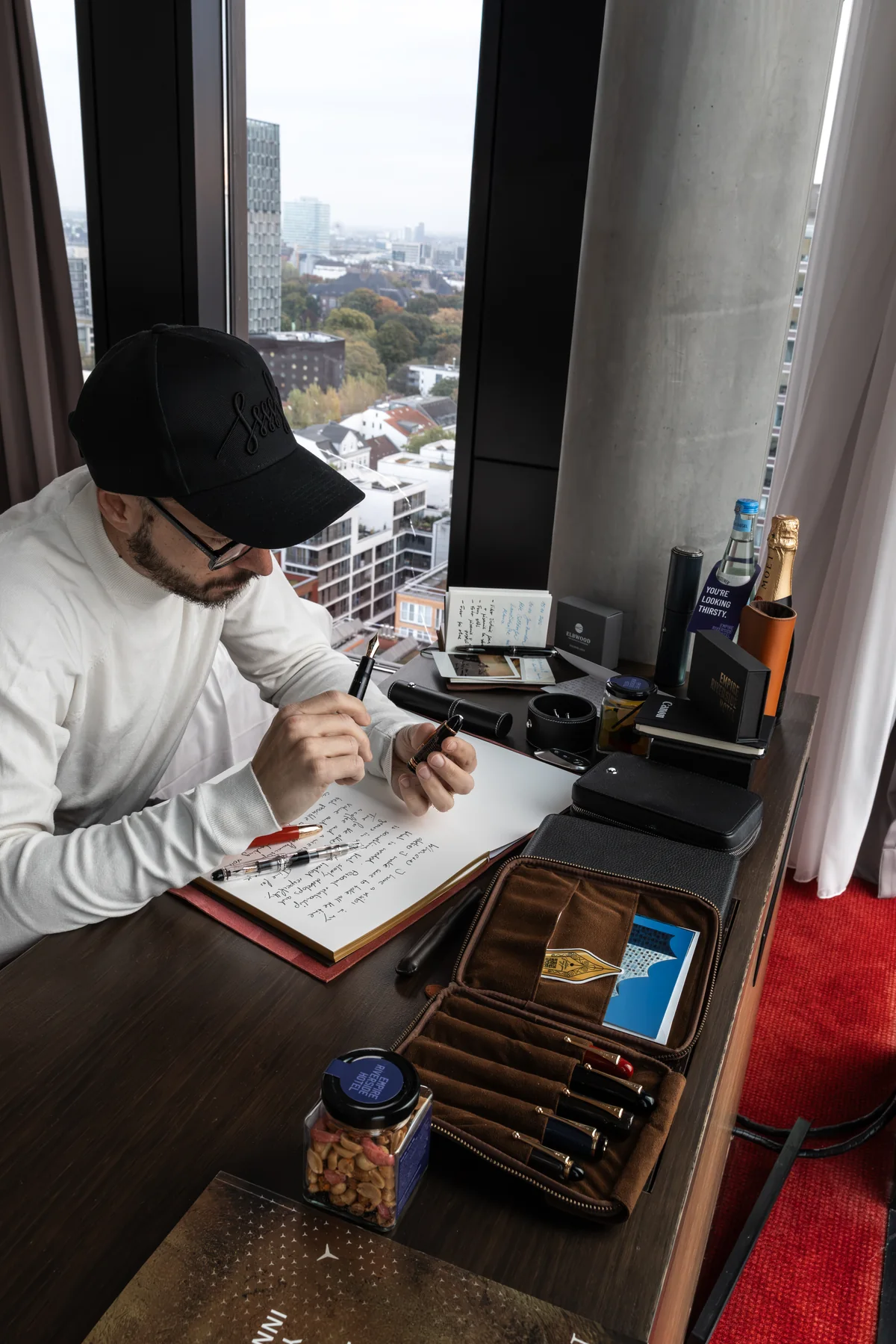
The bed deserves a mention too. The mattress, pillows and duvet were so comfortable that, when we discovered they were available to buy, my wife began seriously considering taking that part of the hotel experience home with us.
Breakfast cost €29 during our stay and offered a wide choice of good food, including local and international dishes. We also tried the hotel restaurant and enjoyed it very much, although dinner was certainly at the more expensive end. The Skyline Bar 20up, on the twentieth floor, was worth visiting for its atmosphere and views. We did smile a little at the fact that our own room offered a view almost as lovely.
The underground garage was practical, and the hotel also had a spa, sauna and fitness facilities. We never quite found time for those. Perhaps next time, with a less ambitious itinerary.
I liked the building itself too. Designed by David Chipperfield, with its bronze façade, clean lines and large areas of glass, it makes the most of its setting and the views over the harbour. The attention to detail felt very much in keeping with what I enjoy in other well-designed objects.
It was certainly not the cheapest option, but I looked forward to returning every evening. If we go back to Hamburg, it will be the first hotel I consider.
14 October · Phillip Landsiedel and Elbwood
Phillip Landsiedel: three familiar pens, three surprises

I had been in contact with Phillip Landsiedel and working with him for some time, so I was especially pleased to finally meet him in person. His work on nibs was one of the things I most wanted to experience on this trip.
Over the years, I have tried everything from very fine Japanese nibs to broad, flexible and specially ground Montblanc nibs. I still discovered how much I had yet to learn about the way they work.
Phillip spent around ten years at Montblanc, including time in the Artisan Atelier. Today, he adjusts, grinds and repairs nibs in his own workshop. People with that level of experience are not easy to find, particularly in Europe. I brought him three of my pens to see what could be improved, including one with a nib suffering from baby’s bottom.
The first thing he did was watch me write. He paid attention to the angle of the pen, the pressure, the speed of my movements and the way the nib met the paper. Before making any adjustment, he wanted to understand the person using it.
He explained why a nib can feel perfect to one writer and uncomfortable to another, why some people enjoy feedback while others want as little resistance as possible, and why polishing a nib further does not necessarily make it better.
We also discussed ink flow and the effect of very small changes in nib geometry. There is more involved than simply widening or narrowing the slit. Several things have to work together. We looked at familiar frustrations too, including nibs that feel exceptionally smooth but occasionally skip because of the shape of their tipping.
Phillip worked with extraordinary precision, explaining each step as he went. It was fascinating to see how little material sometimes needed to change for the writing experience to feel completely different.


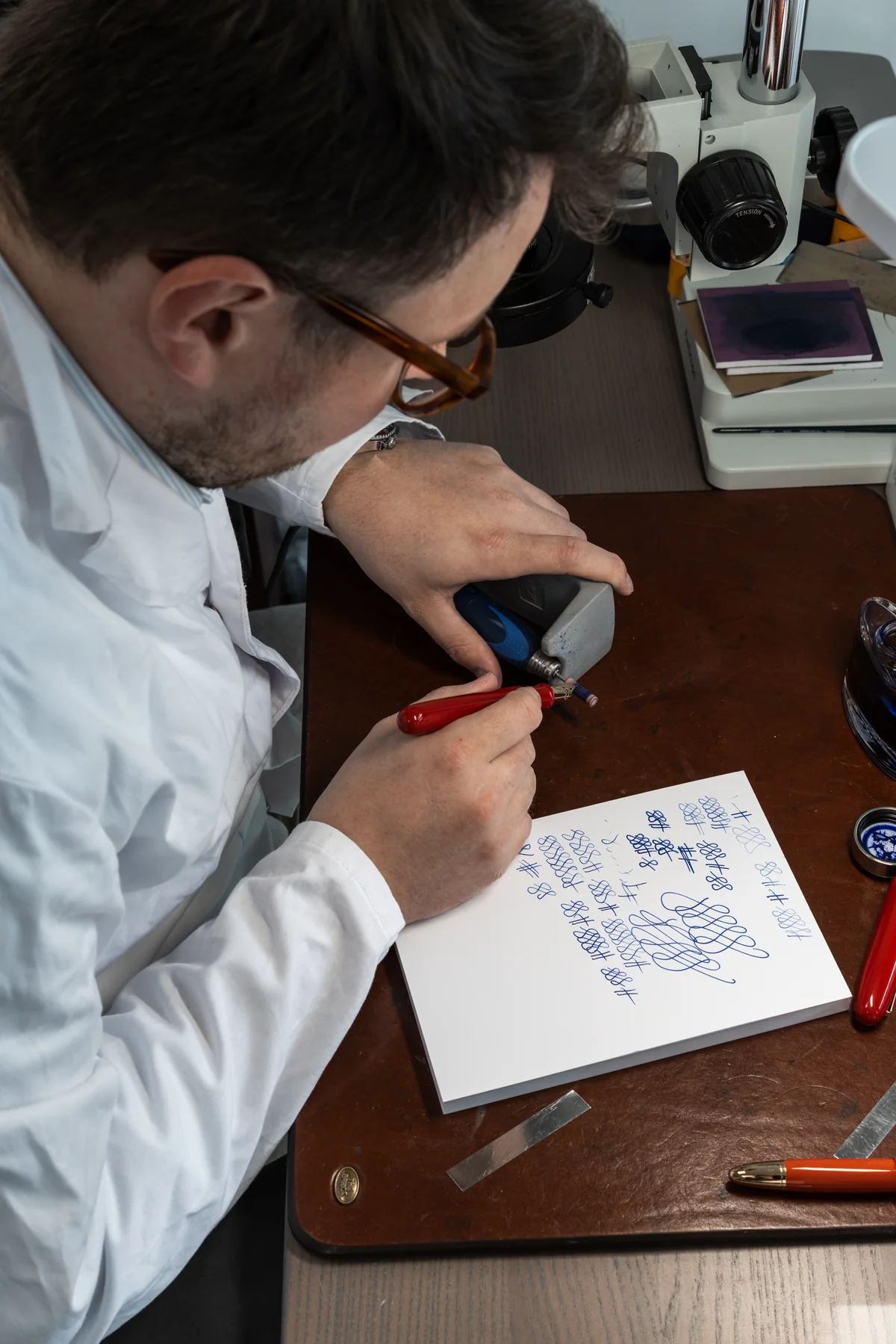

All three pens came back better suited to the way I write. If I had not watched him work, I could quite easily have believed he had replaced the nibs altogether. By the end, I regretted bringing only three. There were clearly many more possibilities to explore.
Between adjustments, we spoke about his career, his years at Montblanc and some of the technical challenges he had encountered. He also showed me part of his private collection, including some wonderfully rare pens. I appreciated his openness about mistakes, too. Even someone with his experience can have a difficult moment with an expensive gold nib, and some of those stories were very instructive.
The visit reinforced something I think is easy to overlook: an expensive pen with a well-made nib is not automatically a perfect match for its owner. A careful individual adjustment can make an enormous difference. After watching Phillip work, I honestly think a good nibmeister's service could justify costing more than it often does.
Elbwood: learning to see the work in a pen
Before visiting Frank's workshop, I had never held an Elbwood pen. I knew them from photographs: unusual materials, very small production runs, and pens that seemed to find their owners despite prices comparable with much larger luxury brands. I wanted to understand the person and the work behind that success.
You know those workshop films where every tool has its place, every movement seems considered, and the making is almost as satisfying to watch as the finished object is to hold? Frank's workshop felt like that in person.
Tools, materials and unfinished components were arranged with remarkable care. The order seemed completely natural to the way he worked.
His route into pen making was unusual. He had worked in social work and later built a wooden boat. Experience with wood and other materials eventually led him towards writing instruments. I think there is a real advantage in coming to pens from another world: you can see possibilities that people already immersed in the industry might overlook.
We talked about his earliest designs and the roughly three years it took to develop the characteristic shape of one of his models. The design had to be comfortable, possible to manufacture, and right in the hand. Knowing that a Kaweco had helped inspire his first model, I could imagine him turning it over and considering what he might do differently.
Frank works with wood, silver, copper, carbon fibre, ebonite and other materials, each with its own demands. Wood can reveal an unwelcome surprise after hours of work have already gone into a component. Metals raise different questions, including how their surfaces should change over time. I liked his willingness to let some materials develop a patina and age alongside their owner.
One of my favourite moments came beside his lathe from 1967. After watching silver being worked, I had the chance to try hammering a metal surface by hand.
It looked straightforward until I tried it. Creating an even texture while controlling each strike required far more skill than I had appreciated. Frank explained that each craftsperson leaves a recognisable hand in the work. I suddenly understood that idea in a much more practical way.
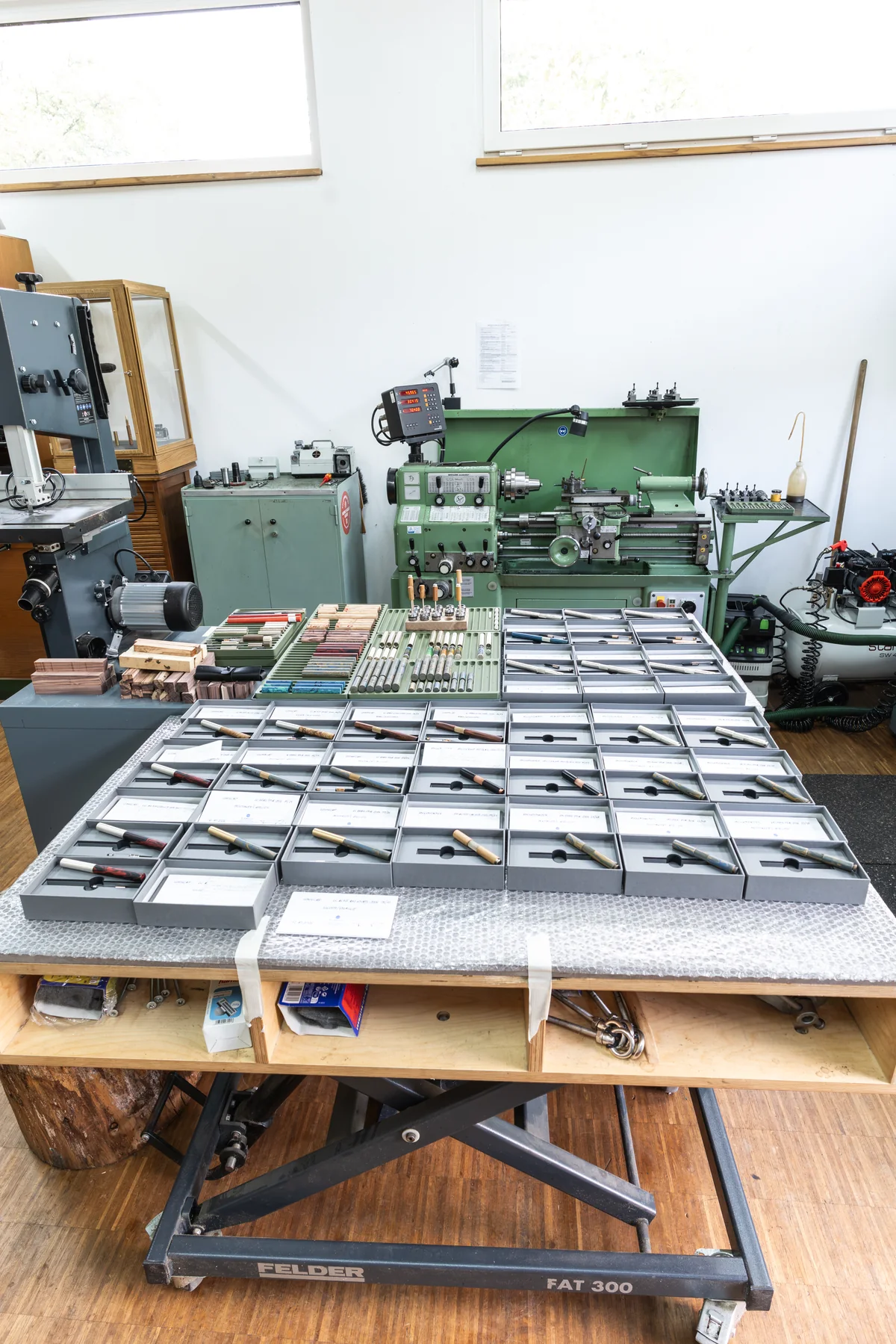


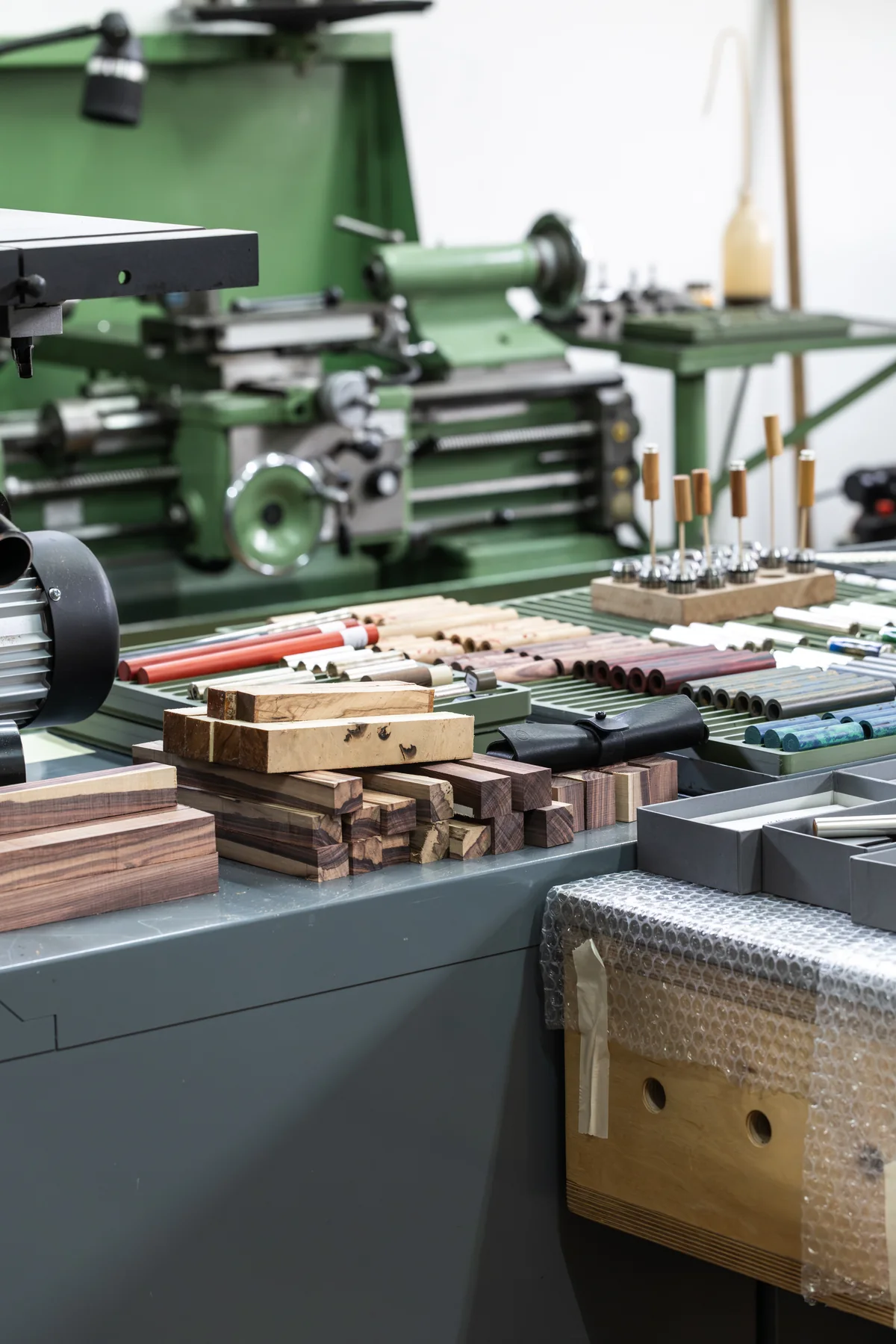
We also discussed the realities of running a small workshop: how many pens he can make, what expanding the workspace changed, and why producing more is never as simple as deciding on a larger number. We spoke about demanding limited editions, special materials and collaborations with other craftspeople.
Afterwards, I understood his prices much better. Development, time, experience and the possibility of having to discard a component all contribute to the cost. The value of the raw silver or wood tells only a small part of that story.
That does not mean every expensive pen automatically deserves its price. It does give me a better basis for judging what I am paying for. I will explore that properly in the Elbwood article.
For now, I am simply grateful that Frank let me see his work so closely and try a little of it myself. If you order a Silber Hammerschlag, there is a possibility that a few of its hammer marks were made by me. I will probably never know which pen carries them, but I love the thought that one might.
On the way back to the hotel, we stopped at a Mercedes-Benz charging hub. Charging in a city without a charger at your accommodation does require a little extra planning, and this was one of those additional stops. I could hardly complain, though. The showroom and service centre were among the most impressive I had ever seen, so I happily spent the time looking around.
15 October · Jan Zander and the Hamburg pen community
Jan Zander: the thought behind a simple shape

Jan Zander's work had caught my attention long before we met. We had already been collaborating and exchanging messages, which made visiting his Hamburg studio feel especially personal.
I am drawn to the restraint in his pens. Their shapes often look simple, with very little unnecessary decoration. Spending time with Jan helped me understand how many decisions sit behind that apparent simplicity.
He worked for Montblanc for more than twenty-two years, beginning in jewellery design before moving into writing instruments. In his own studio, those years of experience now inform pens that follow his own ideas.
The space itself immediately appealed to me. Tools, sketches and unfinished components were carefully arranged, yet it was clearly a working studio where things were continually being tested and improved. I found myself wishing I had a place like it for my own creative work.
Jan showed me sketches, prototypes and different stages in the development of his pens. I tried several models while we discussed how their construction had evolved. His magnetic closure was particularly interesting. In use, it feels like one simple, elegant movement. Listening to him explain the materials and engineering involved gave me a very different appreciation of it.

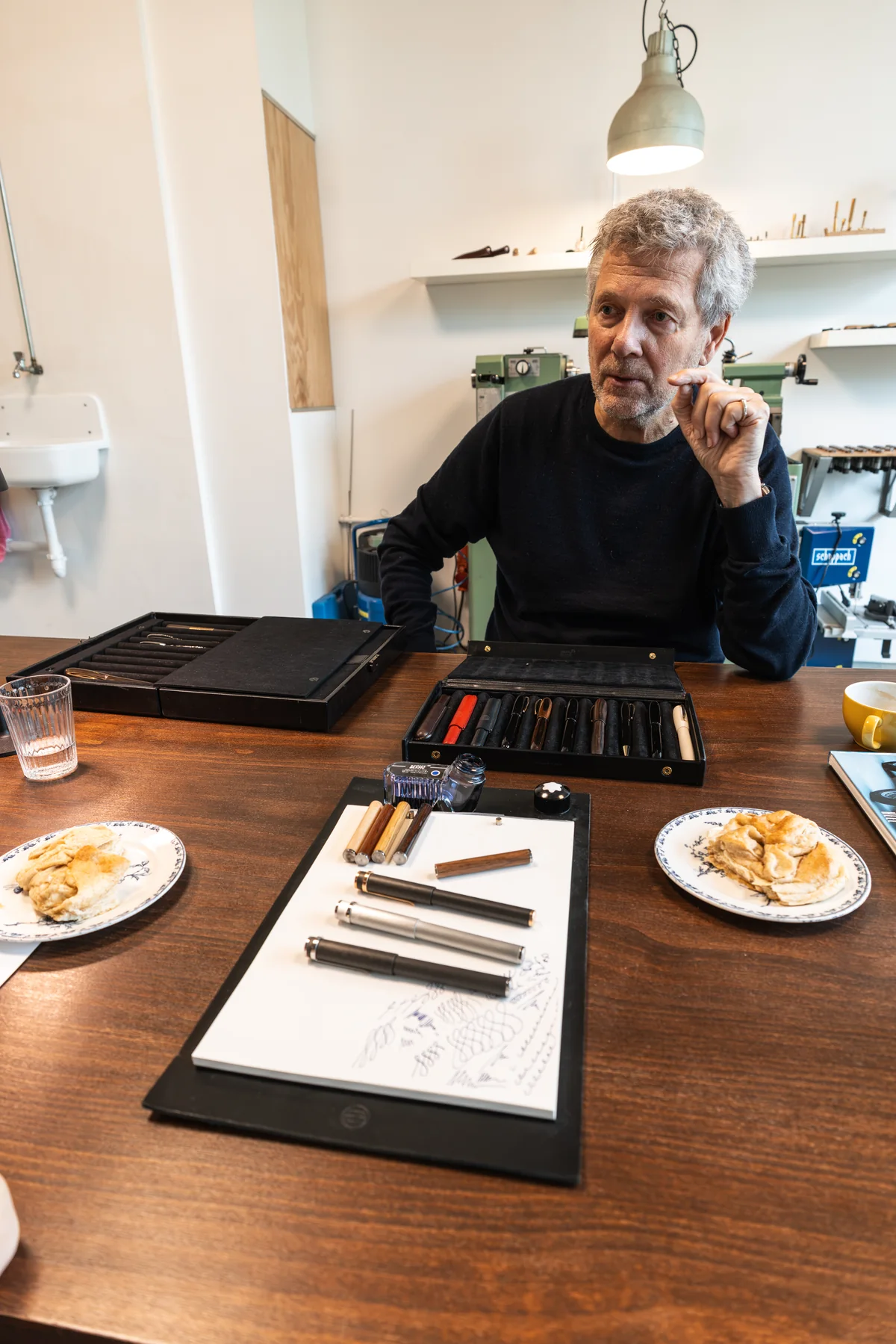


We talked about carbon fibre, ebonite, celluloid and metal components, and the challenges each presents. Attractive materials still have to be worked accurately, finished properly and made to behave reliably over time. Even the clips had their own development stories, with manufacturing methods changing as Jan found better ways to make them.
In a small studio, design and production are closely connected. Every decision affects the tools, materials, time and eventual price. A beautiful sketch is only the beginning of making a pen that can actually be produced well.
Jan also showed me some very rare pens from his personal collection. Naturally, we spent a good deal of time talking about Montblanc. His perspective comes from years of helping create the objects that collectors like me encounter much later, and that made our conversations particularly interesting.
Yet the thing I kept thinking about afterwards was his sketchbook. It was full of unusual shapes, designs and technical ideas. Several made me wonder why they had not already become pens. The answer was largely a matter of time: Jan has more ideas than he can make with his own hands.
I left with even more admiration for his work and a clearer understanding of what goes into it. I feel fortunate to collaborate with him, and very glad we finally met. I will return to JANZANDER DESIGN, its individual models and my favourites in a separate article.
A table full of pens, and people who understand
From Jan's studio, we headed into central Hamburg for a fountain pen meetup organised by Michael and Phillip at Camping Coffee.
The traffic had other ideas about our timing. Between busy roads, traffic lights and finding somewhere to park, it took a little longer than planned. The electric Mercedes GLC's rear-axle steering and automatic parking were especially welcome that afternoon, including in the tight underground garages.
Once we arrived, the tables gradually filled with pens from private collections. We talked about brands, nibs, construction, our own experiences, and the curious hold these objects have on all of us. I had the chance to see and try pens I would rarely encounter otherwise.
My personal highlight was the Montblanc Heritage 1914 that Phillip brought along. It is an imposing pen, and photographs do not quite prepare you for its presence. Holding it was a particular pleasure.
I was also very happy to meet Marco, who gave me sets of tools for repairing Montblanc pens. They are interesting accessories for anyone involved in maintaining and repairing their own pens, and are also available through Nibfolio.
I should admit something here: I am quite an introvert. A desk, a few favourite pens, a notebook and some quiet can keep me perfectly happy for hours. Social gatherings are not something I naturally seek out, so meetings like this usually require a little effort on my part.
This one felt easy. When the people around you are just as interested in nibs, old models and small construction details, conversation comes naturally. There is something very comforting about being among people who do not need you to explain why a gold nib can make you so happy.
After the meetup, we visited the temporary Montblanc pop-up at Alsterhaus. I could not resist entering a competition to win a fountain pen. At that point, despite all the Montblancs in my collection, I still did not own a straightforward Meisterstück 146. I was quietly hoping that might be the prize. Keep your fingers crossed for me.

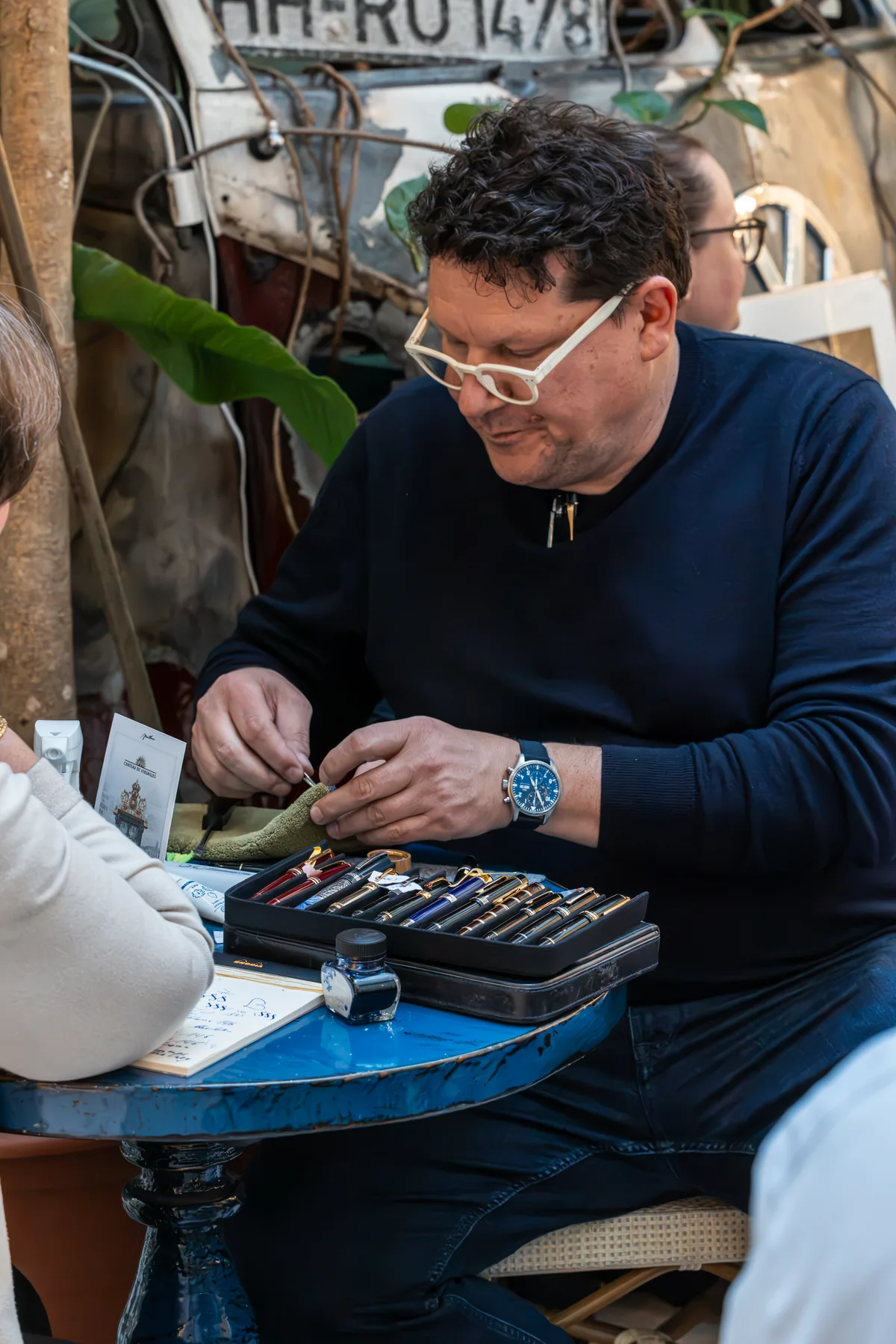
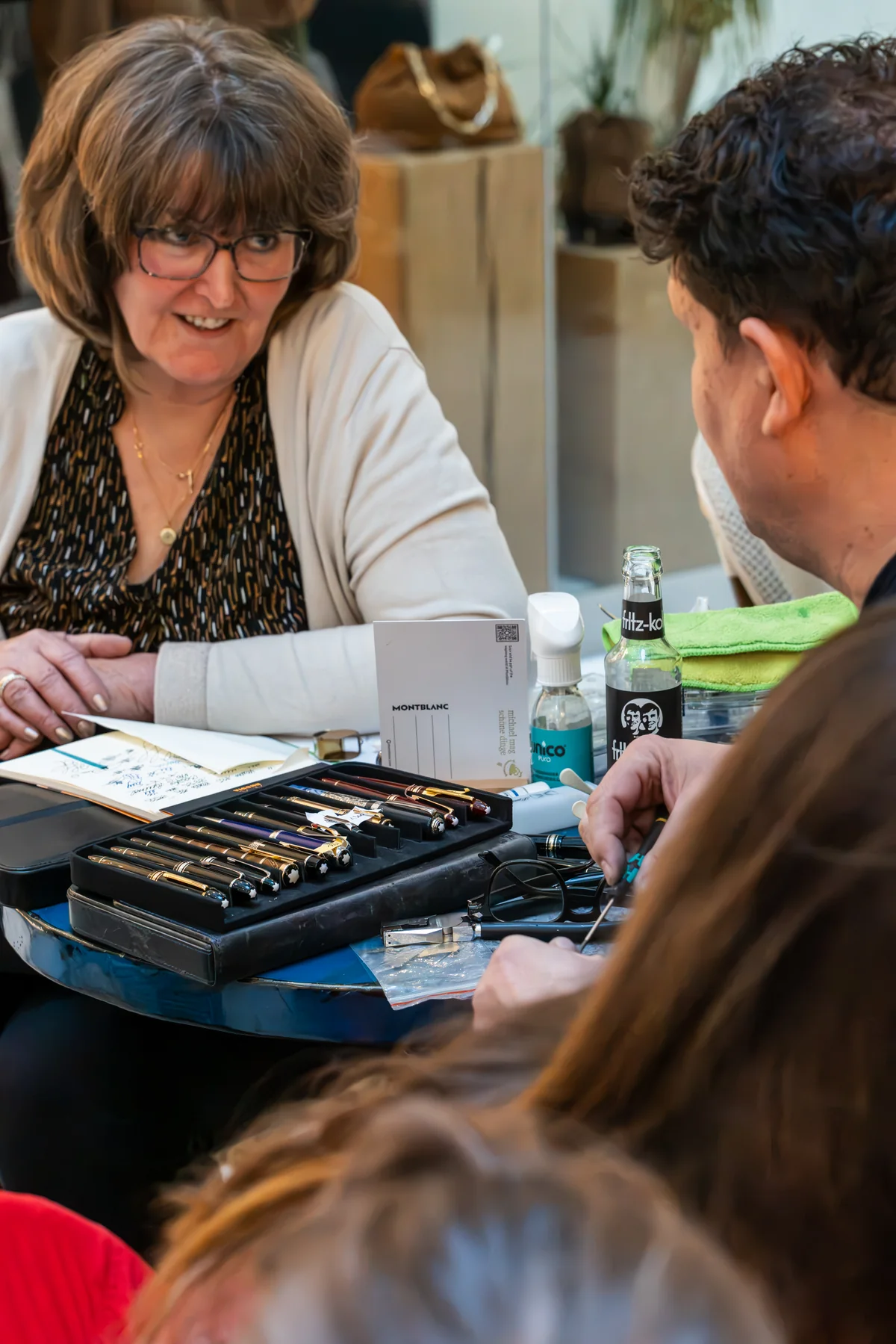
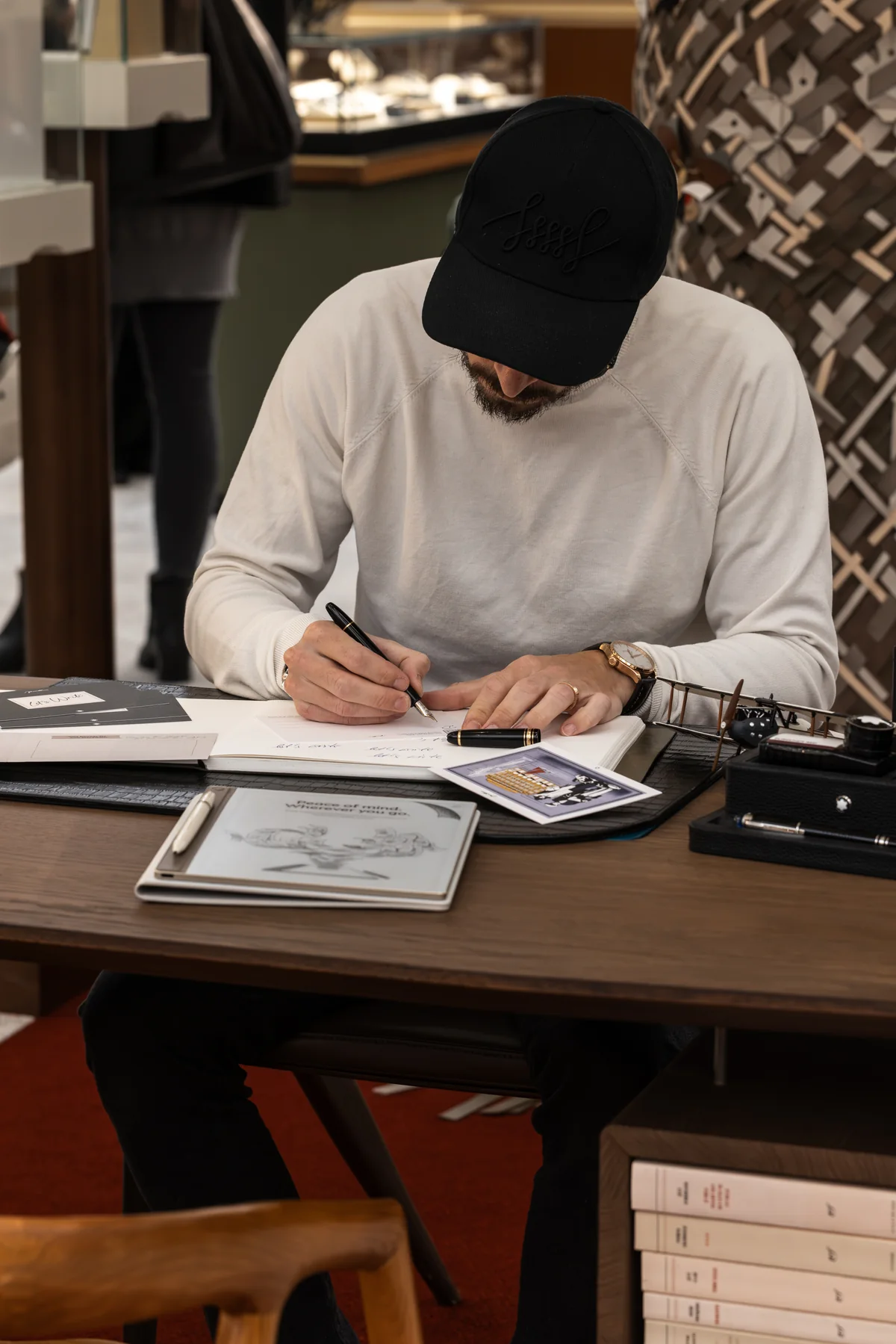
We finished the day with more conversation over an informal get-together with Phillip and Michael, then returned to the Empire Riverside. The room had once again been looked after with such care, and it was lovely to sit down and watch Hamburg at night for a little while before going to sleep.
The pens had given us a reason to meet. The conversations were what made the day memorable.
16 October · Montblanc Manufacture and Montblanc Haus

Watching a nib become a nib
Montblanc was one of the visits I had been looking forward to most. The brand has a special place in my collection. I use nibs from different generations, know many of the models, and have spent years reading about its history. I had also visited two years earlier, so I was curious to discover what might still surprise me.
Quite a lot, as it turned out.
Thanks to Phillip Landsiedel, we had a private tour of the manufacture and the opportunity to see processes that most customers never encounter. Naturally, I paid particular attention to the nibs.
For me, the nib is the most important part of a fountain pen. I can admire the design and materials for a long time, but I only really begin to know a pen when its nib touches paper. Here, I could watch that small component take shape.
The process begins with a gold alloy and the blanks from which the nibs are made. Gradually, they are shaped and decorated, becoming recognisable as the pieces I know so well. We also saw how the tipping is created, using a material different from the gold of the nib itself, followed by the precise work of cutting the slit, grinding, polishing and checking the result.
What I appreciated most was how much still depended on people. Experienced hands, judgement and a feel for the material remained essential alongside the machinery. The final writing tests brought all those stages back to something wonderfully familiar: a nib moving across paper.
We learned more about different gold alloys, special nibs and the technical limits of unusual designs. We also discussed other pen components, tools and materials. Some exclusive models had required solutions that would never occur to me while looking at a finished pen, including help from specialists in other scientific and industrial fields. Unusual natural materials, for instance, raised questions about stability and preservation over time.
Our guide Nico added a great deal to the visit. He had spent his working life with Montblanc and had even been there for the opening of its first boutique. The details and stories he shared could easily fill a very interesting book.
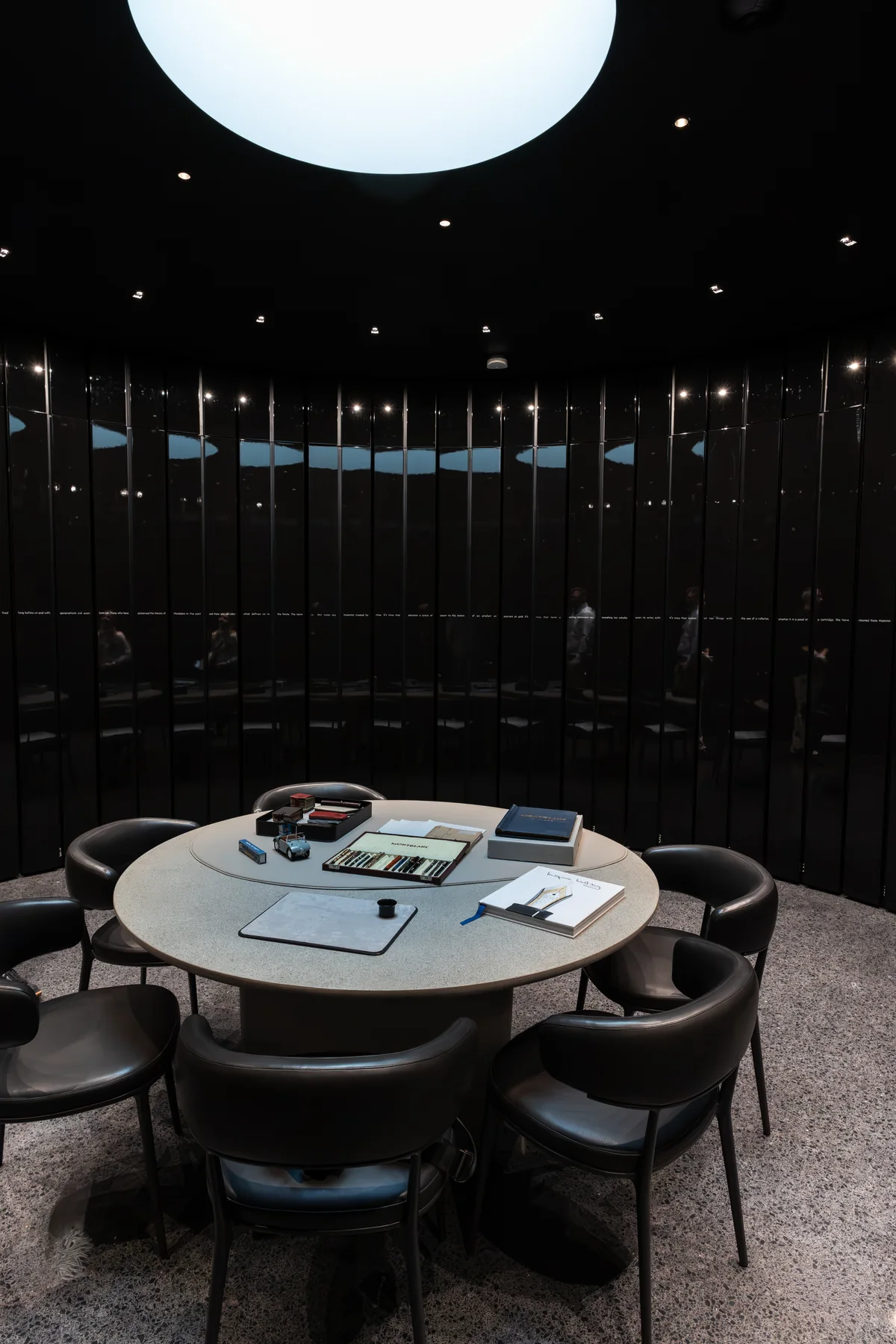
After the manufacture, we continued to Montblanc Haus and had the opportunity to look inside the historical archive. There were original accounting records, advertising materials, old shop designs and objects that are not usually on display.
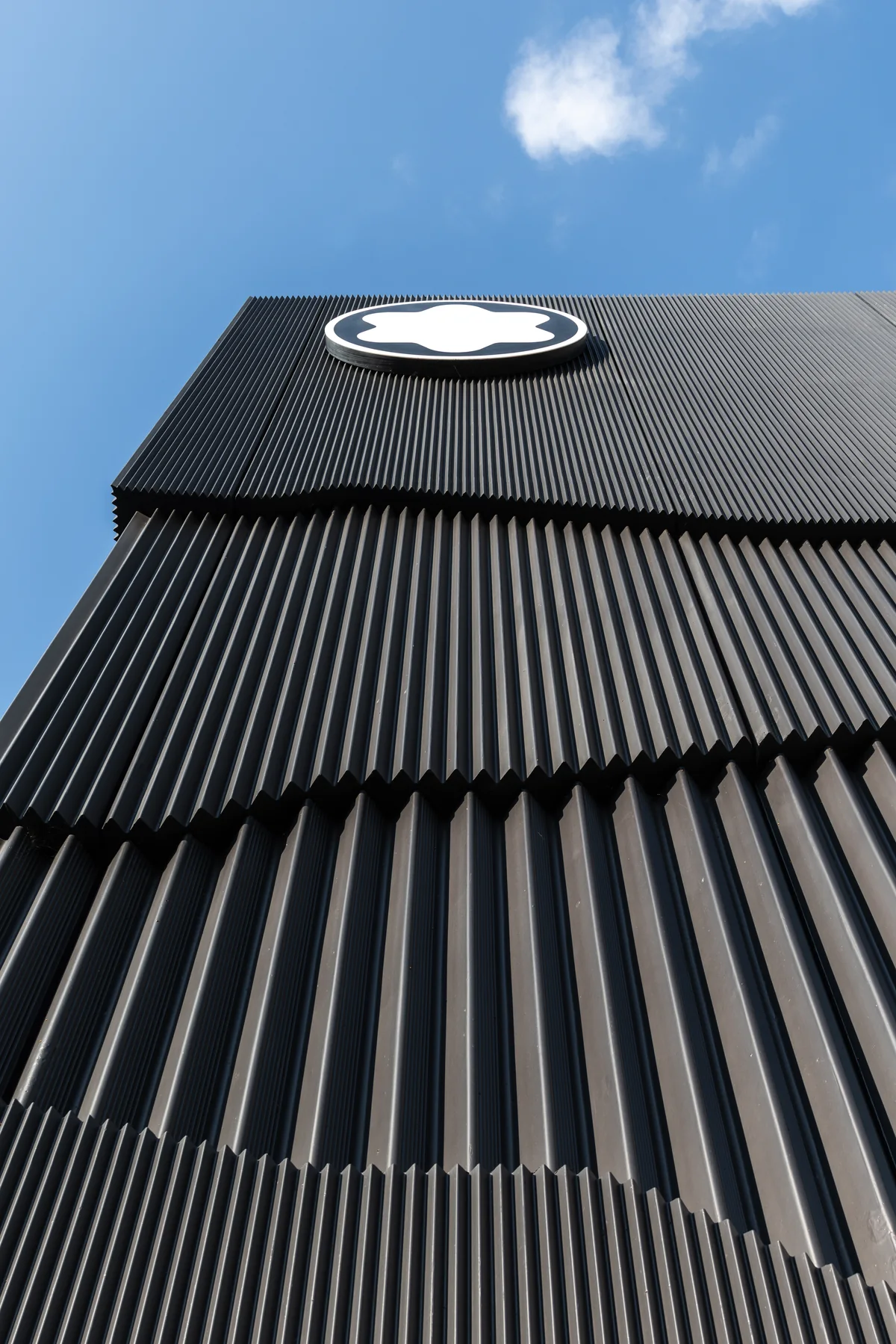

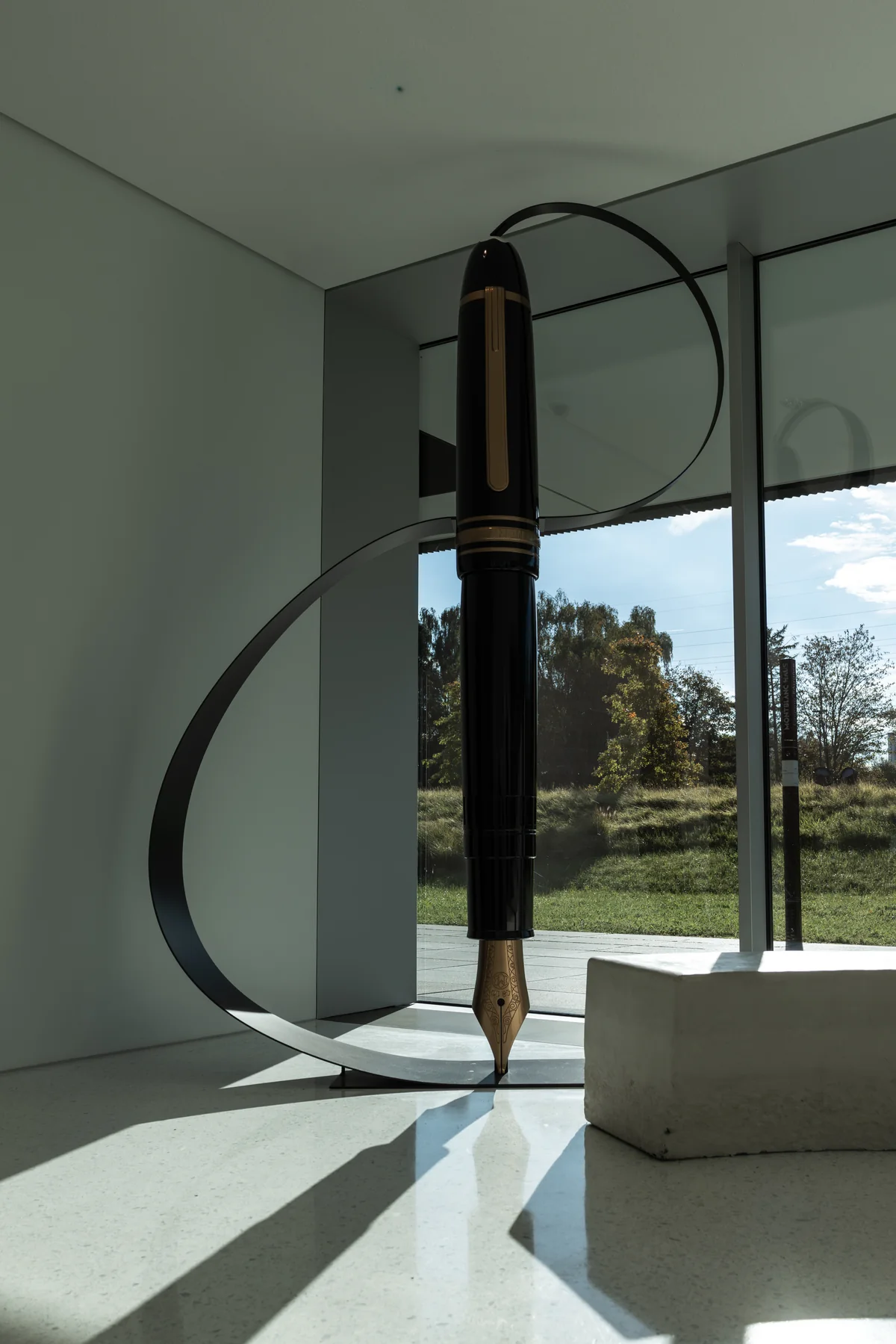

I was especially interested in the care Montblanc had put into presenting its products decades ago. Drawings showing shop layouts and lighting revealed how carefully the company had thought about the setting in which a customer would encounter a pen.
Some of the less obvious archival objects often fascinated me even more than the exceptional limited editions. They offered glimpses of how the company had operated and how its designs, materials and construction had evolved. Features I now recognise instantly as Montblanc had their own particular beginnings.
We stayed almost until closing, and I still felt I had seen only a fraction of what interested me. After years of collecting and studying these pens, there was much more to learn than I had expected. That continuing sense of discovery is a large part of why I enjoy this world so much.

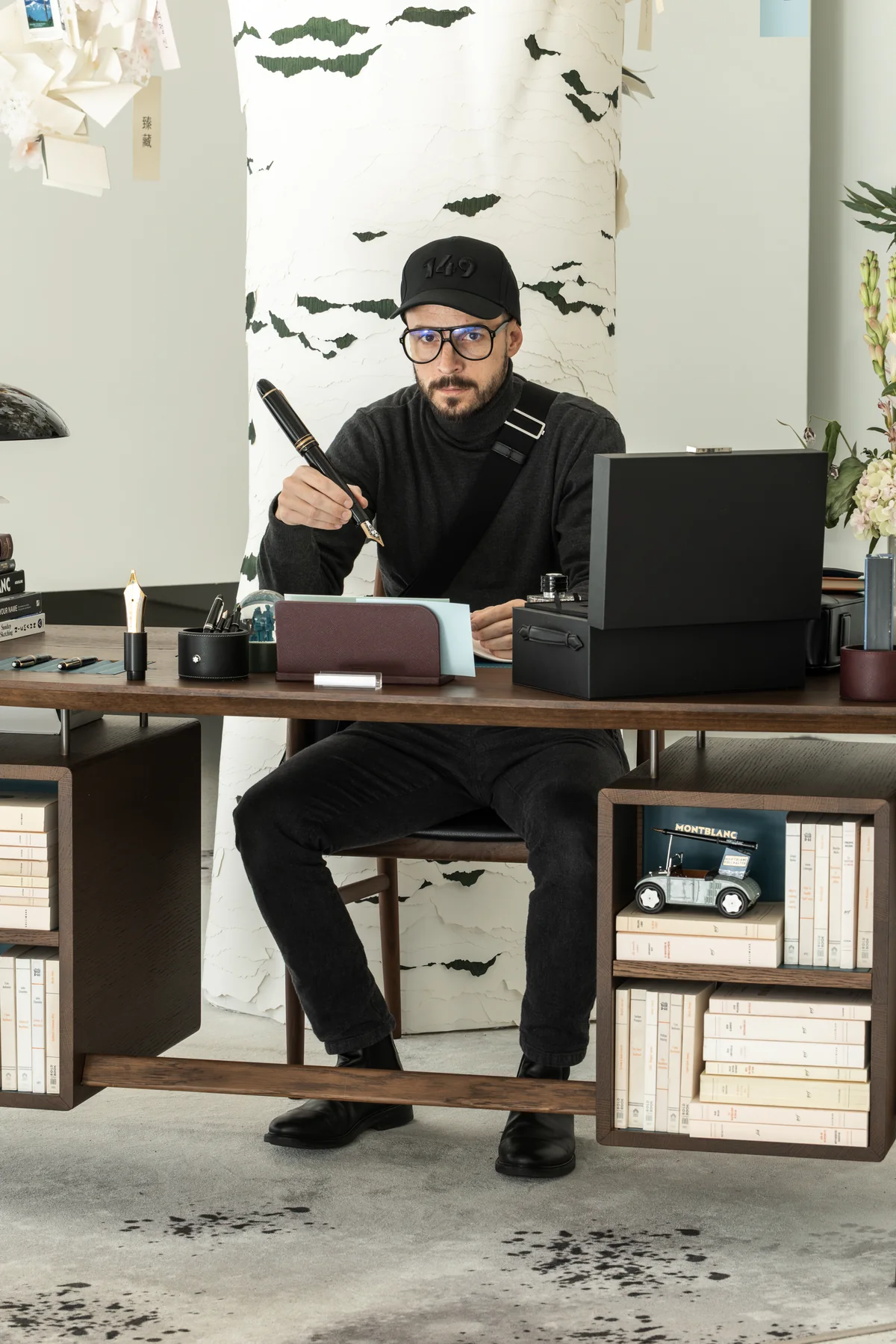

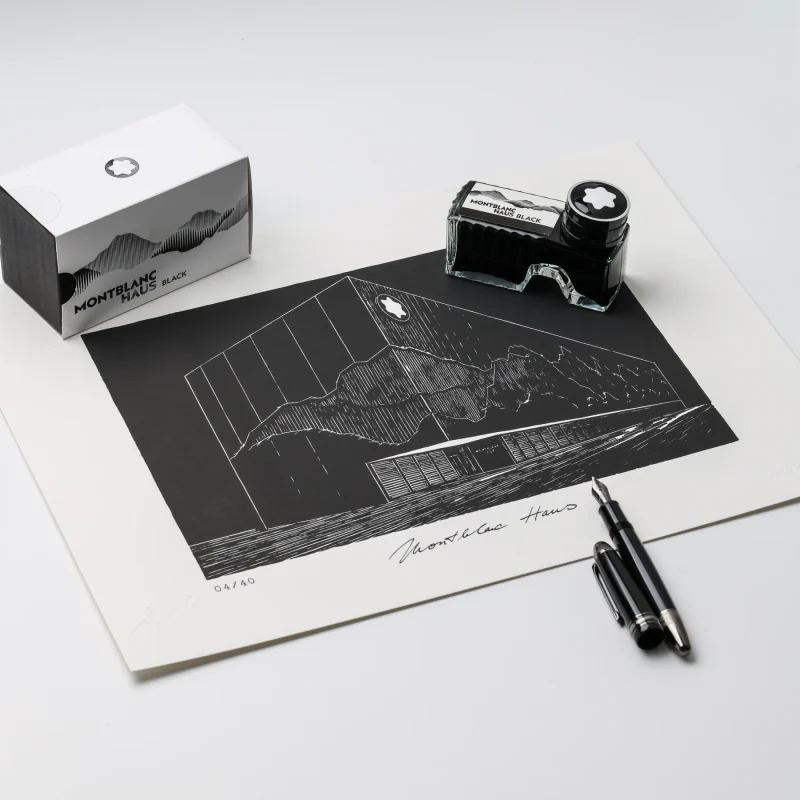
Before leaving, I dropped off the linocut prints of Montblanc Haus that I had brought for Café 149. It felt like the right place for them.
The same Montblanc Haus, Hamburg linocut is now available in my shop. Created by TLATCHENE, it brings the building's distinctive facade and mountain silhouette onto paper. Each print is individually hand-printed, numbered and signed, in an edition of just 40, with no reprint.
 Take a closer look
Montblanc Haus, Hamburg
Bring a little of Hamburg into your writing space. Individually printed by hand, each piece has its own character — a lasting reminder of the home of writing.
- 40 × 30 cm
- Signed & numbered
- No reprint
Then it was back to the hotel for our final evening, and time to begin packing away the temporary desk that had served me so well.
17 October · Leipzig and the journey home
One more visit, and a very special 149
After our final morning in Hamburg, we had one more stop on the way home. In Leipzig, we were meeting Tobi, a fellow fountain pen enthusiast who had invited us to visit.
Our time together ended up being shorter than we had planned, but his welcome was exceptionally generous. He showed me his collection, and the visit brought one last major surprise.
I was able to acquire a Montblanc Meisterstück 149 Demonstrator in original, unused condition.
For someone with my weakness for the 149, that was a very special moment. Simply seeing such a pen would have been memorable. Bringing it into my own collection was something else again.
Its importance to me will always include the journey and the person I acquired it from. Every time I pick it up, there will be a little of this trip attached to it.
The people behind the pens
Looking back, I think first of the people who opened their doors to us and made time for our questions.
Willi, with his living memory of Pelikan. Phillip, who could change the way a familiar pen felt in my hand. Frank and Jan, each developing a very personal approach to making pens. Martin and Nico at Montblanc, whose care and generosity made our visit special. Michael, Marco, Tobi, and the collectors we met around a table in Hamburg.
Some I had known through their work, others through messages and a shared interest. Now I can put a voice, a face and a personal memory to those names.
The trip also gave my wife and me time together in Hamburg, an extraordinary evening at the Elbphilharmonie, and a temporary home we enjoyed returning to. Around the visits were the less obvious parts of making the journey work: the car, the cameras, the notebook and the cases protecting the pens I had brought along. They deserve a few words of their own.
An electric road trip in the Mercedes-Benz GLC 400


I still enjoy the thought of setting off in an electric car to visit fountain pen makers. Pens, ink and a notebook in my bag; a large screen and technology I had mostly read about in front of me. There was something very fitting about bringing those interests together on Follow My Pen — On the Road.
The car was a Mercedes-Benz GLC 400 4MATIC with EQ Technology, and this was my first experience of travelling in an electric car. I was curious to see how it would fit into an actual road trip, with luggage, photographic equipment and a schedule full of things that had nothing to do with driving.
There was also the pleasing coincidence that Mercedes-Benz and Montblanc share the initials MB. I am choosing to believe that was a good sign.
Before I had explored any of the technology, the car itself made an impression. I often write about the difference between seeing a pen in a photograph and holding it. Sitting inside the GLC gave me a similar feeling. The materials, finish, lighting and arrangement of the interior were things I wanted to take time to notice. At moments, it almost felt like sitting at a particularly luxurious desk.
A good pen and an open notebook would have looked entirely at home there. The large continuous screen, ambient lighting and panoramic roof with illuminated stars sound like quite a lot when listed together. Inside the car, they felt considered as a whole. I found myself studying details just as I would examine a clip or the meeting point between two materials on a new pen.
Then the technology enthusiast in me took over. Between MB.OS, MBUX, the AI voice assistant and the phone app, there was plenty to explore. The assistant helped us find good places for lunch and navigate to our destinations. I enjoyed discovering the functions even while the car was parked, and I made very enthusiastic use of them throughout the trip. I tried every function I could find.

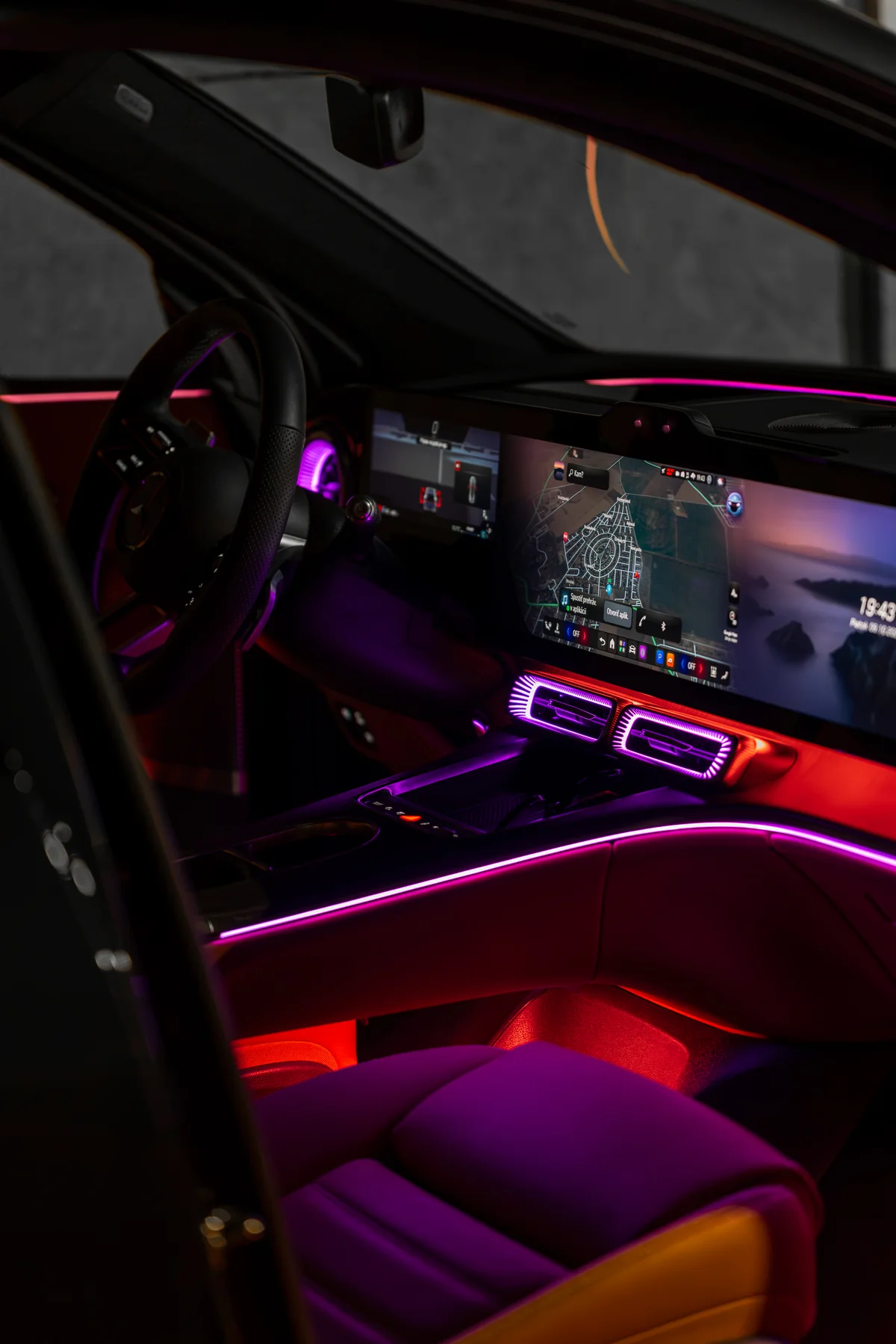


My main practical curiosity was charging. I wanted to know how much attention it would require alongside everything else I was organising. The navigation could plan charging stops and prepare the battery for them, which took some of the work out of the journey. With visits, photography and Follow My Pen already occupying my attention, that was particularly welcome.
Before leaving, I had imagined measuring a charging stop in my own way: how much range could the car gain while I filled a page with a fountain pen? I liked the idea of recording the places, conversations and details of the day while the battery charged.
In practice, one stop rather spoiled my little experiment. By the time I came back from the toilet, we could already leave. I had not even opened the notebook.
The city charging stop I mentioned earlier was a reminder that some planning was still needed. Overall, though, electric travel fitted into the trip far more naturally than I had expected.
Until now, I had been more of an Audi person. Something shifted during these six days. I still do not know whether my next car will be electric, but when I sat down afterwards to write about the experience, one sentence came very easily: it might be electric, it might not, but it will be a Mercedes. I had become rather attached to this one.
Photographing the journey with two Canon cameras


Press the shutter to bring the story below into focus. Keep shooting to see photos from the whole journey.
When I first began photographing pens, I used an iPhone. I had always wanted to pursue photography, and discovering this interest gave me a reason to take it seriously. Collecting and writing led naturally to wanting to photograph the objects I spent so much time with.
Canon was the brand I felt drawn to, but the choice had a practical side as well. For me, its RF macro lens is the best option for the work I want to do. It made the decision feel very natural.
For this trip, I needed something more adaptable than my usual setup at home. I am very grateful to Canon's team in the Czech Republic and Slovakia for lending me a second Canon EOS R5 Mark II, matching my own camera, together with the RF 20–50mm F4L IS USM PZ and a 35mm f/1.4 lens.
Both lenses fitted the trip beautifully. Having two identical camera bodies made a substantial difference too: I could switch between cameras, or set up both at once, instead of continually rearranging a single camera for different tasks.
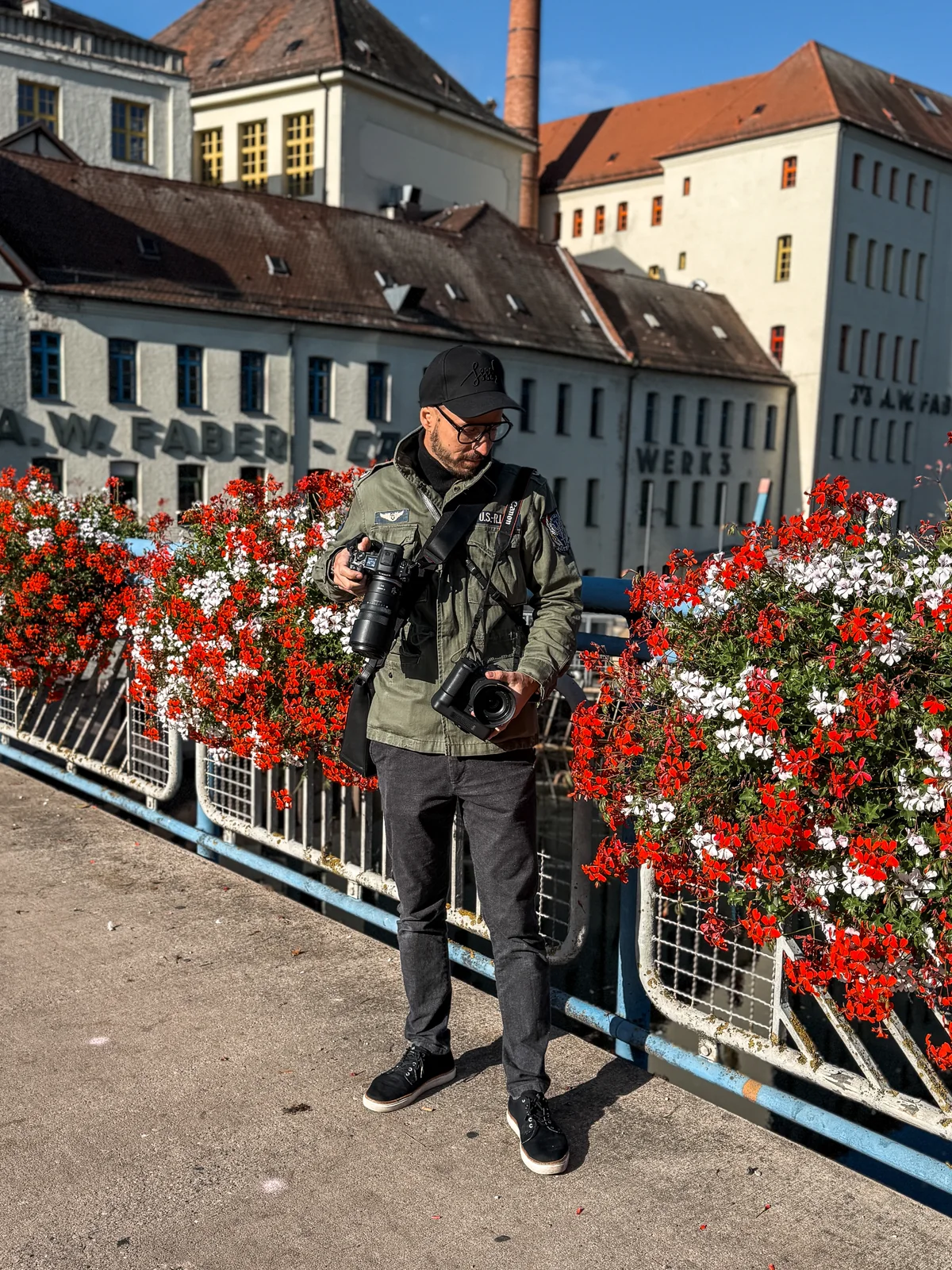
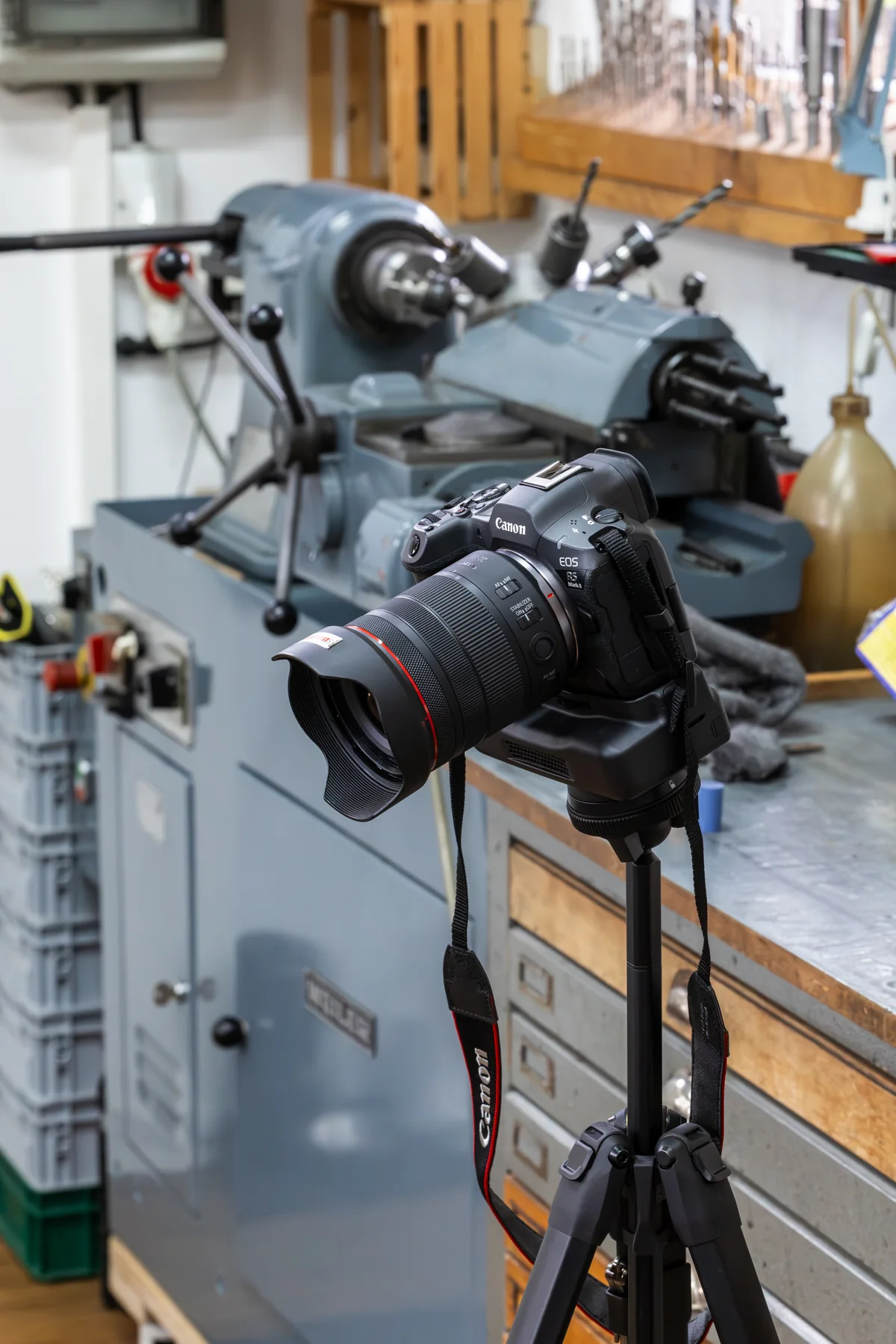
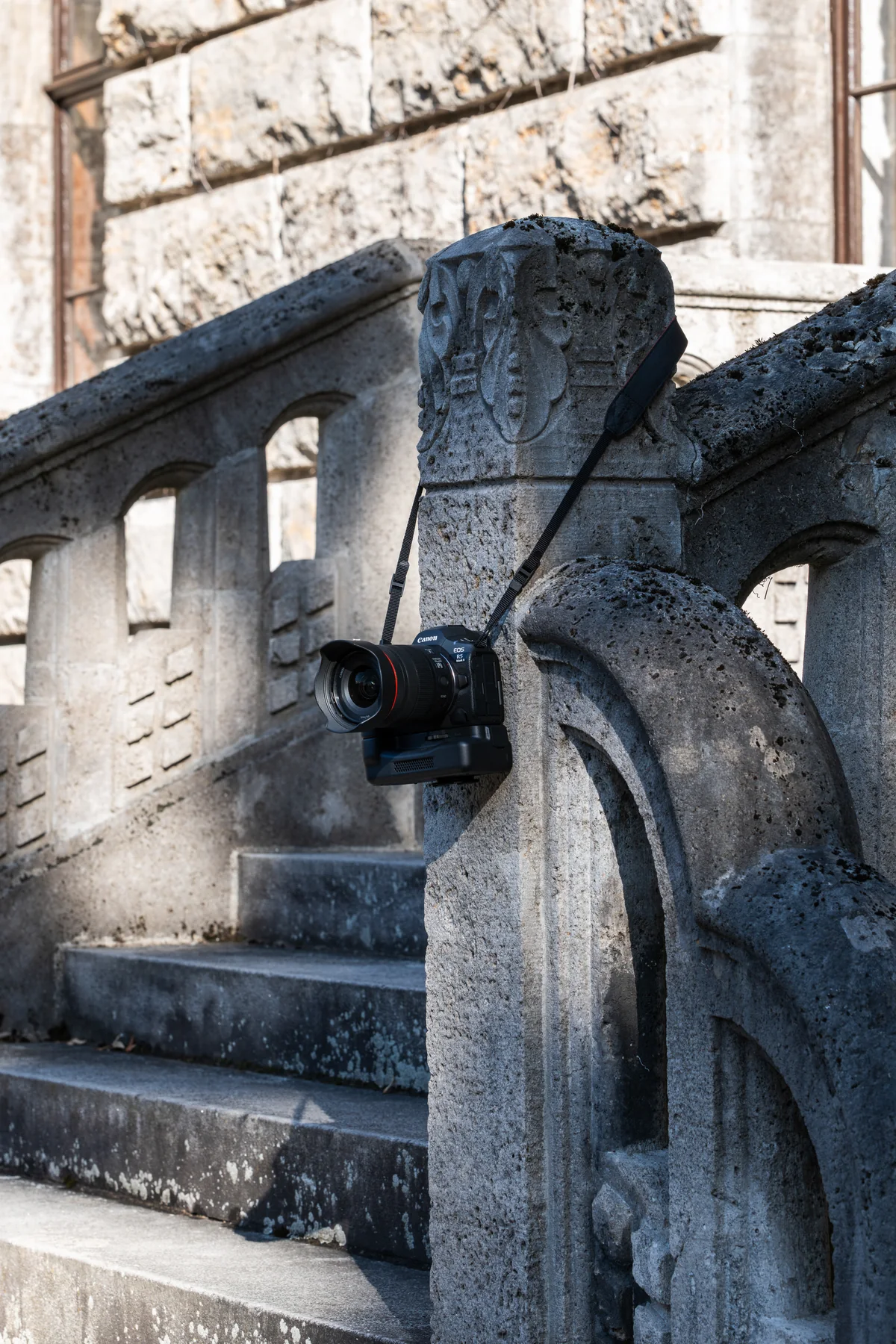
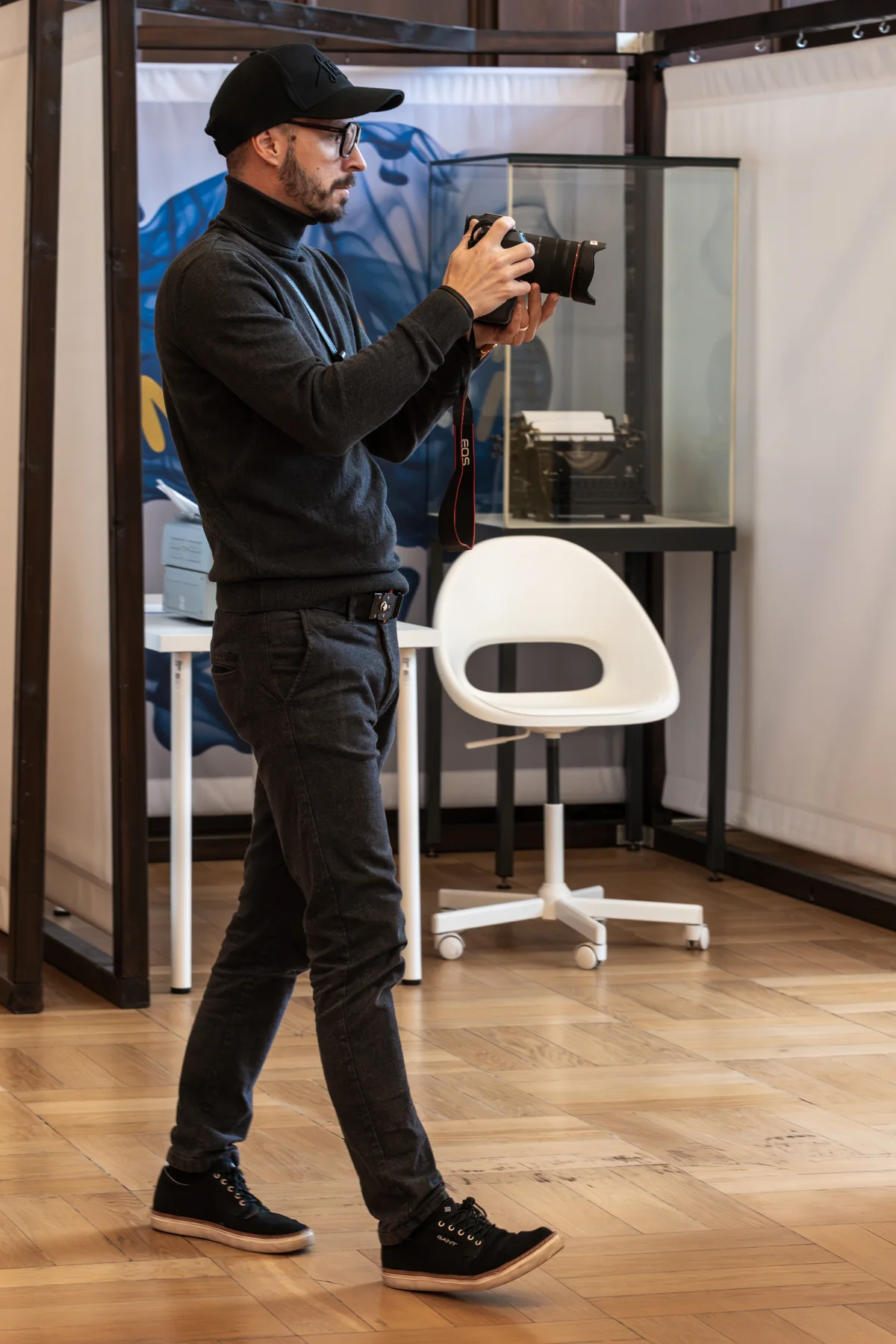
The photographs and videos are not always as polished as I would have liked. Working in the conditions available during a visit is quite different from photographing a pen at my desk. But the equipment helped me record far more, and in greater detail, than I could otherwise have managed. Many small things that might have remained only in my memory are now there to share with you.
UNRUSHED, in a Paper Republic notebook

There is a more personal part of this project that I want to explain honestly.
I have not been managing the pace of my life as well as I would like. I rush, try to fit too much in, and find it difficult to stop thinking about everything still waiting to be done. It has been affecting my mental health. There are nights when I cannot sleep, and days and nights when stress leaves me feeling physically sick. Losing sleep then makes the exhaustion worse.
I am glad I have begun to recognise it. I want to slow down, make better decisions about my priorities, and find a way of living that leaves more room to enjoy the things I care about.
That was the personal reason behind UNRUSHED.
I approached Paper Republic because I wanted a beautiful, well-made notebook for the project, and they provided an A4 notebook to accompany me. My idea was to ask the people I met to write down what helps them slow down: the habits, thoughts or ways of working that make a difference in their own lives.
I wanted to learn from them. I need that inspiration myself.
One of the things I hope to find more often is time to sit with a pen and write without mentally working through the next task at the same time. It sounds simple. For me, it is something I still need to practise.
Keeping the pens safe with &Liebe

&Liebe provided pen cases for the journey and a bag for my wife, and I was very happy to have them with us.
The cases protected the pens beautifully throughout the trip. They were easy to use, with a practical way of taking the pens out, and the interiors were lined with a soft, carefully padded material. Sometimes I looked at how comfortably the pens were travelling and felt slightly envious.
The leather held up very well too. After the journey, I could not see any noticeable scuffs or signs of wear. When I travel with pens that matter this much to me, being able to put them away with confidence makes a real difference. I was very pleased with how the cases performed.
Back at my desk
On the Road has come to an end, and I have brought home enough stories to keep me writing for quite a while.
In the coming articles, I will return to the individual makers and explore the production processes, historical details, technical discoveries and conversations more closely. Several visits changed how I look at objects I thought I already understood. I hope sharing them will give other pen enthusiasts something new to notice too.
This was a physically and mentally demanding trip. For someone who is very happy at his own desk, it took me a considerable distance beyond what feels comfortable. I am grateful for the experiences it made possible, and equally grateful for the kindness of the people who welcomed us along the way.
Thank you to everyone who opened a door, shared their knowledge, helped make the journey possible, or followed along from home.
I am looking forward to sitting down with a pen and telling you the rest.
Watch the video story
Before you go, join me on the road once more. Watch the video story from my journey through Germany’s fountain pen world.
Read next
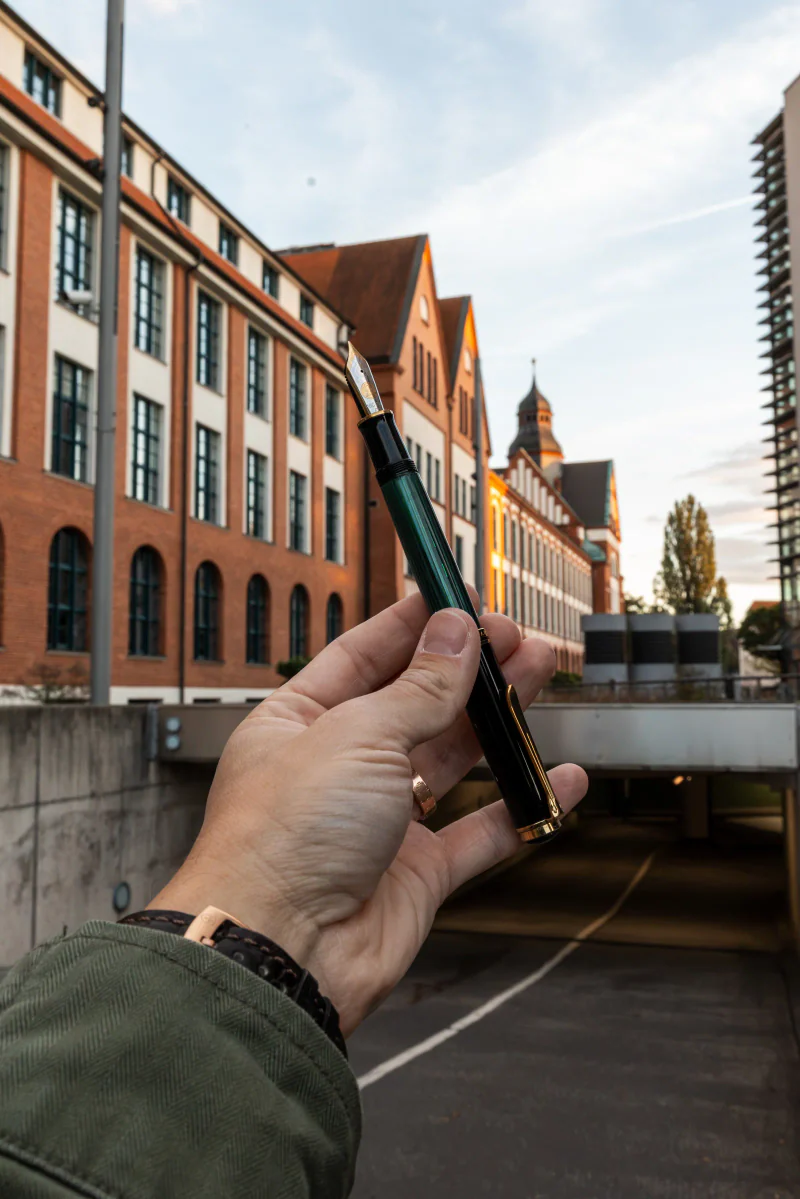
Pelikan in Hanover: Stories from the Ink Castle
Inside Pelikan’s historic home in Hanover with Willi: stained-glass windows, archival inks, green stripes, a well-loved Toledo, and the people behind the pens.
Read article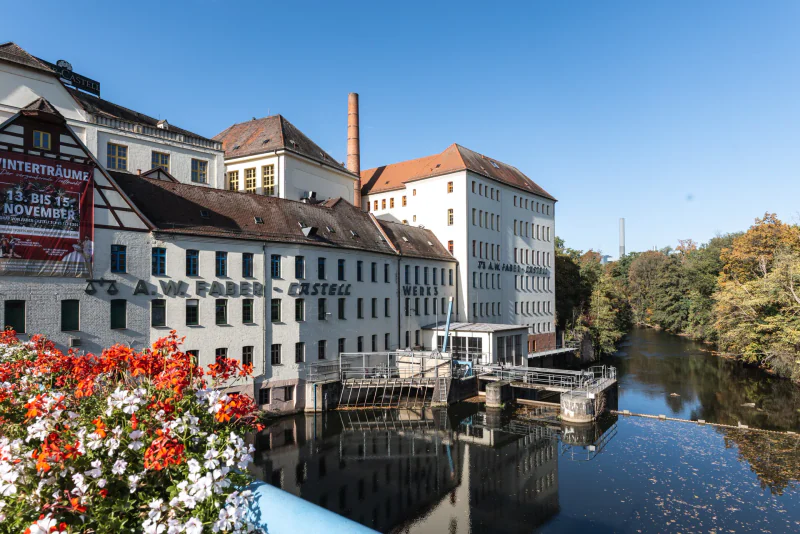
Inside Faber-Castell in Stein: The Surprising Life of a Pencil
A factory visit in Stein, from graphite and clay to eight coats of lacquer, an eraser without glue and a fountain pen made from 84 pieces of wood.
Read article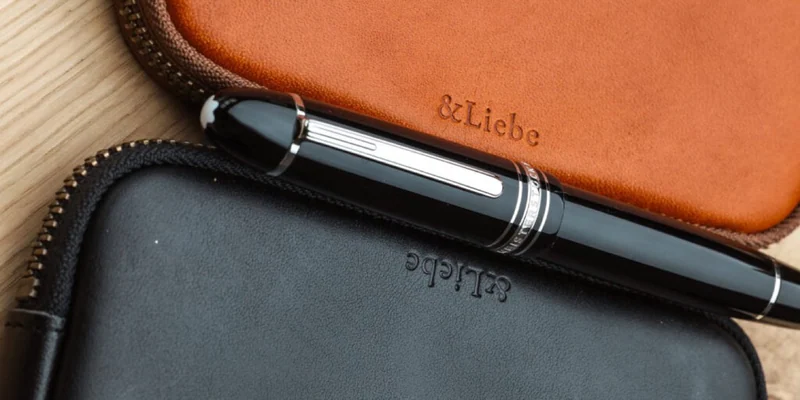
Inside &Liebe: The Japanese Craft Behind Leather Pen Cases
When I see “Made in Japan” somewhere, it immediately has my full attention. I love Japanese culture, its people, and of course the products — which are often made in a way that feels very different from what we are used to outside Japan. One of my favourite brands is andliebe, and I would like..
Read article
0 comments
Comments are moderated before publishing, so the conversation stays useful and calm.
No comments yet. You can leave the first note below.