Phillip Landsiedel: When a Good Fountain Pen Can Write Even Better
Three familiar pens, a workbench in Hamburg, and a different feel on paper. A visit to nibmeister Phillip Landsiedel on our On the Road journey.

Phillip Landsiedel: When a Good Fountain Pen Can Write Even Better
You can lock your phone and keep listening.
Follow My Pen — On the Road
Hamburg, October 14, 2026
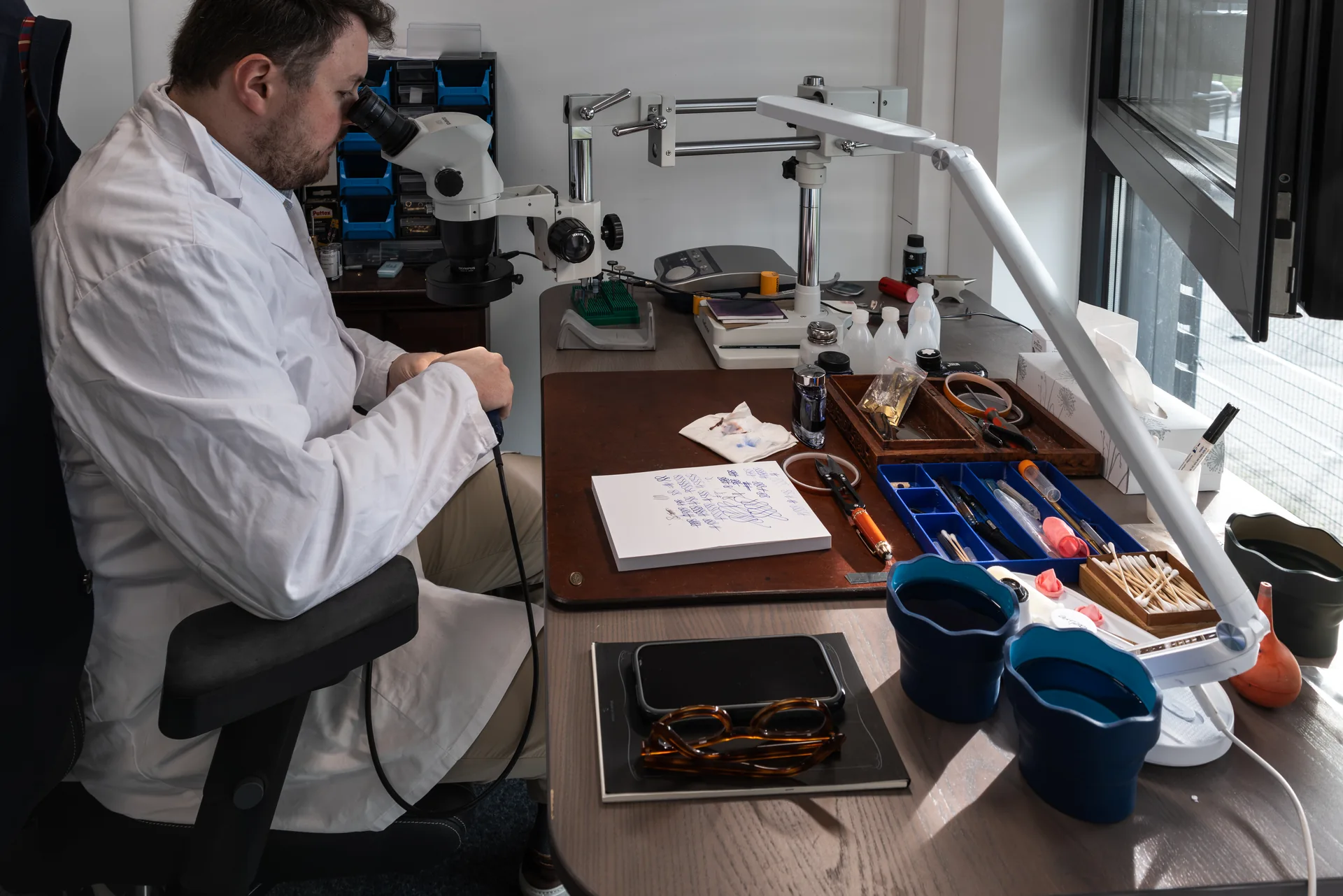
I brought three fountain pens to Landsiedel Fine Writing in Hamburg. I left with the same three pens, yet writing with them felt almost as though they had received new nibs.
Very little had changed on the outside. The design, materials, and components were the same. What had changed was the part of using a pen that matters most to me: how the nib behaves on paper.
After Faber-Castell in Stein and Pelikan in Hanover, our On the Road journey had brought my wife and me to Hamburg. Here, we visited Phillip Landsiedel, who sells fountain pens but specializes in adjusting and grinding their nibs to suit the individual writer. Among collectors, someone who does this work is known as a nibmeister.
I wanted to watch him work, understand the differences between the adjustments, and find out what was possible with pens I already knew. Our conversation gradually grew to include his years at Montblanc, unusual pieces from his collection, mistakes at the workbench, and a question that has stayed with me: how often do we buy another pen in search of a better writing experience, when the one we already own might simply need the right adjustment?
First, He Needed to See How I Write
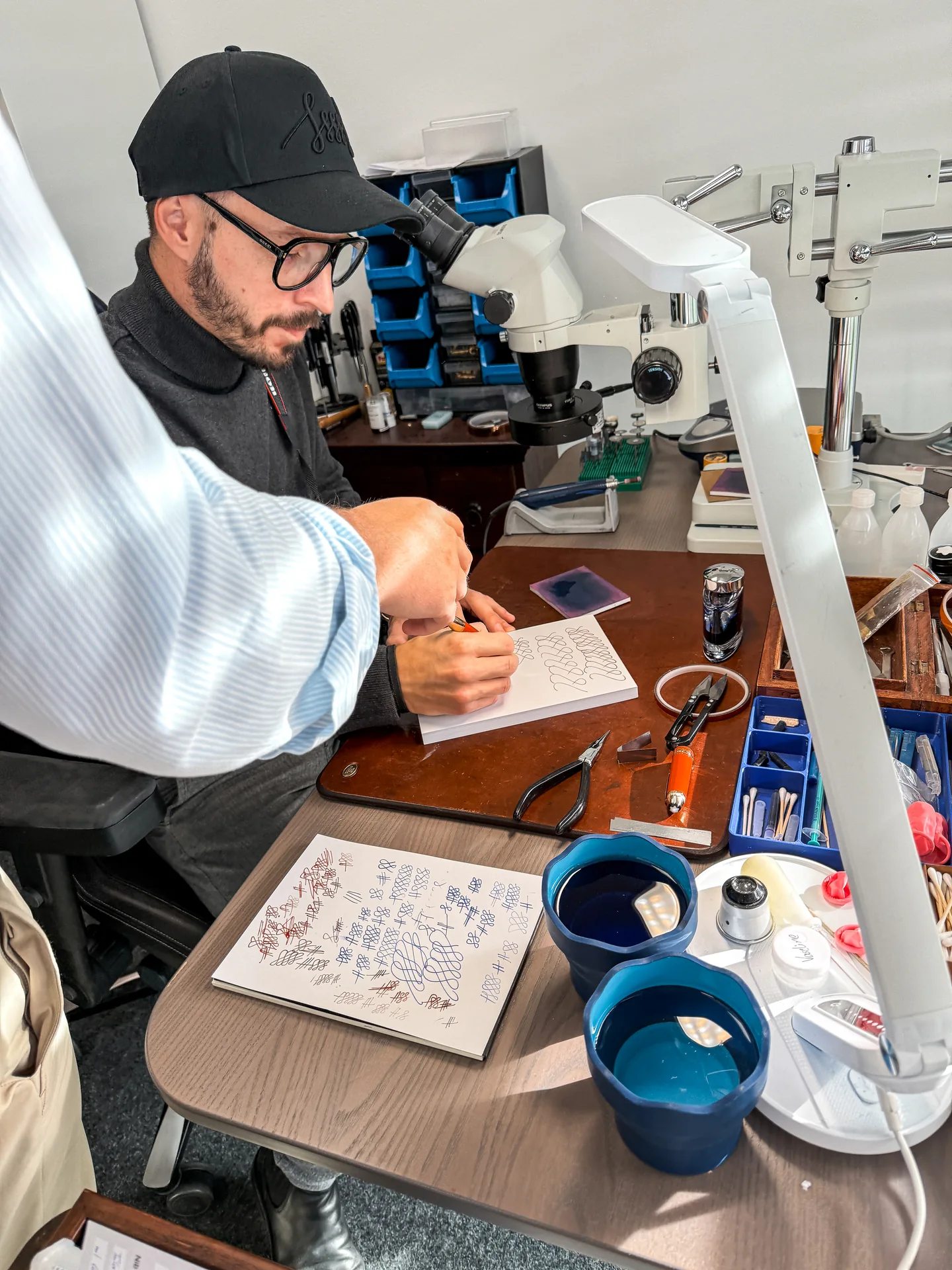
One of Phillip’s first questions was about ink flow. He wanted to know whether I preferred a drier line or a distinctly wet writer.
My answer was straightforward. I like a generous flow, but for everyday writing I mostly use finer nibs. I write on fairly small lines and with a very light touch. I do not want to force a pen to start writing.
Then he watched how I held it. He looked at the angle of the nib, my pressure and writing speed, and the way the pen rotated as my hand moved. Only with that context does the question of how a nib should write begin to have a specific answer.
Phillip compared it to a suit. A good ready-to-wear suit may fit you reasonably well. A tailor can then adapt it to your body. With a nib, the measurements are the writer’s angle, pressure, and habits.
That does not mean every factory nib needs work. It certainly does not excuse a pen that scratches or writes unreliably. Correcting a fault and refining the personal character of a nib are different things.
Meeting in person makes those distinctions easier. Phillip can watch your hand, give the pen back, and keep checking whether the result is getting closer to what you want.
It Started with a Wooden Lamy ABC
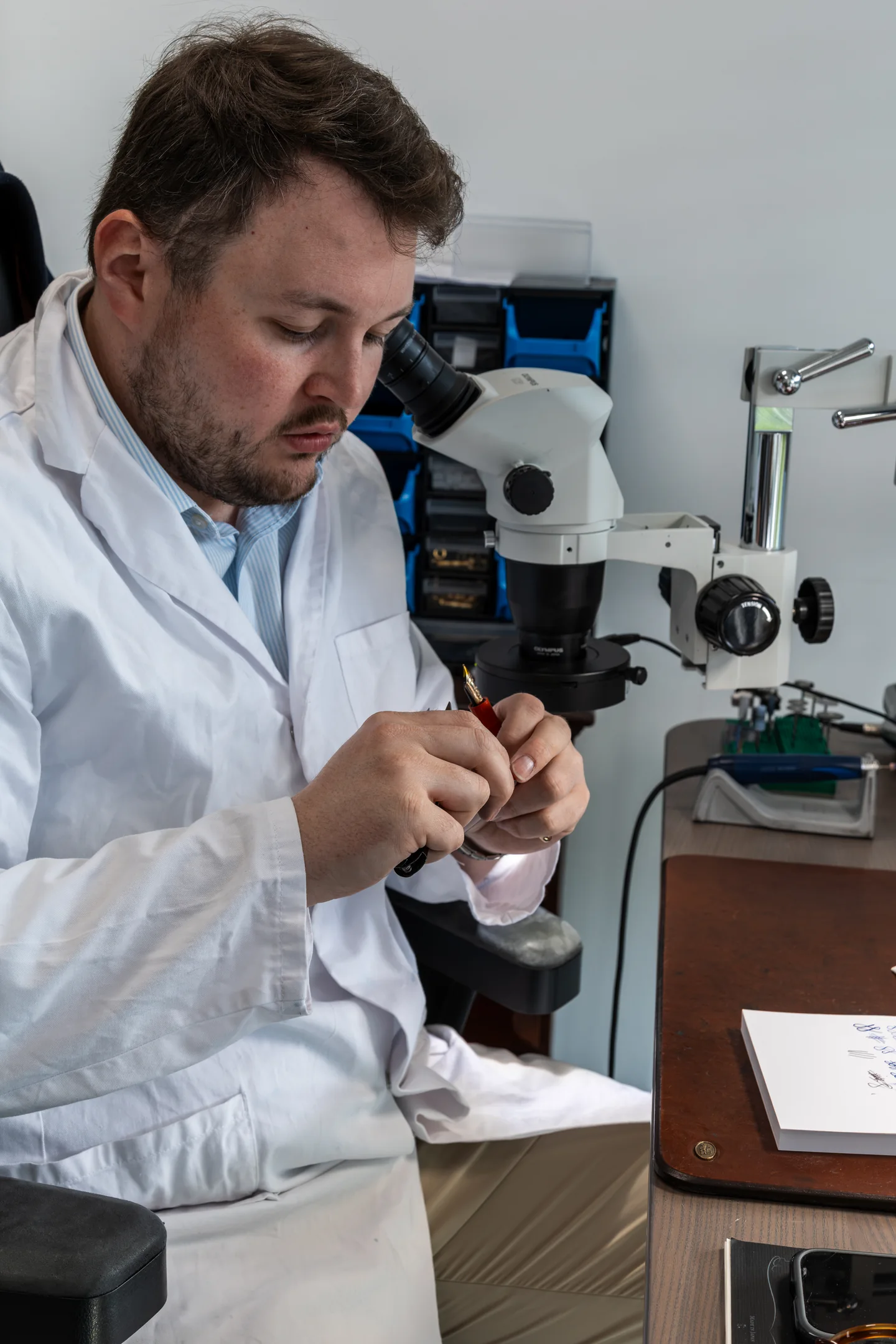
When we turned to his own story, it began with a school pen. In first grade, his aunt and uncle gave him a Lamy ABC with his name engraved in its wooden barrel. That detail stayed with him: it was an object that belonged specifically to him.
Later, he began trying other pens. He visited flea markets with his grandmother, finding older pieces, taking them apart, cleaning them, and learning how they worked. His interest in writing gradually became an interest in materials, mechanisms, and working with his hands.
Discovering that Montblanc was based in Hamburg opened another possibility. Through a contact of his father’s, he arranged two internships and joined the company after school. He spent almost ten years there, mostly in the Artisan Atelier.
Working on particularly elaborate and expensive pens made him wonder why their individuality did not always extend to the point where the nib met the paper. A pen could be exceptional in its materials and craftsmanship while its nib remained unsuited to the way its owner wrote.
He began adjusting his own nibs, asking more experienced colleagues questions, and experimenting. That interest developed into the work he now does at Landsiedel Fine Writing.
I like the two perspectives in his story. He understands the collector’s attraction to an exceptional object, but he keeps coming back to a simple question: what is it like to write with?
Repair, Tuning, and Grinding
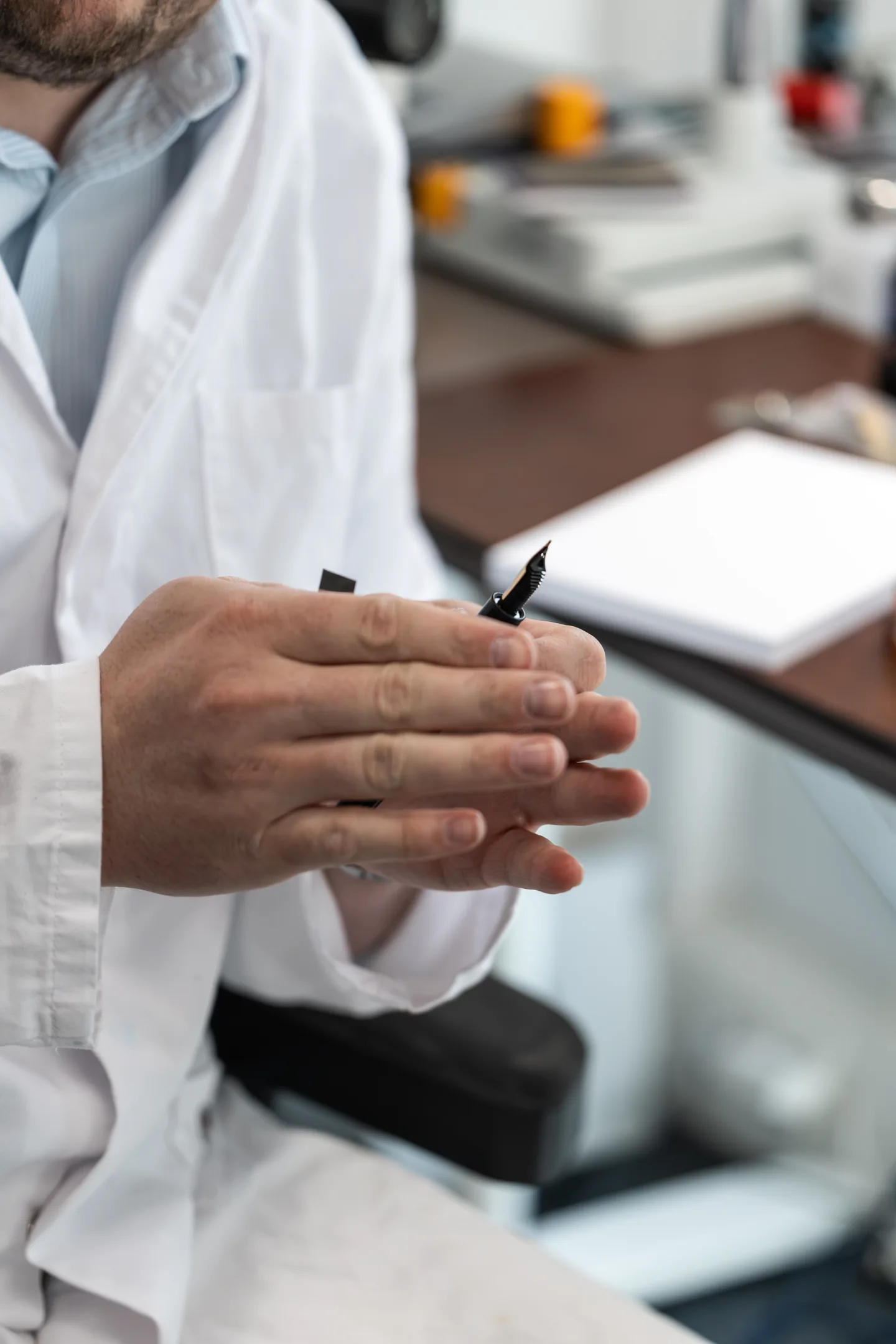
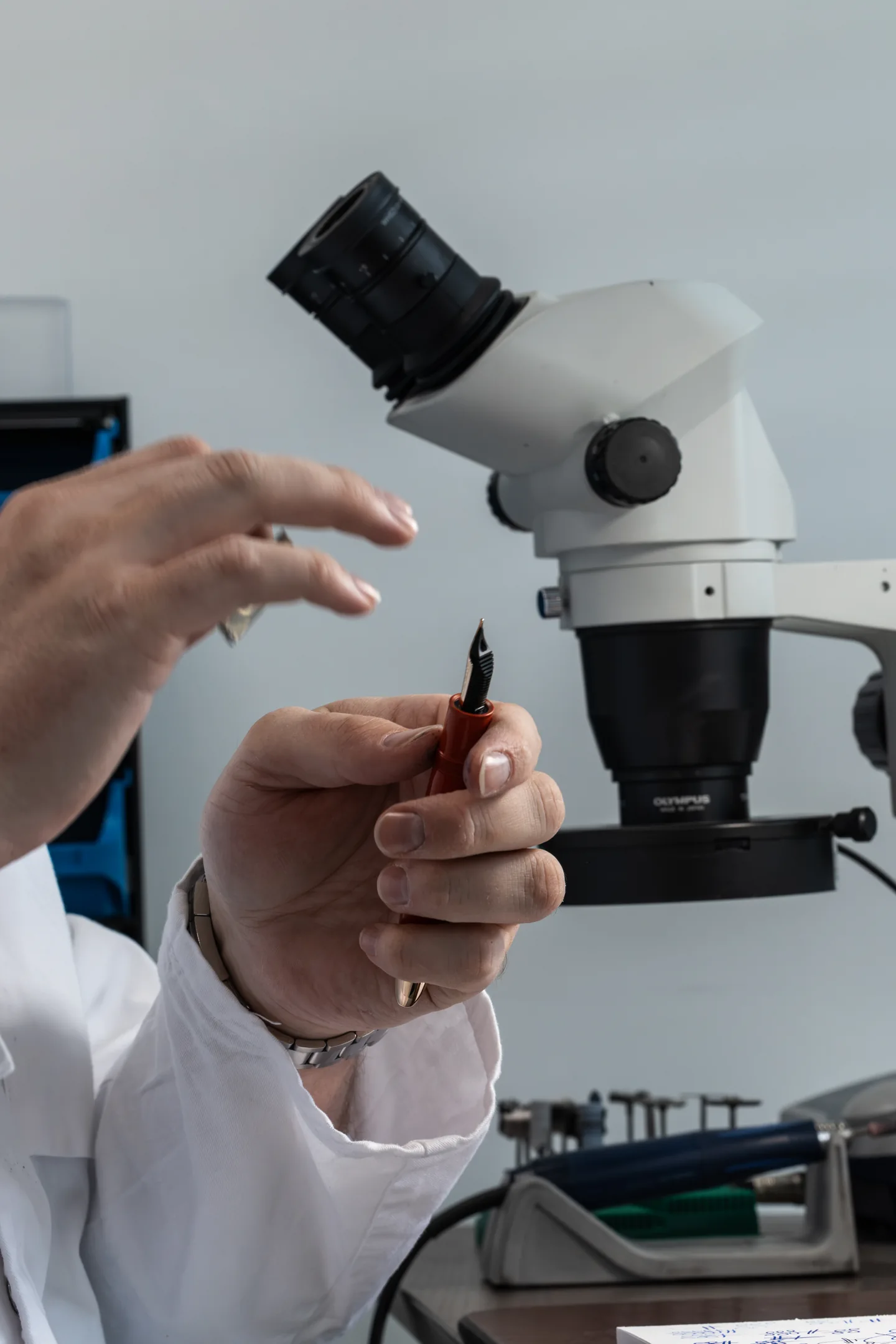
These terms often get mixed together. Phillip explained them as three different aims.
Nib repair restores function. It might involve bent tines or other damage that prevents the pen from writing properly. A badly bent nib can sometimes be made to write again even if traces of the original damage remain visible.
Nib tuning does not necessarily address damage. A nib may work, but its flow or behavior may not suit you. The aim is to adapt it to your preferences without necessarily giving the tip an entirely new profile.
Nib grinding deliberately changes the geometry of the tipping. It can produce a finer line or different line widths depending on the direction of the stroke.
With one of my pens, Phillip explained that the tines were too close together and that a small adjustment could improve the flow. He also pointed out that this was only one of the things affecting ink delivery.
During another test, the tip had already been worked on, but the ink supply and fill level still needed checking. It would have been wrong to attribute everything to the nib. A fountain pen works as a system; grinding does not solve every instance of skipping.
Even so, the overall difference was striking. All three pens suited me better after the adjustments. That feeling of having new nibs came from their behavior moving closer to what I wanted from them.
Smoothness Is Only Part of the Story
We often describe nibs as buttery, silky, or perfectly smooth, as though less resistance must always be better. Phillip does not see them that way.
Some writers want the easiest possible glide. Others enjoy feedback: feeling and hearing the contact with the paper. The distinction is between that controlled sensation and unpleasant scratching or catching paper fibers.
My wife and I made a useful example. Some of the fine nibs I enjoy do not suit her. Their sound and feel bother her. What gives me a pleasant sense of control over a fine line can be distracting to someone else.
We asked him whether an extra-fine nib could be smooth. In his view, yes, although it need not feel like a broad nib with a larger contact area. Equally, a B stamped on a nib guarantees very little about how pleasant it will be. A poorly adjusted broad nib can feel worse than a well-adjusted EF.
Width and polish tell only part of the story. What matters is how the nib works in a particular hand.
Baby’s Bottom: Smooth, but Reluctant to Start
One of the most interesting parts of our visit concerned a problem with an unusual name: baby’s bottom.
Perhaps you have experienced the symptom. The pen moves smoothly across the paper, but the first stroke leaves no line. You repeat the movement or press a little harder before it starts writing. That symptom alone does not establish the cause, but one possibility is the shape of the inner edges of the tipping beside the slit.
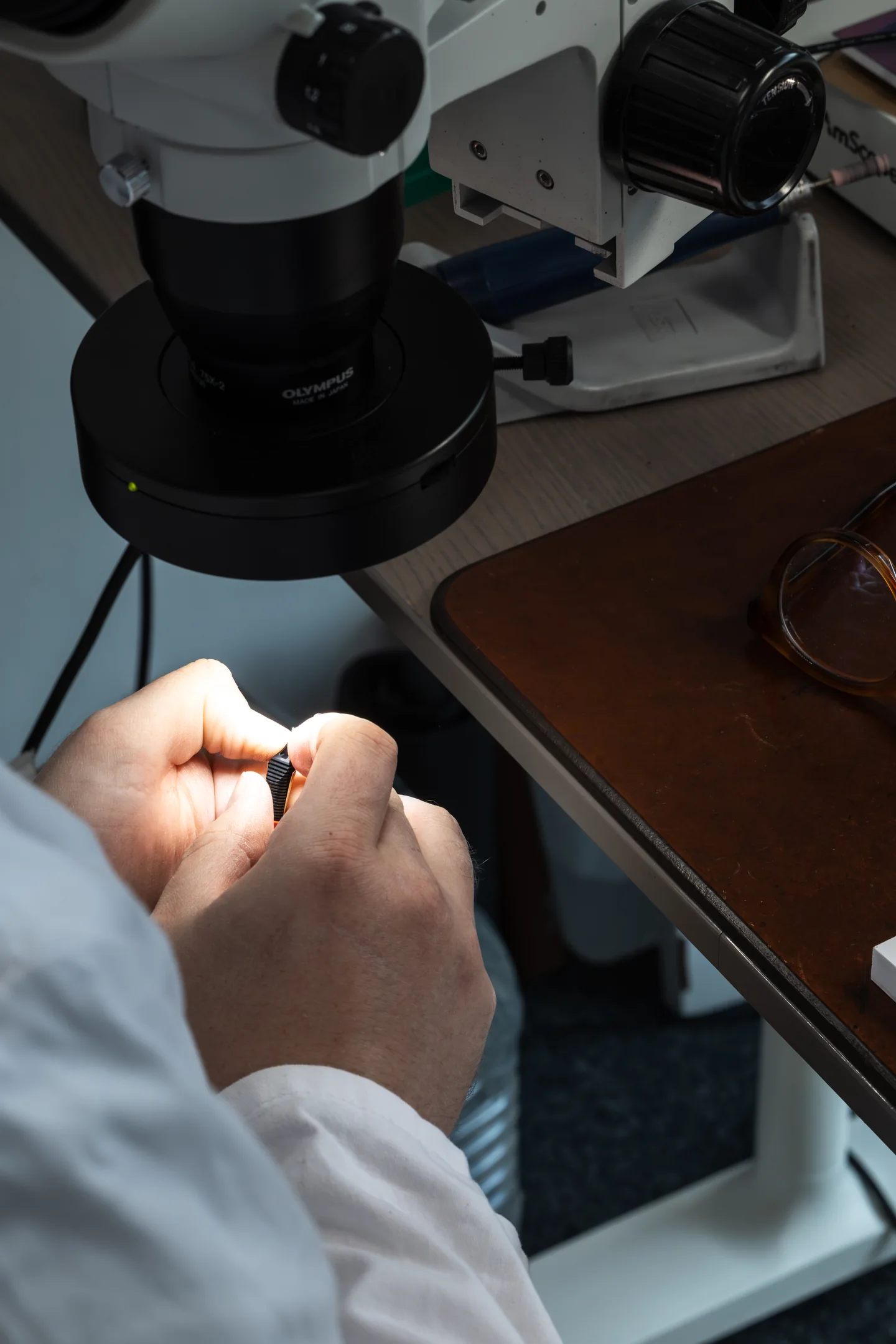
Many nibs have a hard, wear-resistant material at their tip, usually called tipping. It forms the contact surface with the paper. Sharp edges need to be smoothed during finishing, but too much rounding in the wrong place creates a problem.
Phillip explained that with baby’s bottom, the inner edges beside the slit are overly rounded. The ink may no longer reach close enough to the paper to start a line immediately. A nib can therefore feel very smooth while delivering ink unreliably.
Smoothness itself is not the problem. A very smooth nib can write beautifully. The geometry is what matters.
With a light touch like mine, the problem can become more noticeable. Someone using a different pressure or paper may experience it differently, but learning to push harder is not the answer.
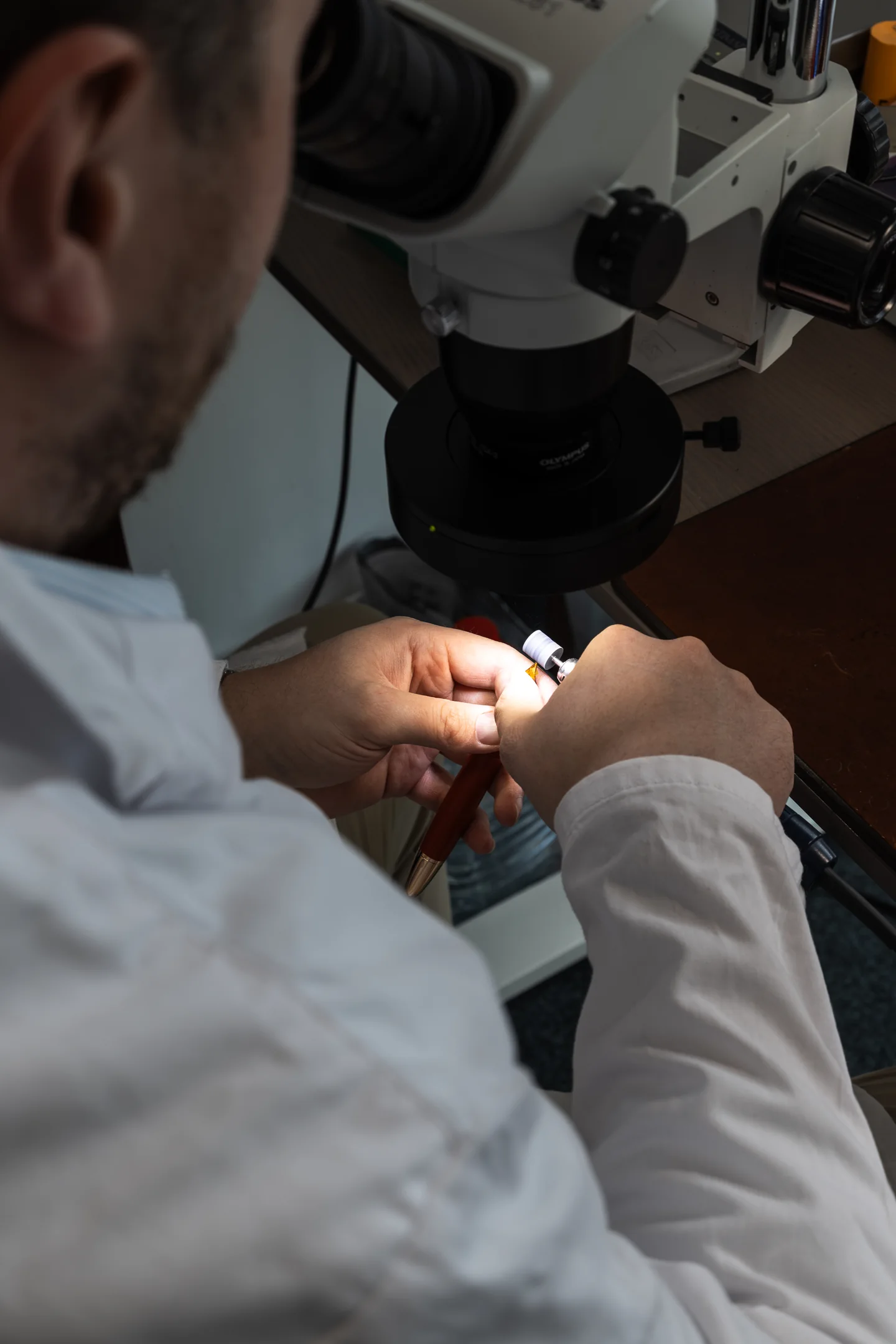
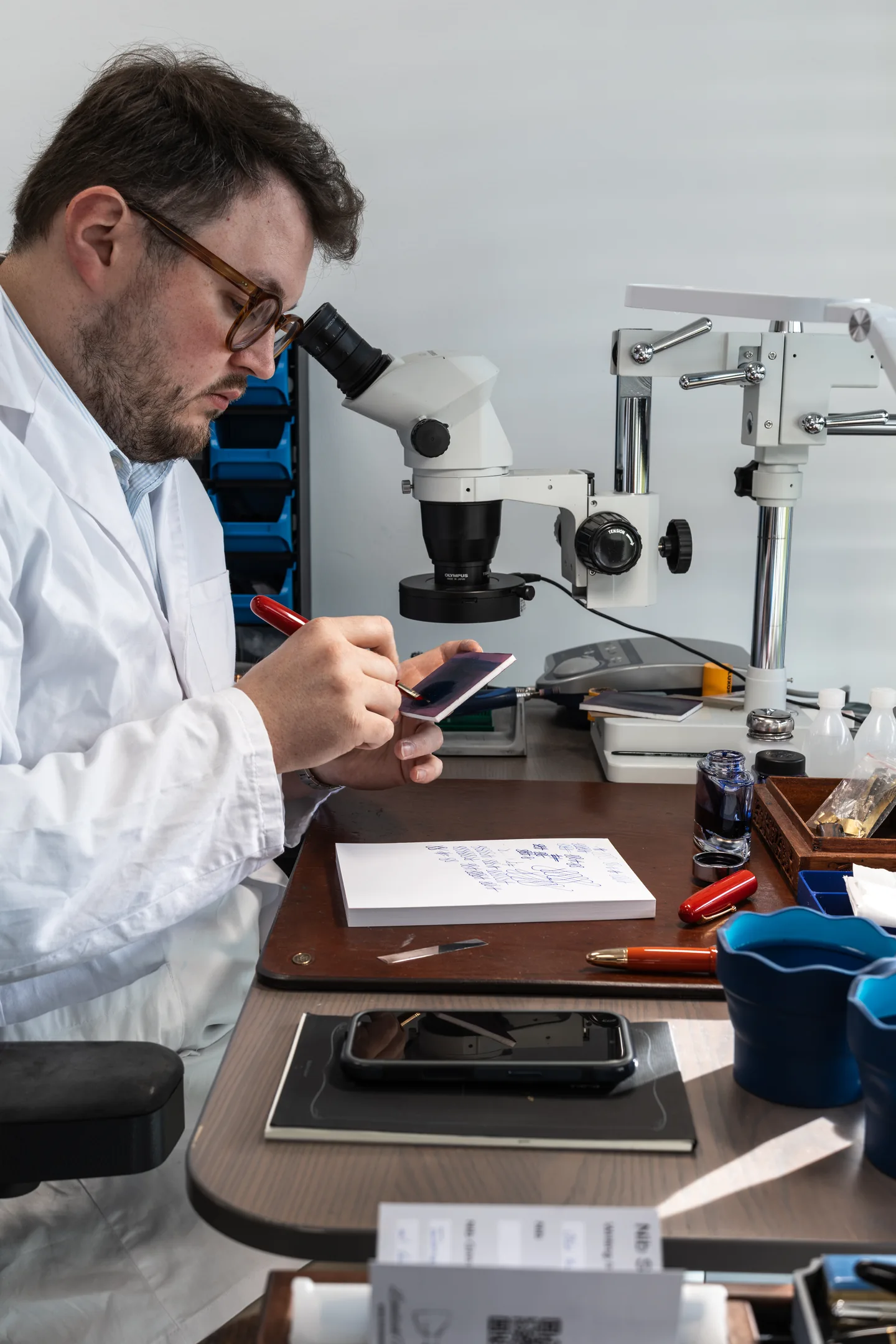
Phillip showed me how he restores a suitable contact shape and then gently smooths it. He also used protective tape to shield surrounding parts and limit unwanted movement of the tines while working.
Watching him, I was struck by how little material he needed to work on. A very small area influences the behavior of the whole pen.
When a Grind Changes the Handwriting
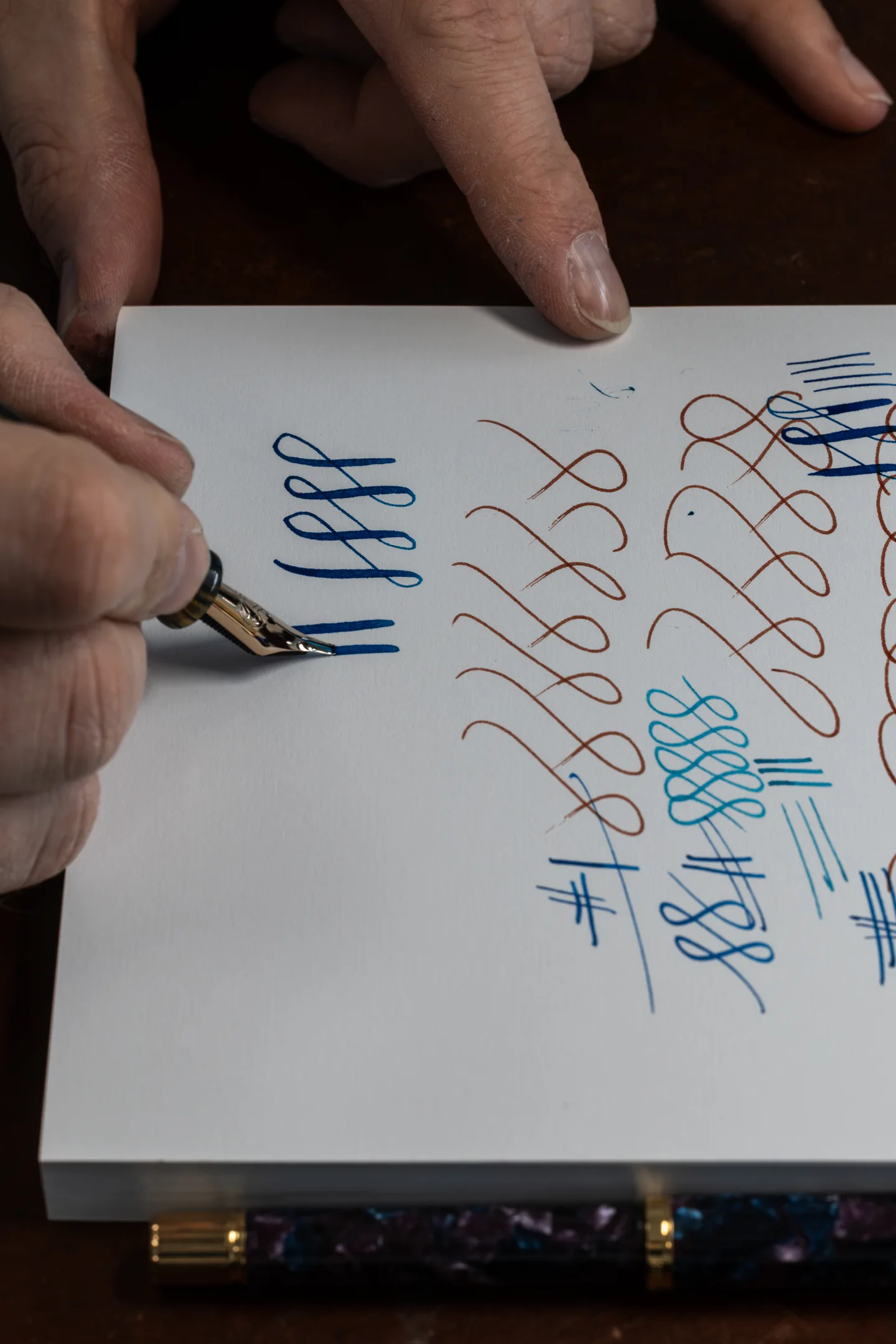
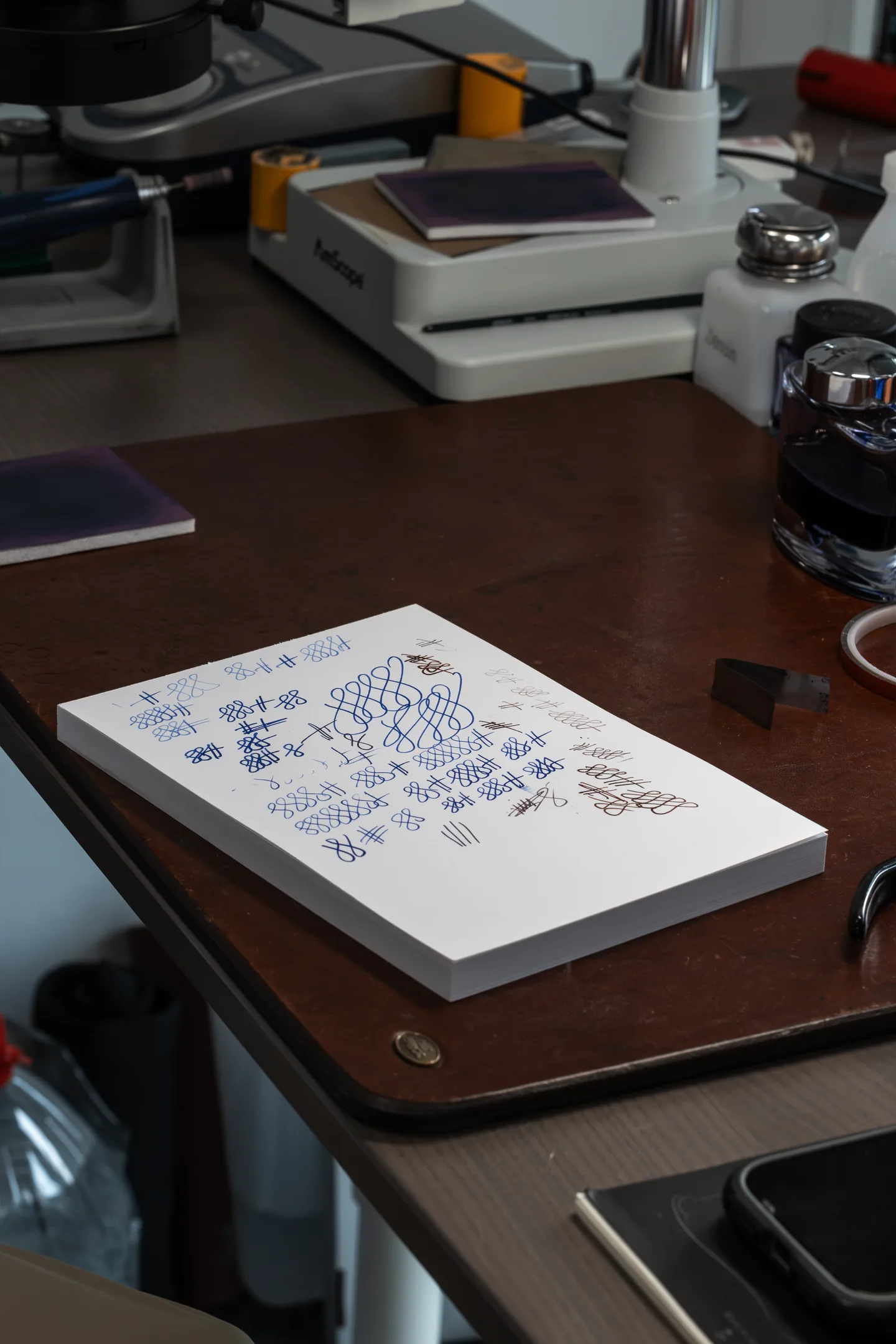
Phillip also showed us nibs that change the shape of the line itself.
With a stub or italic grind, a vertical stroke is generally broader and a horizontal stroke finer. An architect grind typically reverses that relationship, making the vertical stroke finer and the horizontal stroke broader. An oblique has a slanted contact surface, which can suit a particular rotation of the pen in the hand. The slant alone does not tell you how much line variation it will produce.
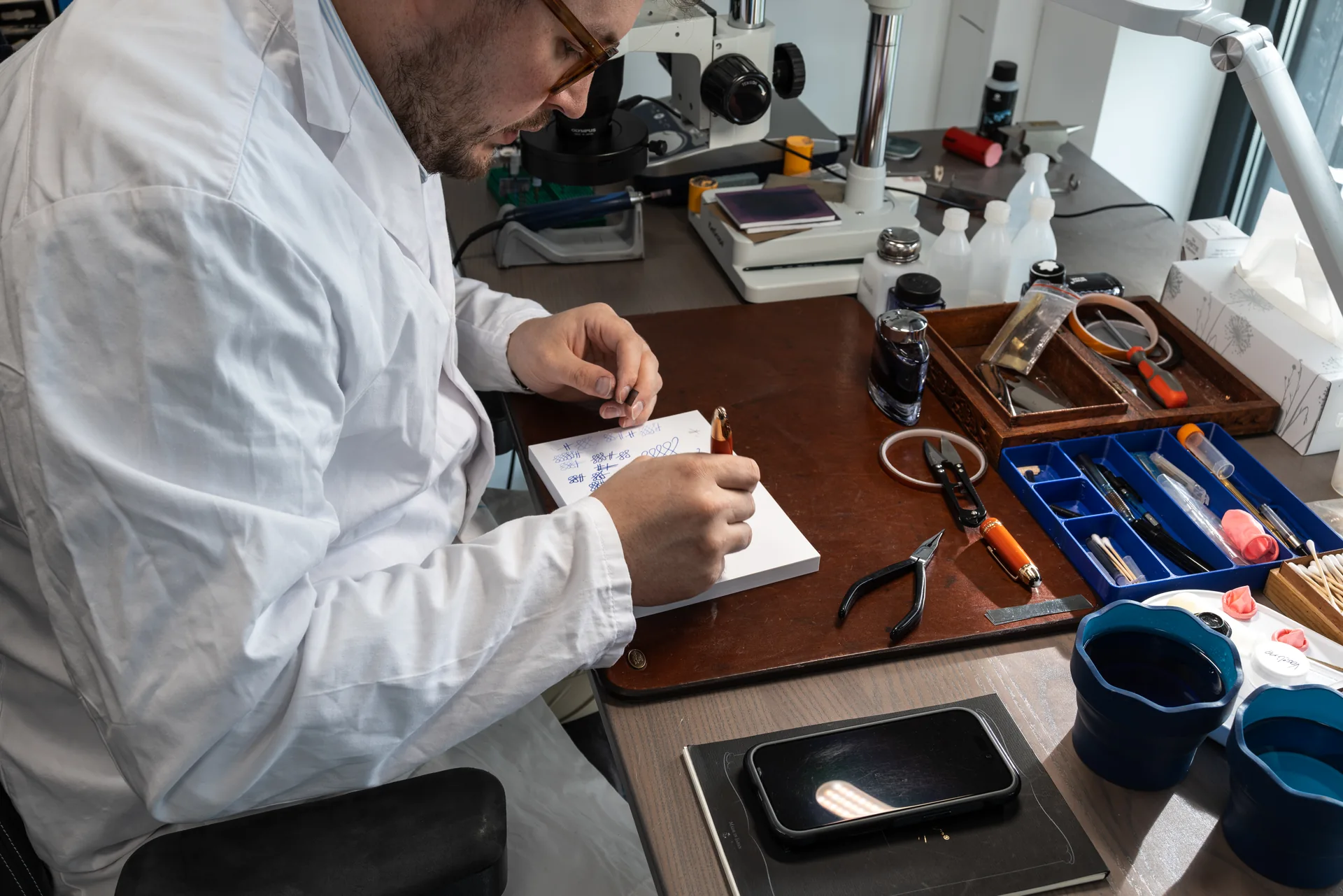
These differences are easiest to understand on paper. Familiar letters suddenly take on a different appearance without the writer having to fundamentally change their handwriting.
More pronounced geometry can also demand more consistent positioning. A nib that produces beautiful contrast may be less forgiving of rotation than an ordinary rounded tip.
I appreciated Phillip’s attitude toward other specialists’ work. He would not change a custom grind without the owner’s agreement simply because he would have made it differently. Something that feels unusual to him might be exactly right for the person it was made for.
We talked about flexibility, too. Some nibs can be modified to feel softer, but Phillip distinguished that from a true flex nib. Greater softness does not automatically mean the tines can safely spread to produce a very broad line. Even a soft nib has limits.
Learning Where to Stop
The question of trying nib work at home came naturally. Phillip said it was possible, but learning involves more than buying a tool and watching a few videos. You should expect to ruin some nibs along the way.
He recommended starting with inexpensive pens you can afford to sacrifice. Basic equipment may not be the biggest investment. Developing a feel for the work, recognizing the cause of a problem, and knowing when to stop take longer.
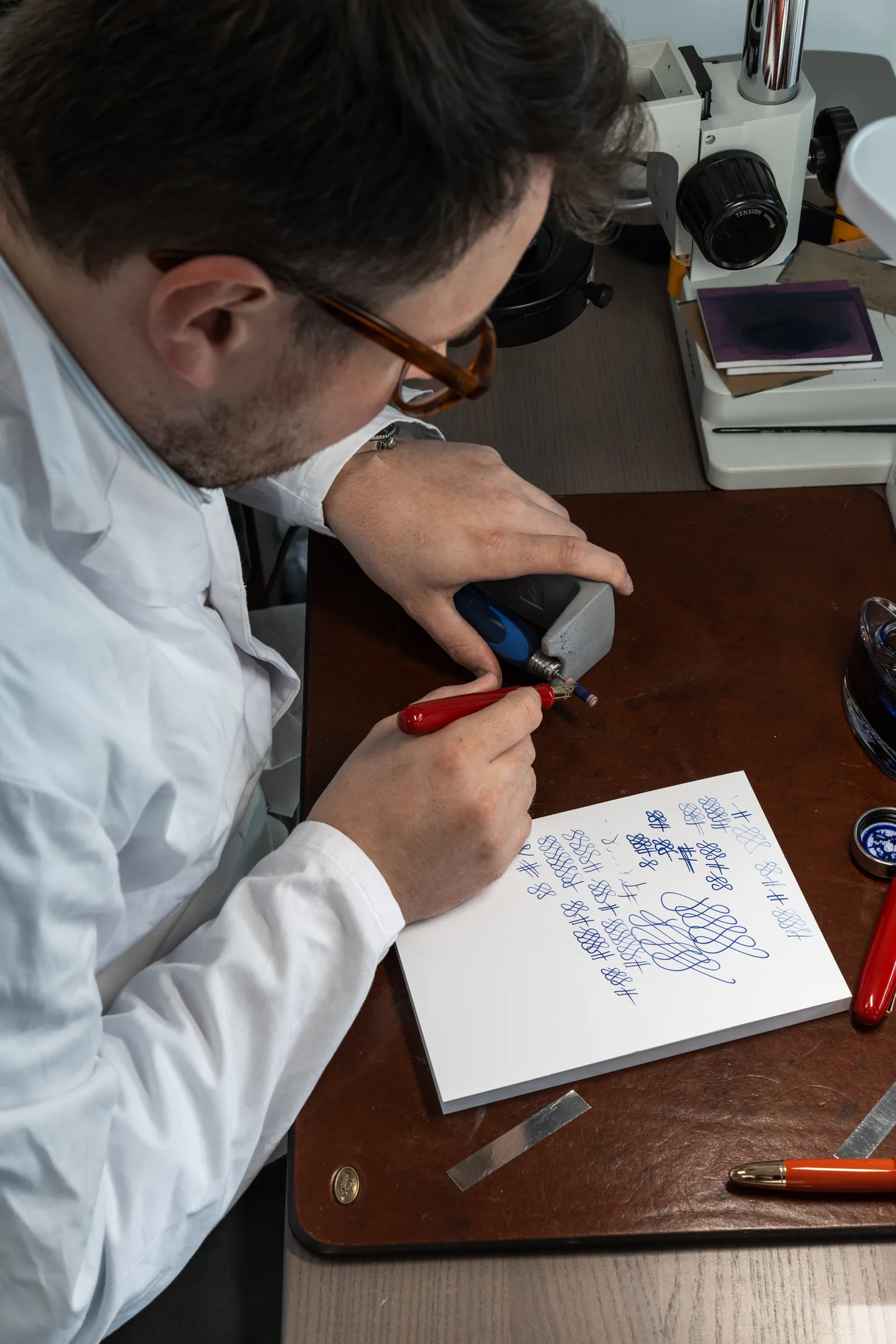
Grinding removes material. Further polishing cannot put it back.
We discussed the boundaries of his own work as well. At the time of our visit, he repaired bent nibs, adjusted flow, and changed grinds, but did not offer retipping: adding new hard material to the tip. It was a skill he wanted to learn in the future.
With an expensive or historically interesting pen, I think it is worth asking whether you actually want to change its original state, as well as whether the modification is possible.
This led to one of his most candid answers. I asked whether he had ever damaged a customer’s nib. Phillip described a job away from his normal workbench where, without his usual microscope check, he misjudged the material and removed the entire tipping.
It was a serious mistake. He told me he would arrange a replacement at his own expense. He did not want to return the pen simply because it might still write for a while.
That mattered to me. Professionalism includes being able to acknowledge a mistake and take responsibility for the result.
A Collection Driven by Curiosity
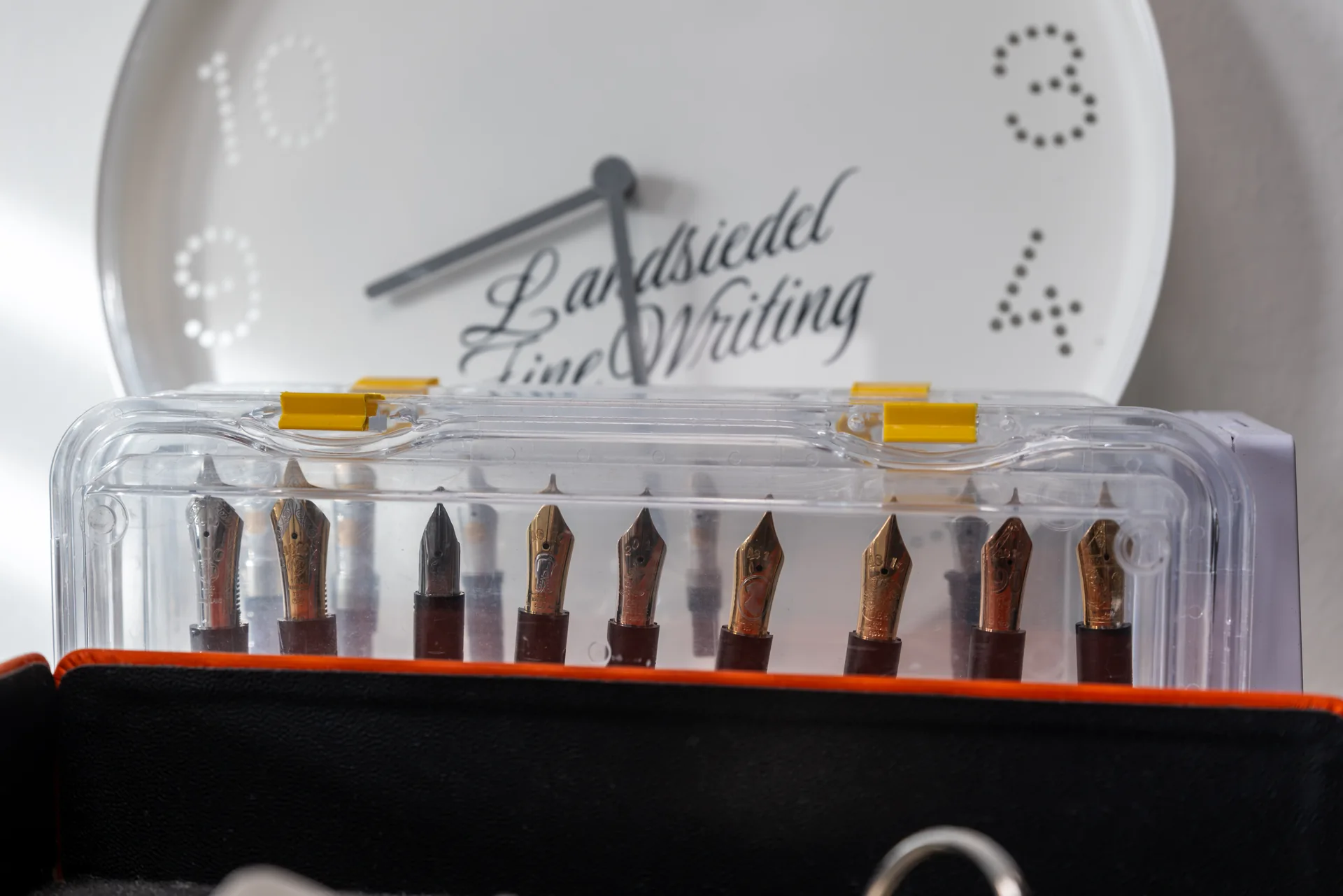
Gradually, the conversation became a tour of Phillip’s own pens. Unusual mechanisms, materials, constructions, and details attract him. His interest goes well beyond a familiar name on the cap.
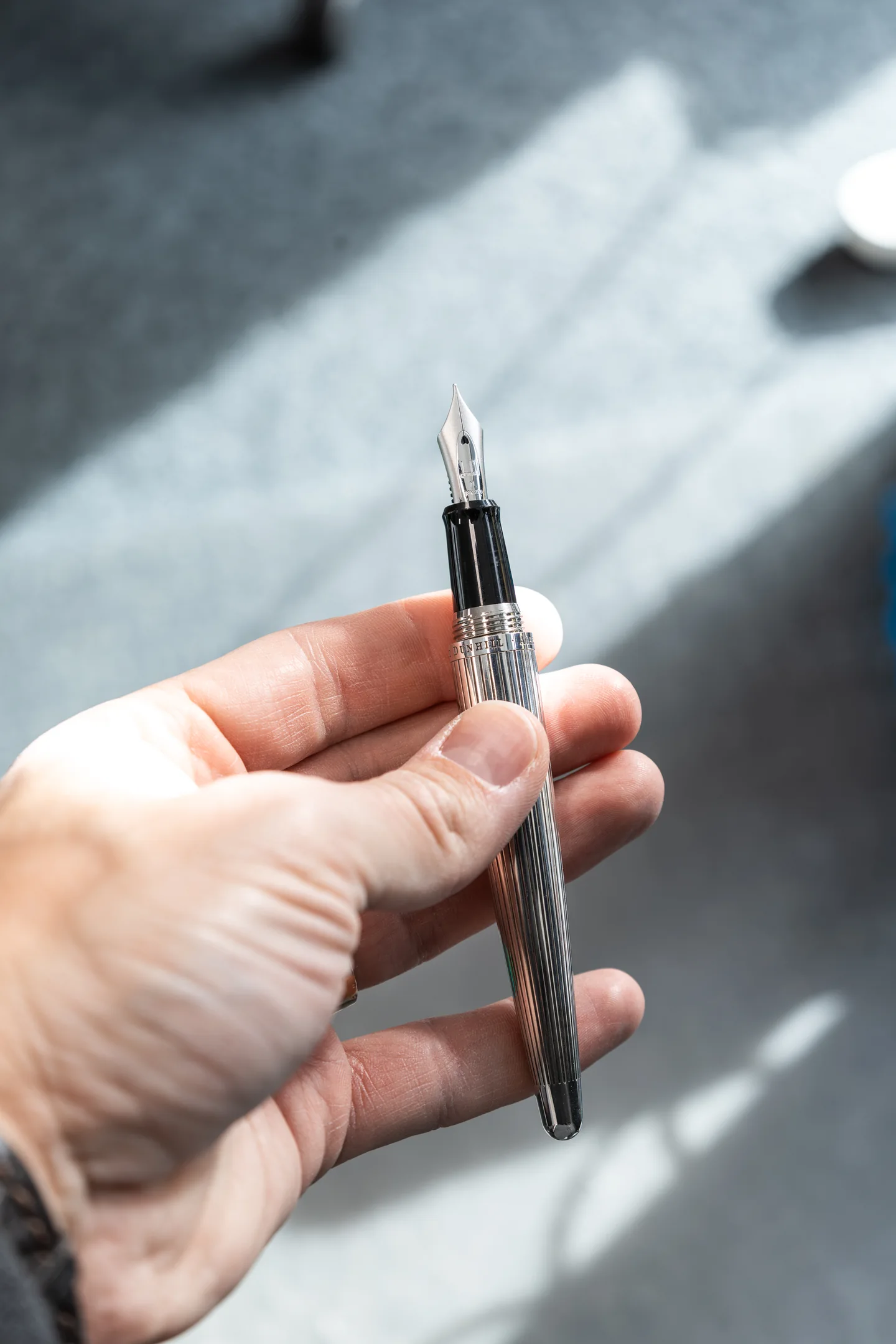
He showed us Dunhill AD 2000 pens, including versions with a calendar or a time-zone display. They are the sort of objects that make you stop and work out exactly what you are holding and why someone designed it that way.

I was also drawn to older Pilot pens with integrated nibs. The nib is formed from the metal front section itself, creating a remarkably clean shape.
Phillip mentioned a Cleave & Company pen that, he told us, he had found on British eBay for around £400. What interested me was his ability to look beyond the models that come up repeatedly in collectors’ conversations.
His collection reminded me that there is still plenty to discover among pens I have previously overlooked.
A Namiki That Needed Nothing, and a Different Pilot
Of course, we also talked about favorite pens for everyday writing. Phillip distinguished personal or collectible value from writing performance. A pen can mean a great deal to you without being the one you prefer for a long page of writing.
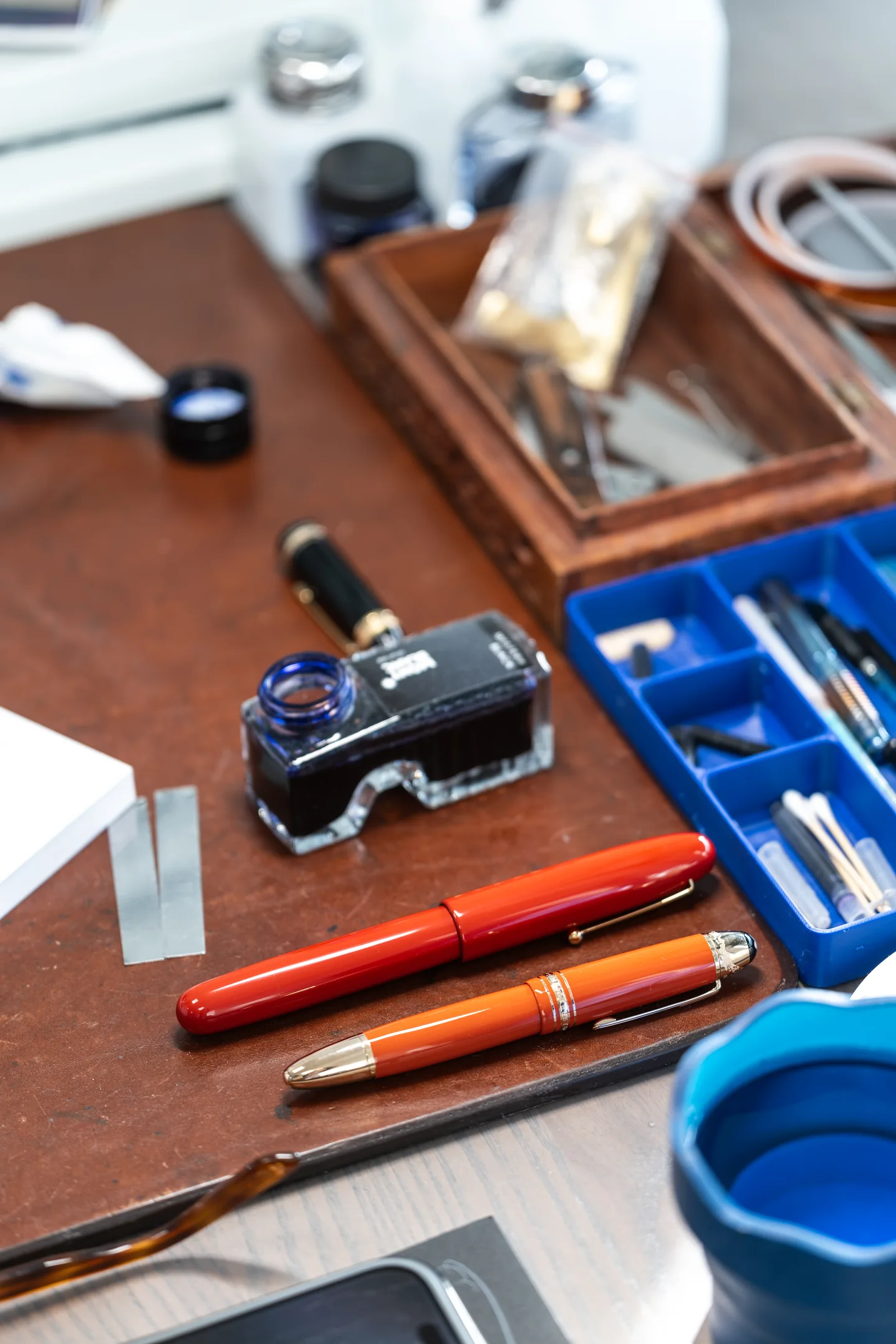
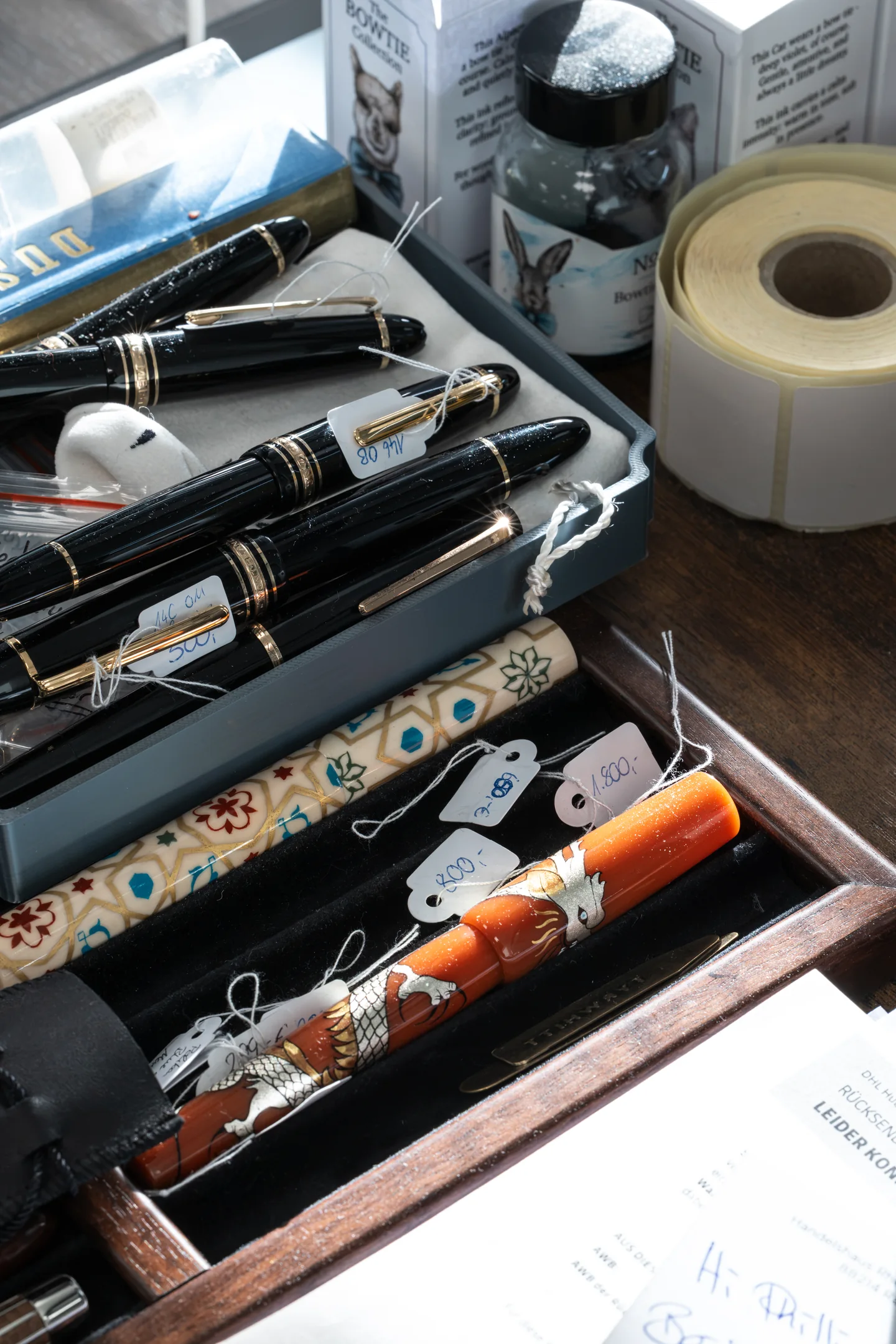
He spoke especially warmly about his Namiki Yukari Royale. According to him, it suited him straight from the factory, and he had felt no need to adjust its nib.
That was interesting to hear from someone who adjusts nibs professionally. It was a personal experience with a particular pen, rather than a ranking of manufacturers.
We discussed my Namiki Emperor, the size of its nib, and the difference between a pen’s dimensions and its weight. I enjoy the size of the Emperor, but I also like the weight of the Yukari Royale. Bigger, on its own, does not settle the question.
Phillip also showed me customized Pilot Custom 823 pens. Alongside his nib work, he changes the appearance of their metal trim, offering black, silver-colored, or mixed finishes in place of the familiar gold-colored details.
For a collector who already likes the construction of a pen but prefers a different finish, that can be an appealing possibility.
A Conversation That Continued the Next Day
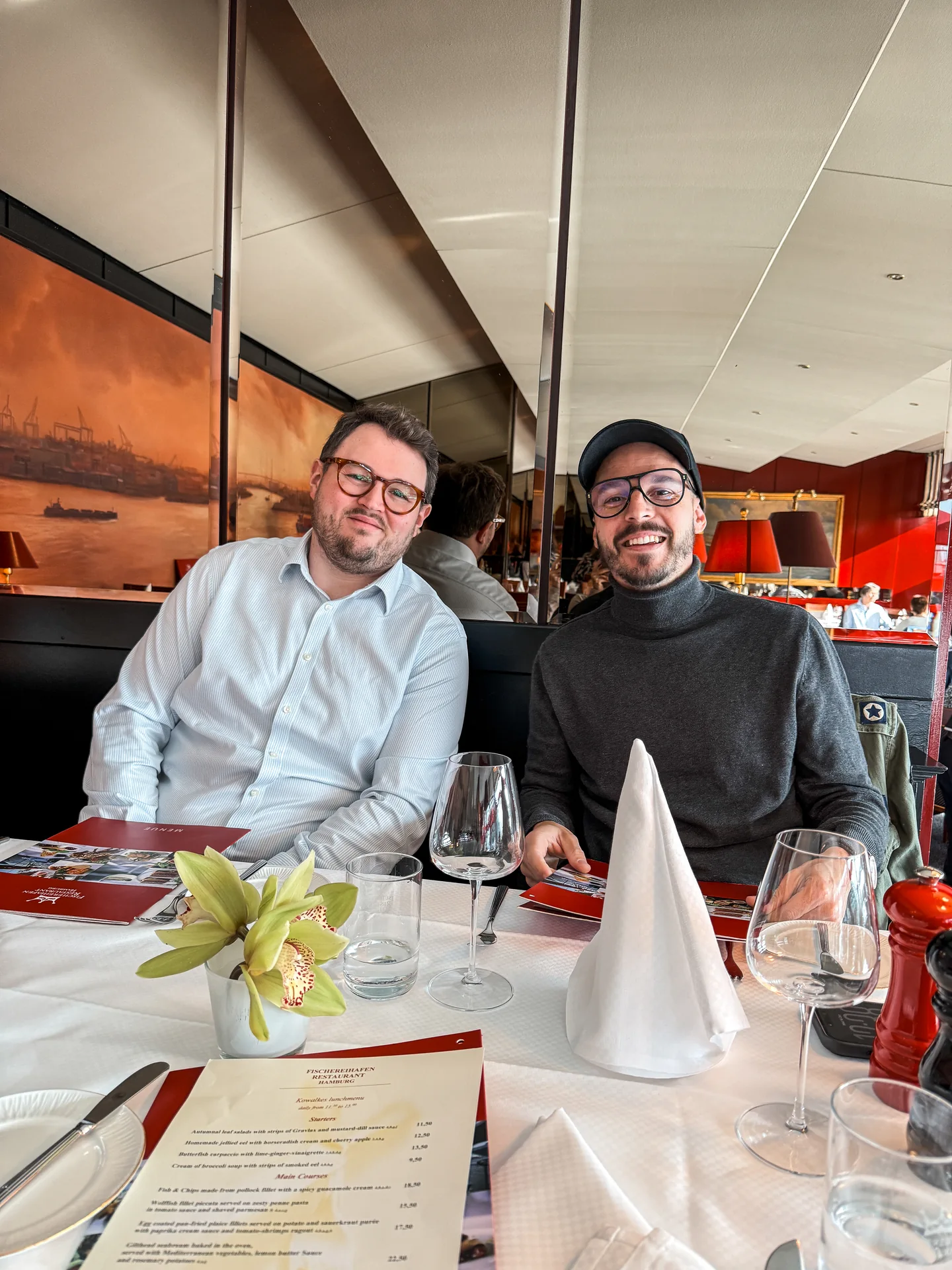
When I mentioned my preference for larger pens, we came to the Montblanc Heritage 1914. I knew its smaller relative, the Heritage 1912, but had never properly tried the larger model.
Phillip owns one and offered to bring it to the following collectors’ meetup. The next day, it became one of the highlights of my time with the Hamburg group.
That is something I love about the fountain pen community. A conversation about one aspect of a nib can end with someone bringing an exceptional pen simply so you can try it.
Photographs, dimensions, and reviews can only take you so far. Sometimes you need a few minutes with the pen in your hand.
Before Buying Another Pen
It would be easy to leave this visit convinced that everyone needs a custom nib. Phillip’s advice was more measured.
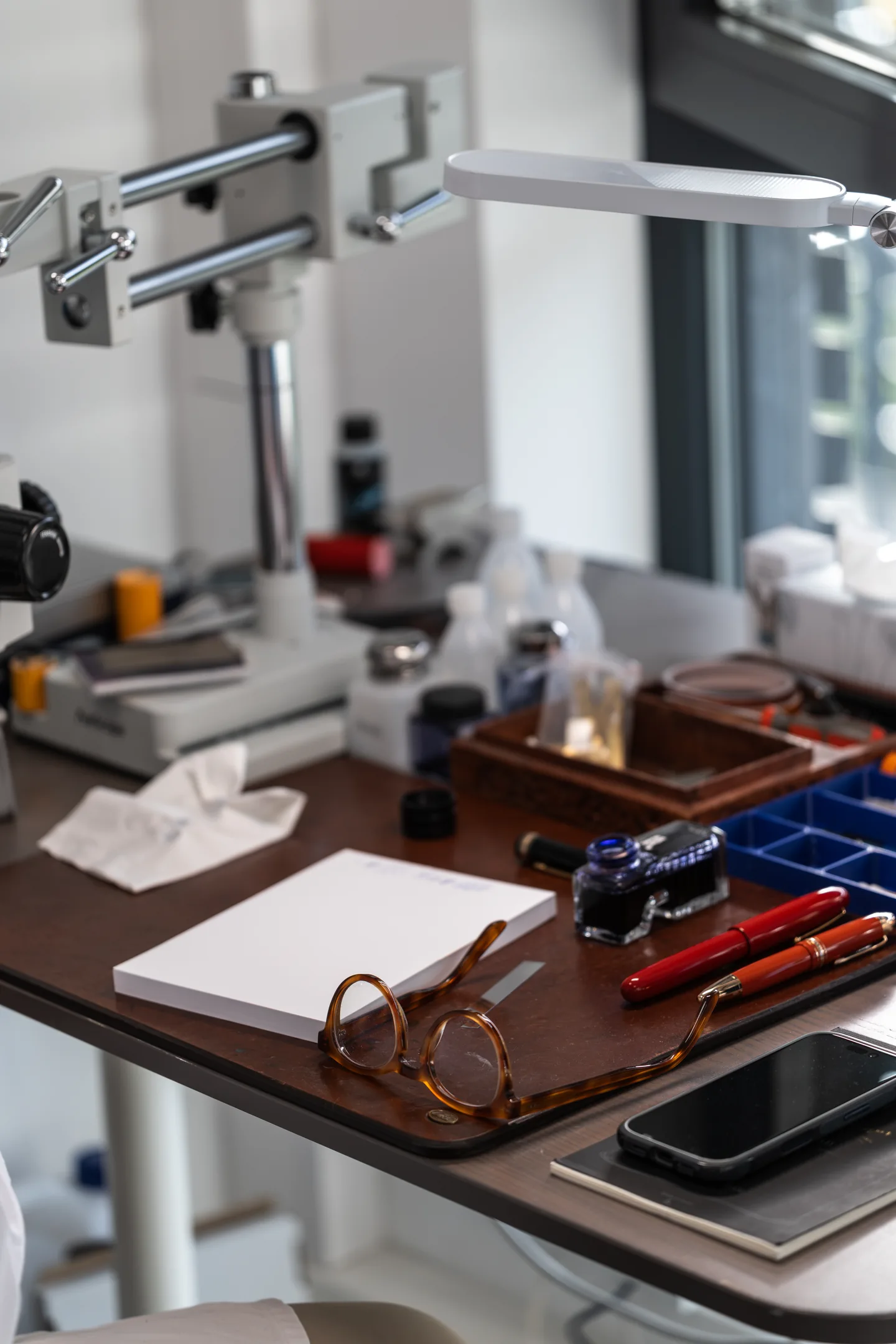
For someone with their first fountain pen, he recommends trying different things first. Find out whether you enjoy a fine or broad line, a wetter flow, more feedback, or a smoother glide. Visit a shop, a collectors’ meeting, or a pen show and compare several possibilities.
If you do not yet know what suits you, it is difficult to ask someone to make precisely that nib. Reliable writing should be the starting point; personal character comes after it.
I was also interested in the distinction he made between creating a grind and finishing the adjustment. He can shape the geometry relatively quickly. Finding the right flow, feedback, and response to a particular grip may take longer. That is the part I value most.
I left Hamburg understanding my own preferences better. A fine line, generous flow, and writing with almost no pressure form a specific combination of requirements. Seeing them addressed together helped explain why certain nibs suit me and others do not.
The strongest memory was writing with my own pens again. I knew them, and yet they suddenly suited me better.
Before the next purchase, perhaps it is worth asking: do I need a new pen, or do I want the one I already own to write the way my hand wants it to?
Visiting Landsiedel Fine Writing
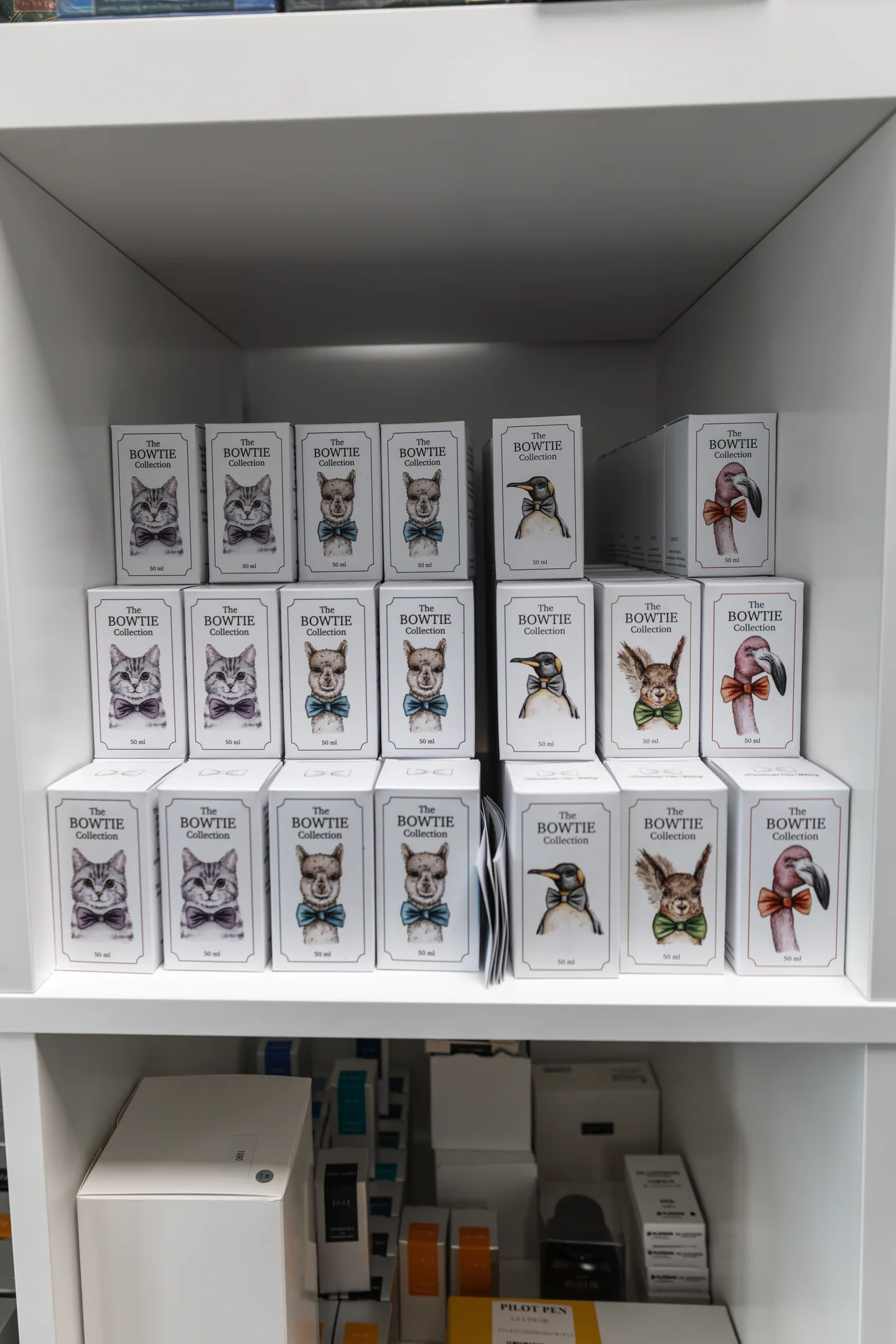
Phillip works in Hamburg. If you are considering an adjustment, contact him in advance, describe the problem, and explain what you want from the pen. You can then agree on the approach and an appointment. Meeting in person allows him to see your natural grip and refine the result with you.
Follow My Pen readers can use the code FILIP10 for 10% off on the Landsiedel Fine Writing website.
Phillip and I had already worked together before this trip. This article describes our personal visit, our conversation, and my experience of having my own pens adjusted.
The Journey Continues

From the pencils of Stein to the ink stories of Hanover, and now to a single nib under a microscope in Hamburg, this journey keeps bringing me closer to the people behind the things I use. There is more to share from Hamburg: Elbwood, another very different approach to making pens, and the collectors who brought their own stories to the table.
For the full story of the trip and the people behind it, read On the Road — The Stories Behind the Pens.
Read next

On the Road – The Stories Behind the Pens
Six days in Germany, from Faber-Castell and Pelikan to independent workshops and Montblanc: the people, discoveries and personal moments behind On the Road.
Read article
Inside Faber-Castell in Stein: The Surprising Life of a Pencil
A factory visit in Stein, from graphite and clay to eight coats of lacquer, an eraser without glue and a fountain pen made from 84 pieces of wood.
Read article
A Journey to the Heart of Montblanc: The Montblanc Haus and Pen Manufacture in Hamburg
Montblanc, my favorite brand, symbolizes the pinnacle of craftsmanship and luxury in writing instruments. The moment Montblanc Haus was unveiled in 2021, it beckoned me irresistibly. This year, my long-awaited visit materialized, extending beyond the allure of Montblanc Haus to the very birthplace of its pens. My tour, meticulously planned since last year, coincided with..
Read article
0 comments
Comments are moderated before publishing, so the conversation stays useful and calm.
No comments yet. You can leave the first note below.