Inside Faber-Castell in Stein: The Surprising Life of a Pencil
A factory visit in Stein, from graphite and clay to eight coats of lacquer, an eraser without glue and a fountain pen made from 84 pieces of wood.

Inside Faber-Castell in Stein: The Surprising Life of a Pencil
You can lock your phone and keep listening.
Follow My Pen On the Road · Stein, Germany · 12 October 2026
The coloured end of a pencil can take days to finish. An eraser can stay attached without a single drop of glue. And a conversation about pencil lead can turn, quite naturally, into a discussion about pottery.
These were some of the things we discovered at Faber-Castell in Stein, near Nuremberg, on 12 October 2026. In my overview of Follow My Pen On the Road, I promised to return to the individual stops in more detail. This is the first of those stories: a visit that made me look much more closely at something I had spent far less time thinking about than fountain pens.
Our guide understood that immediately. She knew about my interest in pens, but suggested that pencils were even more interesting. Over the next few hours, she made a surprisingly convincing case.
A factory with two castles
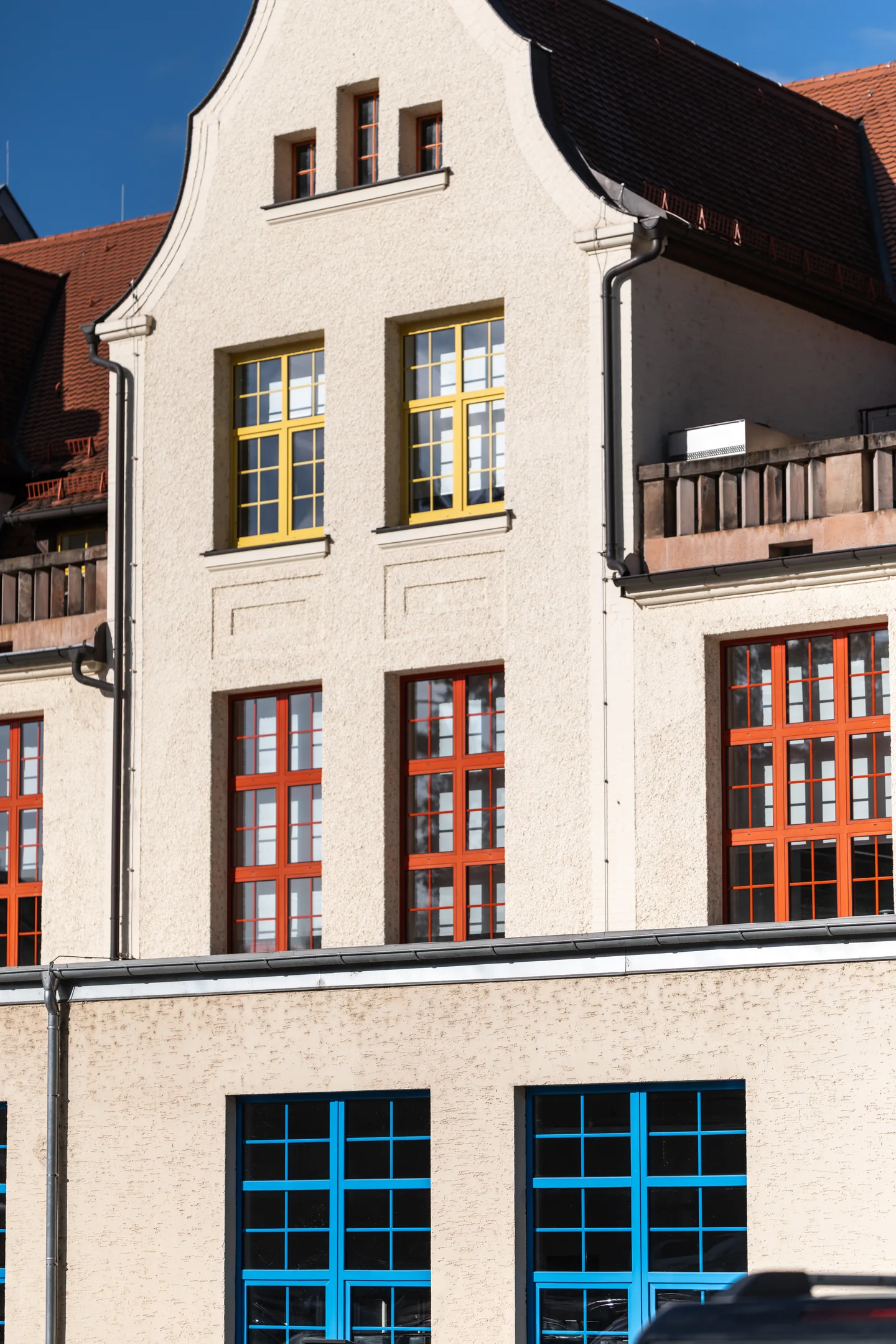
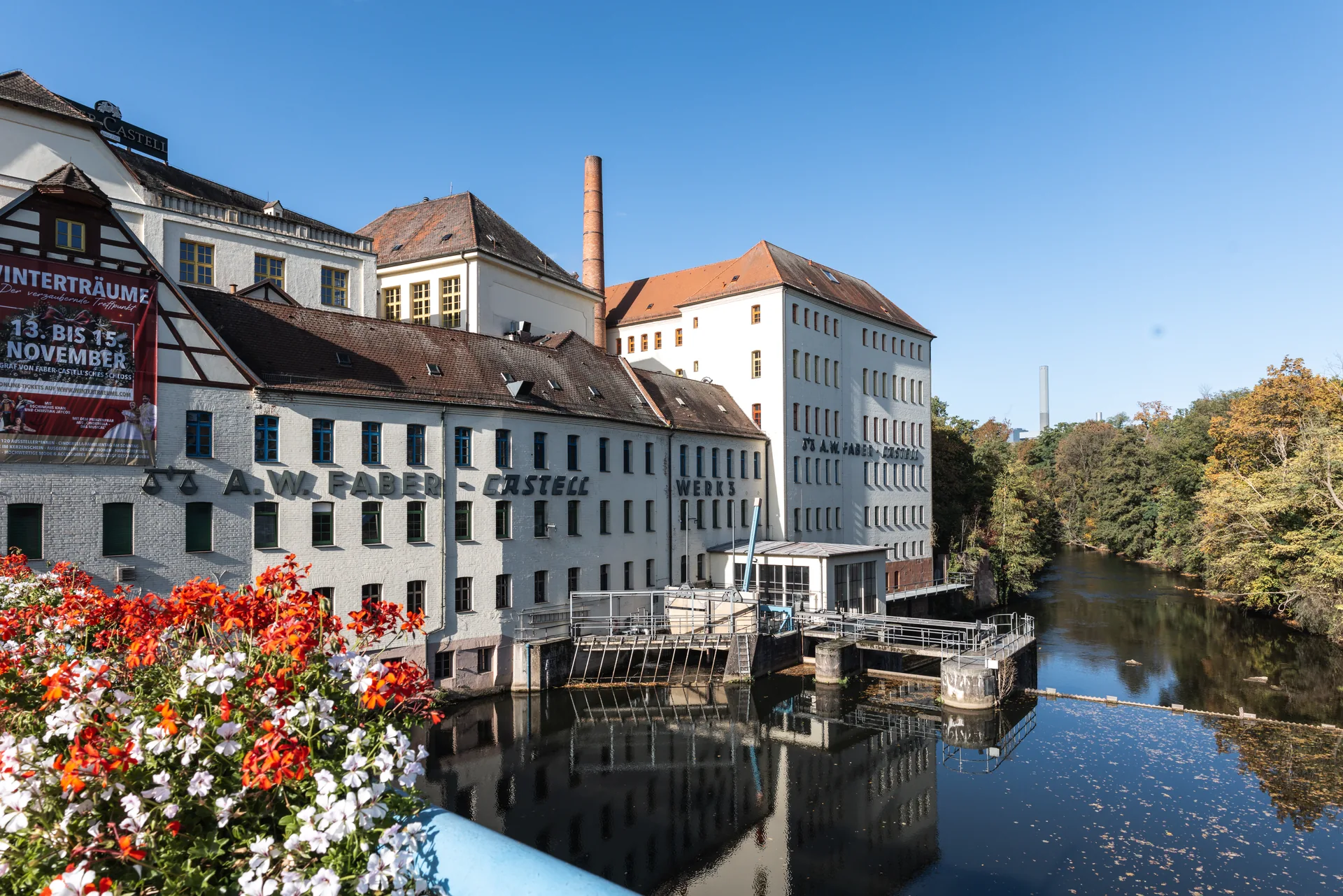
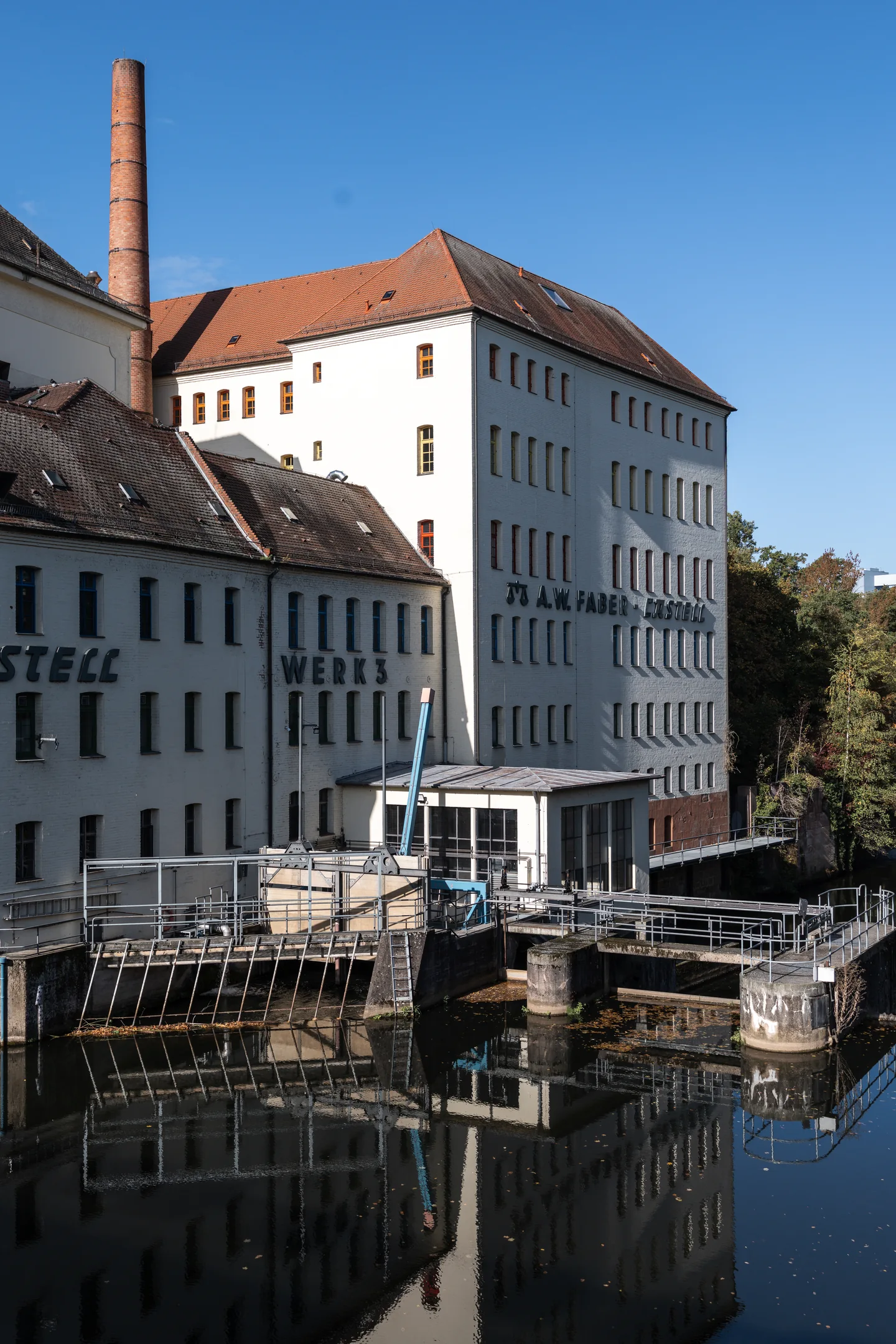
The grounds do not look quite like the setting you might imagine for a large factory. Historic buildings stand beside a river, there is greenery between them, and colour appears across the façades and window frames. Our guide explained that Anton Wolfgang von Faber-Castell wanted visitors to recognise, even before stepping inside, that this was a place where coloured pencils were made. Everything was clean and beautifully kept, inside and out. Walking through the grounds, I sometimes felt I was at an open-air exhibition rather than a working factory.
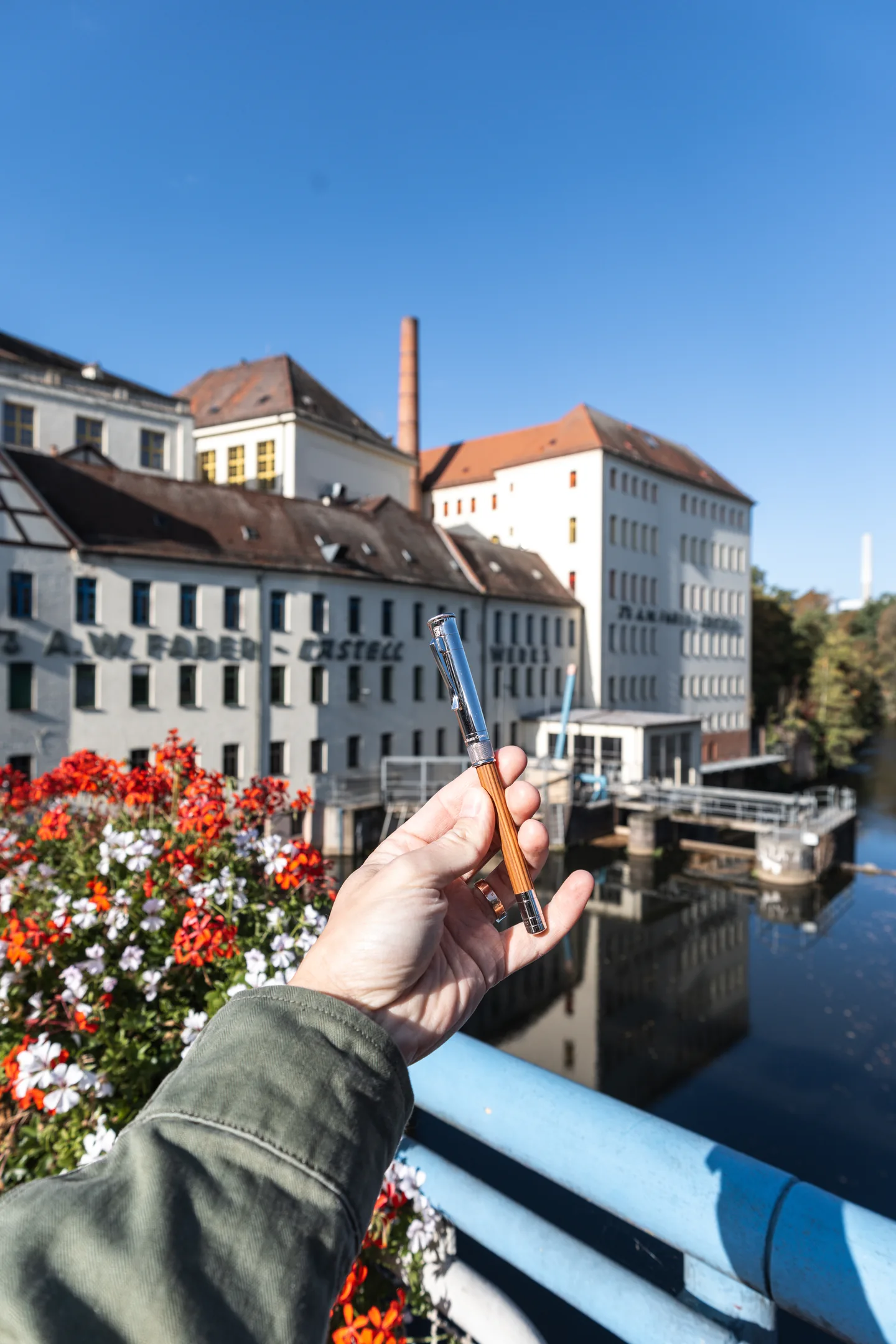
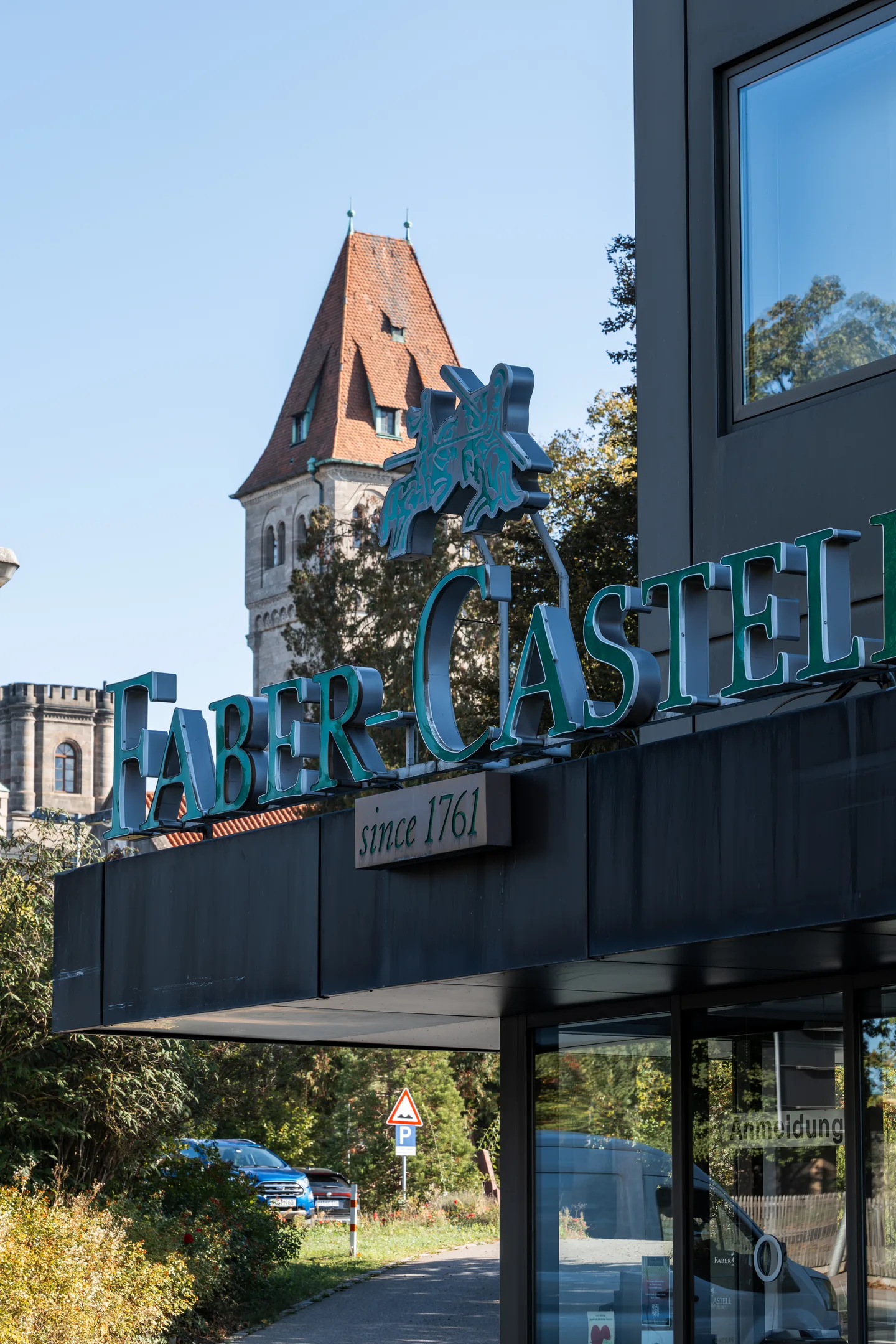
There are also two castles. The Old Castle was built for Lothar von Faber; the New Castle followed between 1903 and 1906, commissioned by Alexander von Faber-Castell. Its towers may suggest the Middle Ages, but the building dates from the beginning of the twentieth century. Faber-Castell’s account of the castle describes how the two buildings are joined by the tower. I was glad to see this setting, including the castles, preserved as part of a working company. It is a beautiful place to spend a day.
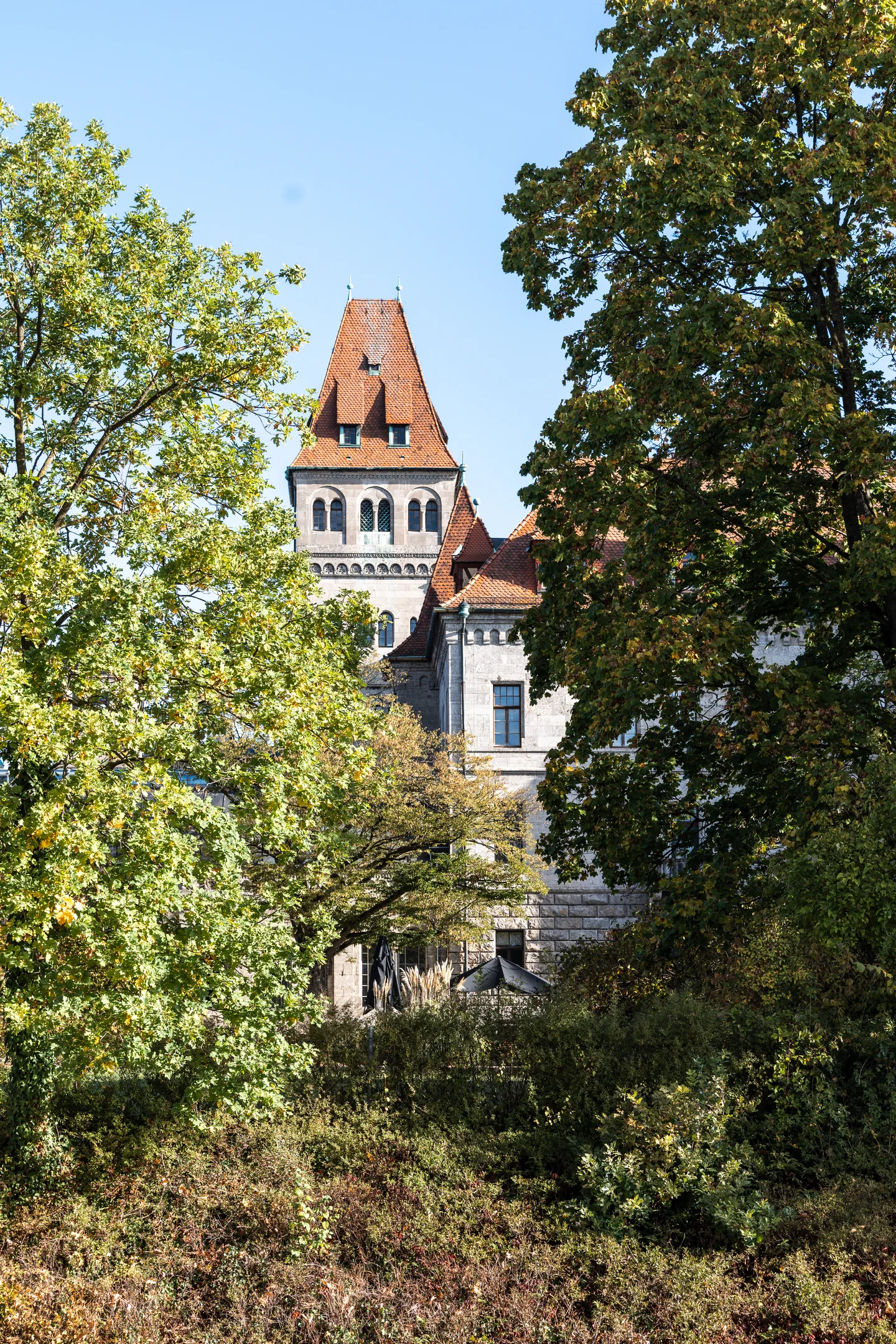
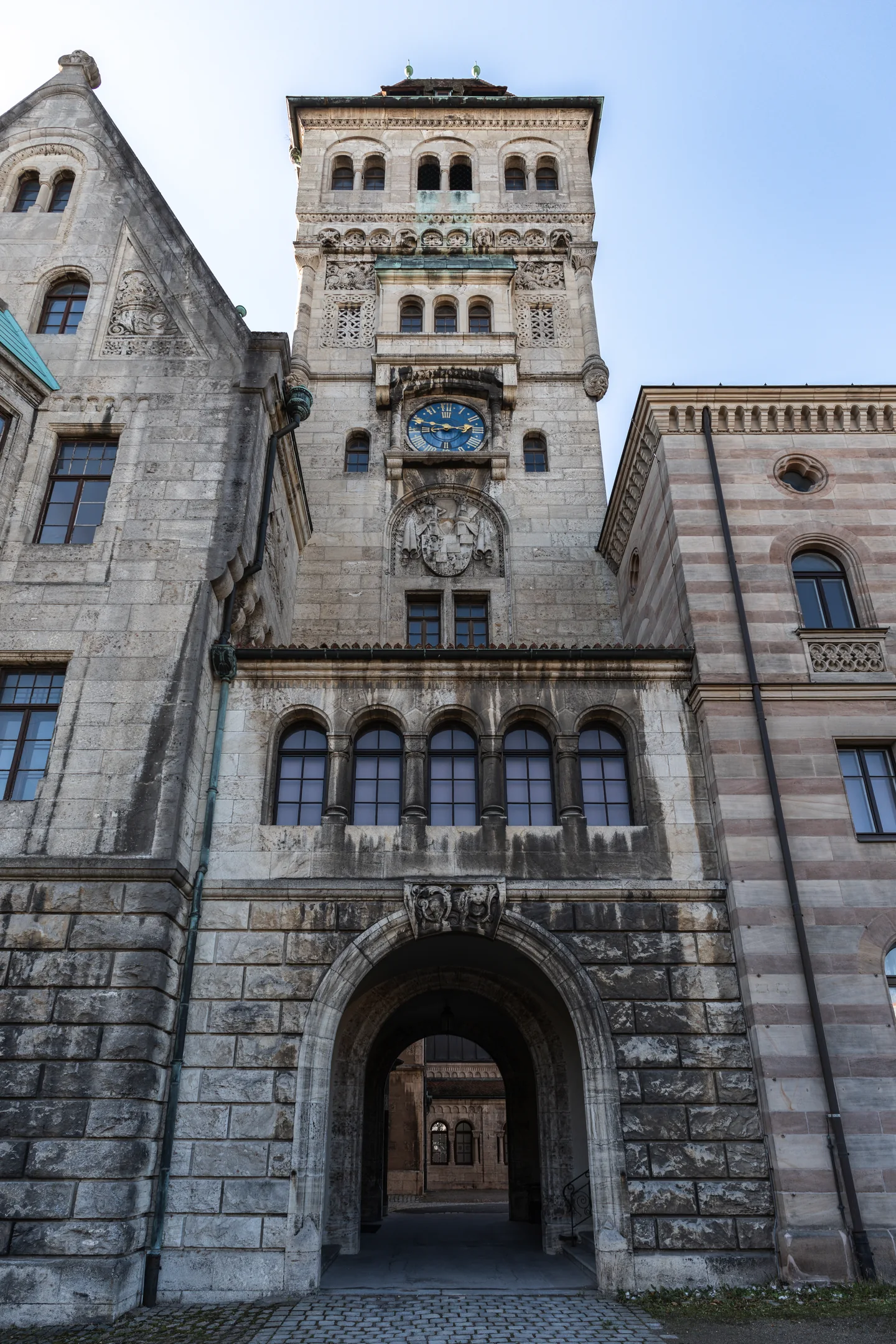
The company itself is much older. Cabinetmaker Kaspar Faber began making pencils in 1761, which made this a business with 265 years behind it when we visited. The double name came later, through a marriage. In 1898, Lothar’s granddaughter Ottilie von Faber married Alexander zu Castell-Rüdenhausen. The Faber name was to be preserved, and the two family names were brought together.

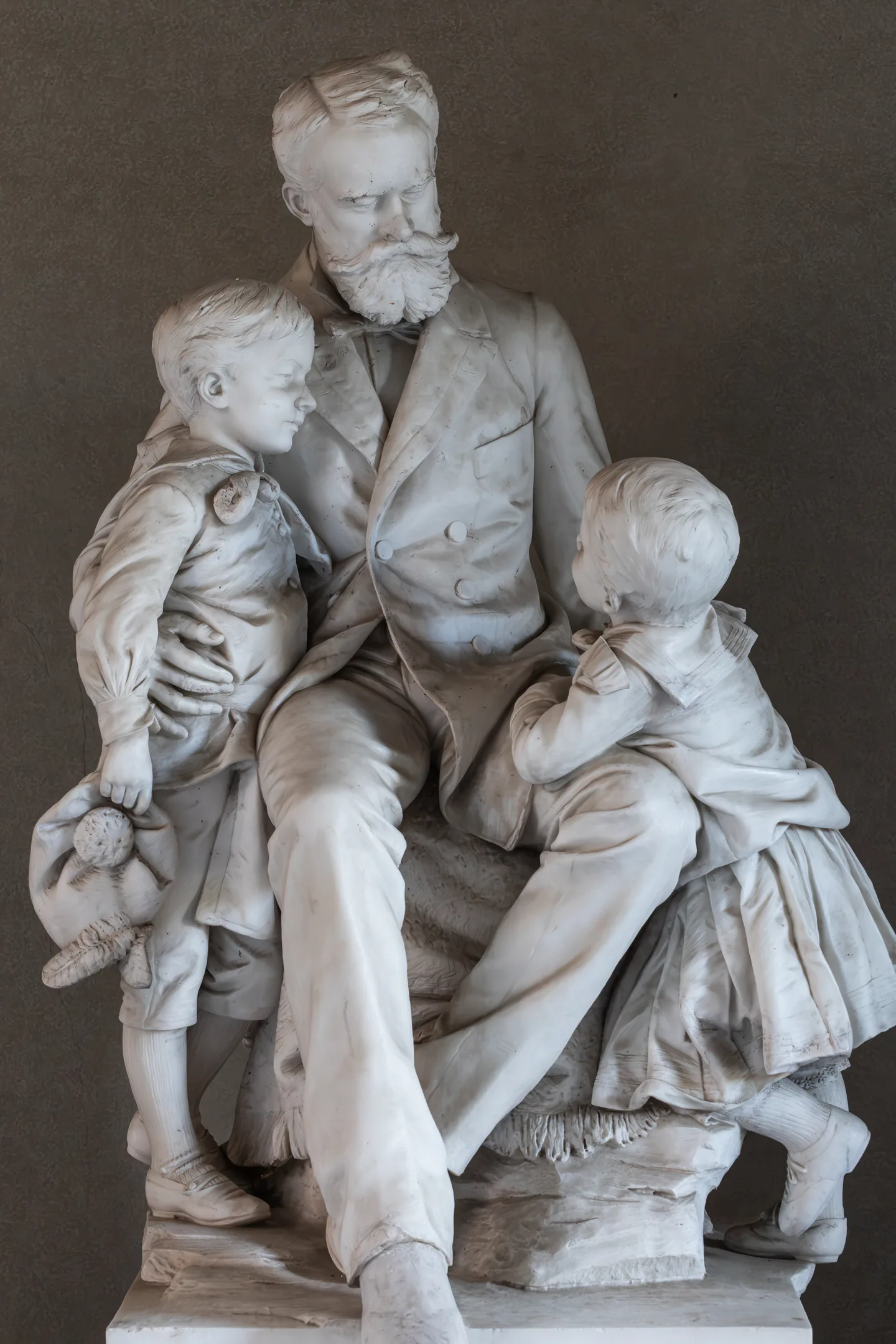
During our walk, we stopped beside an enormous Atlas cedar. According to our guide, it had been planted in 1926. A hundred-year-old tree at a pencil factory naturally raises the question of how many pencils it might produce. This one, however, is staying where it is. For production in Stein, the preferred wood we discussed was a different species, known as incense cedar.
Knights, green paint and an unexpected film connection
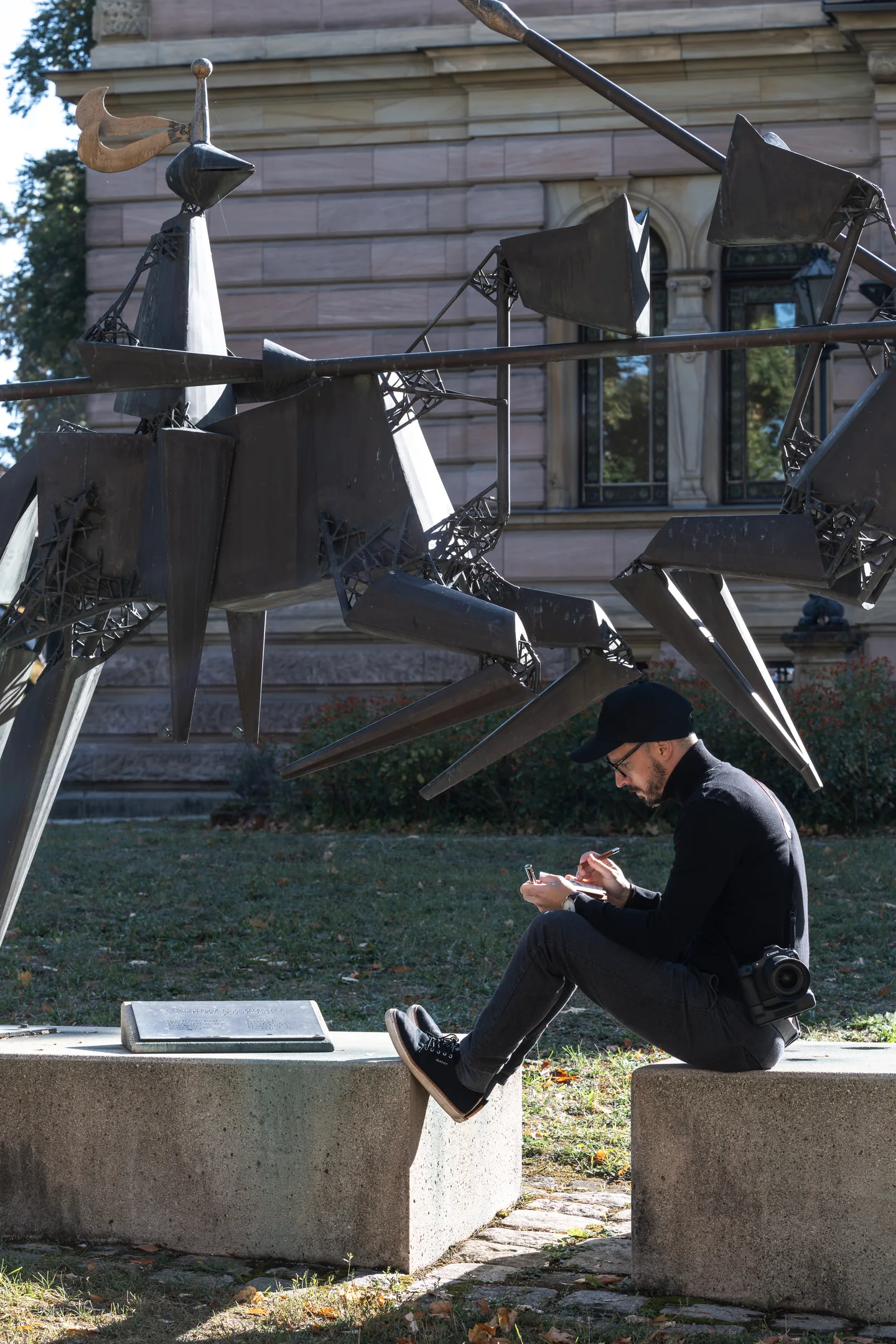
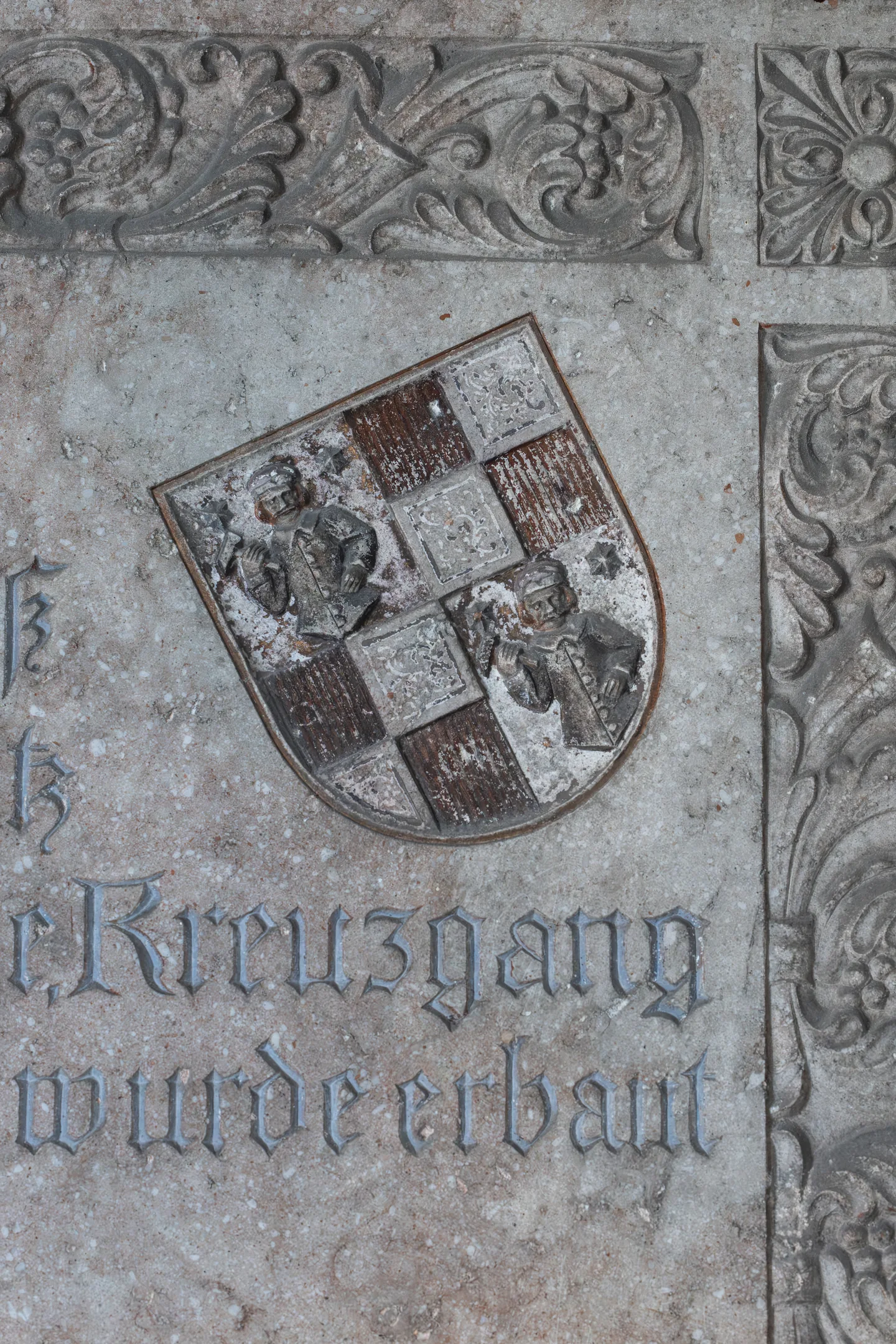
Look closely at the Faber-Castell logo and you will notice that the two knights are jousting with pencils. The image began as an advertising motif for the Castell range introduced by Alexander in 1905. Even the green coating had a reason behind it: he chose the colour of his regiment. The company’s history of the jousting knights makes a familiar logo rather more interesting to look at.
There is a less romantic story behind protecting the name on those pencils. Faced with imitations of A. W. Faber products, Lothar campaigned for trademark protection. His 1874 petition helped bring about the German trademark law that took effect the following year, a contribution recorded by the German Patent and Trade Mark Office.
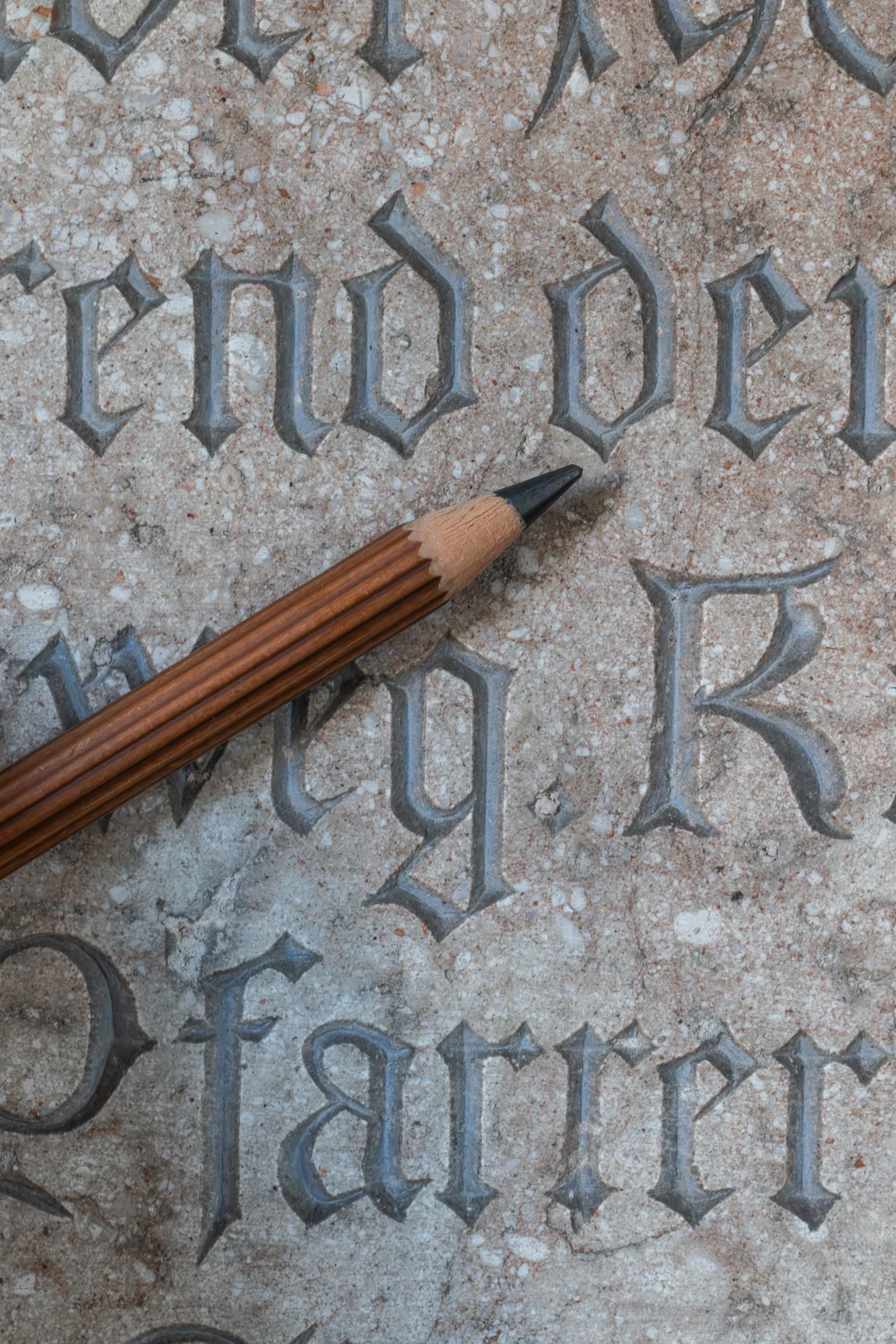
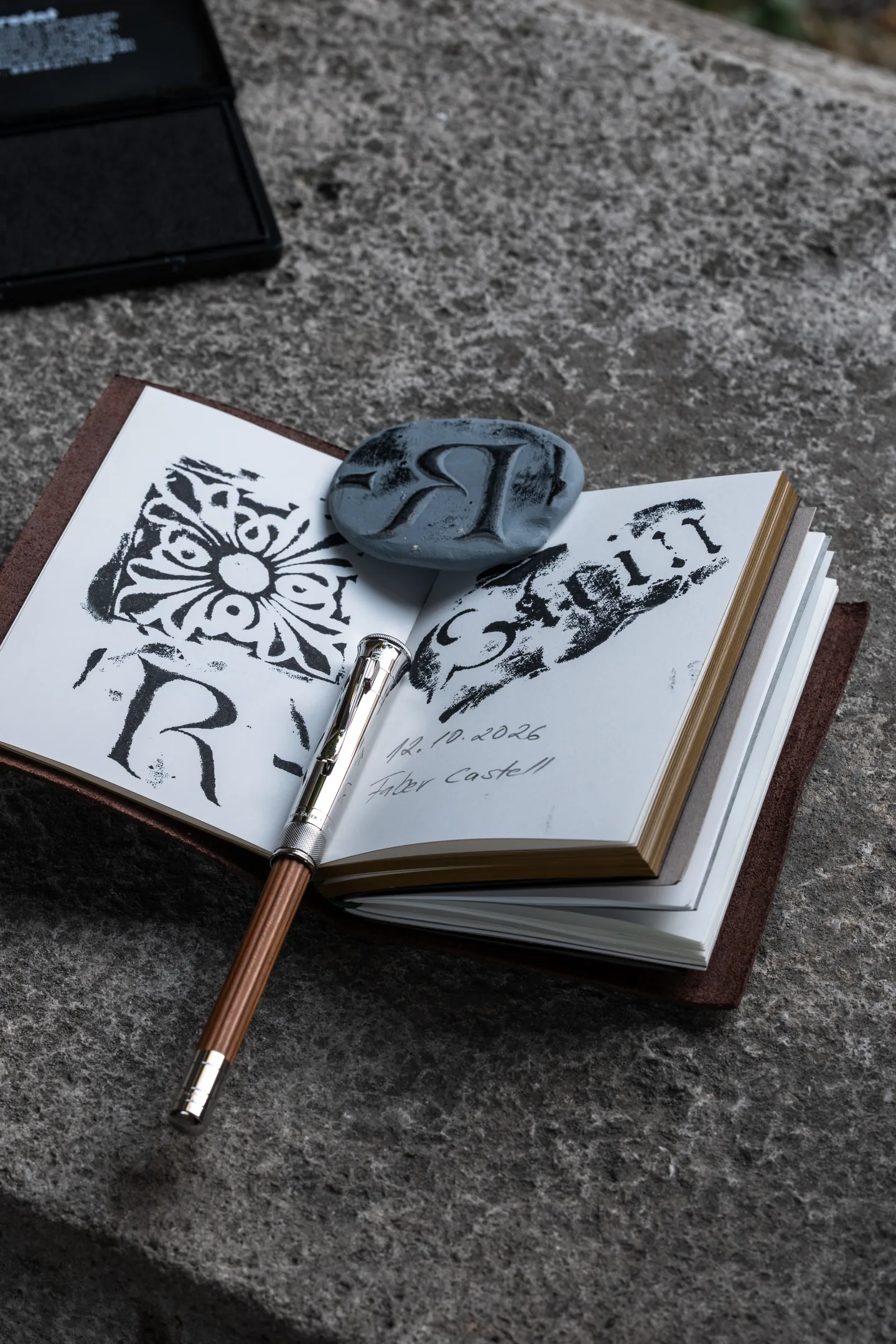
Then there is E.T. In its own story of the Castell 9000, Faber-Castell connects the green pencil with special-effects artist Carlo Rambaldi and his sketches of the extraterrestrial. That is quite a journey for an apparently ordinary pencil.
Precision at every step
Inside the large production hall, I was surprised by how few people there were. So much of the work was automated. For pencils made on this scale, that made sense, but seeing it in person was still striking. Faber-Castell came across as an exceptionally well-run company. The processes seemed thoroughly thought through, and I could feel that attention to precision at every step of the tour.
My one regret was that I could not take my Canon cameras inside. I would have loved to photograph the production process, especially the details that are easy to overlook in a finished pencil.
From tree to pencil.
Nine chapters in the life of
an everyday object.
It begins with a tree.
Straight-grained timber gives the pencil its wooden body. The choice of species matters: the wood must support the core and cut cleanly when sharpened.
Wood and graphite take separate paths. They meet at the gluing stage.
An illustrated overview of a wood-cased graphite pencil. Some operations run in parallel; finishing varies by range. Explore Faber-Castell’s production history ↗
Read all nine steps
- It begins with a tree.
Straight-grained timber gives the pencil its wooden body. The choice of species matters: the wood must support the core and cut cleanly when sharpened.
- From timber to tiny grooves.
Timber is cut into thin slats, dried and prepared. Parallel grooves are machined into the wood, making a place for each future pencil core.
- The part that makes a mark.
Graphite, clay and water are mixed, extruded into fine strands, dried and fired. A final oil or wax treatment helps the core glide across the page.
- The wooden sandwich.
Cores settle into glued grooves. A second slat closes the sandwich, and pressure holds the layers together while the adhesive sets.
- A familiar shape emerges.
Cutters work from above and below, shaping the sandwich and separating it into individual pencils. The body may be hexagonal, round or triangular.
- Colour, one coat at a time.
Thin coats of lacquer build up the finish, with drying between applications. The sequence described on our visit included two base coats, four colour coats and two finishing coats.
- Small details, precisely made.
Lettering and the grade are stamped onto the body. Depending on the range, further finishing may include raised Grip dots or a metal ferrule holding an eraser.
- A point. A final inspection.
The point is sharpened and the finished pencil is inspected. Checks along the line help catch defects before pencils are packed for their next journey.
- Ready to write.
A tree, a carefully prepared core and many small operations have become something that fits between your fingers. The finished pencil is ready for its own journey.
What pencil lead has in common with pottery

When our guide began explaining the lead, she brought us back to ceramics. A conventional graphite lead starts with graphite, clay and water. The mixture is formed into thin strands, cut, dried and fired. The comparison with pottery is very literal.
The proportion of clay helps determine how the pencil writes. More clay produces a harder lead and generally a lighter line; more graphite gives a softer, darker mark. H refers to hardness, B to blackness. Comparing HB and 8B on paper made those familiar school-pencil markings much easier to remember.
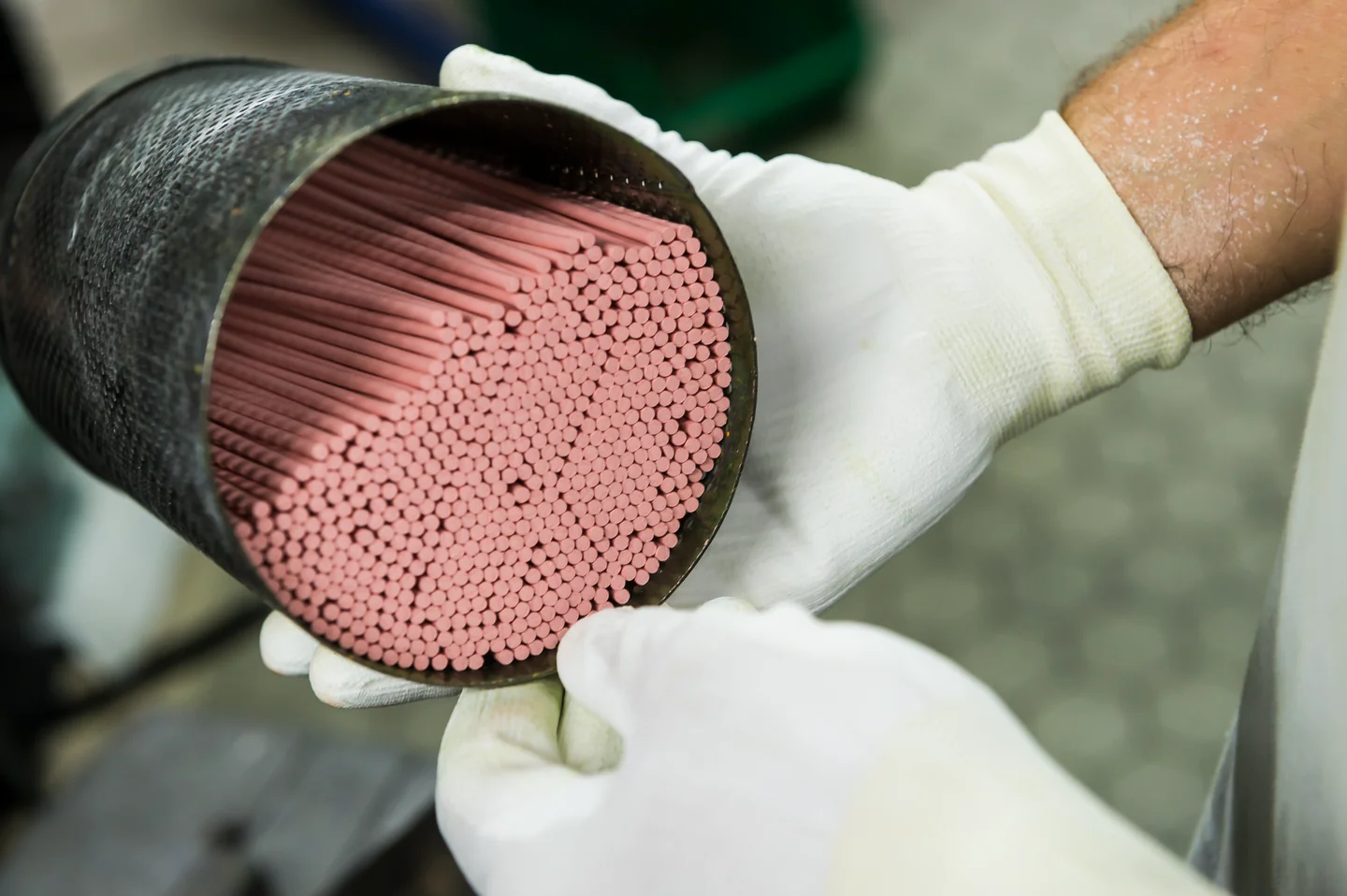

There is no lead metal in that core. Despite the English expression “pencil lead” and the German word Bleistift, the writing material is graphite, a form of carbon. The old name has outlived the misunderstanding.
Coloured pencils need a different recipe. Their pigments and binders cannot simply go through the same firing process. We also discussed impregnating leads with wax to help them glide over paper, and the Albrecht Dürer watercolour pencils, whose marks can be dissolved with a wet brush. Similar wooden bodies can contain materials that behave very differently on the page.
A pencil begins as a wooden sandwich
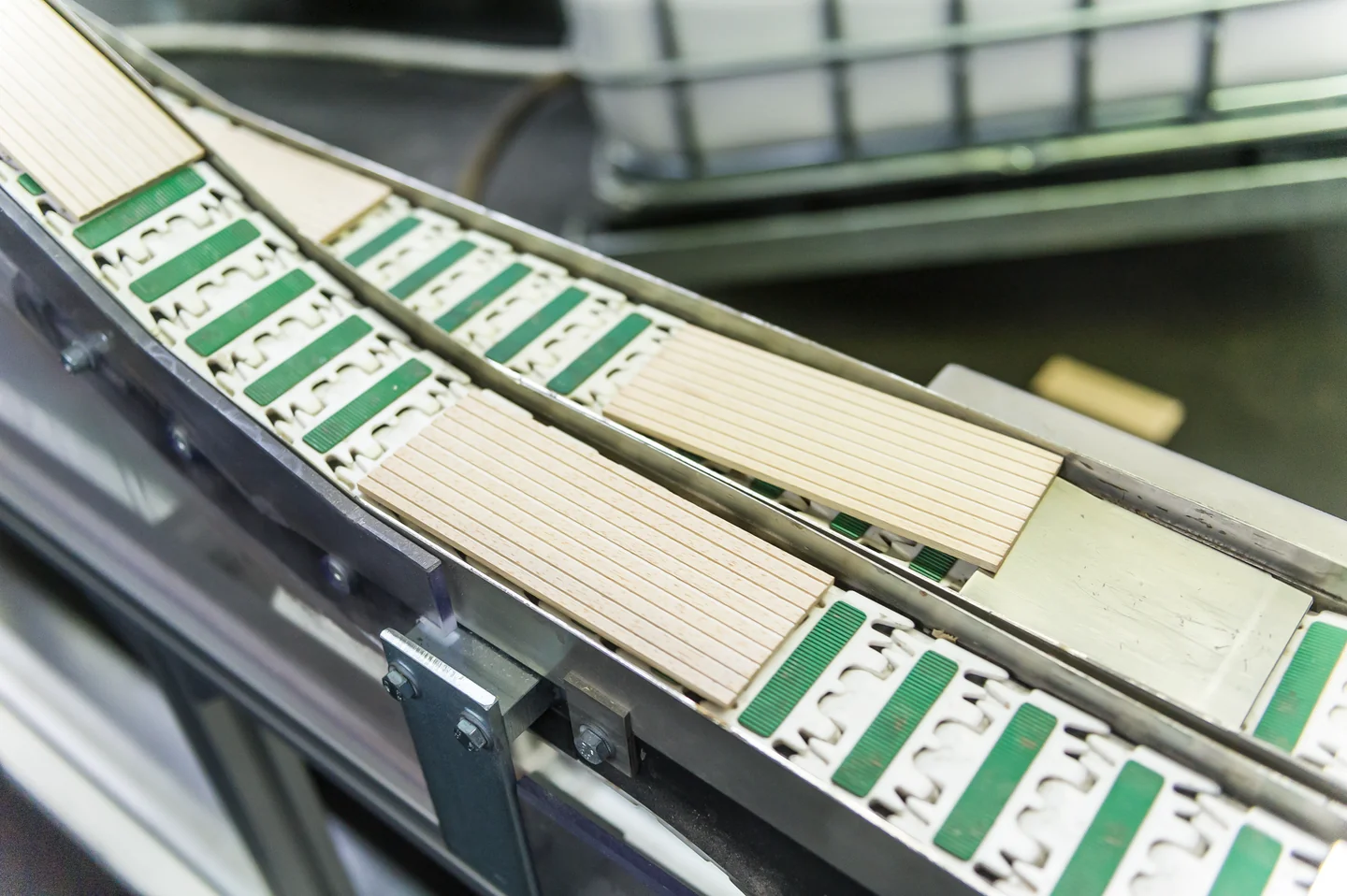
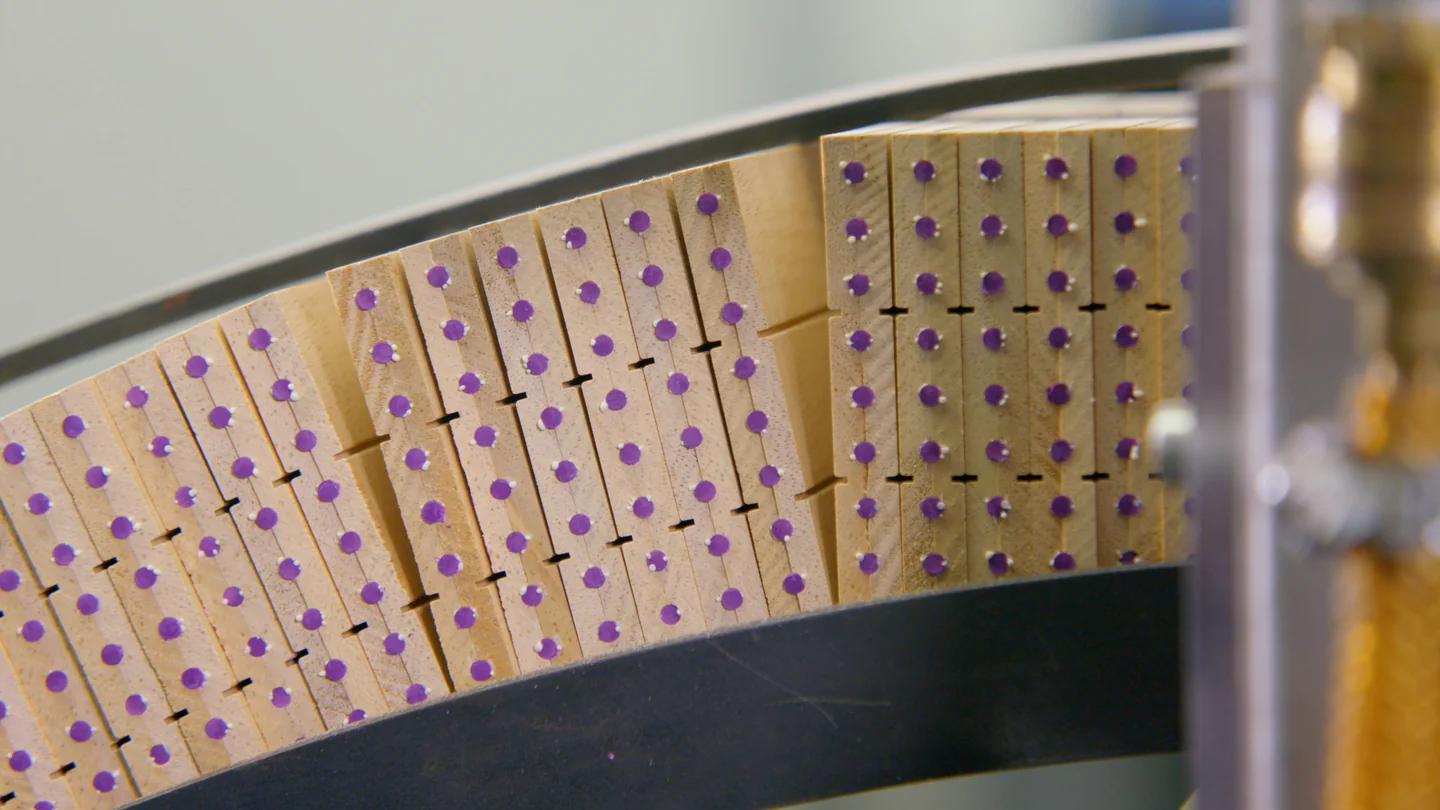
The lead is put in place while the wooden body is being assembled. Production begins with flat slats, into which a machine cuts parallel grooves. Glue is applied, the leads are laid in, and another slat closes the sandwich. Several future pencils sit side by side inside it.
One of the clearest demonstrations was a reject. Our guide showed us a piece in which the pencils had only been partly cut out. When we asked why the shaping stopped halfway along, she explained that she had kept it from rejected production. Its unfinished form made the construction easier to understand than a perfect pencil ever could.
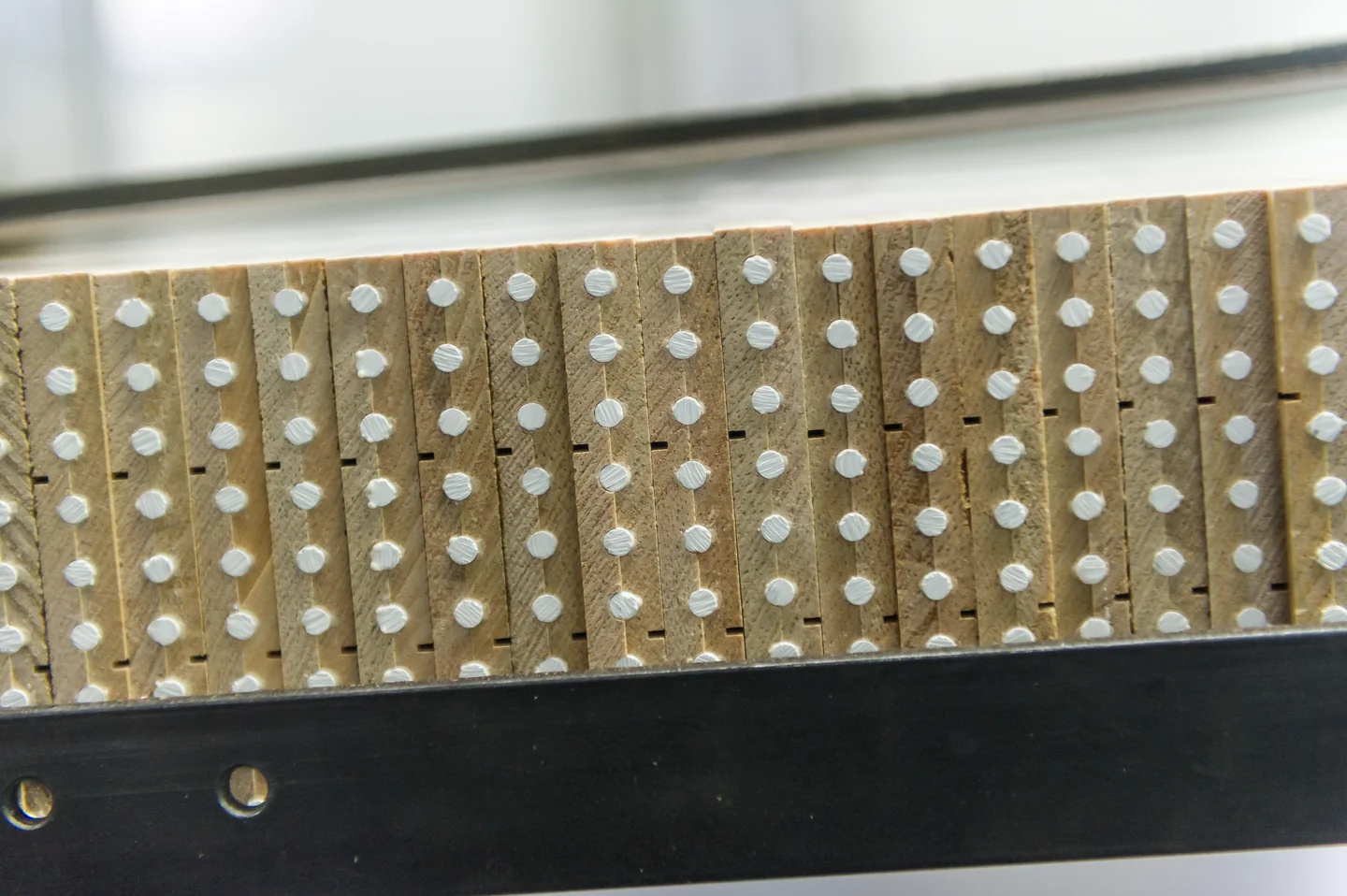
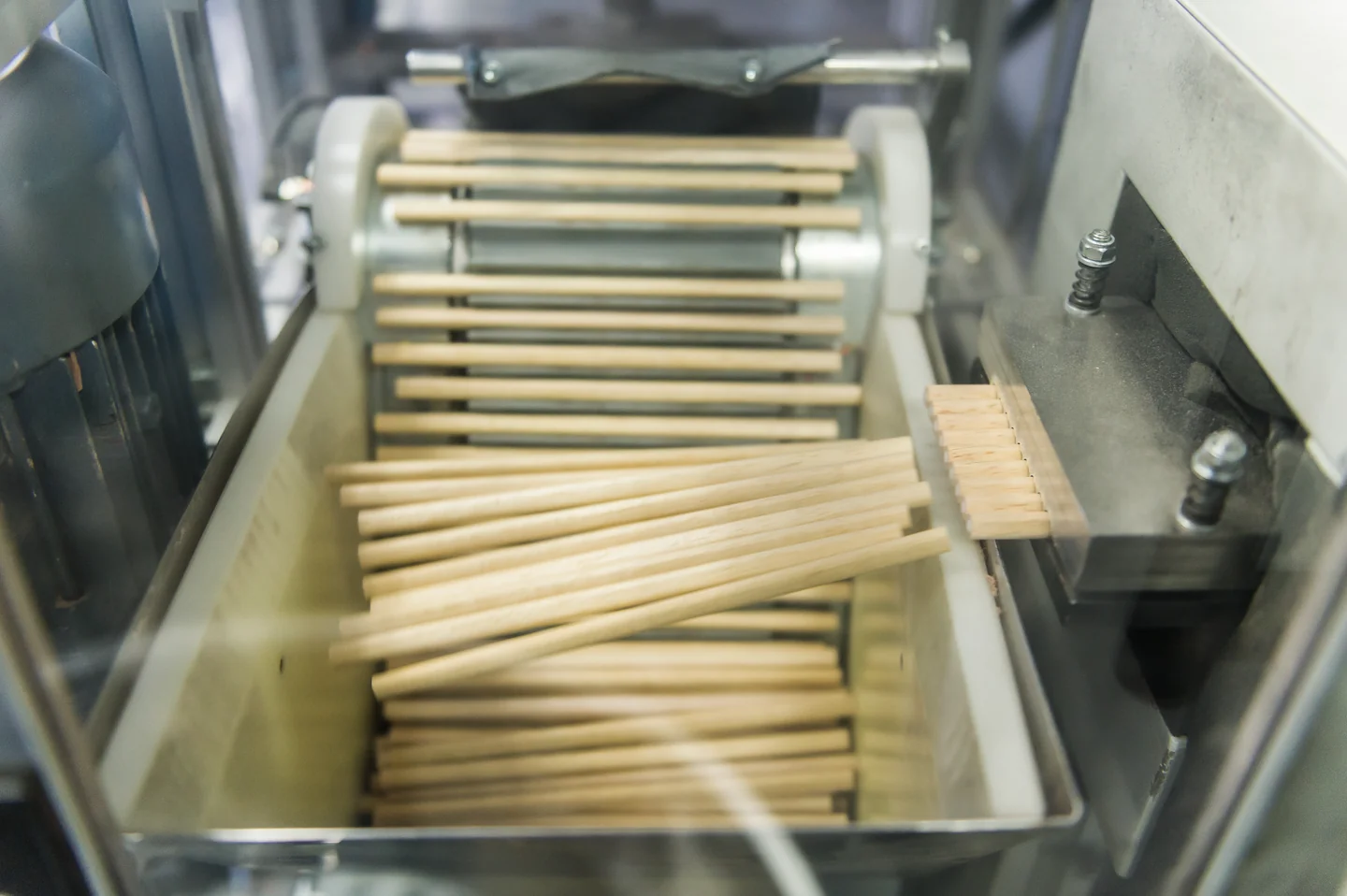
Before cutting, the glue needs time to set. The joined slats are held under pressure in a machine resembling a carousel. According to the explanation on our tour, a complete rotation takes about an hour. At the end of that journey, the material can move on to the cutters, which shape it from above and below into round, hexagonal or triangular pencils.

In several ranges, the lead is bonded to the wood along its full length to improve resistance to breakage. Looking at a partly finished piece makes you notice a joint that is almost invisible in the pencil you use every day.
Why does the point keep breaking?
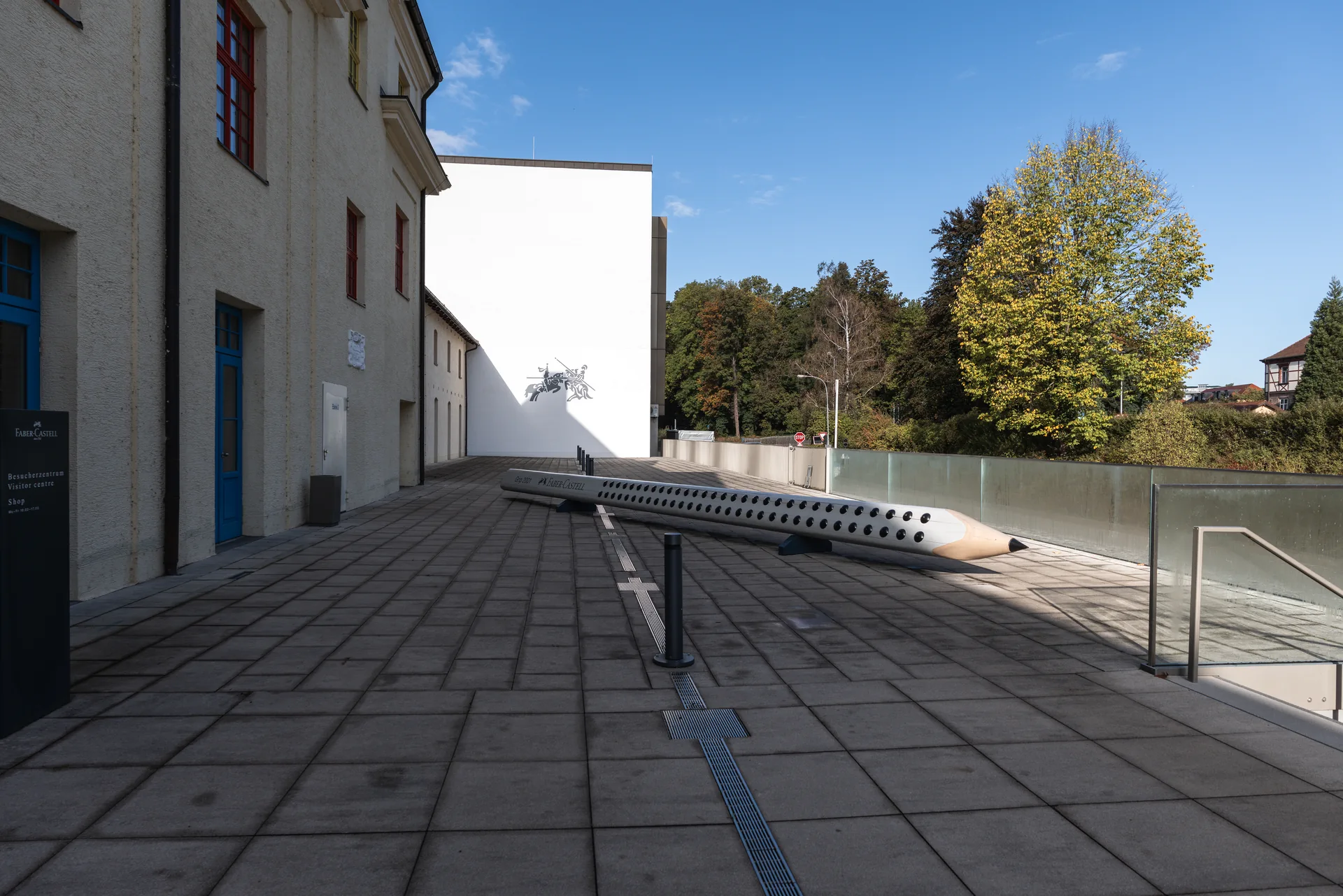
You probably know the routine. Sharpen the pencil. Break the point. Sharpen it again. Before long, the pencil is noticeably shorter and your patience is running out.
One possible cause is the wood. It needs to cut cleanly while supporting the lead. If it crumbles or chips away during sharpening, more of the core is left exposed and the point becomes easier to break. Our guide explained why the choice of timber and the direction of its grain matter.
The shape of the point makes a difference too. In the process shown to us, graphite pencils were sharpened at an angle of about 21 degrees and coloured pencils at about 24 degrees. The coloured pencils had a shorter point with more support behind it. If a lead repeatedly breaks, the sharpener deserves a closer look as well. The point is part of how the pencil works.
Eight coats of lacquer, and then more waiting
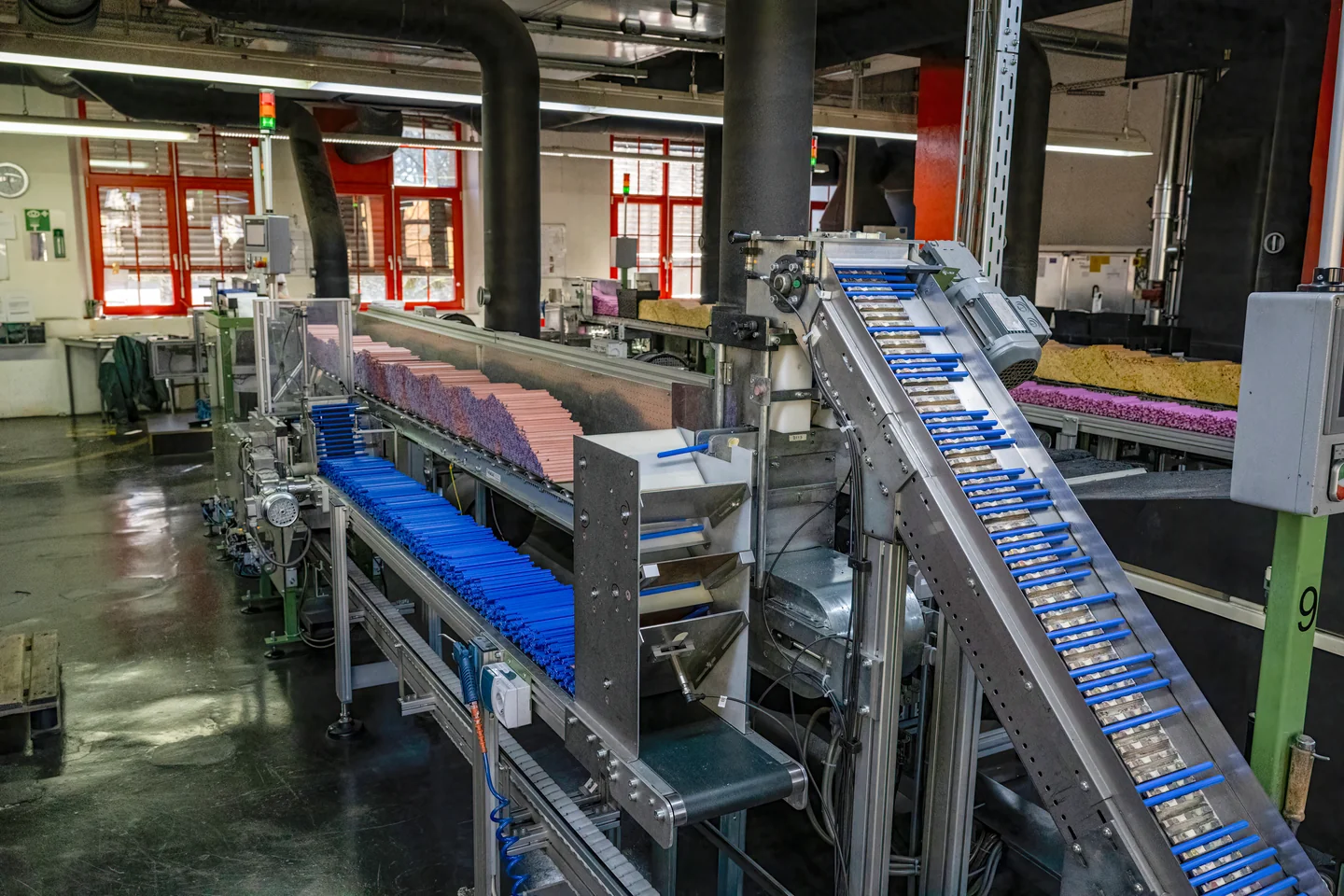
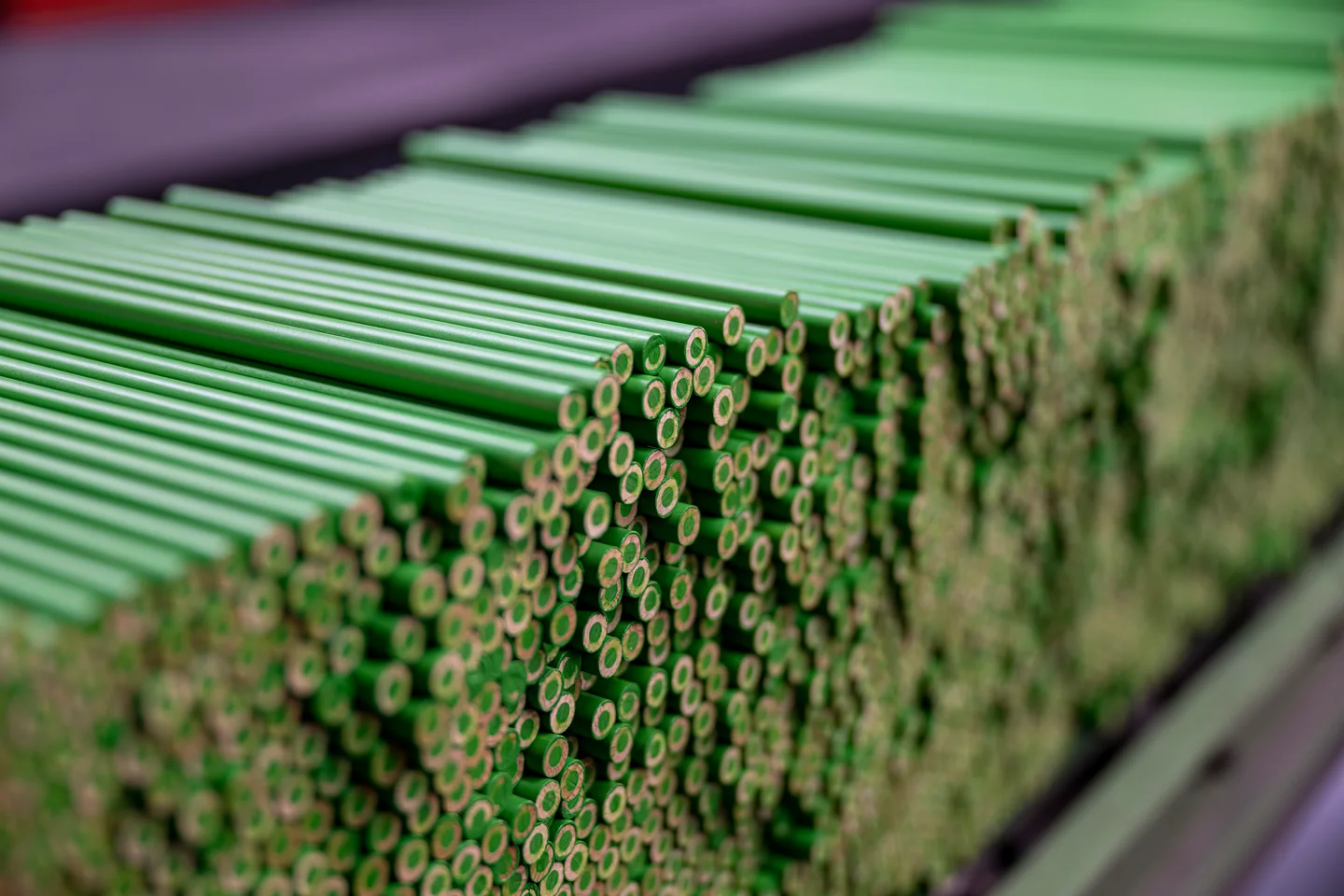
Once the body has been shaped, the pencil could already write. Yet a whole series of operations still lies ahead. I was surprised by how long the lacquering and drying took. There were so many pencils drying between stages; seeing them made the time involved much more tangible than simply hearing how many coats were applied.
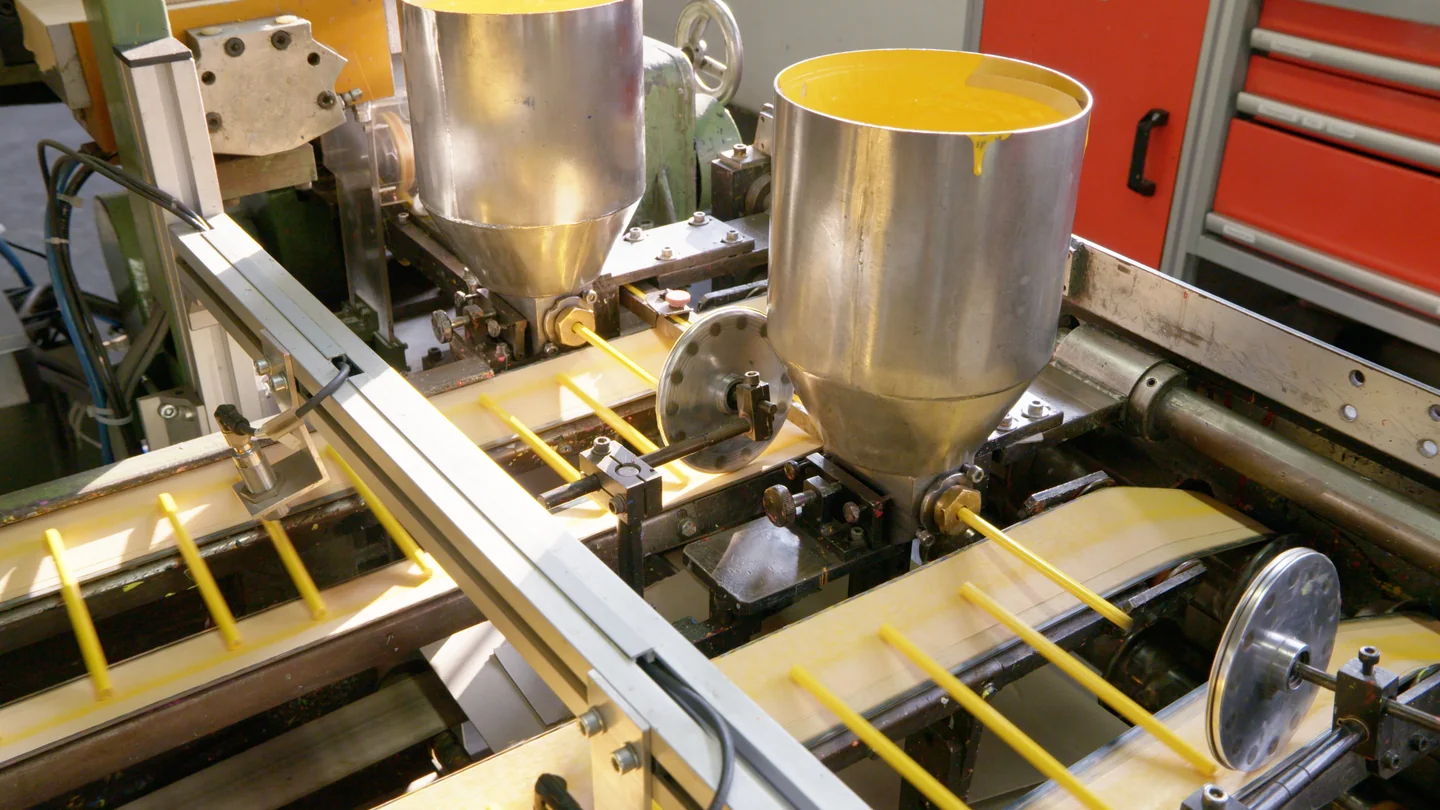
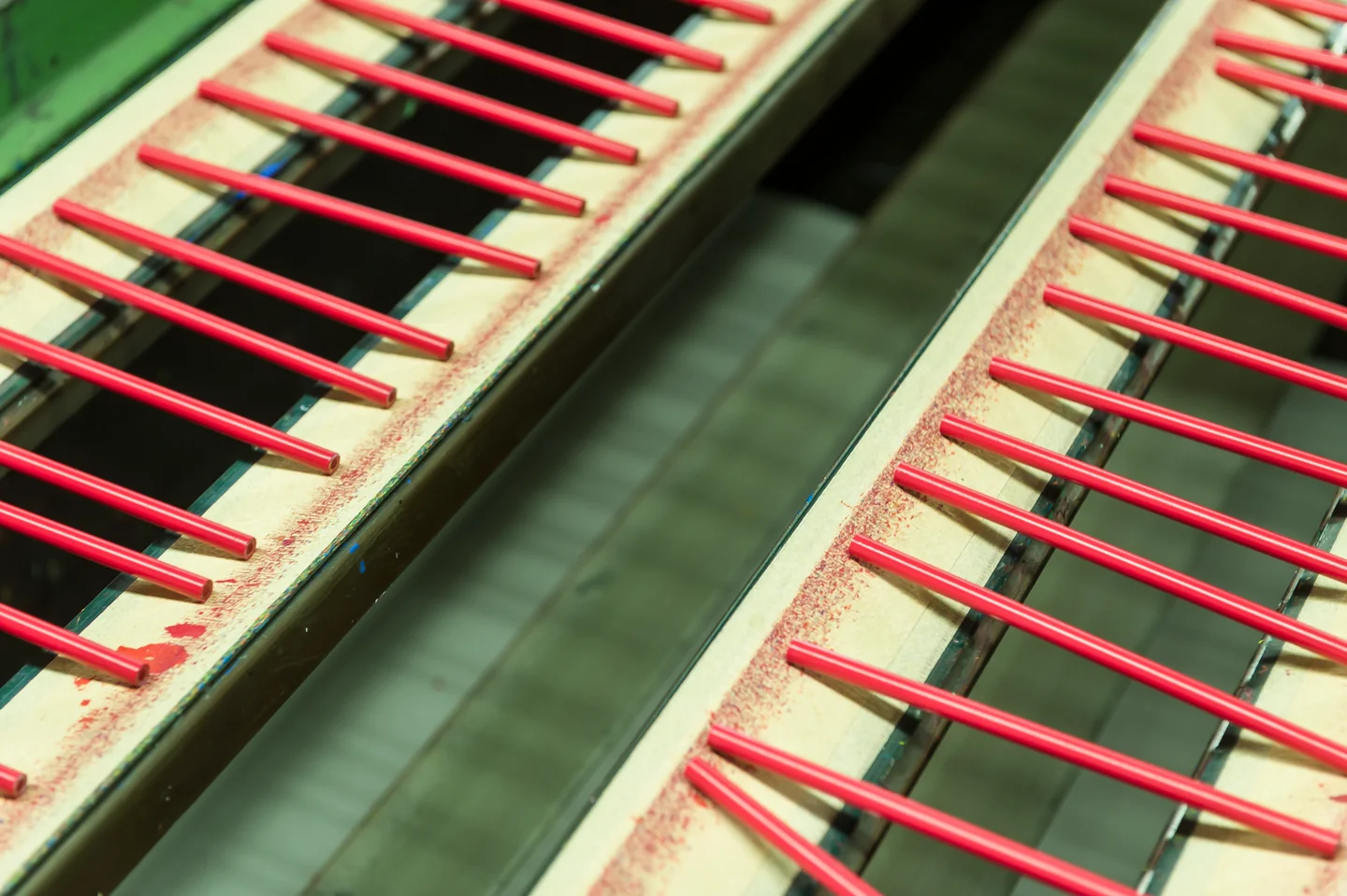
Our guide described a typical sequence of two preparatory coats, four coloured coats and two finishing coats. Eight thin layers, each needing to dry before the next. The exact number depends on the product and shade. In this part of production, the company uses water-based lacquers applied in successive layers.
The ends can take even longer. A thicker dipped coating may need to dry overnight. For some multicoloured ends, our guide explained, the finishing work can stretch over several days. That little decorative ring represents another operation and another wait.
At the machine, we discussed a detail I would never have thought to ask about. The container of lacquer rises towards the suspended pencils. Each dip removes a little of the coating from the container, so an optical sensor monitors the level and the machine adjusts its movement. That keeps the length of the coloured end consistent.
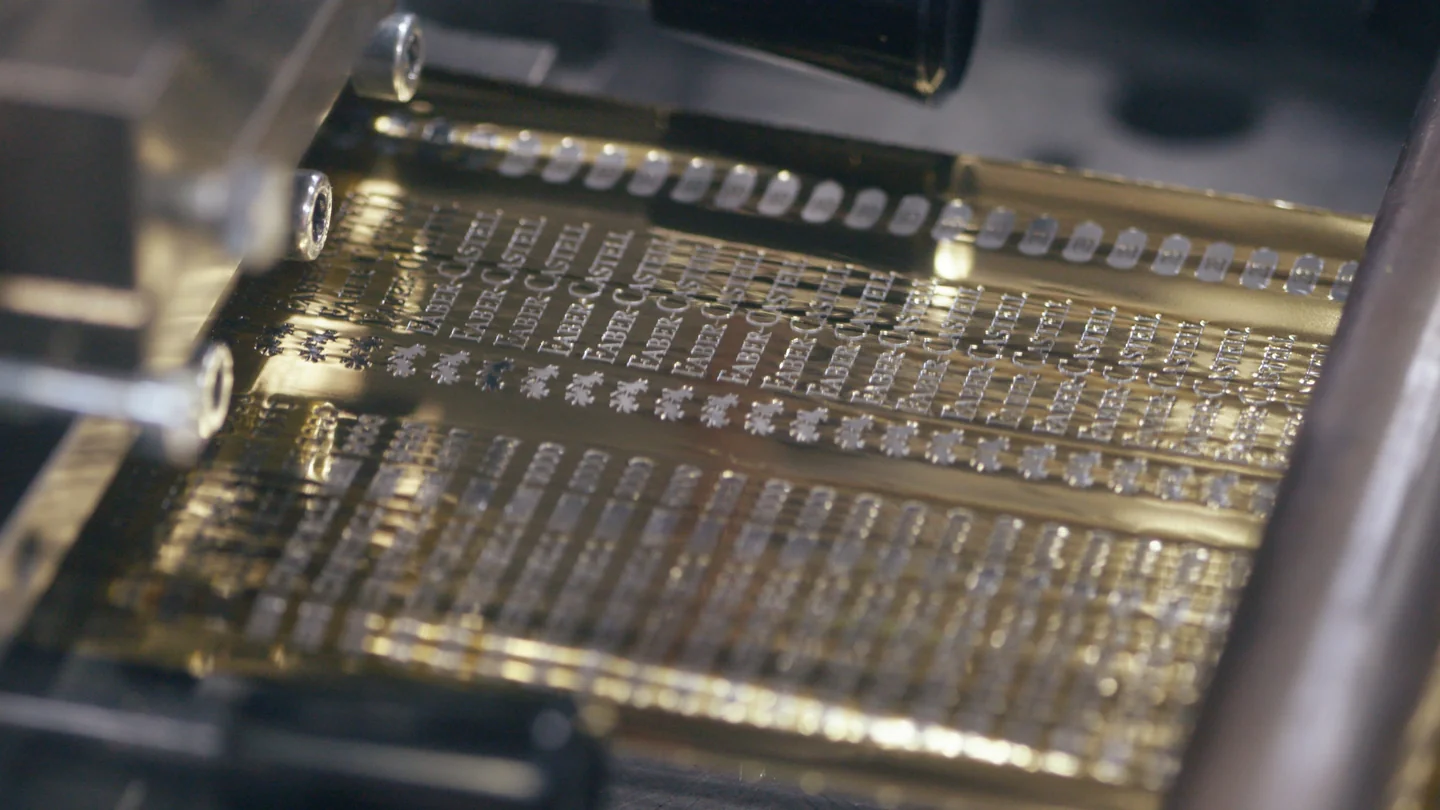
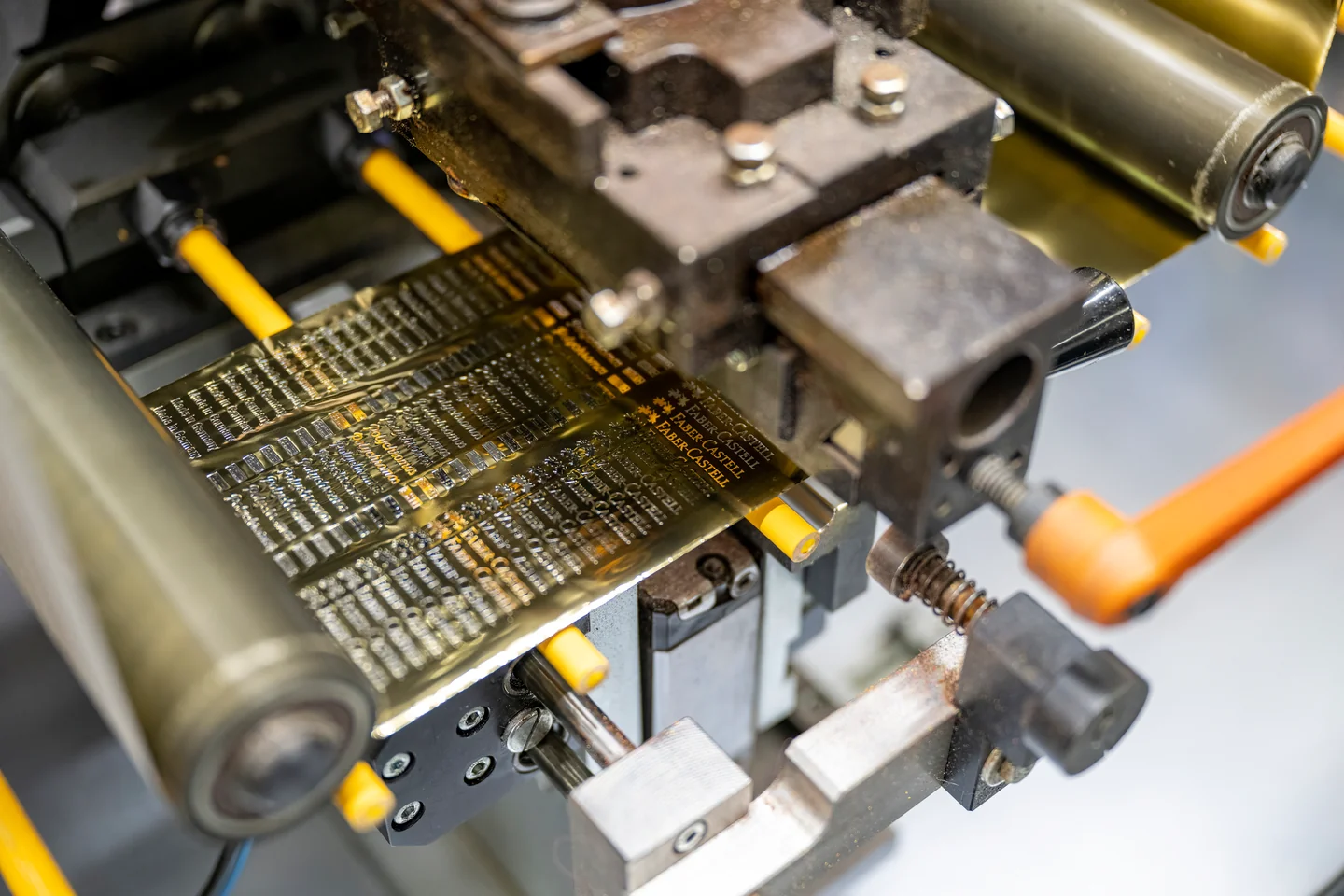
Faber-Castell’s production photographs show another finishing detail: the application of the name and the jousting-knights logo. Even this familiar mark has its own place on the production line.
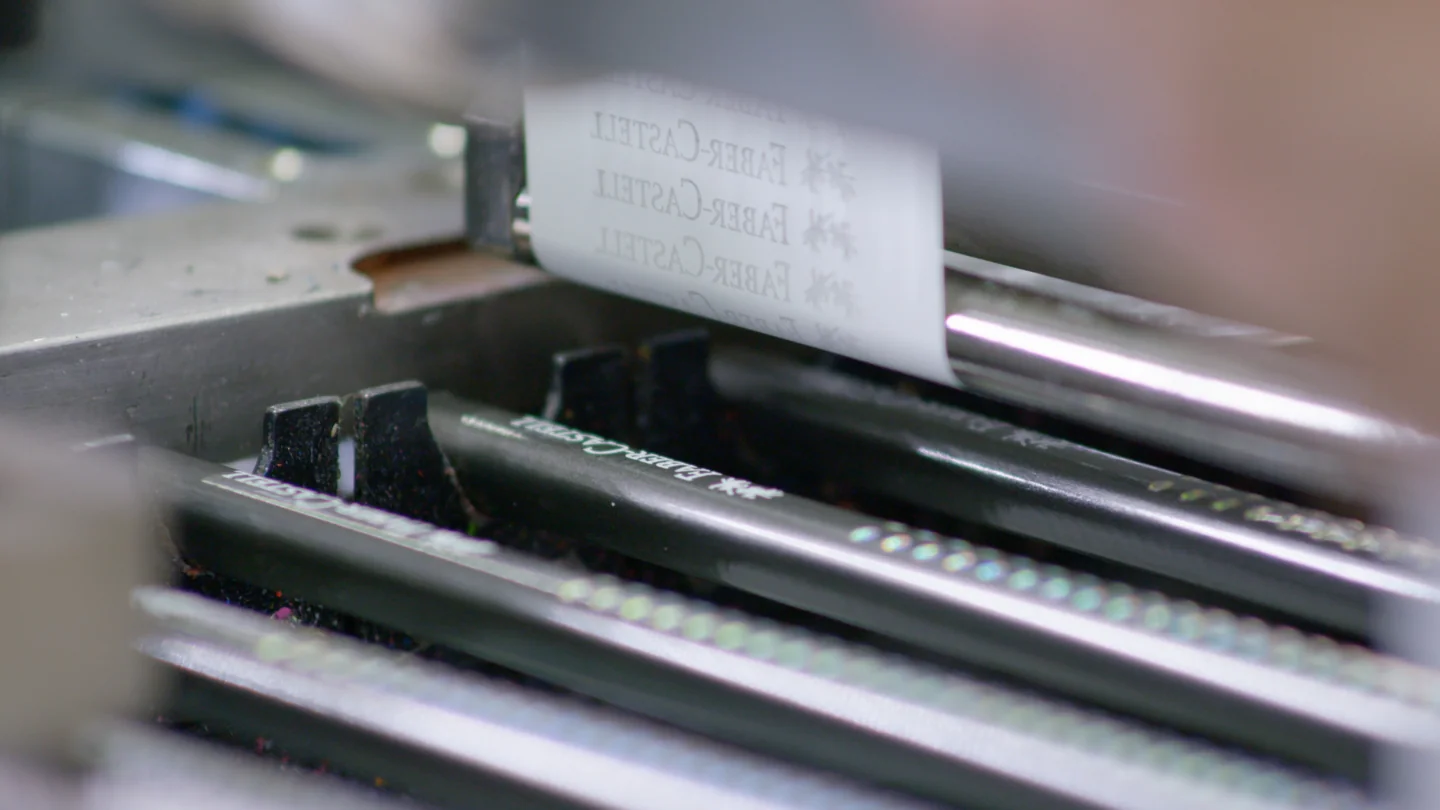

The familiar raised dots on a Grip pencil have their own production step. A thicker coating material is applied so that it stands above the surface, then cured with UV light. Further along this part of the line, a camera checked the pencils and diverted those that did not meet the requirements.
The final quality control particularly impressed me. Alongside the camera checks, people physically inspected the pencils too. After seeing so much automation, it was reassuring to see that a person still took a close look at the finished result. That combination of machine inspection and human attention stayed with me.
The eraser that needs no glue
The eraser brought another surprise. In the process demonstrated to us, there was no glue involved. A metal ferrule was fitted over the prepared end of the pencil, the eraser was inserted, and the metal was crimped in six places.
If you have a similar pencil at home, have a look at the tiny indentations around that metal sleeve. These were exactly the details I enjoyed discovering. You can use an object for years without stopping to consider what holds it together.
From the pencil case to the cosmetics bag
Towards the end of the visit, the conversation moved to cosmetics. We had come for writing instruments and found ourselves looking at products for eyes and eyebrows. From a manufacturing perspective, the connection makes sense: once again, the questions concern pigment, consistency and the way a material transfers onto a surface.
Faber-Castell Cosmetics develops and manufactures products for other brands. You can therefore encounter something made by the company without seeing the familiar name from your pencil case on its packaging.
This is also a much older connection than I expected. The company dates its first eyebrow pencil, A. W. Faber’s Eyebrow, to 1890. Its cosmetics timeline begins long before the creation of the modern division.
A calculator with a job left for its owner
Another historical detour involved a slide rule. Before electronic calculators, its sliding scales could be used for operations such as multiplication and division. Our guide demonstrated a simple calculation, with one condition: you still had to work out where the decimal point belonged.
The instrument did part of the work, but you needed to understand the size of the answer you were expecting. When electronic calculators arrived in the 1970s, slide rules lost their place. We learned how the factory in Geroldsgrün shifted from making them to producing plastic components, including parts for felt-tip pens. A company does not survive for more than two centuries by making the same things forever.
What happens when you make two billion pencils?
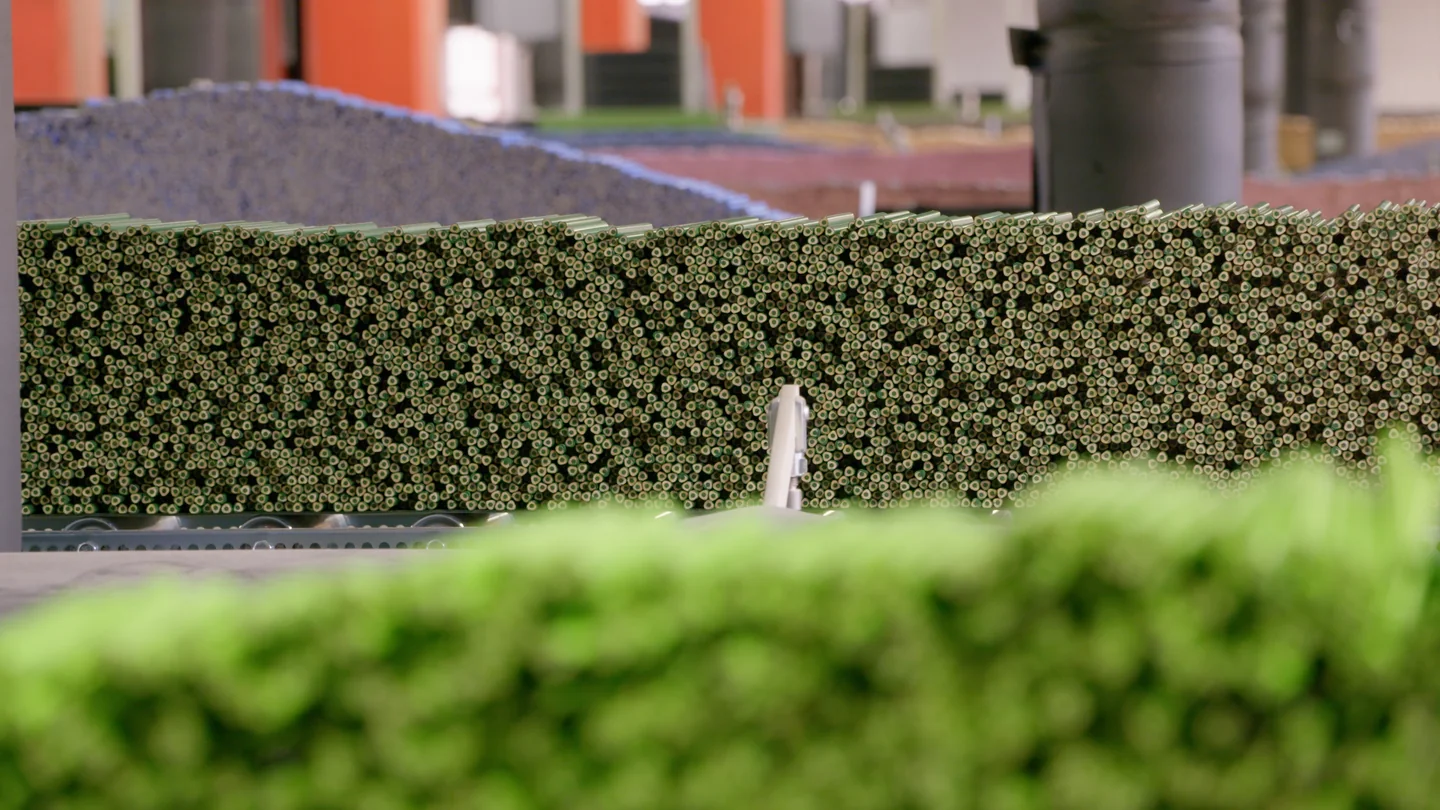
We also talked about the company’s large operations in Brazil and Indonesia. One figure puts that scale into perspective: in its 2026 company information, Faber-Castell reports annual production of more than two billion graphite and coloured pencils.
At that volume, the source of the wood and the fate of the offcuts matter. In Stein, green pipes carry wood residues from production towards the boiler house, where they are used to generate heat. The material removed while shaping a pencil has another use.
The Rednitz beside the historic buildings also has a practical role. According to the company’s Sustainability Insights 2024/25, its Kaplan turbine has been in operation since 1956 and supplies roughly one fifth of the Stein site’s electricity needs.
Faber-Castell says it manages around 8,200 hectares of forest in Prata, Brazil, with roughly a quarter set aside as natural conservation areas. It also reports using FSC- or PEFC-certified wood for its worldwide production of wooden pencils. These figures are set out in the company’s environmental information.
Back to fountain pens, with a different eye for wood
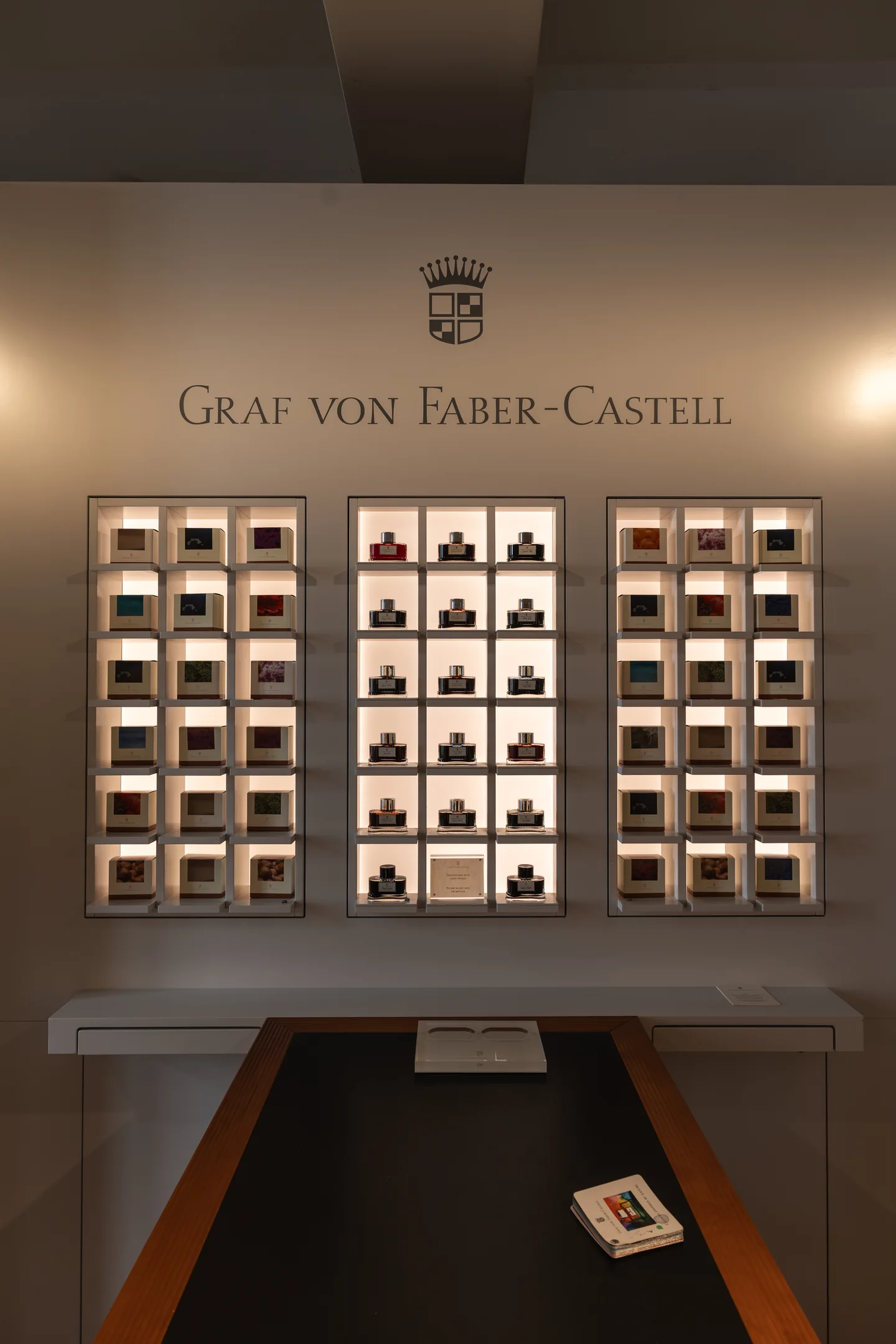
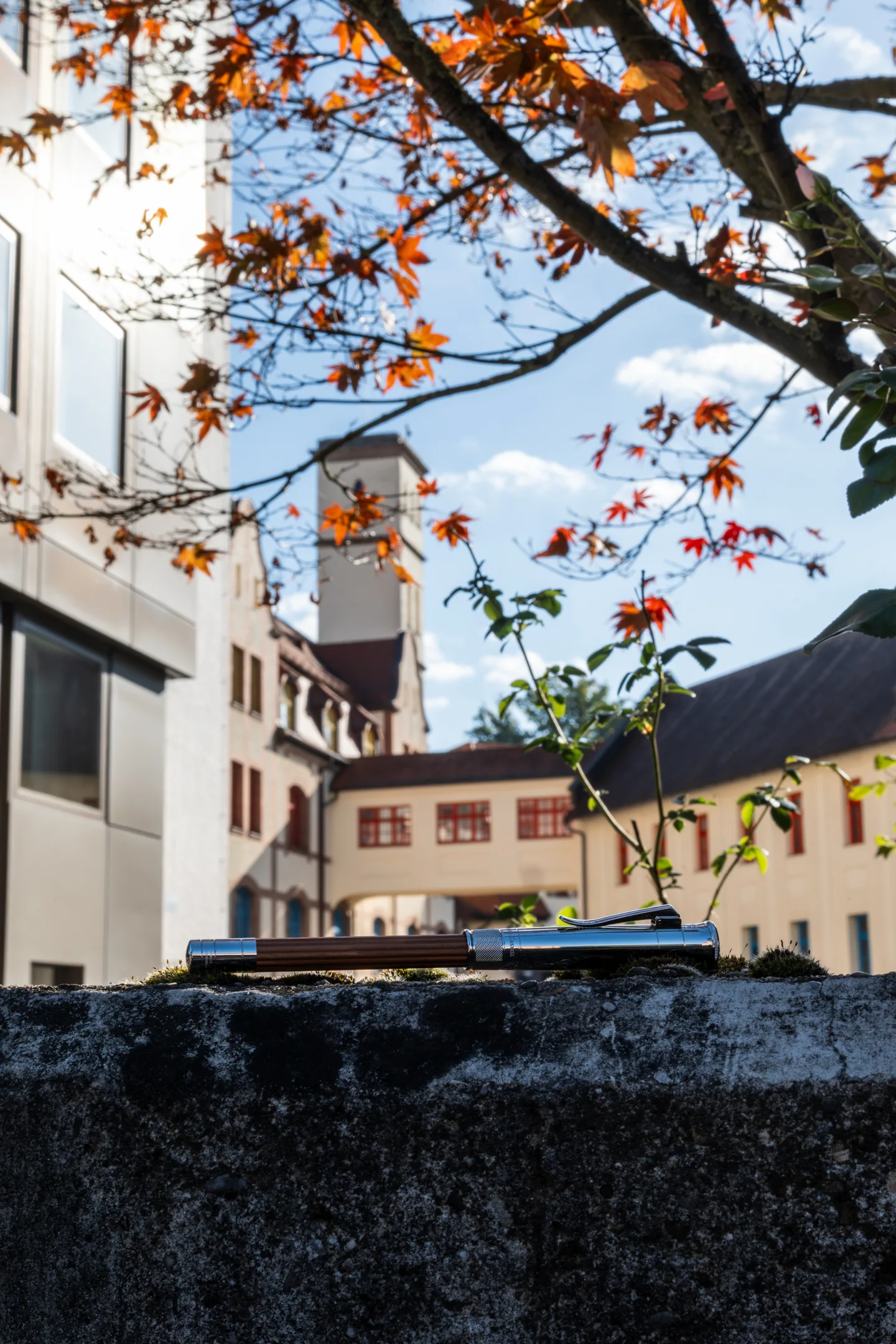
Eventually, we reached Graf von Faber-Castell fountain pens. I was back in familiar territory, but after the factory visit I found myself paying more attention to the wood and the way it had been worked.
Among the Pen of the Year editions, our guide showed us her favourite: the 2008 model. Its barrel uses Indian satinwood, a material also associated with the panelling in Countess Ottilie’s salon in the castle.
On the pen, it forms a pattern like miniature parquet flooring. The Pen of the Year 2008 contains 84 individually made wooden pieces, fitted precisely around a curved barrel. The castle where our conversation had begun returned in the detail of a writing instrument.
The shop was beautiful, and I found something I wanted to take home: the Graf von Faber-Castell elephant pen holder. My wife talked me out of it. She reminded me that my desk was already full and I did not need another thing on it. She had a point, although it was a very tempting elephant. It stayed in the shop.
A second look at an ordinary pencil
I arrived as someone quite capable of spending a long time admiring a fountain pen nib. I left wanting to inspect an ordinary pencil more carefully too. The coloured end, the bond between wood and lead, the metal sleeve around an eraser: all of them had become worth a second look.
The visit convinced me of the quality of Faber-Castell pencils. Having seen how much the wood, the core and the finishing matter, I would choose them over a cheap substitute. I now have a much clearer sense of what good materials and carefully controlled processes contribute to a pencil, and why those choices are worth paying for.
If you would like to visit, Faber-Castell offers experiences in Stein covering pencil production, the castle and historic lead production at the Alte Mine museum. Check what the particular programme includes and which language it is offered in when booking. The Faber-Castell Experience website has the current options.
I am very glad I had the chance to see all of this, and I came away with a thoroughly positive impression. Thank you to our guide and the Faber-Castell team for showing us around. I would happily suggest the factory tour to someone who does not collect pencils. Curiosity about how everyday things are made is quite enough.

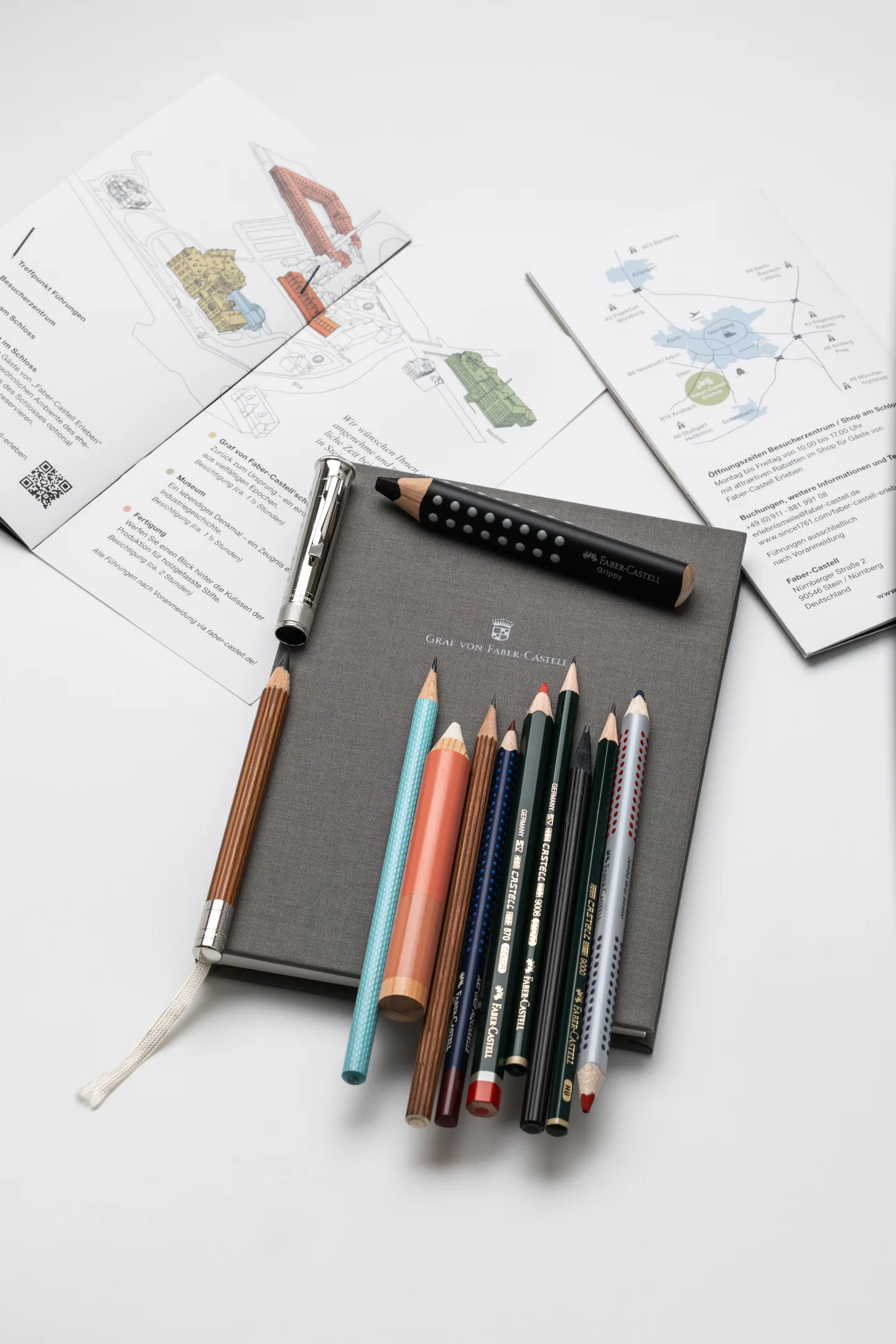
Back at home, this is what my desk looks like. Fountain pens are only part of the picture: pencils have an important place here too, alongside my notebooks and a few reminders of our visit to Stein.
Back on the road

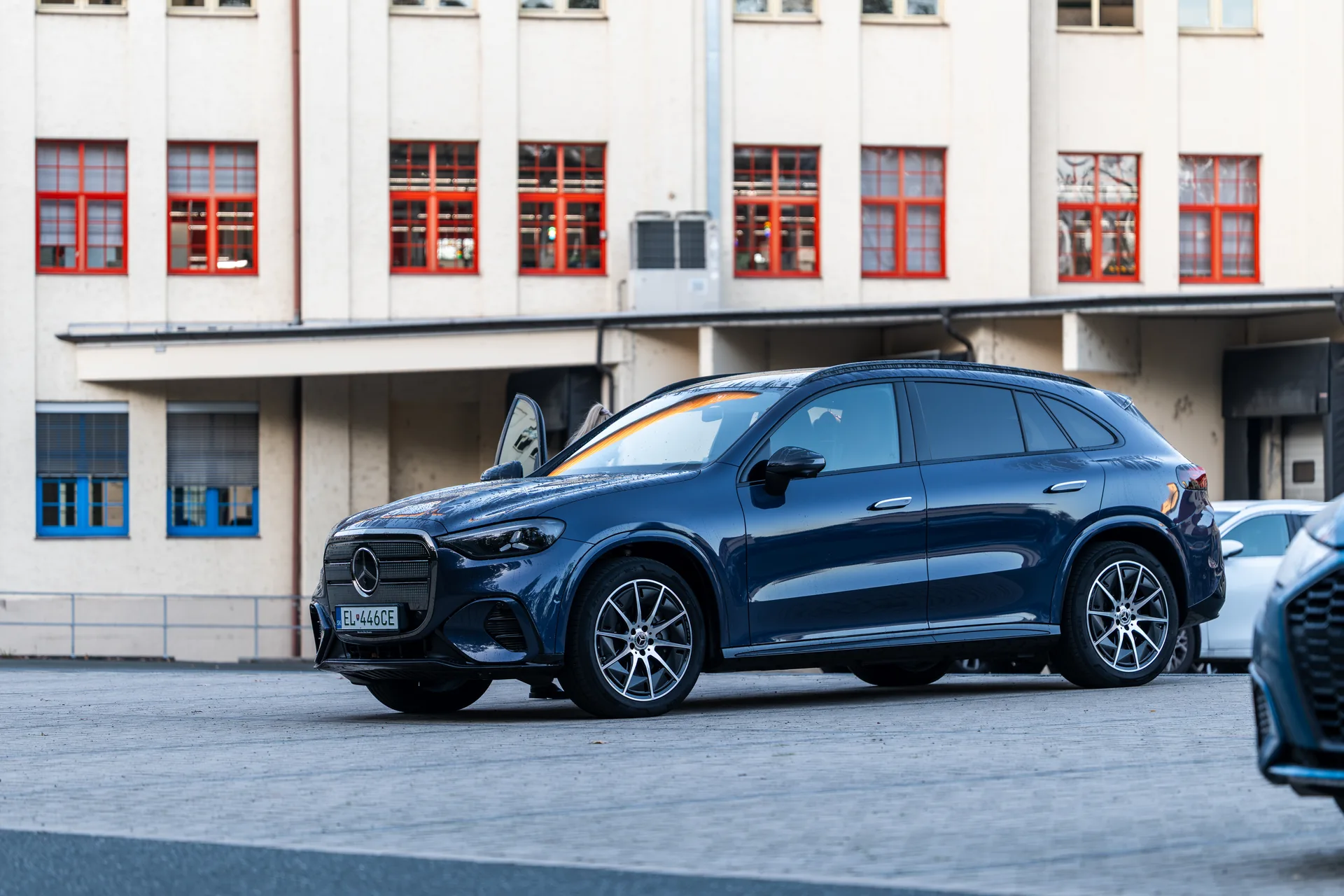
Stein was one stop on a longer journey. With the notebook a little fuller, it was time to get back into the Mercedes and continue towards Hannover.
In the next On the Road article, I will take you inside our next stop: Pelikan. There are more workshops, more people and more small details to write about. For now, I am leaving Faber-Castell with a new appreciation for the pencil.
Watch the video story
Join me on the road in the film from this journey. The video below starts at 2:42.
Read next
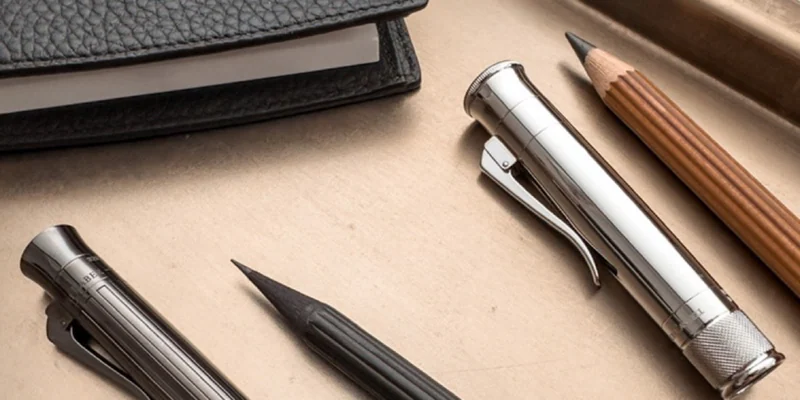
The Graf von Faber-Castell Perfect Pencil: An unseen marvel in the World of Writing Instruments
When one is asked to think about the quintessential writing instrument, a pencil is often the first thing that comes to mind. However, not just any pencil will do when you want the perfect blend of luxury, functionality, and design. The Graf von Faber-Castell Perfect Pencil is a product that truly embodies the union of..
Read article
On the Road – The Stories Behind the Pens
Six days in Germany, from Faber-Castell and Pelikan to independent workshops and Montblanc: the people, discoveries and personal moments behind On the Road.
Read article
Faber-Castell Ondoro Smoked Oak Fountain Pen – An Affordable Luxury
During a delightful trip to Verona, I stumbled upon the Faber-Castell Ondoro Smoked Oak Fountain Pen, a captivating writing instrument that immediately caught my attention. Eager to explore an affordable option with a stainless steel nib – a departure from my usual gold nibs – I couldn’t resist the allure of this unique pen. My..
Read article
0 comments
Comments are moderated before publishing, so the conversation stays useful and calm.
No comments yet. You can leave the first note below.