A complete overview of all Pilot Iroshizuku inks
Iroshizuku by Pilot is truly a household name in the fountain pen world, and I believe almost every enthusiast is familiar with these inks. I tried my very first Iroshizuku — Ajisai — a long time ago, and my initial experience was actually negative because it feathered heavily on the page. At that time, I..

Iroshizuku by Pilot is truly a household name in the fountain pen world, and I believe almost every enthusiast is familiar with these inks. I tried my very first Iroshizuku — Ajisai — a long time ago, and my initial experience was actually negative because it feathered heavily on the page. At that time, I didn’t know much about fountain pens; I was using poor-quality paper and a broad nib, among other factors.
The second time I tried it was when I encountered a baby-bottom issue on one of my pens, and someone recommended using a wetter ink. It worked perfectly — and from that moment forward, Pilot Iroshizuku inks became a regular part of my lineup.
Today, I’m a proud owner of all 24 standard Iroshizuku colors. But in reality… there are 34, or perhaps even more? I’ll also show you the limited editions released for the 100th anniversary…
Pilot Iroshizuku colors
A quick linked overview of every ink in this guide. Tap an ink name to jump directly to its profile and photos.
| Ink | Color family | Flow | Character | Open |
|---|---|---|---|---|
| Hotaru-biFirefly Light | Yellow-Green | Wet | Shading HighSheen NoneWater Low | Open ink |
| To-roWarm Lantern | Red-Orange | Wet | Shading MediumSheen NoneWater Low | Open ink |
| Yu-yakeSunset Glow | Orange-Red | Wet | Shading MediumSheen NoneWater Low | Open ink |
| Yama-budoCrimson Glory Vine | Magenta / Wine | Wet | Shading HighSheen StrongWater Low | Open ink |
| MomijiAutumn Leaves | Red-Pink | Wet | Shading HighSheen SubtleWater Low | Open ink |
| Fuyu-gakiWinter Persimmon | Orange | Moderate | Shading MediumSheen NoneWater Low | Open ink |
| Hana-ikadaFlower Rafts | Pink | Wet | Shading MediumSheen NoneWater Low | Open ink |
| Murasaki-shikibuJapanese Beautyberry | Purple | Wet | Shading MediumSheen SubtleWater Low | Open ink |
| Asa-gaoMorning Glory | Blue | Wet | Shading MediumSheen NoneWater Low | Open ink |
| AjisaiHydrangea | Blue-Purple | Wet | Shading MediumSheen SubtleWater Low | Open ink |
| Ama-iroSky Blue | Blue | Wet | Shading MediumSheen NoneWater Low | Open ink |
| Ku-jakuPeacock | Teal | Wet | Shading HighSheen SubtleWater Low | Open ink |
| RikkaSnow Crystal | Blue | Moderate | Shading MediumSheen NoneWater Low | Open ink |
| Kon-pekiDeep Cerulean Blue | Blue | Wet | Shading HighSheen SubtleWater Low | Open ink |
| Tsuki-yoMoonlit Night | Blue-Teal | Wet | Shading MediumSheen SubtleWater Low | Open ink |
| Shin-kaiDeep Sea | Blue-Black | Wet | Shading MediumSheen SubtleWater Medium | Open ink |
| Syo-roDew on Pine Tree | Blue-Green | Wet | Shading HighSheen NoneWater Low | Open ink |
| Sui-gyokuEmerald | Teal-Green | Wet | Shading MediumSheen NoneWater Low | Open ink |
| Shin-ryokuDeep Green | Green | Wet | Shading MediumSheen NoneWater Low | Open ink |
| Chiku-rinBamboo Forest | Yellow-Green | Wet | Shading HighSheen NoneWater Low | Open ink |
| Yama-guriWild Chestnut | Brown | Wet | Shading HighSheen NoneWater Low | Open ink |
| Syun-gyoSpring Dawn | Black-Burgundy | Wet | Shading LowSheen NoneWater Low | Open ink |
| Fuyu-syogunOld Man Winter | Grey | Moderate | Shading HighSheen NoneWater Medium | Open ink |
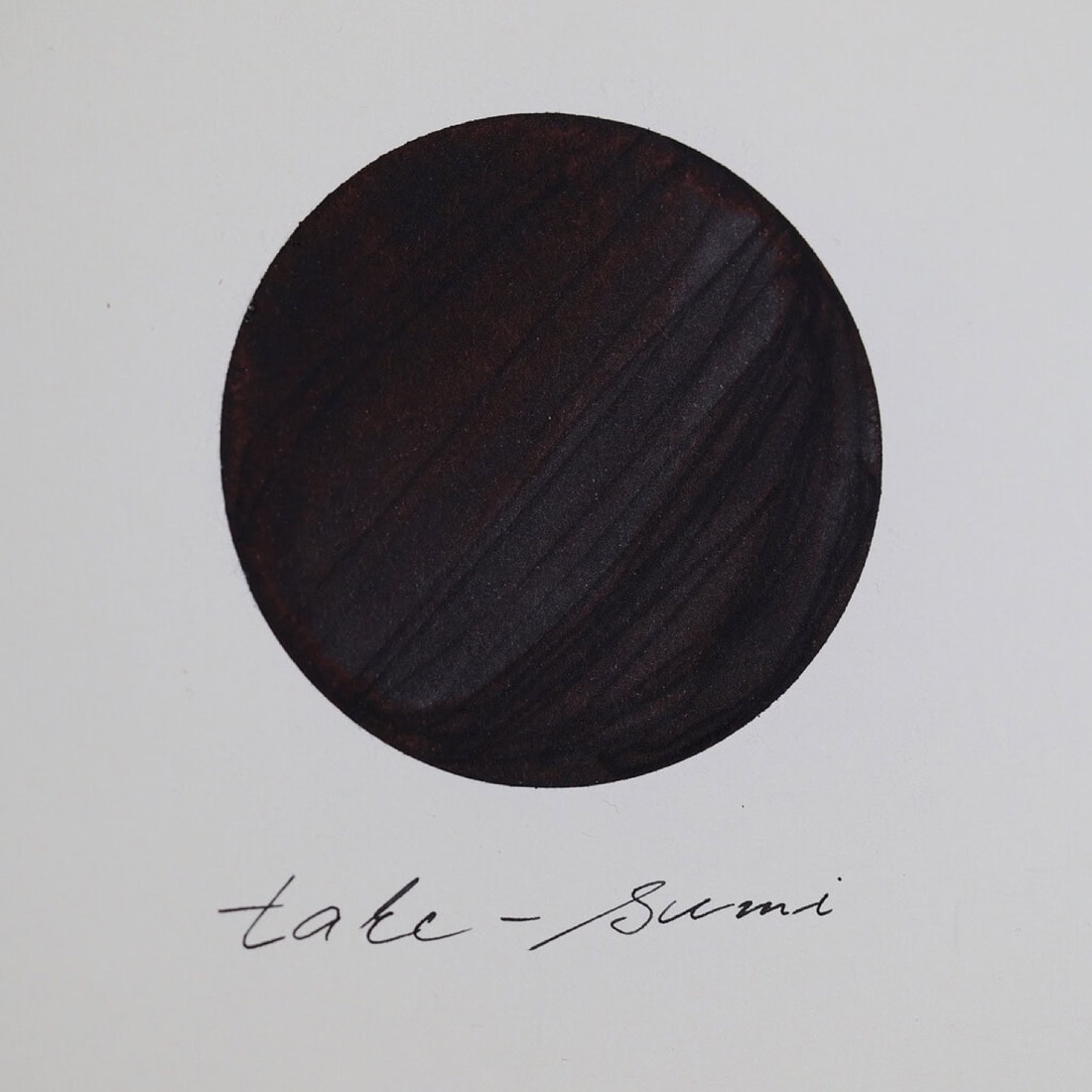
| Take-sumiBamboo Charcoal | Black / Charcoal | Moderate | Shading LowSheen NoneWater Medium | Open ink |
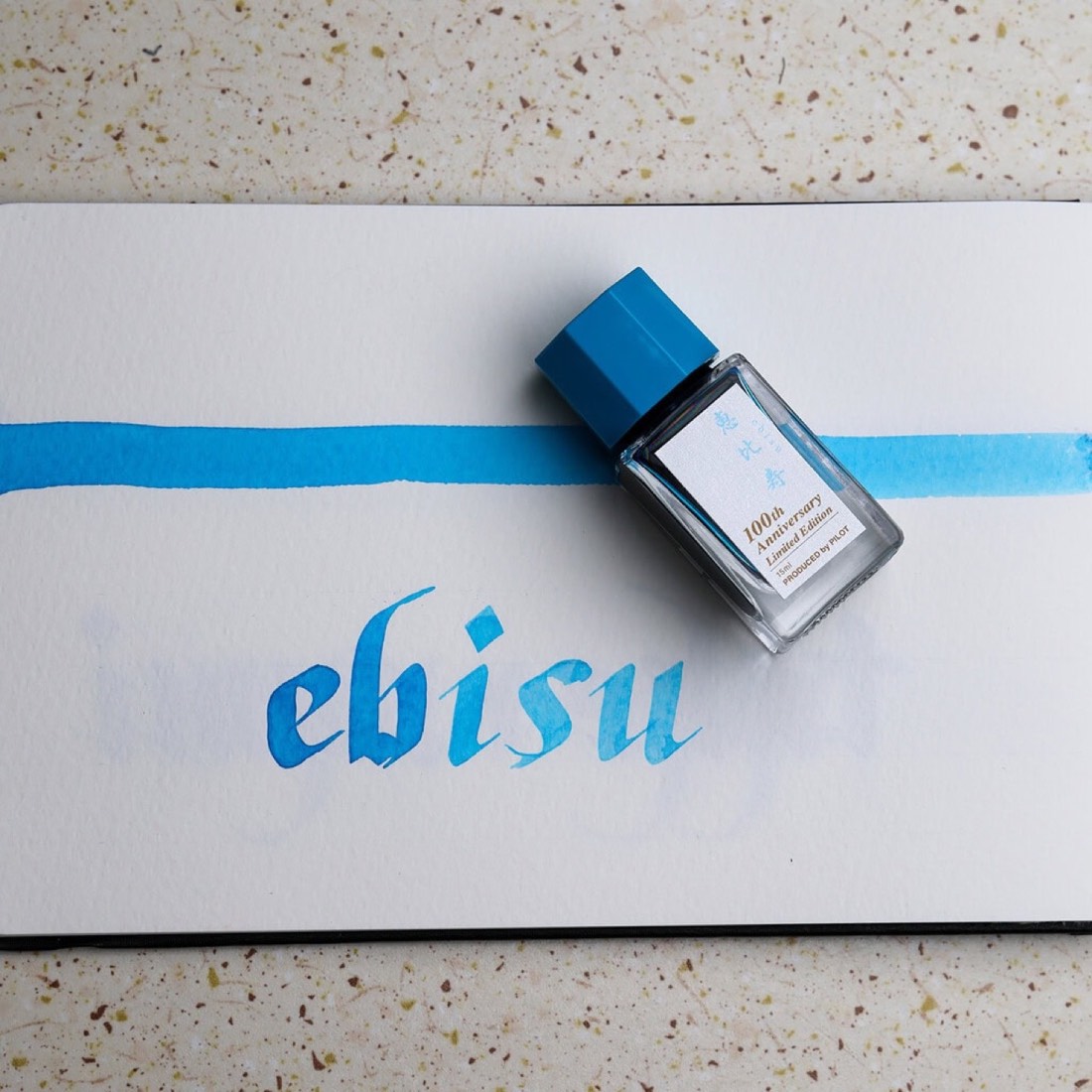
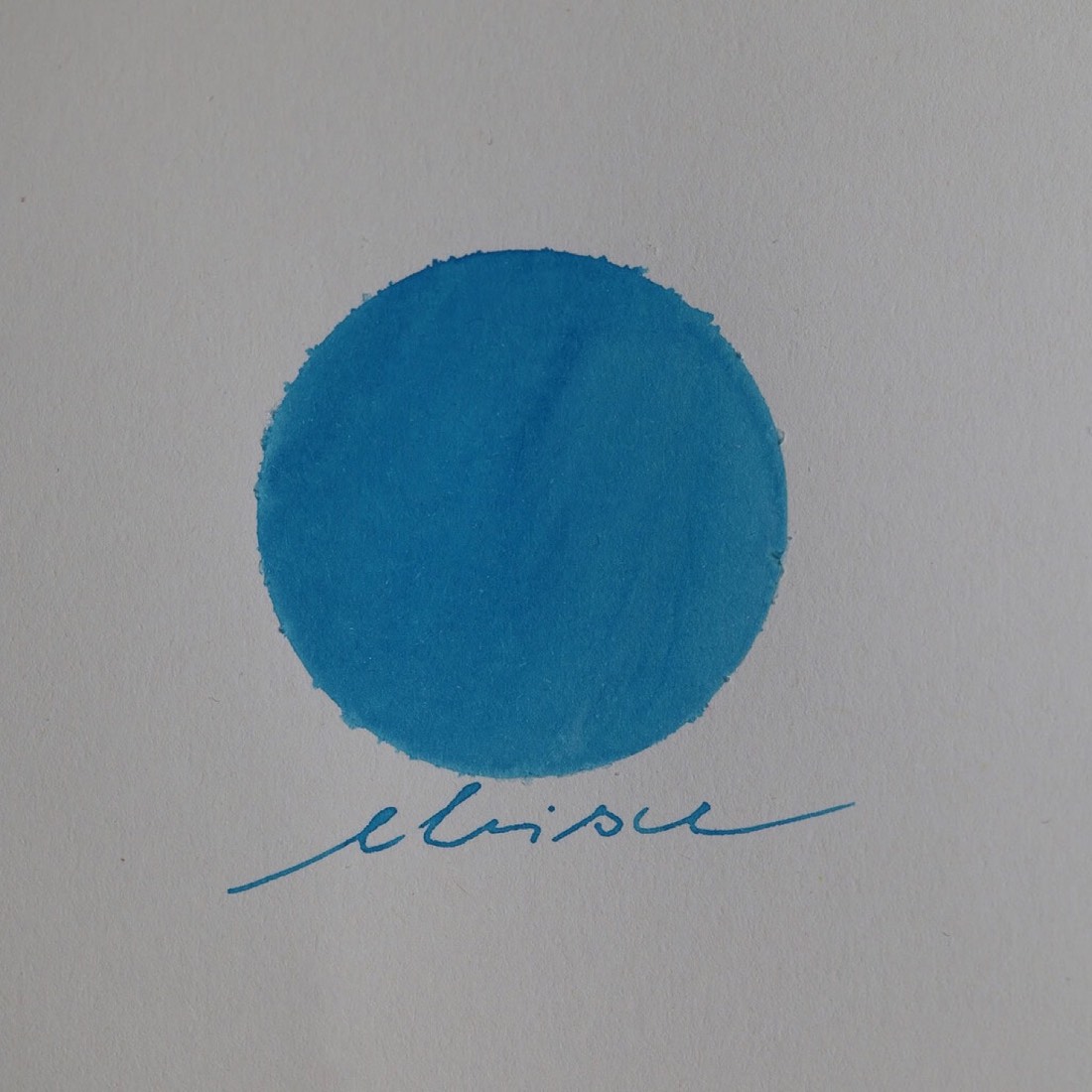
| EbisuGod of Prosperity | Blue | Moderate | Shading MediumSheen SubtleWater Low | Open ink |
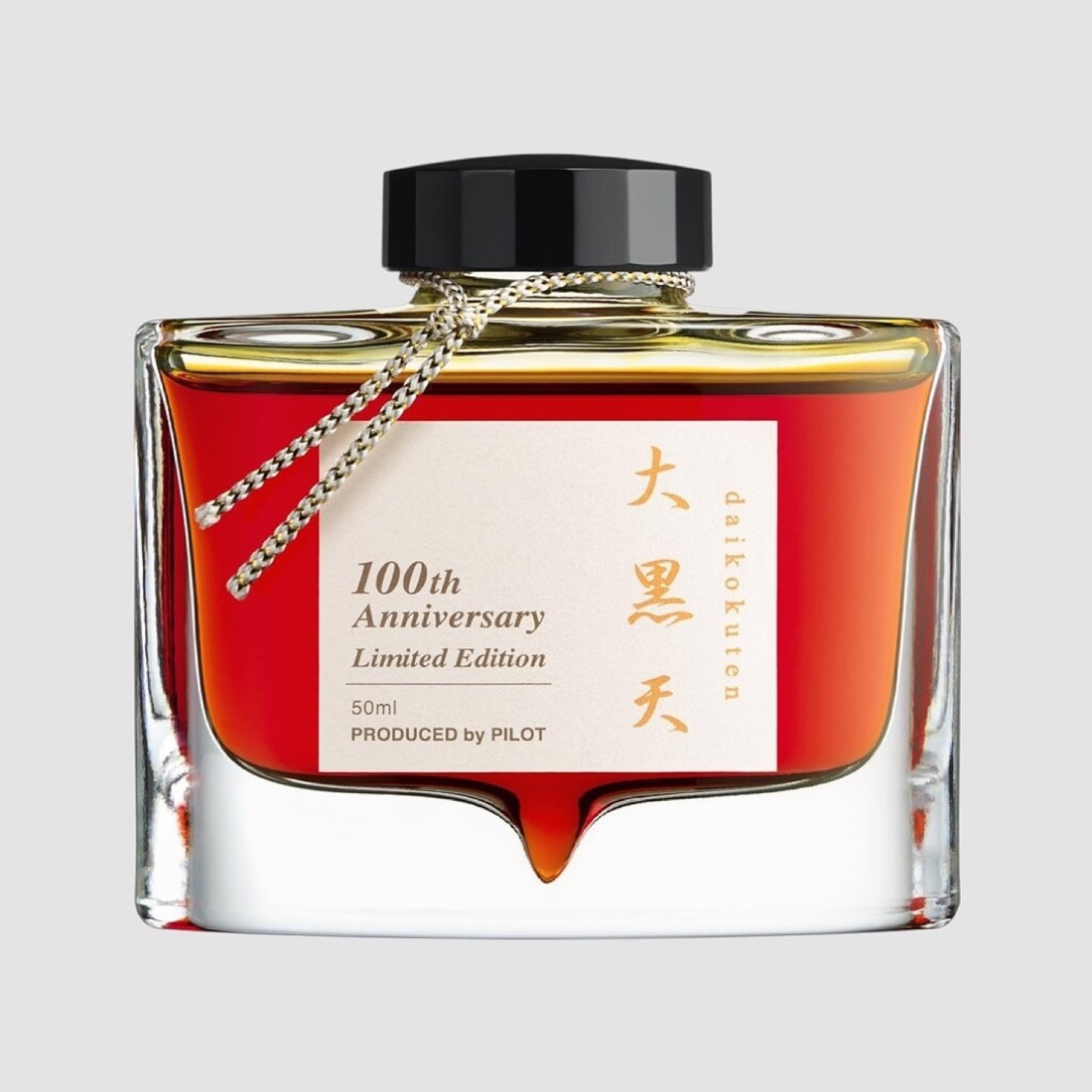
| DaikokutenGod of Wealth | Golden yellow | Moderate | Shading MediumSheen NoneWater Low | Open ink |
| BishamontenGod of Warriors | Red | Wet | Shading HighSheen SubtleWater Low | Open ink |
| BenzaitenGoddess of Music & Art | Pink | Wet | Shading MediumSheen NoneWater Low | Open ink |
| FukurokujuGod of Happiness, Wealth & Longevity | Yellow-Green | Wet | Shading MediumSheen NoneWater Low | Open ink |
| JurojinGod of Longevity | Blue-violet | Moderate | Shading MediumSheen NoneWater Low | Open ink |
| HoteisonGod of Happiness & Good Health | Deep-green | Wet | Shading MediumSheen NoneWater Low | Open ink |
| Fukagawa-NezuFukagawa-Nezu District | Grey | Moderate | Shading MediumSheen NoneWater Low | Open ink |
| Shimbashi-iroShimbashi Blue | Light Blue | Moderate | Shading MediumSheen NoneWater Low | Open ink |
| Edo-murasakiEdo Purple | Purple | Wet | Shading MediumSheen MediumWater Low | Open ink |
| Tsuyu-kusaDew Grass | Turquoise / Blue-Green | Wet | Shading MediumSheen NoneWater Low | Open ink |
| TsukushiHorsetail | Brown-Red | Moderate | Shading HighSheen SubtleWater Low | Open ink |
| Ina-hoRice Ear | Golden Brown | Moderate | Shading HighSheen NoneWater Low | Open ink |
| KosumosuCosmos Flower | Pink | Wet | Shading LowSheen NoneWater Low | Open ink |
| TsutsujiAzalea | Bright Pink | Wet | Shading MediumSheen SubtleWater Low | Open ink |
| Kiri-sameMisty Rain | Grey | Moderate | Shading HighSheen NoneWater Low | Open ink |
Pilot Iroshizuku inks are regarded as some of the finest fountain pen inks in the world. Their formula is known for:
- More watery consistency — excellent flow, ideal for drier nibs
- Smooth writing with consistent lubrication
- Elegant shading that adds character to handwriting
- Nature-inspired color palette with poetic Japanese themes
- Good performance on quality paper
- Easy cleaning thanks to their gentle water-based formulation
Advantages & Disadvantages of Pilot Iroshizuku Inks
Pilot Iroshizuku inks have earned their reputation as some of the most refined and enjoyable fountain pen inks available today. Their formula is noticeably smoother and slightly more fluid than many others on the market, giving them excellent flow even in drier nibs. This creates a pleasantly lubricated writing experience, where the pen glides effortlessly across the page. The inks also deliver beautiful shading and expressive color variation, bringing life and depth to handwriting without requiring any specialized nibs.
The Iroshizuku palette is inspired by the beauty of Japanese nature — snow, forests, rivers, dusk skies, blooming flowers — and each color carries a poetic story. Thanks to this thoughtful design, users can choose inks not only by shade but also by mood and personal expression. Practical benefits accompany this artistic quality: Iroshizuku inks are water-based and well-behaved, easy to flush out of pens, gentle on feeds and converters, and unlikely to cause clogging or staining. The glass bottle design is also iconic — elegant, functional, and collectible.
There are a few characteristics to keep in mind, though none diminish the overall value of the line. Because the inks are more watery in consistency, they may feather or bleed on poor-quality paper — though they perform beautifully on fountain-pen-friendly paper. They are also not formulated for strong water resistance, making them better suited for journaling, notes, and expressive writing rather than archival or official permanent documents. Finally, the premium presentation and performance come at a higher price point compared to standard inks — yet most users agree that the quality and experience justify the cost.
Overall, Pilot Iroshizuku inks strike a rare balance between beauty, reliability, and emotional expression. They enhance not only how writing looks, but how writing feels. For anyone who appreciates smooth performance, poetic colors, and thoughtful craftsmanship, Iroshizuku remains one of the finest and most rewarding ink collections to explore.
Why I Love Pilot Iroshizuku Inks
Pilot Iroshizuku inks have become some of my all-time favorites, not only for their stunning Japanese nature–inspired colors, but also for their performance. The shades aren’t just “blue” or “green” — each one feels like a story on the page, carrying emotion, atmosphere, and culture with every stroke.
What I appreciate most is the writing experience: the inks flow beautifully, feel smooth on the nib, shade elegantly even with simple handwriting, and are easy to clean from any pen. Paired with good paper, they deliver crisp, refined lines that elevate everyday writing.
Owning the full main lineup has shown me how diverse and expressive these inks can be. Every time I fill a pen, it feels like a small creative moment — a perfect blend of practicality and artistry that always inspires me to write more.
_______
Hotaru-bi
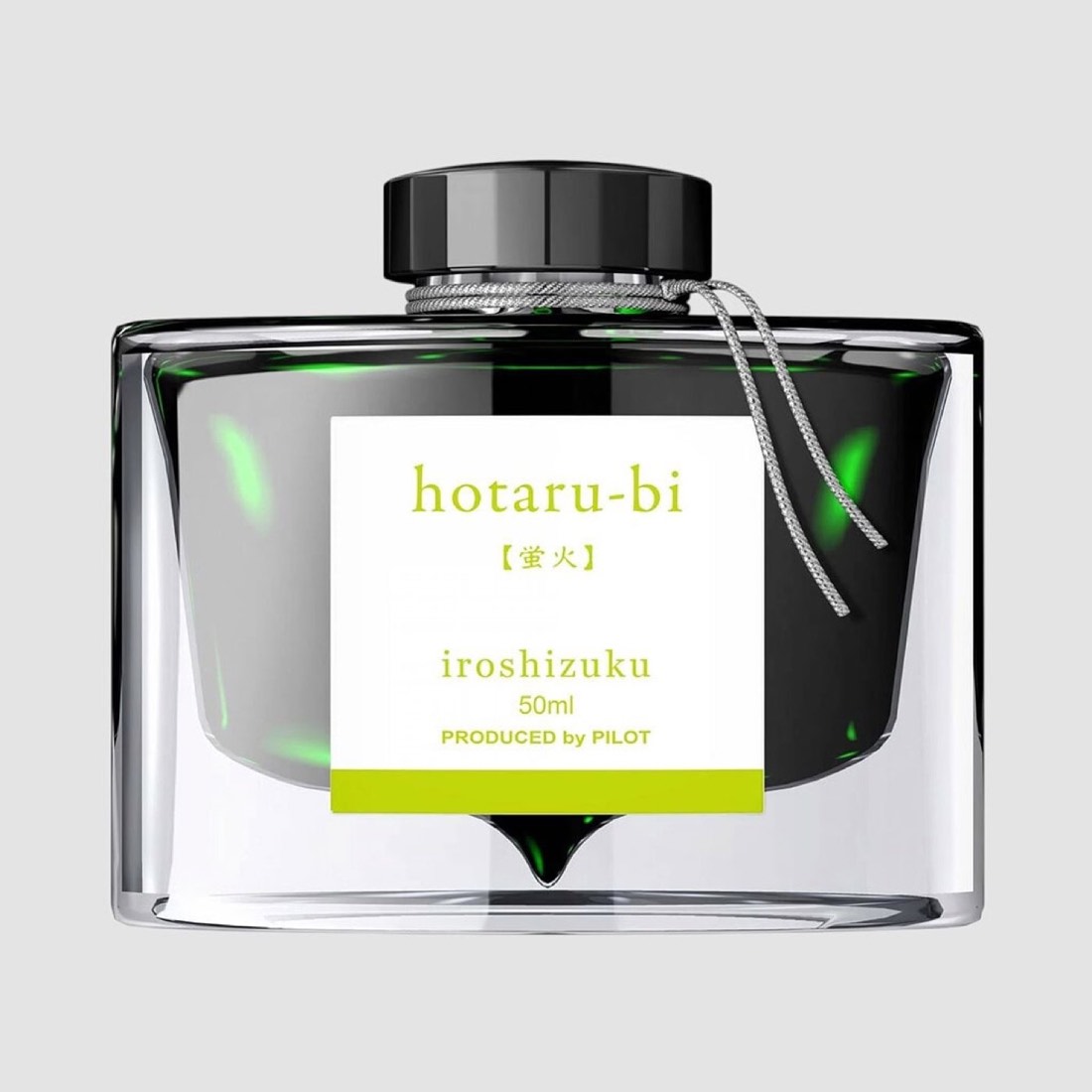
Hotaru-bi (蛍火) literally means “firefly light” in Japanese. The name evokes a magical summer evening where the tiny glowing lights of fireflies flicker through the darkness — mysterious, fleeting, and full of wonder. Pilot Iroshizuku Hotaru-bi is a lively and luminous grass-green ink with a subtle hint of yellow — a perfect representation of fireflies glowing above summer fields.
💚 Color tone: Bright green with soft yellow undertones
✨ Shading: High — from gentle spring green to deep vibrant tones
🖋️ Flow: Smooth and juicy on the page
🎨 Personality: Energetic, playful, uplifting


Hikaru (sometimes referred to as “Hotaru-bi Hikaru,” distinct from Hotaru-bi in some regional editions).
To-ro
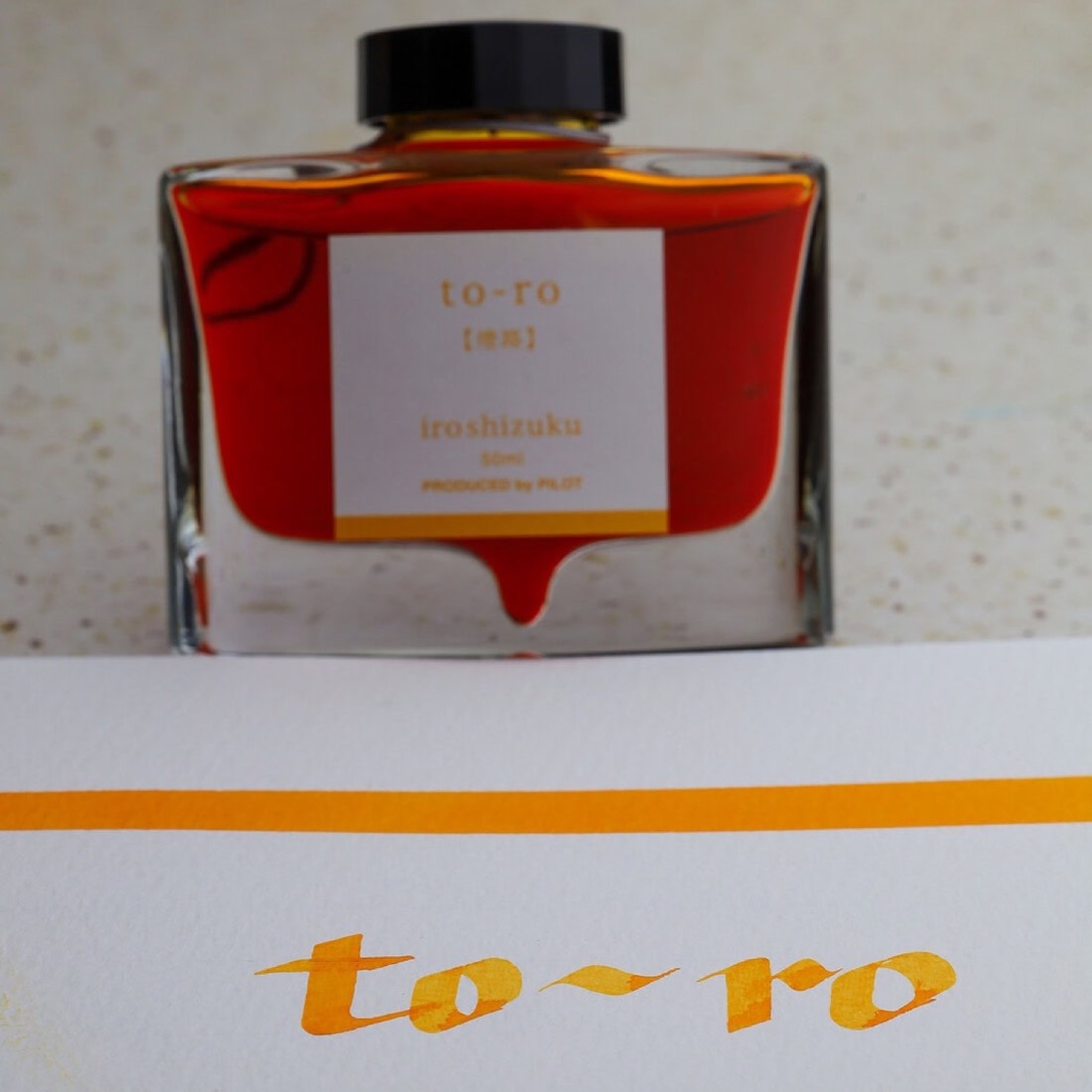
To-ro (灯籠) refers to a “warm lantern”, inspired by the gentle glow of traditional Japanese lantern light on a quiet evening. The name evokes warmth, nostalgia, and a soft, inviting glow — like a lantern swaying after rain, guiding you along a narrow alley. Pilot Iroshizuku To-ro is a luminous orange-yellow ink — warm as lantern light, vibrant yet sophisticated.
🟠 Color tone: A warm mix of yellow and orange — leaning just slightly more orange than pure yellow, yet softer than bold oranges.
✨ Shading: Moderate to high — text written with broad or wet nibs can show beautiful variation from lighter yellow-orange to richer amber hues.
🖋️ Flow: Smooth and well-lubricated — typical for Iroshizuku inks, offering a pleasant writing experience. 🕯️ Mood & vibe: Warm, cozy, slightly nostalgic — perfect for creative writing, letters, journaling, or any context where you want your words to shine like lantern light.


Yu-yake
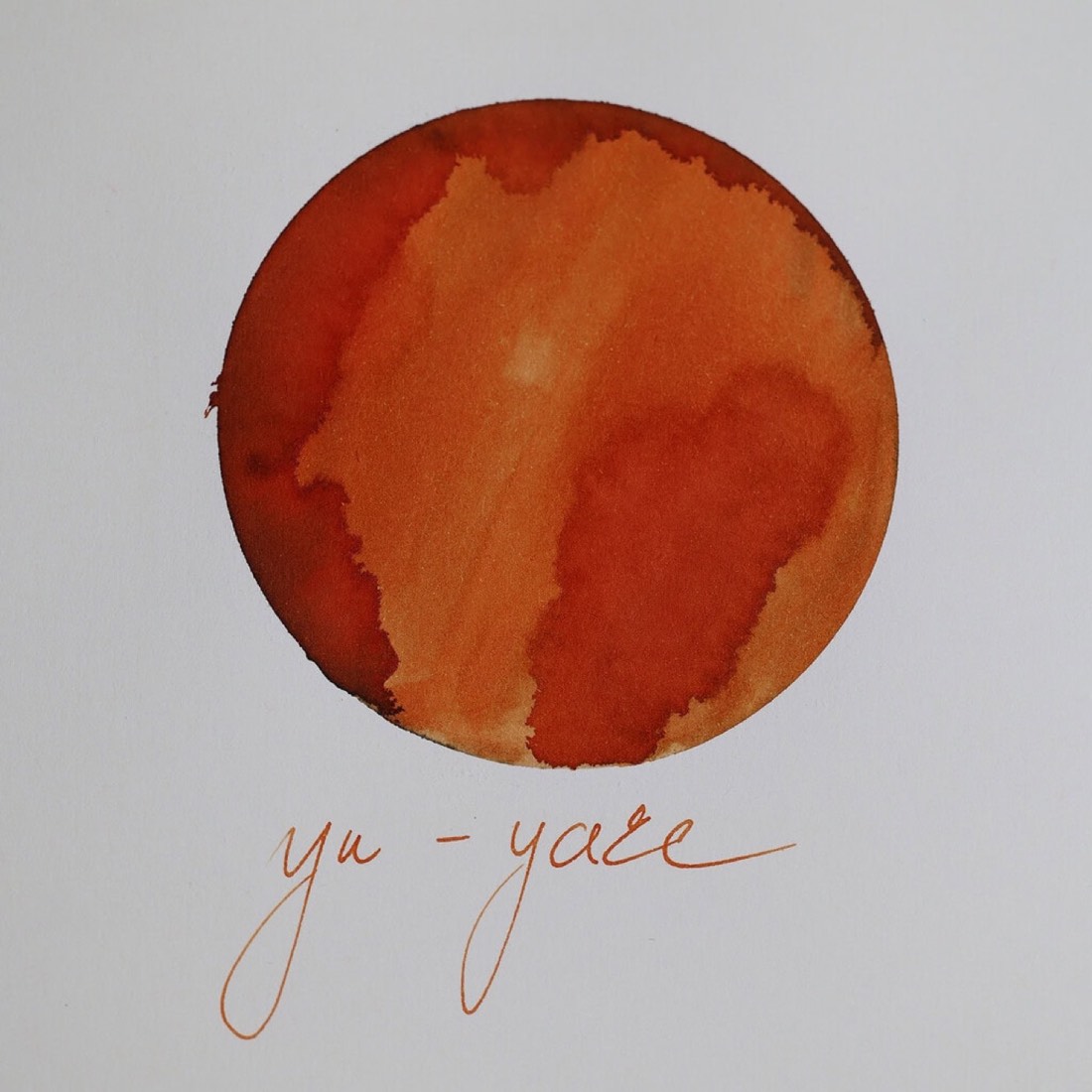
Yu-yake (夕焼け) means “sunset glow” in Japanese. The name evokes the warm, vivid colors of the sky when the sun sinks below the horizon — bright, emotional, and full of atmosphere. Pilot Iroshizuku Yu-yake is a warm, expressive sunset orange ink — bold enough to stand out, yet soft enough to remain elegant. It captures that magical moment when daylight fades and the sky glows in deep oranges and gold.
🟠 Color tone: Radiant sunset orange with a gentle reddish undertone
✨ Shading: Beautiful shifts between light and rich orange, especially with broader nibs
🖋️ Flow: Smooth, slightly wet — enhances nib glide and ink vibrancy
⏱️ Dry time: Moderate — comfortable for everyday writing
Yu-yake brings the mood and emotion of sunset directly onto the page — perfect for journaling, letters, creative accents, or illustrations. It’s an ink with a voice and a feeling.


Yama-budo
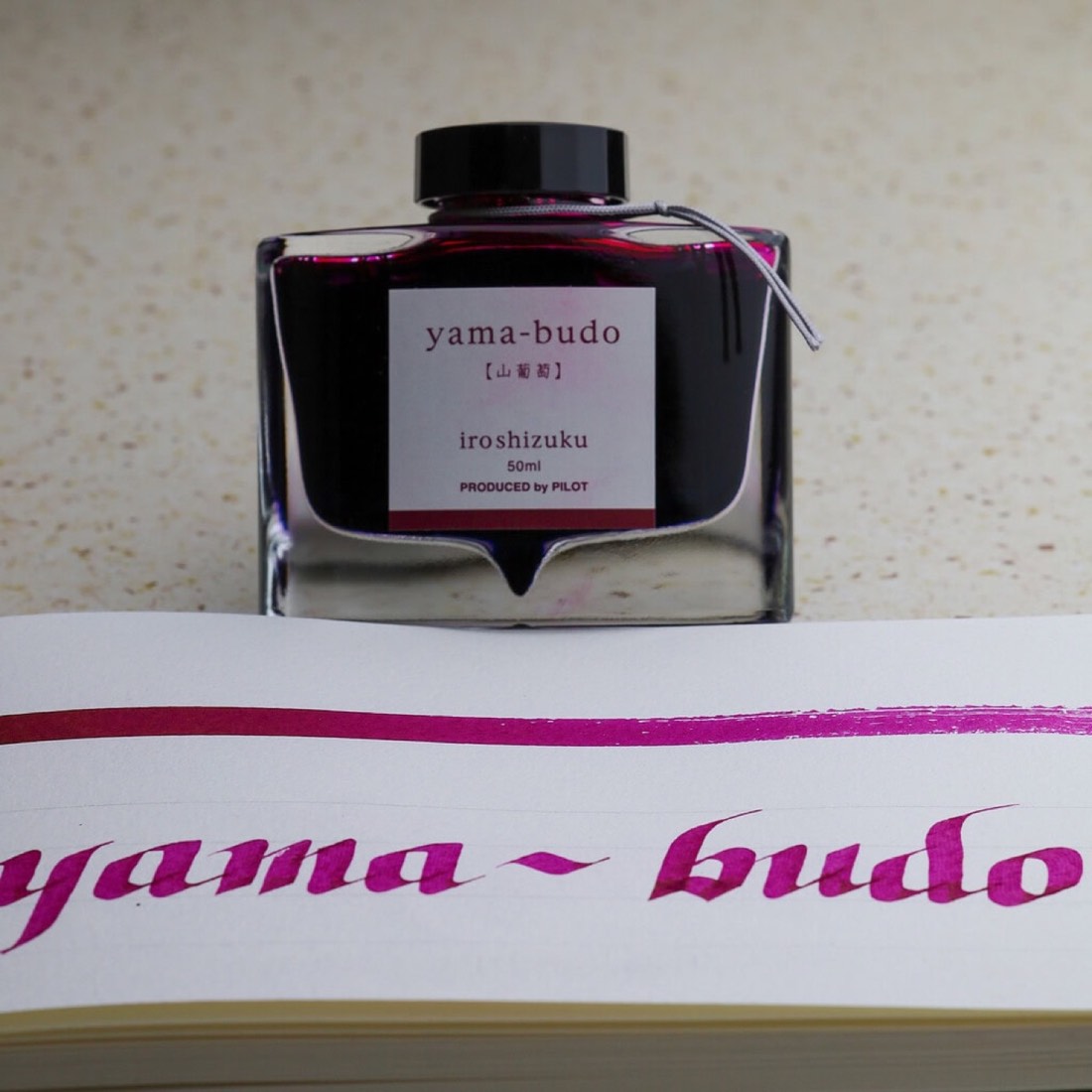
Yama-budo (山葡萄) translates to “wild mountain grapes” in Japanese. The name evokes deep purple-red fruit growing in the mountain forests — rich, bold, and full of natural intensity. Pilot Iroshizuku Yama-budo is one of the most iconic and celebrated inks in the Iroshizuku lineup. It features a vibrant magenta-purple tone that commands attention — strong, luxurious, and full of personality.
🍇 Color tone: Bold magenta-purple with ruby undertones
✨ Shading: Noticeable gradient — from bright pinkish hues to deep wine purple
🖋️ Flow: Smooth and wet — enhances line richness and ink saturation
🔮 Sheen: Strong dark green sheen on high-quality paper
This is not a shy ink. Yama-budo is dramatic, elegant, and artistic — a true statement color.


Momiji
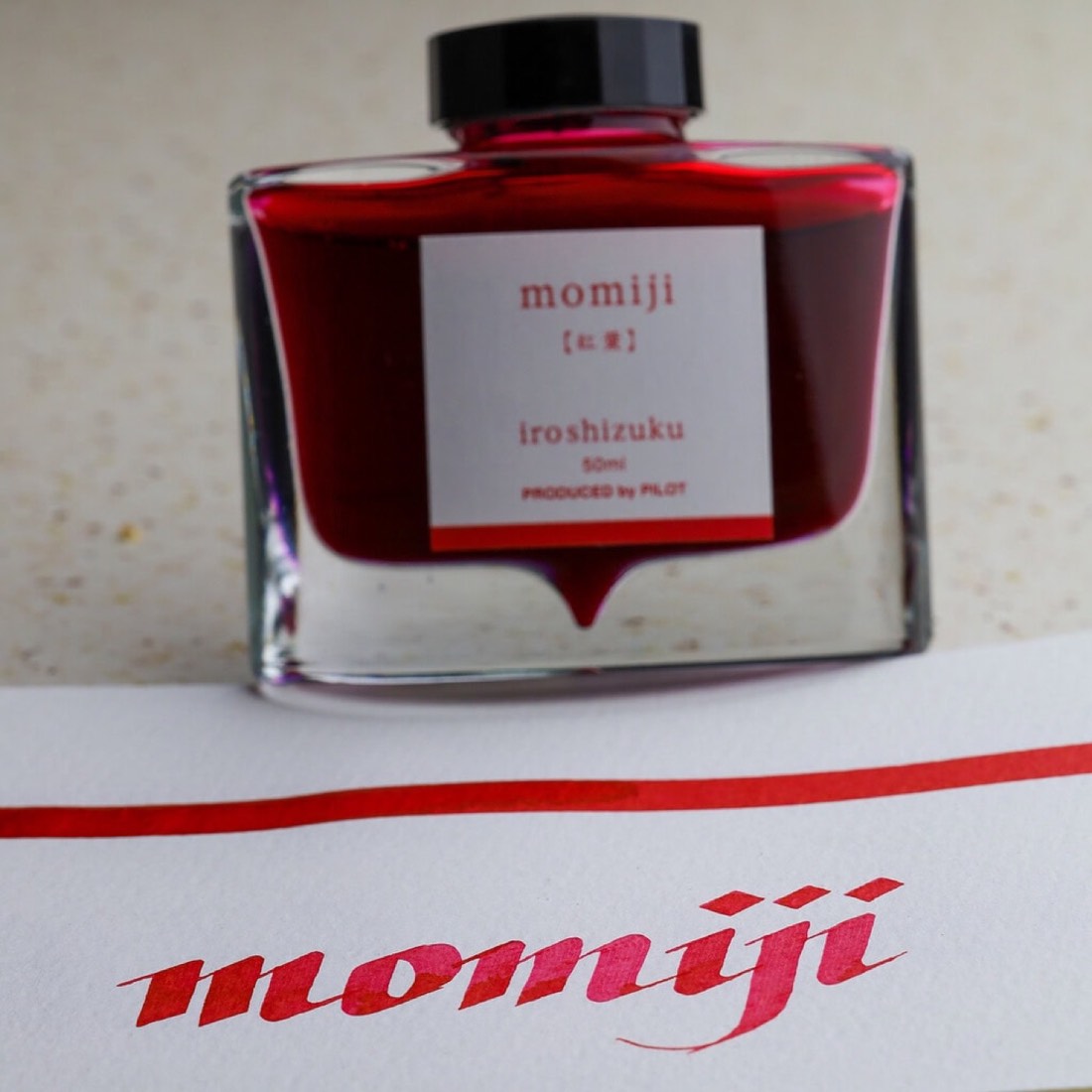
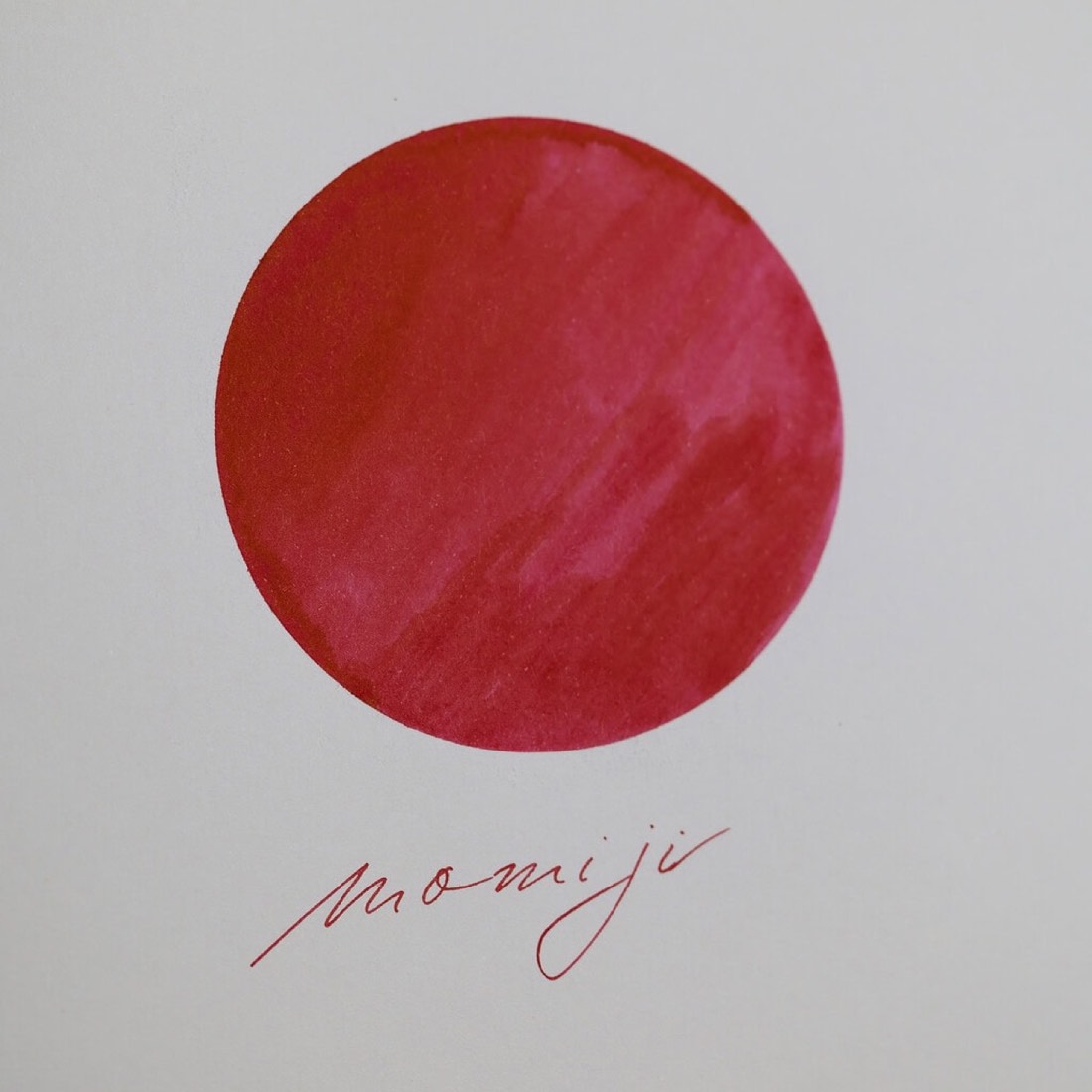
Momiji (紅葉) translates to “autumn leaves” in Japanese. It specifically refers to the brilliant red Japanese maple leaves that transform the landscape during fall — a symbol of seasonal beauty, change, and the artistry of nature. Pilot Iroshizuku Momiji embodies the vibrant red of freshly turned maple leaves. It is a bright, clear, and energetic red-pink ink — more playful than a classic red, and more refined than a pure pink.
🍁 Color tone: Bright red with subtle magenta-pink undertones
✨ Shading: Moderate — transitions beautifully from light cherry to deep maple red
🖋️ Flow: Smooth and slightly wet — great performance even with finer nibs
🔆 Vibrancy: Very high — it pops on the page, especially on white paper
🔍 Legibility: Excellent — an eye-catching yet comfortable color for reading

Fuyu-gaki
Fuyu-gaki (冬柿) translates to “winter persimmon.” The name reflects the rich, bright orange of ripe persimmons enjoyed in Japan during the colder season — a burst of color and warmth against winter’s gray tones. Pilot Iroshizuku Fuyu-gaki is an energetic, bright persimmon orange ink. It feels cheerful, fresh, and juicy — a perfect pop of positivity in writing.
🍊 Color tone: Vivid bright orange with a slight red-fruit influence
✨ Shading: Noticeable — ranges from soft pumpkin to vibrant citrus orange
🖋️ Flow: Smooth, slightly wet — enhances vibrancy and coverage
⏱️ Dry time: Moderate — practical for journaling and note-taking
🎨 Personality: Playful, lively, uplifting — a joyful ink with strong visual impact
Unlike a harsh neon orange, Fuyu-gaki is warm and inviting — it draws attention while remaining easy on the eyes.


Hana-ikada
Hana-ikada (花筏) translates to “flower rafts” in Japanese. It refers to the poetic spring scene where fallen cherry blossoms gather and drift like tiny rafts along the surface of a river. Soft. Fleeting. Pilot Iroshizuku Hana-ikada is a delicate, gentle cherry blossom pink in its purest form. It captures the airy and ephemeral feel of sakura petals dancing on the water.
🌸 Color tone: Soft sakura pink
✨ Shading: Light variation — adds a watercolor feel
🖋️ Usage: Perfect for journaling, highlighting, detailed creative writing
💧 Flow: Smooth and slightly wet — especially elegant with broader nibs
🔍 Legibility: Best with medium to broad nibs for stronger color presence


Murasaki-shikibu
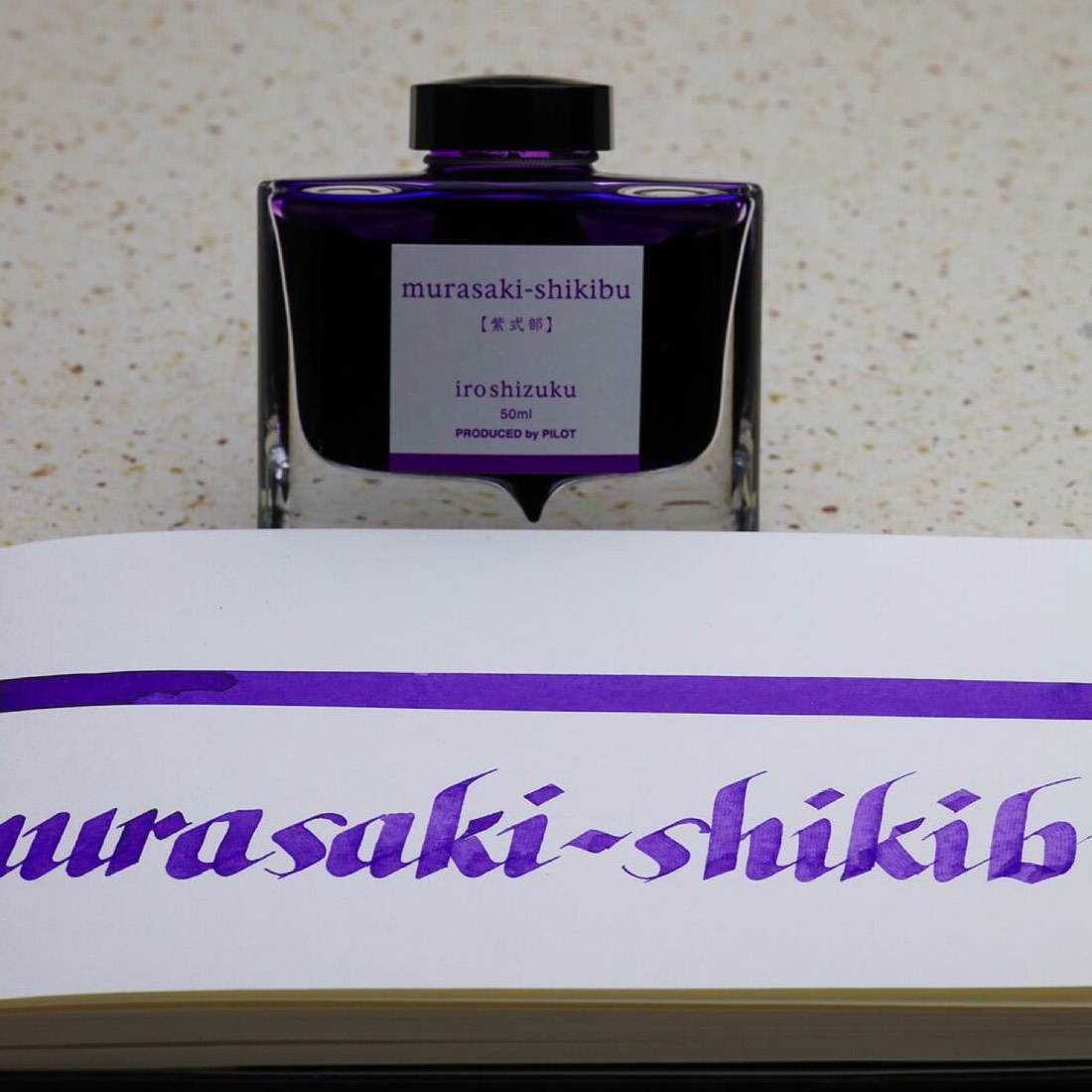
Murasaki-shikibu (紫式部) is named after one of the most important figures in Japanese literature, Lady Murasaki Shikibu — the noblewoman who wrote The Tale of Genji, considered the world’s first novel. Pilot Iroshizuku Murasaki-shikibu is a sophisticated bright violet ink with a fresh, modern character. It stands out beautifully on the page without feeling overpowering.
💜 Color tone: Clear violet with light blue-magenta undertones
✨ Shading: Soft to moderate — gives writing a dynamic, graceful look
🖋️ Flow: Smooth and slightly wet — enhances nib performance
🔮 Sheen: Subtle pink sheen on high-quality paper
📄 Readability: Excellent — vibrant while still easy to read


Asa-gao
Asa-gao (朝顔) translates to “morning glory” in Japanese. The name represents the vibrant blue morning glory flower, opening with fresh energy at sunrise — a symbol of new beginnings, clarity, and optimism. Pilot Iroshizuku Asa-gao is a classic royal blue ink with a bright, uplifting tone. It captures the crispness of early morning — clear, confident, and expressive.
💙 Color tone: Bright royal blue with a clean, pure finish
✨ Shading: Moderate — adds elegant depth to handwriting
🖋️ Flow: Smooth and consistent — excellent everyday performance
🔍 Readability: High — ideal for long writing sessions
🏢 Use case: Perfect balance for professional + creative writing
Asa-gao is one of the most versatile inks in the Iroshizuku lineup — bold enough to stand out, yet classic enough for daily work notes and correspondence.


Ajisai
Ajisai (紫陽花) means “hydrangea” in Japanese. Hydrangeas bloom during Japan’s rainy season — shifting in color depending on the soil and weather. Ajisai represents delicate beauty, transformation, and emotional depth. Pilot Iroshizuku Ajisai captures the soft, cool charm of blue-violet hydrangea petals glistening after rain. It is a gentle, calming shade — neither too blue nor too purple.
💜💙 Color tone: Light blue-violet (a perfect lavender-blue balance)
✨ Shading: Lovely soft transitions — watercolor-like effect
🖋️ Flow: Smooth and wet — enhances softness and depth
🌧️ Mood: Calm, serene, emotional — like a rainy summer morning
📄 Readability: Best with Medium/Broad nibs for richer visibility
Ajisai is ideal for journaling, thoughtful letters, and expressive everyday writing — it adds emotion without overpowering the page.


Ama-iro
Ama-iro (天色) translates to “sky blue” in Japanese. It evokes a clear daytime sky — bright, airy, refreshing, and full of optimism. An ink for open horizons and uplifting thoughts. Pilot Iroshizuku Ama-iro is a light, refreshing sky-blue ink. It has a cheerful brightness and a soft personality — perfect for expressive, friendly writing.
💙 Color tone: Clean, bright sky-blue with cool undertones
✨ Shading: Moderate — creates subtle depth and variation
🖋️ Flow: Smooth and on the wetter side — enhances softness of the color
🎨 Personality: Playful, youthful, uplifting — a happy ink
📄 Best use: Works beautifully with broader nibs to bring out its vibrancy
Ama-iro is not a business-style ink — it’s meant for creativity, journaling, and everyday writing that feels joyful and personal.


Ku-jaku
Ku-jaku (孔雀) means “peacock” in Japanese. The name evokes the stunning green-blue shimmer of peacock feathers — vibrant, confident beauty with a proud presence. Pilot Iroshizuku Ku-jaku is a luxurious teal blue-green ink — bright enough to stand out, yet balanced enough for everyday use. It’s one of the most beloved inks in the Iroshizuku lineup for its elegance and versatility.
🦚 Color tone: Rich teal — a perfect harmony of blue and green
✨ Shading: Excellent — from deep peacock green to bright aquatic tones
🖋️ Flow: Smooth and slightly wet — strong color presence even with finer nibs
🌊 Mood: Confident, expressive, sophisticated
🔍 Readability: Very high — bold but not overwhelming
Ku-jaku feels like a statement ink — refined, artistic, and full of personality.


Rikka
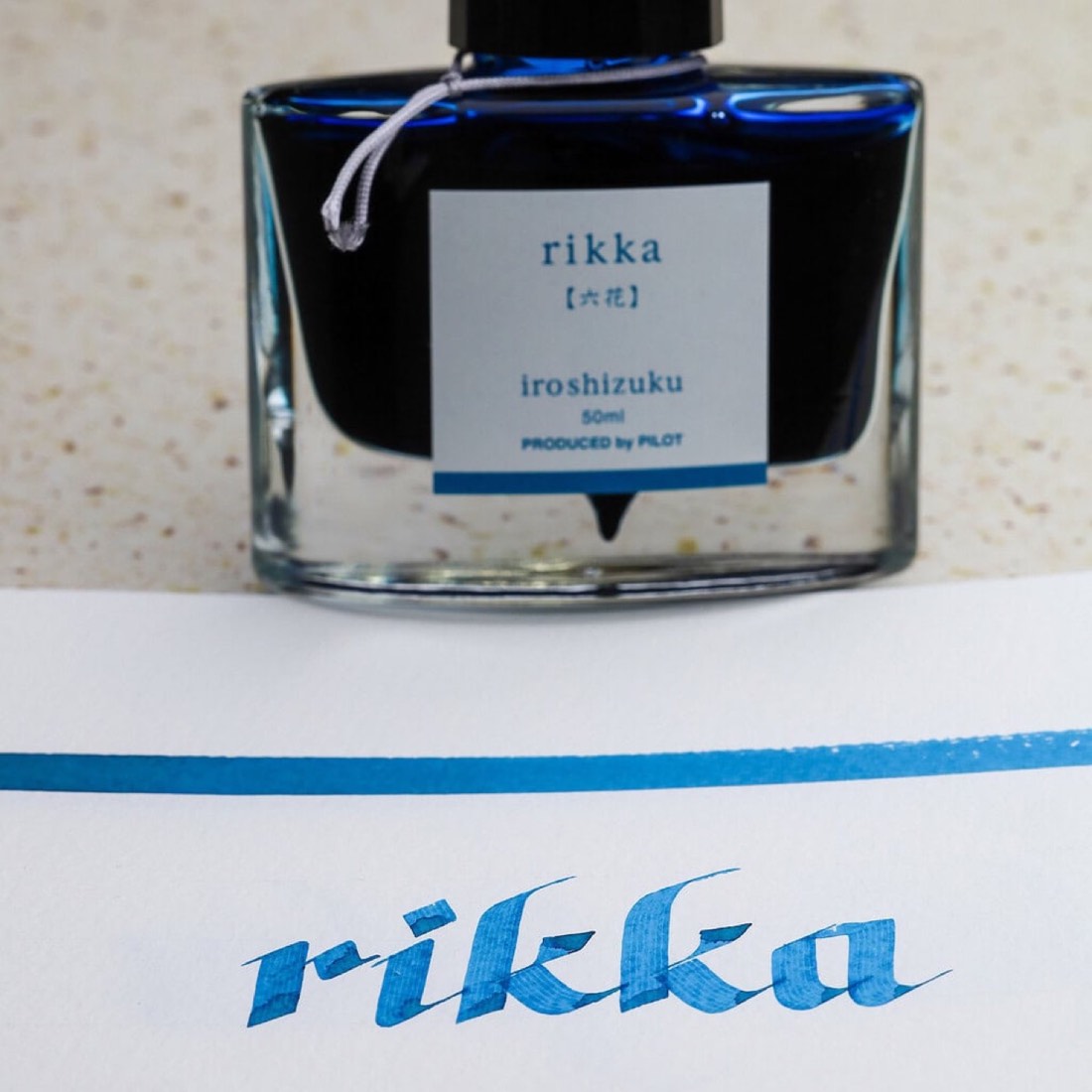
Rikka (六花) can be interpreted as “six-flower”, a poetic reference to a snowflake — hinting at its hexagonal crystalline shape. The name evokes images of snow falling softly from a clear winter sky, pure and serene. Pilot Iroshizuku Rikka is a crisp, cool blue ink that captures the fresh, airy essence of winter snow and frosty skies. It’s elegant, subtle, and evocative.
❄️ Color tone: Light-to-medium blue with a slight hint of green — a cool “icy” blue rather than a deep navy.
✨ Shading: Moderate — you’ll get soft transitions from lighter sky-blue to richer mid-tones depending on nib and paper.
🖋️ Flow: Smooth, reliable — typical for Iroshizuku inks, with good lubrication and pleasant glide.
⏱️ Dry time: Around medium (~20 seconds on good paper), balancing usability and flow.
📄 Readability: High — crisp and clear, even with finer nibs, but still expressive enough for headings, journaling or creative writing.
🌨️ Mood & Personality: Fresh, airy, clean — evokes winter mornings, clarity and calm. Perfect for reflective writing, poetry, notes or minimalist journal spreads.
Rikka isn’t a loud or flashy ink. It’s subtle, serene — like a winter breeze across a snowy field. In a world of saturated purples and dramatic dark blues, Rikka feels like quiet elegance: calm, thoughtful, and a little poetic.


Kon-peki
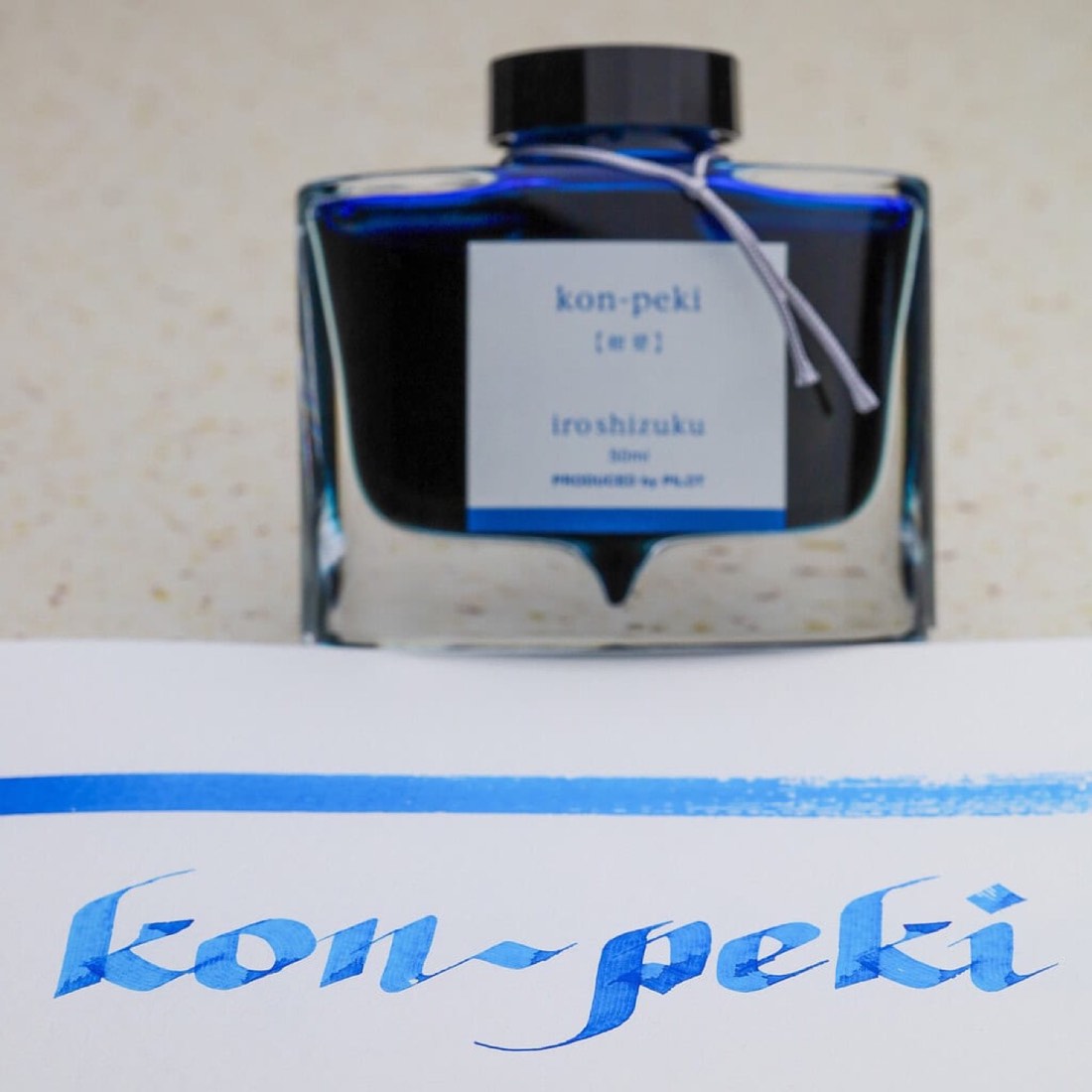
Kon-peki (深碧) translates to “deep cerulean blue” in Japanese. The name evokes the vastness of a clear ocean and the richness of endless blue skies — a sense of openness, freedom, and depth. Pilot Iroshizuku Kon-peki is one of the most iconic and best-loved inks in the fountain pen world. It is a bright, vibrant turquoise-blue that instantly catches the eye.
🌊 Color tone: Vivid cerulean — balanced perfectly between blue and teal
✨ Shading: Excellent — natural transitions from lighter aquas to deep ocean blue
🖋️ Flow: Smooth and lubricated — enhances nib performance and writing comfort
🔍 Readability: Strong and clean — highly visible without being harsh
🎨 Personality: Fresh, energetic, and uplifting
Kon-peki is incredibly versatile — perfect for journaling, letters, creative writing, or even adding flair to everyday notes. It’s a blue that brings joy to the page.


Tsuki-yo
Tsuki-yo (月夜) translates to “moonlit night” in Japanese. The name evokes a peaceful, poetic scene — a quiet night sky illuminated by the soft glow of the moon. Pilot Iroshizuku Tsuki-yo is a refined, deep blue ink inspired by those tranquil nights when the moonlight gently reflects off the darkness of the landscape. The color sits beautifully between navy blue and teal, giving it a sophisticated yet vivid character.
🌙 Color tone: Deep blue with subtle green-teal undertones
✨ Shading: Smooth and moderate — adds elegance to handwriting
💧 Saturation: Rich, without feeling overly bold
🖋️ Flow: Very well-lubricated — enhances nib smoothness
🔍 Dry time: Moderate — ideal for journaling and longer writing sessions
🎨 Sheen: Occasional reddish sheen on high-quality paper
This makes Tsuki-yo a perfect everyday ink for those who want something darker and professional, but with a quiet touch of personality — like a moonlit mystery hidden within each stroke.


Shin-kai
Shin-kai (深海) means “deep sea” in Japanese. The name reflects the quiet power and depth of the ocean — mysterious, elegant, and endlessly profound. Pilot Iroshizuku Shin-kai is a refined dark blue ink with sophisticated gray undertones. It strikes the perfect balance between professional seriousness and artistic character — ideal as an everyday signature color.
🌌 Color tone: Deep navy-blue softened by subtle gray
✨ Shading: Gentle but elegant — adds texture without distraction
🖋️ Flow: Smooth and well-lubricated — reliable for daily writing
🔍 Readability: Excellent — crisp, comfortable on the eyes
🕴️ Use case: Perfect for business, journaling, signatures, and long writing sessions
Shin-kai feels calm and intelligent — like ink that knows what it’s doing. It’s classy without trying too hard.


Syo-ro
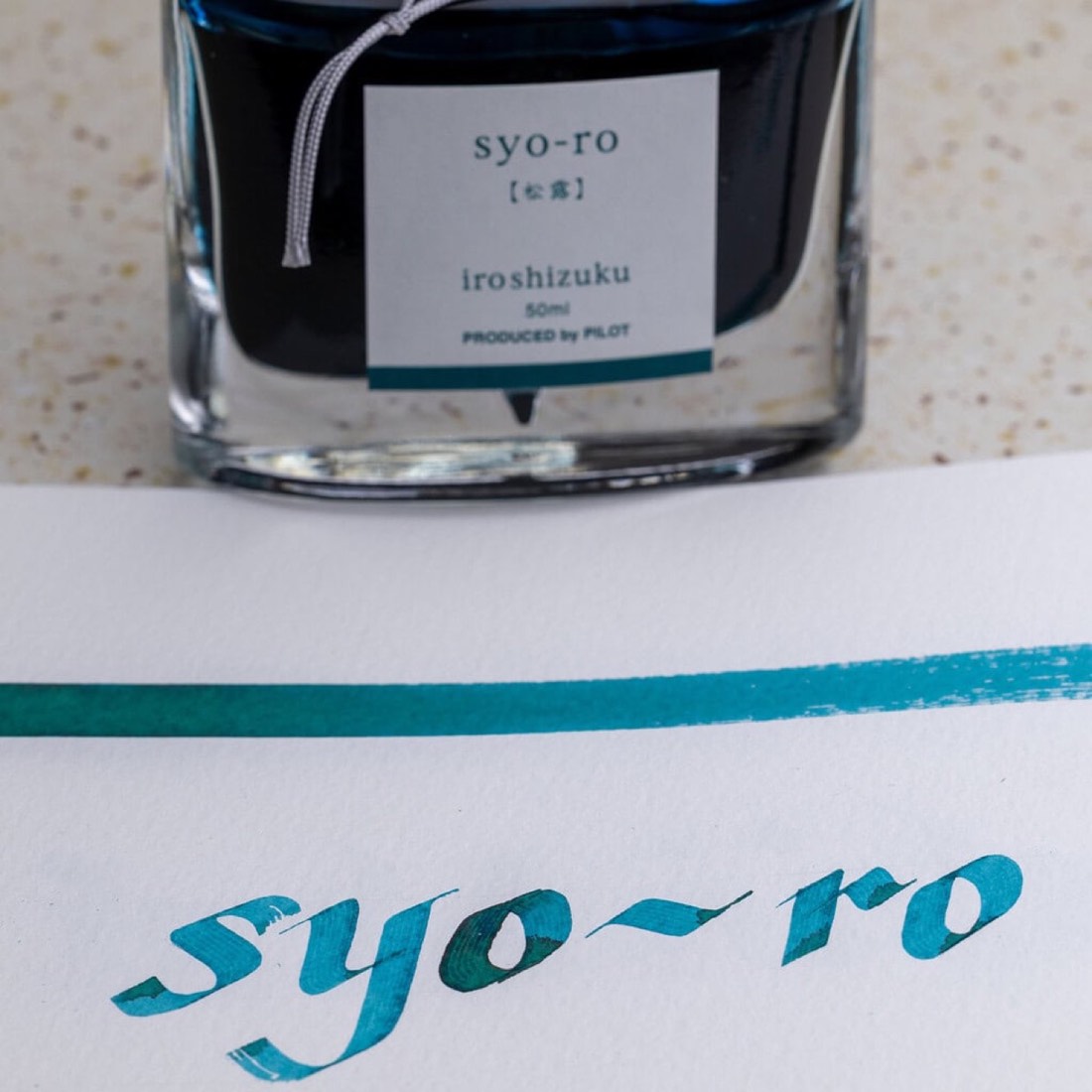
Syo-ro (松露) translates to “dew on pine trees.” The name evokes a peaceful forest morning — cool air, quiet shadows, and droplets of dew glistening on deep green pine needles. Pilot Iroshizuku Syo-ro is a deep blue-green / forest teal ink. It is richer and moodier than Ku-jaku — slightly darker, more grounded, more mysterious.
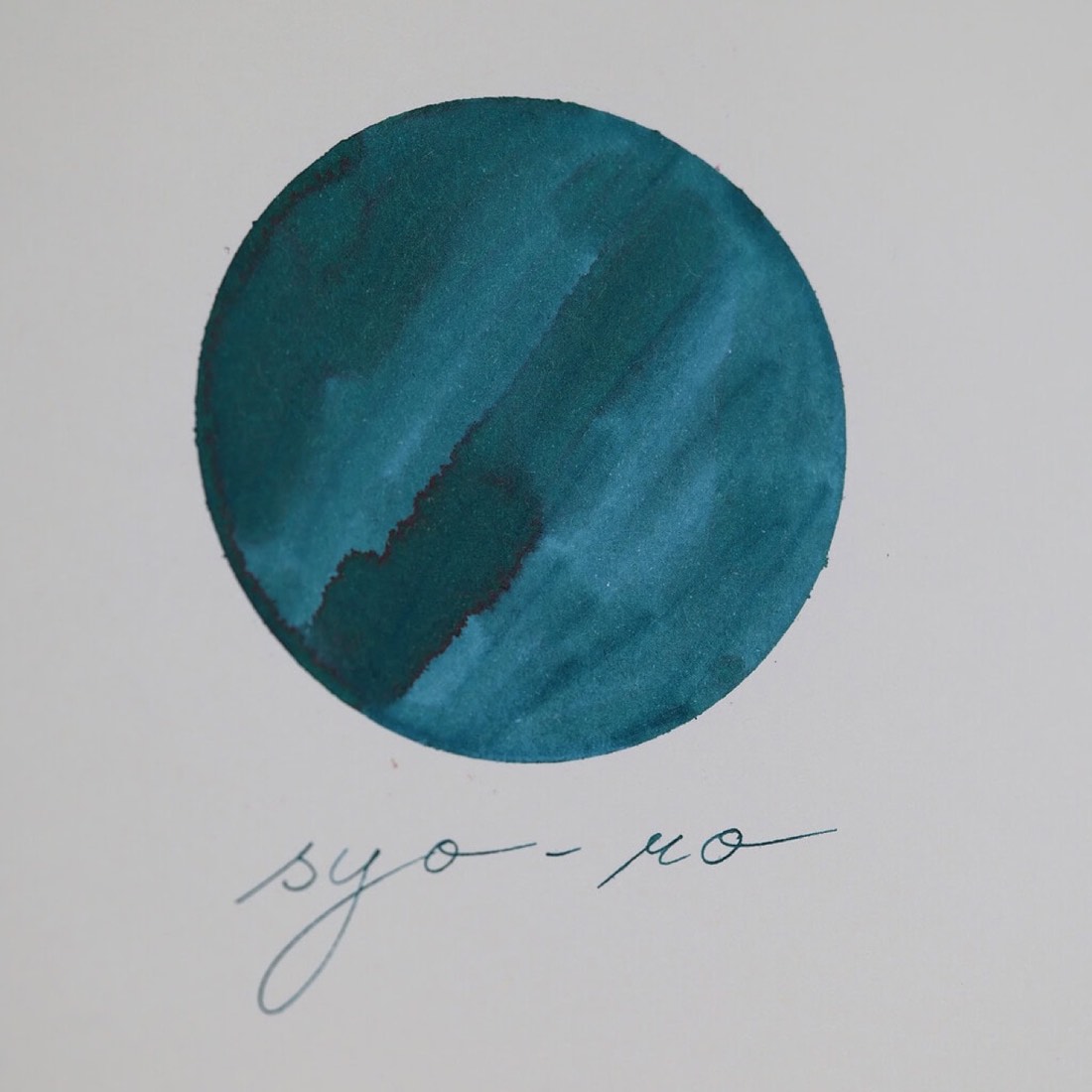
🌲 Color tone: Deep teal with a strong green heart and subtle blue edge
✨ Shading: Excellent — dynamic transitions between pine green and ocean teal
🖋️ Flow: Smooth and slightly wet — provides a lush writing experience
🔍 Readability: High — elegant and understated, great for everyday use
🌧️ Mood: Calm, mature, natural — like writing in a quiet forest
Syo-ro feels like nature captured in ink: sophisticated, earthy, and beautifully balanced.

Sui-gyoku
Sui-gyoku (翠玉) can be translated roughly as “emerald” or “jade gemstone.” The name reflects the deep green-aquatic tone of this ink — a color reminiscent of precious stone, rich with natural depth and calm. Pilot Iroshizuku Sui-gyoku is a sophisticated teal-green / aqua-green ink — combining freshness with elegance. It sits nicely between green and blue, giving it a versatile character that works for writing, journaling or creative pieces.
💚 Color tone: Medium teal / aqua-green — lively but balanced
✨ Shading: Good — produces subtle transitions from lighter aqua to deeper green tones, depending on nib, paper, and ink saturation.
🖋️ Flow: Smooth and consistent — typical of Iroshizuku inks, giving pleasant glide and reliable ink flow.
📝 Writing behavior: On quality paper, handwriting appears clean and expressive; on broader nibs shading becomes more pronounced. Fine nibs may render it more uniform.
🌟 Overall vibe: Calm, natural, slightly cool yet still vibrant — a great bridge between traditional green and blue inks.
Sui-gyoku is less about harsh contrasts or loud colors — it’s about subtle elegance and depth, like ink inspired by a gemstone’s glow.


Shin-ryoku
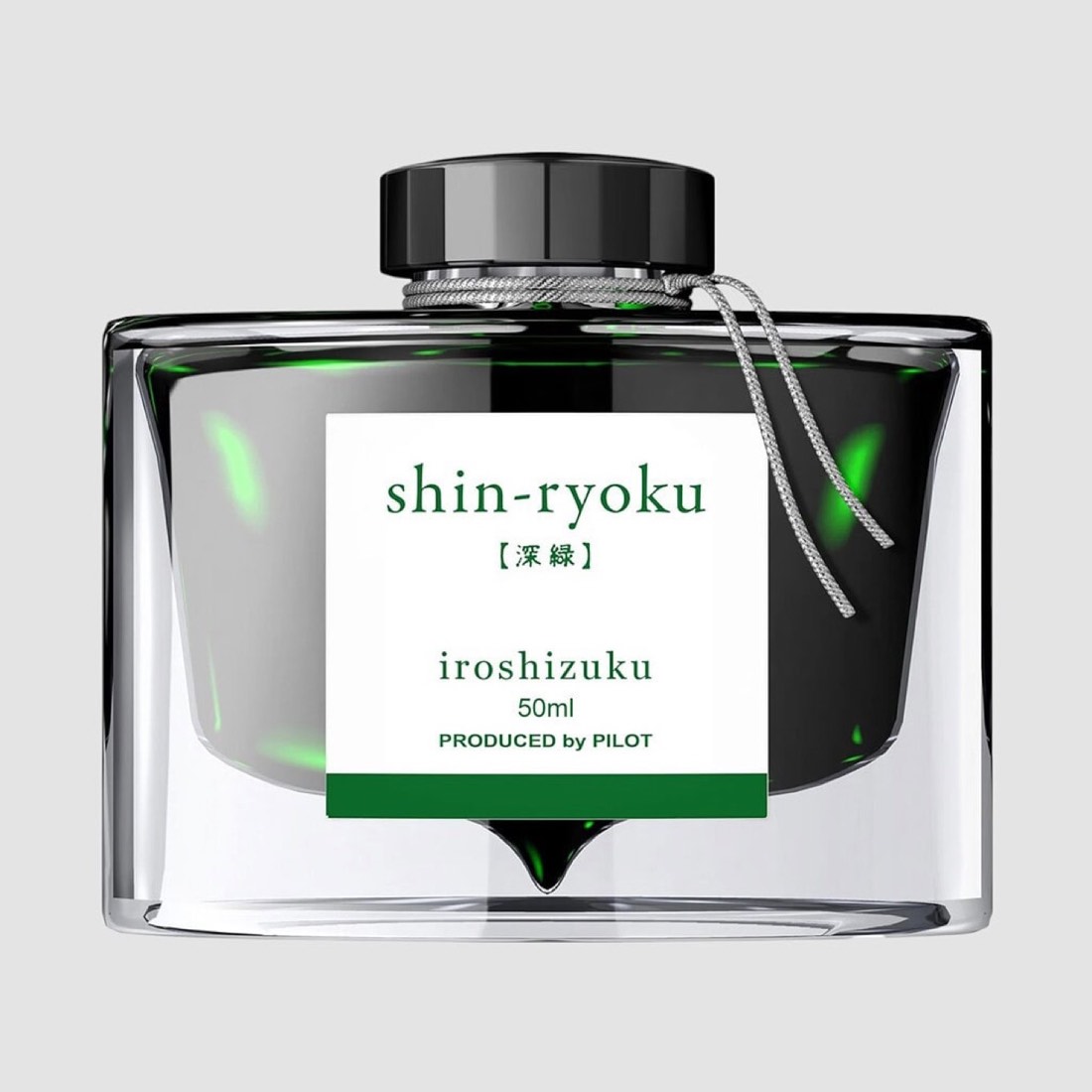
Shin-ryoku (深緑 / sometimes just 深緑 written as “deep green” in Japanese) evokes the deep, rich green of dense forests — the colour of evergreen pines, moss, and shadows under the trees. It captures the calm, timeless beauty of nature’s greenery and invites a sense of tranquillity and groundedness. Pilot Iroshizuku Shin-ryoku is a medium-to-dark forest green ink, deeply saturated yet subtle enough for everyday use. It belongs to Iroshizuku’s high-end line, known for excellent quality, smooth flow, and refined colors.
🌲 Color tone: Rich forest green — a perfect balance between green and deep natural tones.
✨ Shading: Medium — on good paper and with broader nibs you’ll see lovely transitions from lighter green to deeper shades.
🖋️ Flow: Smooth and wet — gives a nice ink-lay without skipping, and comfortable glide for long writing sessions.
🕒 Dry time: Moderate — good balance for everyday writing without long waiting times.
🔥 Personality / vibe: Calm, natural, elegant — perfect when you want your writing to feel organic, grounded, and timeless.
Shin-ryoku doesn’t try to shout. It feels like writing with nature — thoughtful, serene, and versatile.


Chiku-rin
Chiku-rin (竹林) means “bamboo forest” in Japanese. The name evokes the calm, serene atmosphere of a bamboo grove — peaceful, refreshing, and rooted in nature. Pilot Iroshizuku Chiku-rin is a fresh, natural bamboo-green ink — a gentle green with grey-blue undertones that gives it a subtle, elegant character. It feels like writing with nature at your fingertips.
🌿 Color tone: Soft bamboo-green / muted green-grey — understated but distinct
✨ Shading: Gentle — with broader nibs you get lovely variation from soft pale green to deeper sage tones
🖋️ Flow: Smooth and balanced — good for everyday writing or creative journaling
🌱 Mood: Calm, natural, balanced — reminiscent of shady bamboo forests and fresh leaves
📄 Readability: Very good — soft on the eye, yet readable and expressive
Chiku-rin isn’t about loud colors — it’s about subtle presence, calmness, and a connection with nature. An ideal everyday green that doesn’t overwhelm the page.


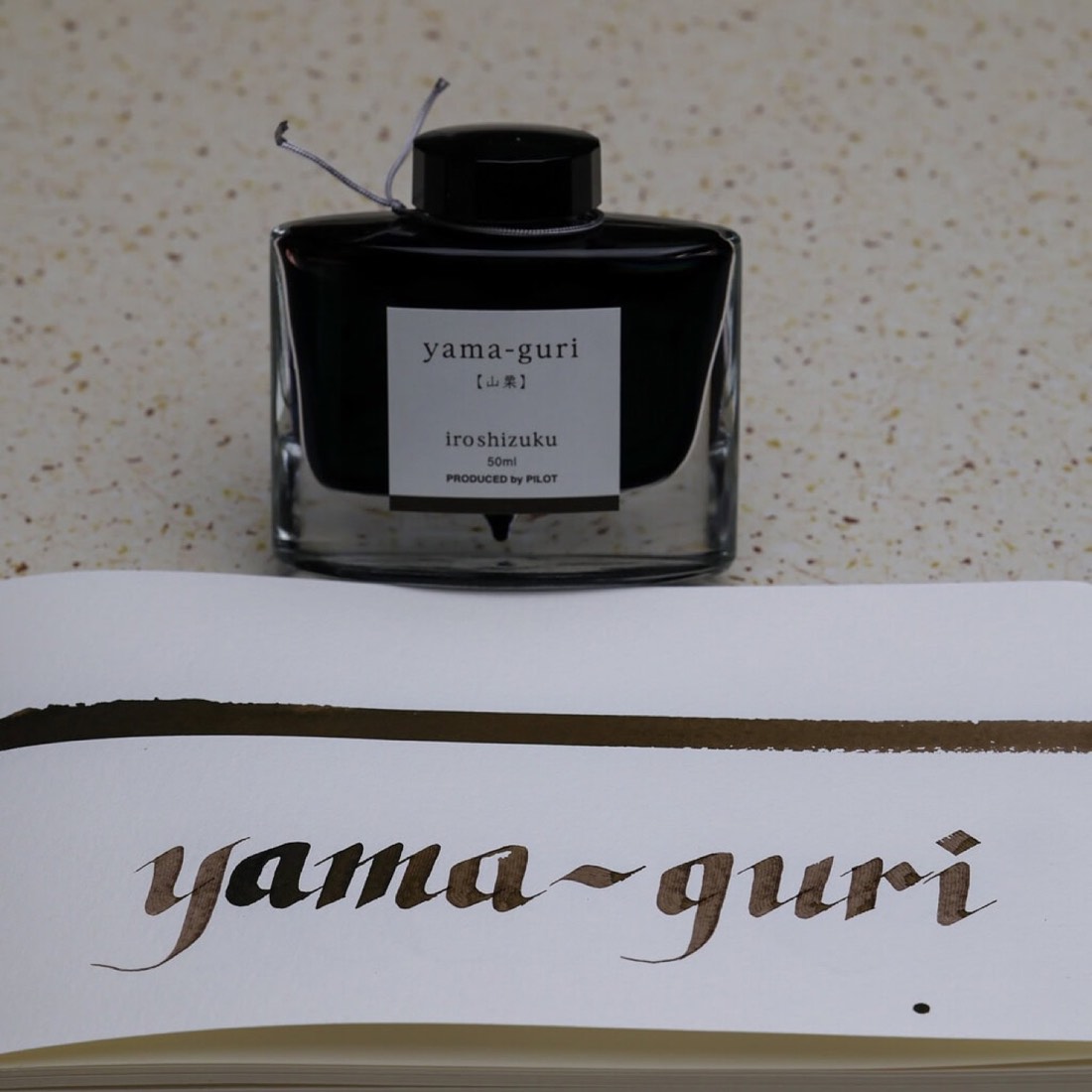
Yama-guri
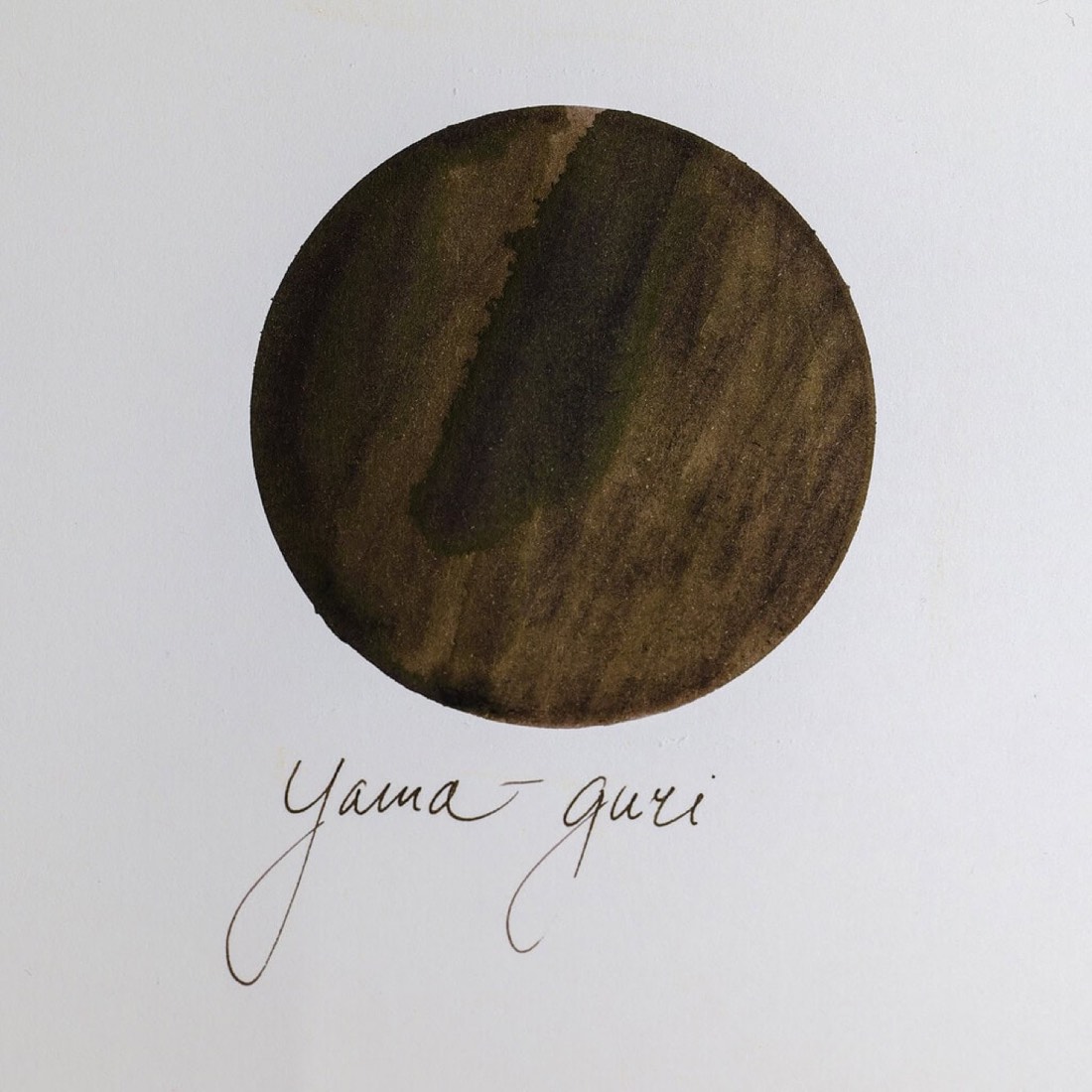
Yama-guri (山栗) translates to “wild mountain chestnut.” The name brings to mind deep earthy tones, autumn woods, and the warmth of natural textures — a tribute to the richness of the forest floor. Pilot Iroshizuku Yama-guri is a dark brown ink with refined character. It balances warmth and depth, making it both expressive and elegant — a perfect alternative to black for those who want subtle personality in everyday writing.
🌰 Color tone: Deep chestnut brown with soft cool undertones
✨ Shading: Excellent — from lighter earthy browns to rich, near-black lines
🖋️ Flow: Smooth and slightly wet — comfortable for long writing sessions
🕴️ Use case: Professional, journaling, personal notes — highly versatile
📄 Readability: Very high — dark enough for business settings, warm enough for expressive writing
Yama-guri feels like ink with history — understated but full of depth and emotion.

Syun-gyo
Syun-gyo (春暁) translates to “spring dawn” in Japanese. It captures the quiet moment when the first warm light of spring breaks into the darkness — soft, subtle, and full of new beginnings. Pilot Iroshizuku Syun-gyo is a deep black-burgundy ink with a refined warm undertone. It appears professional and dark at first glance, yet reveals a hint of wine-red character under light — a perfect blend of elegance and emotional depth.
🌄 Color tone: Black with a subtle burgundy/red-brown undertone
✨ Shading: Visible in broader nibs — transitions from near-black to warm wine hues
🖋️ Flow: Smooth and well-lubricated — classic Iroshizuku performance
🔍 Readability: Excellent — suitable for professional writing
🎨 Personality: Understated sophistication with a poetic soul
Syun-gyo feels like a black ink with a secret — timeless enough for business, expressive enough for journaling and personal notes.


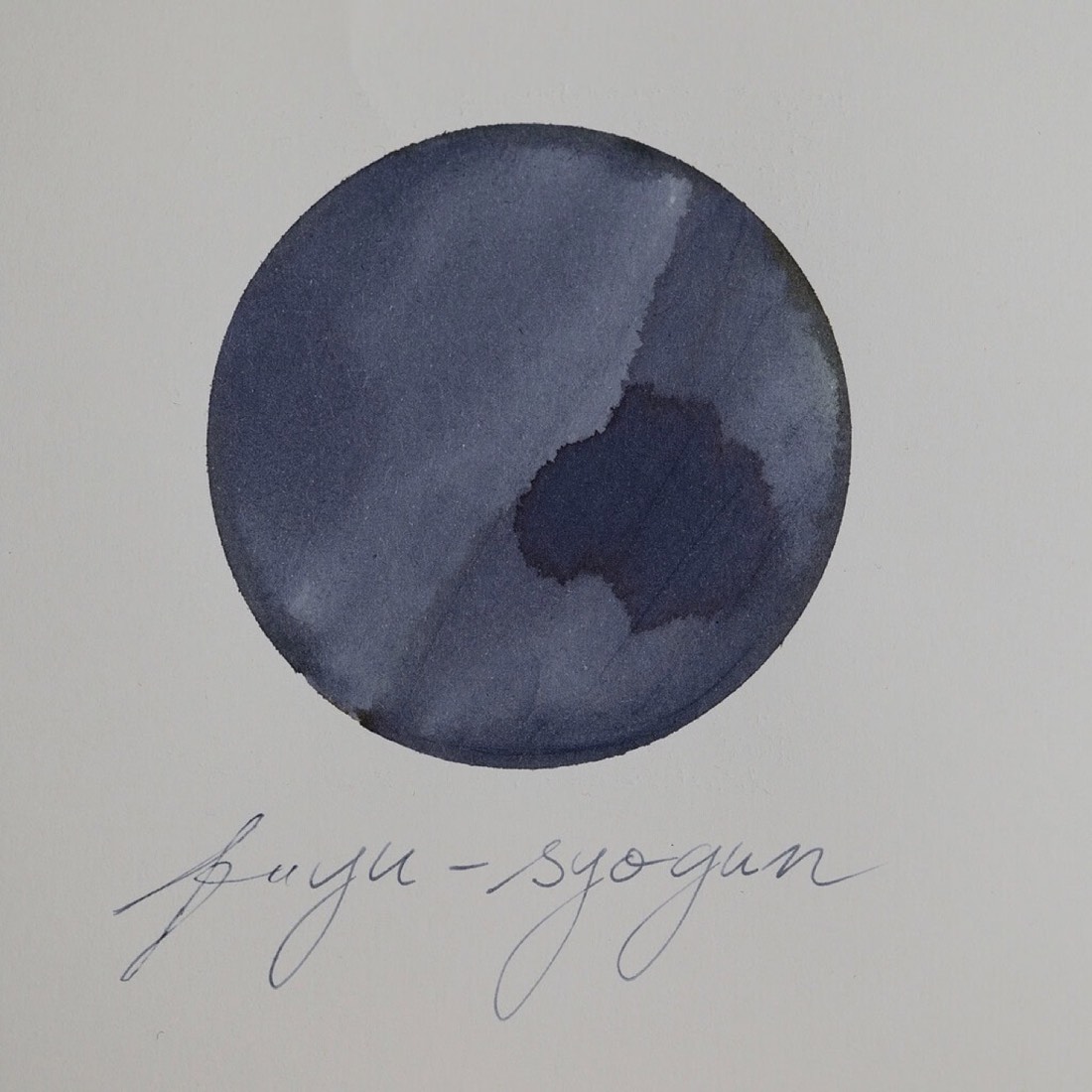
Fuyu-syogun
Fuyu-Syogun (冬将軍) translates to “Old Man Winter.” It evokes cold, overcast winter skies — quiet, muted, and beautifully calm. A color that reflects the stillness and introspection of the season. Pilot Iroshizuku Fuyu-Syogun is a refined cool grey ink with soft blue-violet undertones. It offers subtle character that makes writing feel elegant and atmospheric.
❄️ Color tone: Medium grey with a hint of blue/violet
✨ Shading: Noticeable — from light ash grey to charcoal tones
🖋️ Flow: Smooth and consistent — very pleasant for everyday writing
🔍 Readability: Soft but clear — a gentle alternative to black or blue
🧼 Cleaning: Easy to rinse — not highly permanent
🌫️ Mood: Calm, minimalist, introspective — “winter in a bottle”
Fuyu-Syogun is perfect for those who appreciate subtle beauty and emotional nuance in their writing.


Take-sumi
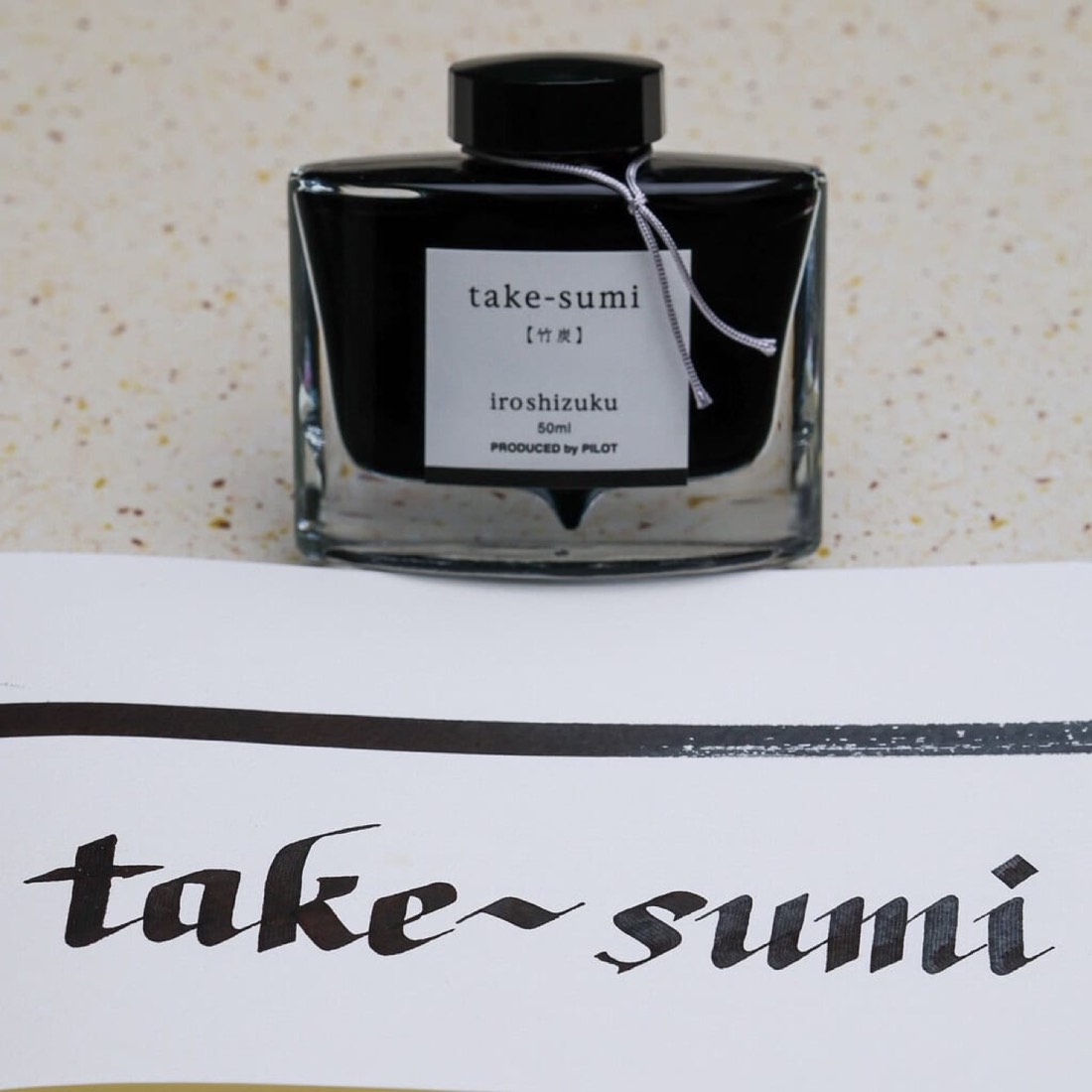
Take-sumi (竹炭) translates to “bamboo charcoal.” It evokes the image of traditional Japanese ink grounded in nature — earthy, deep, and minimalist. It’s like the charcoal from bamboo forests transformed into a rich, timeless writing tone. Pilot Iroshizuku Take-sumi is a deep, muted charcoal gray–black ink. It behaves like classic black ink at first glance, but on closer inspection reveals subtle greys and depth — a truly elegant alternative to standard black.
🪵 Color tone: Rich charcoal black, slightly softened — not harsh, but deep and balanced
✨ Shading: Slight variation — from deep near-black to soft charcoal gray depending on nib and paper
🖋️ Flow: Smooth and consistent — great for daily writing
🌑 Mood / Vibe: Understated, refined, perhaps a bit reserved — perfect for minimalism, journals, and business writing
📄 Readability: Excellent — clean lines with depth and character
Take-sumi feels like ink for the mindful writer — calm, grounded, refined.

————
Iroshizuku The Japanese Seven Gods of Good Fortune 100th anniversary
In 2018, Pilot celebrated its 100th anniversary with a remarkable set of Iroshizuku inks inspired by The Seven Gods of Good Fortune (七福神 — Shichifukujin), an iconic group of deities in Japanese folklore who symbolize happiness, prosperity, wisdom, and long-lasting good luck.
Each ink in this collection honors one of these legendary gods, reflecting their unique personalities and cultural significance through carefully crafted color symbolism. From the bold confidence of Bishamonten to the serene purity of Benzaiten, every shade tells a story deeply rooted in Japanese heritage.
Ebisu
Ebisu (恵比須) is named after one of the Seven Gods of Good Fortune in Japanese mythology — originally worshipped as the god of plentiful fishing, and today regarded as a god of happiness and prosperity. Pilot Iroshizuku Ebisu, created for Pilot’s 100th anniversary, reflects this origin through its color: a light blue / turquoise ink inspired by the sparkling sea around the rock on which Ebisu is often depicted sitting.
💙 Color tone: Fresh, luminous turquoise leaning slightly toward sky-blue — youthful, modern, and energetic
✨ Shading: Good — from pale water-blue to richer turquoise depending on nib and paper
🖋️ Flow: Smooth, wet Iroshizuku behavior — enhances softness and clarity of color
⏱️ Dry time: Moderate — practical for journaling and everyday writing
🔍 Readability: Best on white paper, lively but still comfortable for longer notes
Ebisu is ideal if you want something positive and refreshing — a turquoise that feels cheerful rather than dramatic. Like writing with a bit of sunshine and good fortune on the page.

Daikokuten
Daikokuten (大黒天) is the god of wealth, prosperity, and abundance. His symbolism is rooted in thriving businesses, good harvests, and material success — warm, reassuring, and optimistic.
Pilot Iroshizuku Daikokuten is a warm golden-yellow with olive undertones, subtle yet full of character.
🟡 Color tone: Golden yellow leaning toward earthy green — elegant, not loud
🌗 Shading: Soft to medium — gentle depth, especially in broader strokes
💧 Flow: Smooth and controlled — ideal for expressive writing
✨ Vibe: Warm, balanced, and contemplative
Daikokuten feels like late afternoon sunlight — refined, peaceful, and surprisingly versatile. Perfect for journaling, thoughtful notes, and moments that deserve a quiet glow


Bishamonten
Bishamonten (毘沙門天) is the protector god — symbolizing courage, discipline, and victory. He brings a sharp, powerful, determined energy.
Pilot Iroshizuku Bishamonten is a deep crimson red with subtle wine undertones, bold yet refined.
🔴 Color tone: Rich crimson-red — strong, elegant, and commanding
🌗 Shading: Medium — visible depth, especially in expressive lettering
💧 Flow: Smooth and consistent — delivers confident, saturated lines
🔥 Vibe: Powerful, determined, and dignified
Bishamonten is an ink with presence — ideal for statements, signatures, and writing that demands attention.


Benzaiten
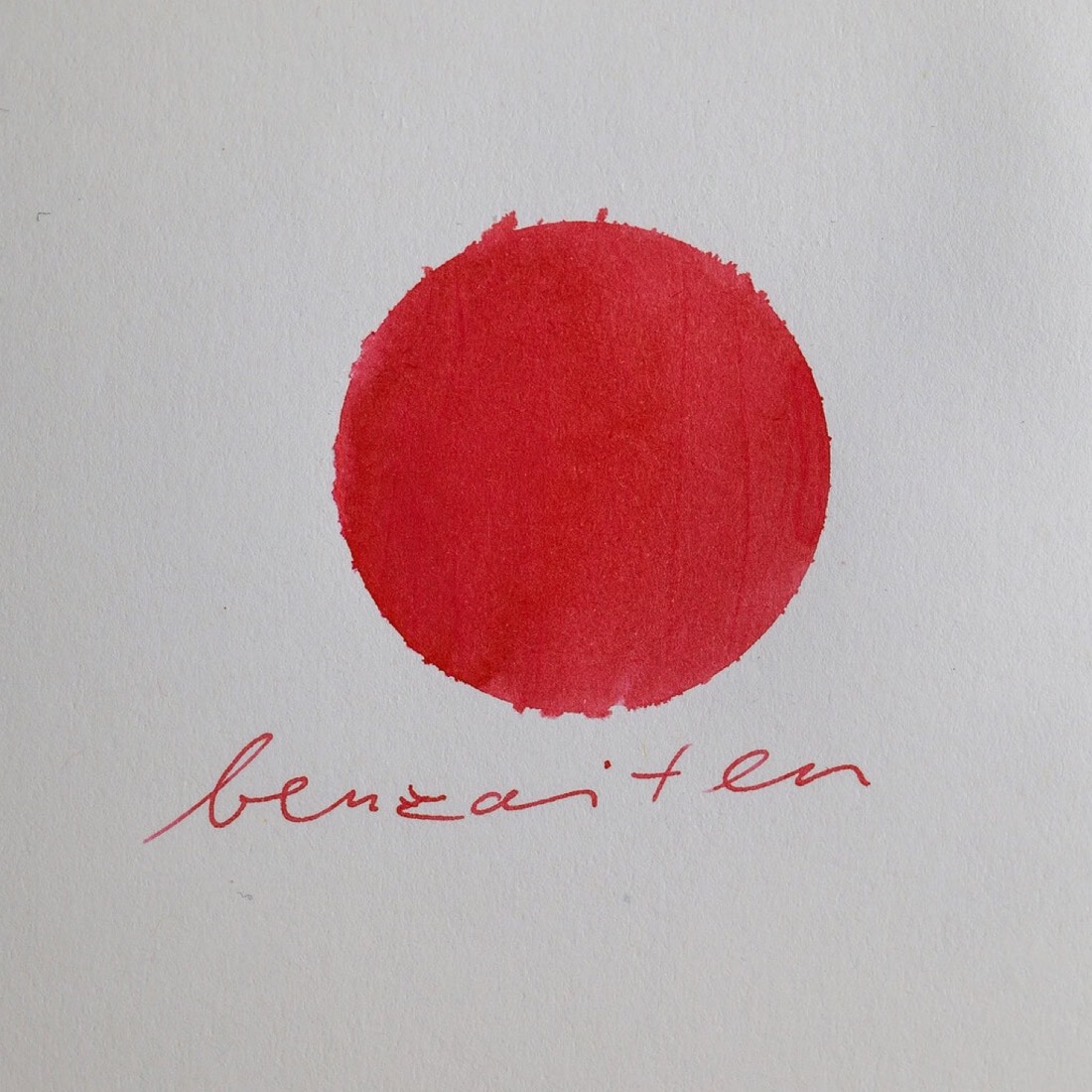
Benzaiten (弁才天 / 弁財天) is the goddess of art, music, beauty, and inspiration — joyful creativity flowing like water. Pilot Iroshizuku Benzaiten is a bright, cheerful pink — expressive, youthful, and artistic.
🌸 Color tone: Vivid soft-rose pink with uplifting energy
✨ Shading: Light-to-medium — playful movement across strokes
🖋️ Flow: Wet and smooth — enhances vibrancy of color
🎨 Mood: Creative, joyful, charismatic — perfect for expressive notes
Benzaiten is an ink for those who want their writing to sing — positive energy on every page.


Fukurokuju
Fukurokuju (福禄寿) represents happiness, prosperity, and longevity — the wise guardian of a fulfilling life. Pilot Iroshizuku Fukurokuju is a fresh yellow-green ink — soft, optimistic, and naturally joyful.
🌿 Color tone: Light-to-medium grassy green with a hint of warmth
✨ Shading: Moderately expressive — from spring green to deeper leaf tones
💧 Flow: Smooth and lively
🌱 Personality: Friendly, calm, nature-connected
It’s a perfect ink for journaling optimistic thoughts, summer entries, or highlighting ideas with a gentle, happy green.


Jurojin
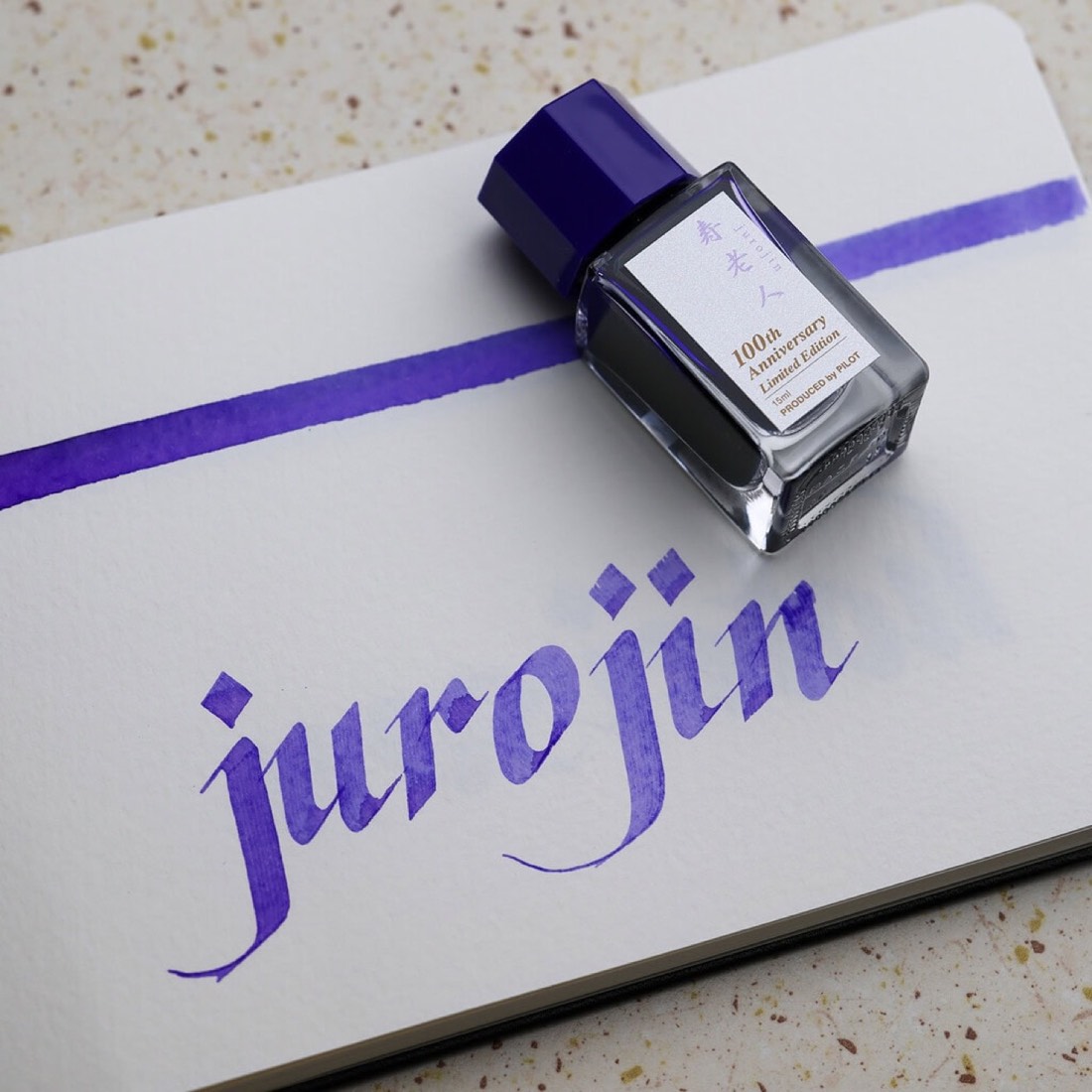
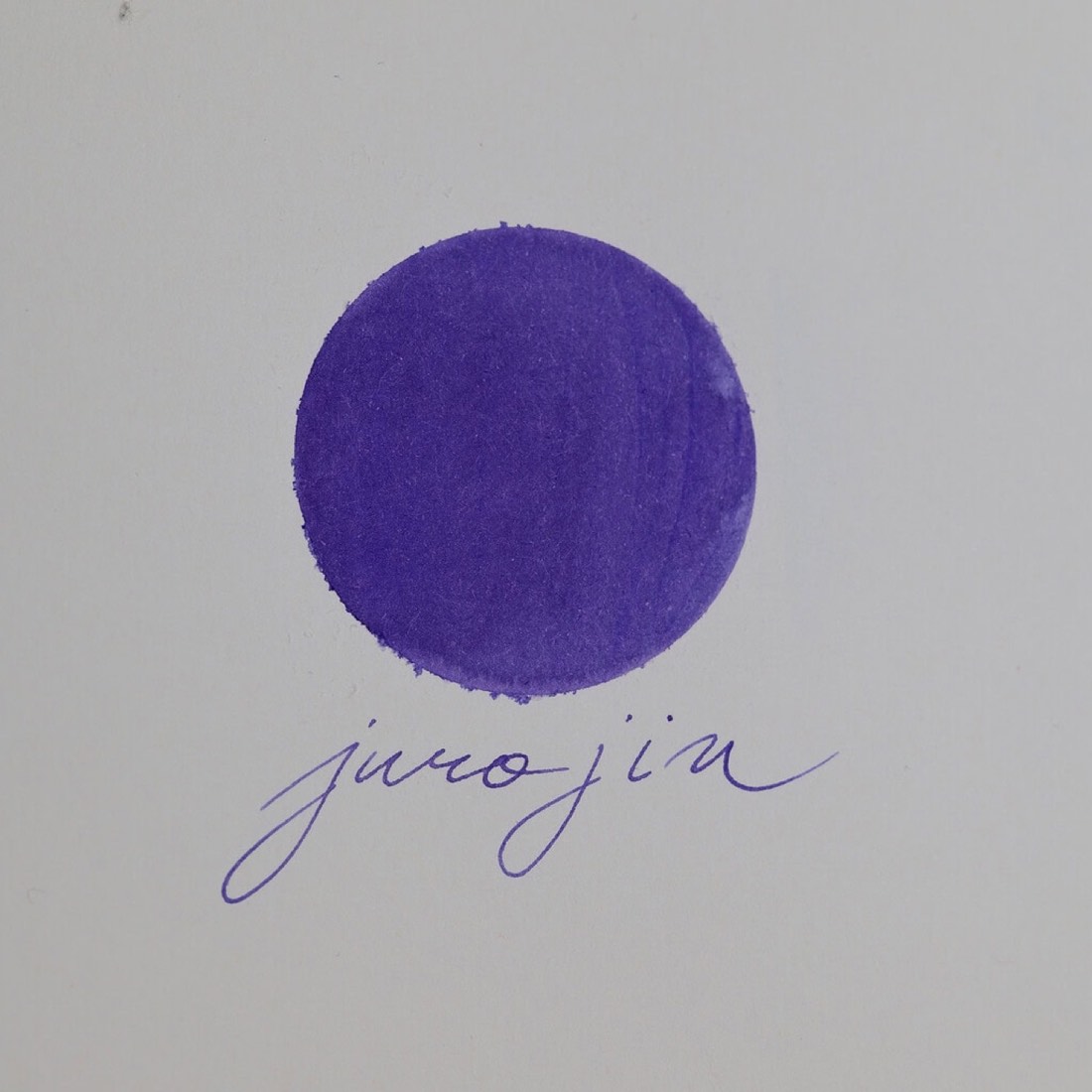
Jurojin (寿老人)is the deity of long life and wisdom — a symbol of calm presence, experience, and clarity. Pilot Iroshizuku Jurojin is a deep blue-violet leaning toward indigo, elegant and contemplative rather than loud.
💜 Color tone: Blue-violet / indigo — cool, refined, and thoughtful
🌗 Shading: Medium — gentle variation that adds depth to broader strokes
💧 Flow: Smooth and controlled — ideal for long writing sessions
🧠 Vibe: Wise, calm, and introspective
Jurojin feels like slow writing and deep thought — perfect for journaling, letters, and moments when you want your ink to whisper rather than shout

Hoteison
Hoteison (布袋尊) (often spelled Hotei-son) is the god of happiness, generosity, and good fortune — the joyful laughing deity with an open heart. Pilot Iroshizuku Hoteison is a warm red — lively, expressive, and full of celebration.
🌿 Color tone: Deep green with subtle olive undertones
✨ Shading: Medium — dynamic transitions in larger strokes
🖋️ Flow: Smooth and vivid — enhances richness of color
🥳 Vibe: Happy, sociable, and celebratory
Hoteison is an ink that smiles — perfect for accents, creative headings, and anything filled with joy.


————
Tokyo 2007 Limited Edition – A Collectible Tribute from Iroshizuku
At the end of 2007, the premium ink line Pilot Iroshizuku released a special Tokyo-themed limited edition series — available only in Japan. The set was conceived as a homage to historic neighborhoods and traditional districts of Tokyo, capturing the spirit of the city’s old charm and urban heritage through ink. Because the bottles were sold exclusively via select Japanese retailers and were never mass-distributed internationally, these inks quickly became rare collector’s items.
Ink Profiles
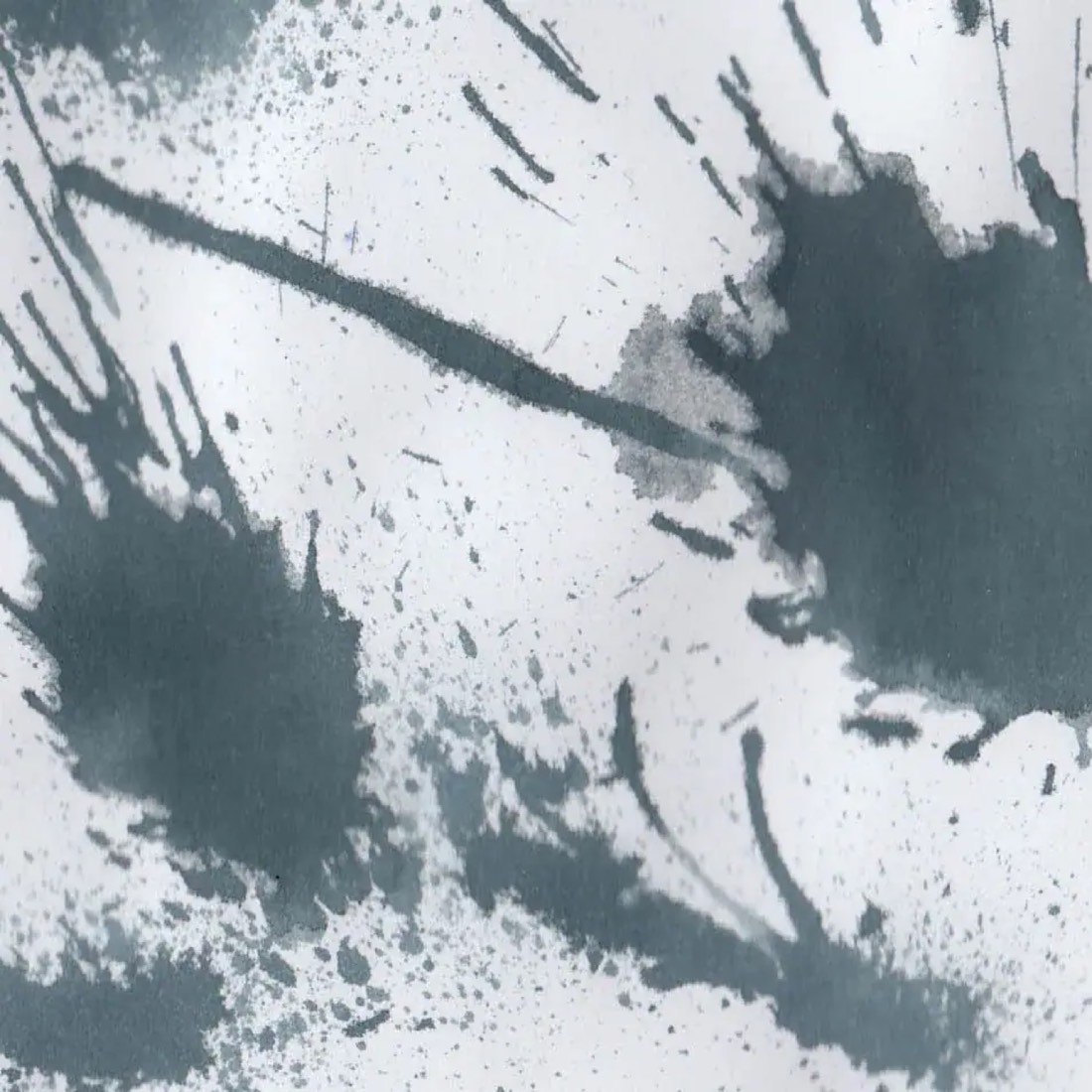
Fukagawa-Nezu — Misty Grey Elegance
• Meaning & Inspiration: Named after the historic district of Fukagawa in Tokyo — invoking images of quiet backstreets, stone bridges, and evening mist.
• Color & Behavior: A cool, smoky grey with a slightly soft tone. It’s not a flat grey — shading brings subtle depth, giving writing a misty, atmospheric mood. Works well for notes, sketches, or journal entries where you want elegance without bold colors.
• Why It Matters: As a subtle, nuanced grey — somewhat rare among fountain-pen inks — it stood out for those seeking understated sophistication.
Shimbashi-iro — Light Blue
• Meaning & Inspiration: Shimbashi is another historical area of Tokyo, known for its old-town energy and early railway era charm. The ink was meant to capture that urban, slightly nostalgic atmosphere.
• Color & Behavior: A soft, light blue with a subtle turquoise cast, similar to Ebisu but with its own clean, airy tone. Its gentle shading gives the ink a fresh vintage quality while keeping it easy to read for journaling, letters, and everyday writing.
• Why It Matters: The balance between usability (as an everyday ink) and subtle distinctiveness made Shimbashi-iro a top choice for those valuing function and personality.
Edo-murasaki — Historic Purple Nobility
• Meaning & Inspiration: “Edo” refers to old Tokyo, before it was renamed, and “murasaki” means purple — a color traditionally associated with nobility and elegance. Thus Edo-murasaki was a tribute to the old heritage and cultured spirit of the city.
• Color & Behavior: A deep, dignified purple — rich but not overly saturated, offering elegance and a touch of authority. Great for expressive writing, poetry, signatures, or creative projects that call for a distinguished ink hue.
• Why It Matters: As a purple ink with such a meaningful backstory, Edo-murasaki appealed to those who love history, nuance, and individuality in their writing tools.


————
Basic inks discontinued in 2021 and replaced by other colors.
Tsuyu-kusa
Tsuyu-kusa (露草) literally means “dew grass” in Japanese. The name evokes the fresh, cool world of early morning dew on grass and leaves — calm, revitalizing, and full of quiet freshness. Pilot Iroshizuku Tsuyu-kusa is a bright aqua-turquoise ink — vibrant yet soft, like a drop of morning dew glinting in the sun.
🌱 Color tone: Fresh turquoise-aqua — vivid but gentle, between green and blue.
✨ Shading: Good — on fountain-pen-friendly paper or with wetter nibs you’ll see a lovely gradient from light aqua to richer sea-green tones.
🌊 Feel & mood: Refreshing, creative, breezy — perfect for travel journaling, creative notes or artful writing.
📄 Readability: Very good on white paper; on darker paper it might lose clarity but will still create interesting artistic visuals.
Tsukushi
Tsukushi (土筆 / horsetail) refers to the Japanese horsetail plant. The ink draws inspiration from natural hues of early-spring horsetail shoots — earthy, subtle, rooted in nature. Tsukushi is a medium reddish-brown / brown ink with a warm, organic character — elegant, understated, yet full of personality.
🌰 Color tone: Rich brown with soft red undertones — sometimes described as coffee-bean brown or roasted chestnut brown.
✨ Shading & Sheen: Offers noticeable shading (especially with wet or broader nibs) — transitions from lighter brown to deeper, almost chocolaty tones. On some papers/swabs even a subtle green-ish sheen may appear under certain lighting.
⏱️ Dry time: Moderate-fast — depending on paper and nib. On good fountain-pen-friendly paper Iroshizuku performs reliably.
📄 Suitability: Great for professional writing, journaling, notes, letters — especially when you want something more subtle than black or blue but more serious than vivid colors.
🌿 Mood & Character: Earthy, calm, a little nostalgic — perfect for autumn or winter-themed writing, journal entries, day-to-day notes with warmth and depth.
Ina-ho
Ina-ho (稲穂) means “rice ear / rice grain head” in Japanese — the golden tips of rice plants swaying in late summer and early autumn fields. It symbolizes harvest, prosperity, and the quiet beauty of nature at its peak. Pilot Iroshizuku Ina-ho is a unique and sophisticated golden-brown ink with hints of olive and ochre. There is no other Iroshizuku color quite like it — warm, organic, and beautifully earthy.
🌾 Color tone: Golden grain brown with subtle olive undertones
✨ Shading: Excellent — transitions from light wheat tones to darker grain browns depending on nib and flow
🌤️ Mood: Autumn harvest vibes — calm, rustic, warm, and nostalgic
📄 Visibility: Works best in medium and broad nibs — fine nibs may look slightly light


————
Basic inks discontinued in 2024 and replaced by other colors.
Kosumosu
Kosumosu (コスモス) means “cosmos flower” in Japanese — the delicate pink blossoms that sway gracefully in the late summer and autumn breeze. The name evokes warmth, gentleness, and soft beauty in motion. Pilot Iroshizuku Kosumosu is a soft, warm pink ink — cheerful and sweet, but not overly bright. It has a romantic, poetic feel that makes writing feel personal and heartfelt.
🌸 Color tone: Soft coral-pink with a touch of warmth
✨ Shading: Light shading that adds subtle visual depth
🧁 Mood: Sweet, gentle, friendly — perfect for emotional expression
📄 Readability: Best with medium to broad nibs for stronger visibility
Tsutsuji (ツツジ) means “azalea” in Japanese — referring to the vibrant blooming azalea flowers that brighten spring gardens with their intense pink blossoms. Pilot Iroshizuku Tsutsuji is a bright, vivid pink ink — lively and bold, with character and personality unique among Iroshizuku colors.
Tsutsuji
🌸 Color tone: Bright azalea-pink — cheerful, energetic, vibrant.
✨ Sheen: On many papers (especially fountain-pen friendly ones) Tsutsuji shows a subtle greenish sheen that adds depth and dimension.
⏱️ Drying time: Around 30 seconds on good paper.
📄 Suitability: Works well for creative writing, journal entries, notes, and expressive scripts — not a subdued office-blue, but a statement colour.
Kiri-same
Kiri-same (霧雨) translates to “Autumn Shower” (or “misty rain”) in Japanese. The name evokes the soft, grey atmosphere of a gentle rain or drizzle on a cloudy autumn day — subtle, calm and melancholic. Pilot Iroshizuku Kiri-same is a refined light-to-medium grey ink — understated, elegant, and perfect for those who want a softer alternative to black or blue.
🌫️ Color tone: Soft, slightly warm-toned grey — sometimes with a hint of beige or pinkish undertone under lighting.
✨ Shading: Strong — shading ranges from pale silvery grey to deeper steel-grey depending on nib, paper, and ink flow.
⏱️ Dry time: Fairly quick — many users report dry times around 15 seconds on good papers.
🔍 Readability & Versatility: Even though it’s soft and subtle, Kiri-same remains legible — works well for journaling, letters, notes, creative writing or sketching.
Kiri-same is ideal if you want elegant sophistication without the starkness of black or the brightness of color — it’s subtle, refined, and emotionally nuanced.


Notebook for Iroshizuku inks
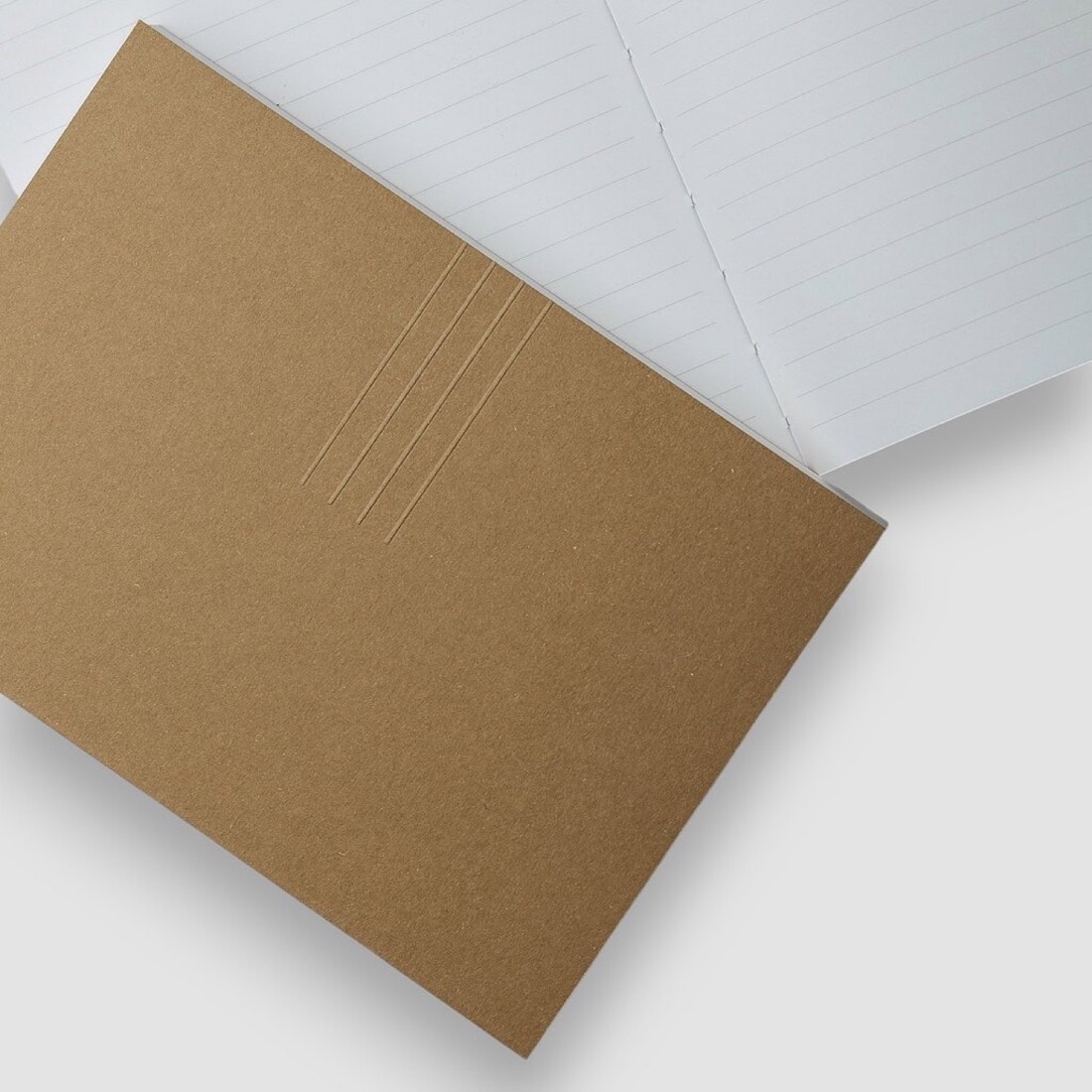
A fountain-pen-friendly notebook for testing shading, flow and colour behaviour. Open the product or add it directly to your cart.
Read next

The Complete Guide to Pilot Fountain Pen Nibs
If you’ve ever wondered why a Pilot pen can feel completely different from anything else on the market, the answer is here—in the nib. If you are someone who truly writes with your pens—not just collects them—then Pilot is a dream come true. The sheer variety of nibs they offer is remarkable, especially considering they..
Read article
Pilot Falcon vs. Pilot Justus 95: Which Special Nib Is Right for You?
Pilot Falcon or Justus 95? I compare their 14K nibs, softness, line variation, balance and ideal use to help you choose.
Read article
Review of the Pilot Capless fountain pen limited edition 2025 Link Midnight
Perhaps the biggest obstacle when it comes to writing with a fountain pen is the process itself — taking the pen out, unscrewing the cap, and only then beginning to write. I experience this myself. By the time I remove the pen from its case and unscrew the cap, which I then hold awkwardly in..
Read article
3 comments
Comments are moderated before publishing, so the conversation stays useful and calm.
I am delighted with these inks and their beautiful colors. The writing quality is incredible and they last a long time. Thank you to Japan!
These are fantastic reviews! Great photos, excellent descriptions. You really capture the “character” and “vibe” each color communicates!
shimbashi-iro is a light blue, similar to ebisu