Pilot Falcon vs. Pilot Justus 95: Which Special Nib Is Right for You?
Pilot Falcon or Justus 95? I compare their 14K nibs, softness, line variation, balance and ideal use to help you choose.

Which Pilot fits your writing?
Choose the option that sounds more like you in each row. The recommendation updates as you go.

Pilot Falcon vs. Pilot Justus 95: Which Special Nib Is Right for You?
You can lock your phone and keep listening.
I recently became the proud owner of both the Pilot Justus 95 and the Pilot Falcon. What makes these two pens so interesting is not necessarily their appearance, but their distinctive nibs. When I first started collecting fountain pens, design was one of the most important factors for me. Today, however, I place far more value on the nib itself and the kind of writing experience a pen can deliver.
These two models are often confused, with many people assuming that both feature flexible nibs. In reality, the Pilot Justus 95 has an adjustable nib—but the adjustment is not about changing its flexibility. Instead, it allows you to modify the nib’s feel from firm to soft. I found that difficult to believe, so naturally, I had to test it for myself. Is the Justus really not a flex pen? Let’s take a closer look at both pens and my experience with them.
The two pens sit within a very similar—and surprisingly approachable—price range. Some might argue that they are relatively expensive considering how understated they look. I would compare them to unassuming cars with ferocious engines hidden beneath the hood. That is exactly what these pens are about. The moment you remove the cap, it becomes clear that neither is an ordinary fountain pen. Their “engines,” in the form of those fascinating nibs, are what make them truly special.
Pilot Falcon or Justus 95 at a glance
Choose the Pilot Falcon
Choose it for a naturally soft, springy nib and clearly visible line variation. It is the more expressive pen and the one I would reach for when signatures, lettering and the character of each stroke matter most.
Choose the Pilot Justus 95
Choose it for an adjustable writing feel, a more planted body and excellent control during everyday or long-form writing. Its mechanism changes firmness and feedback far more than line width.
Overall Design
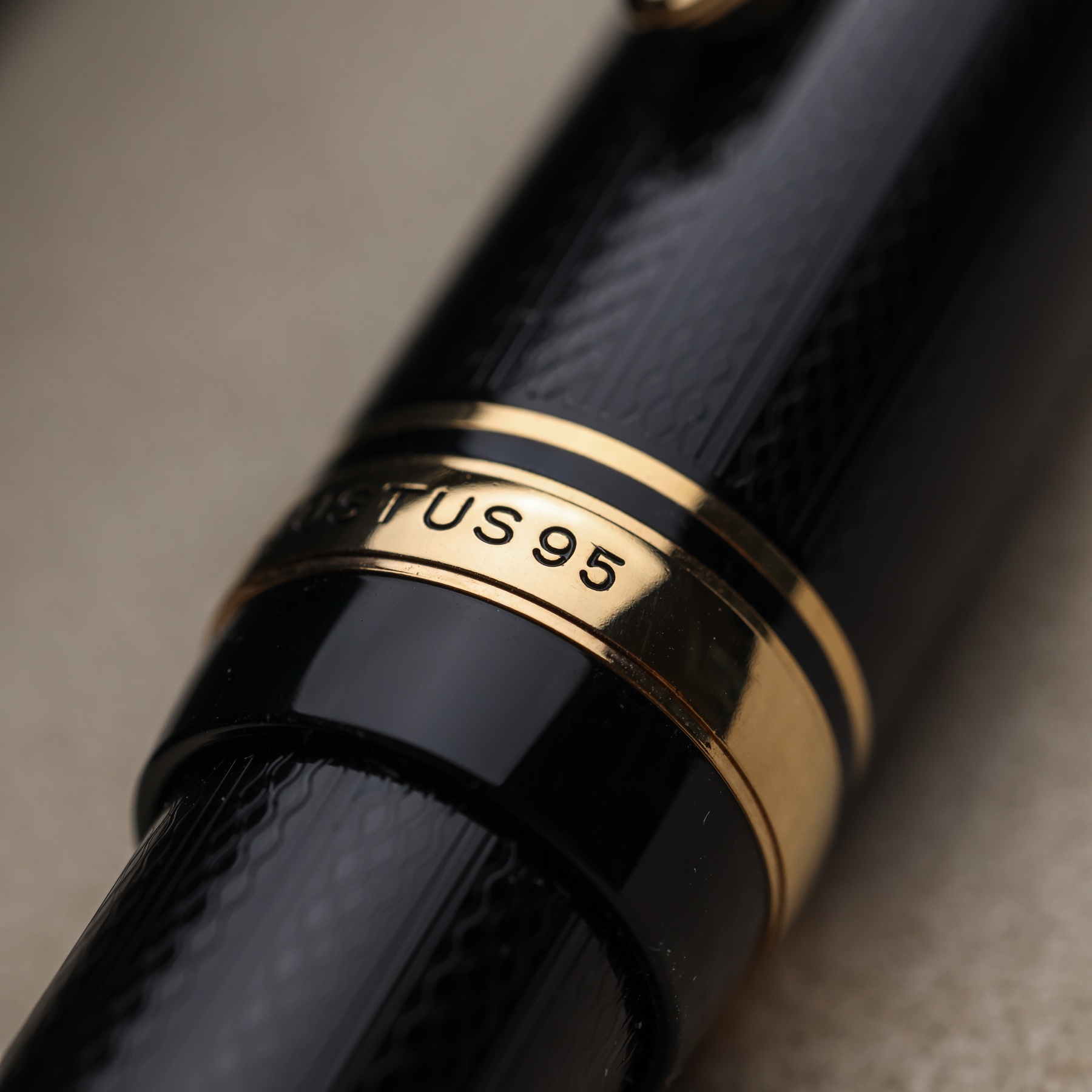
At first glance, the Pilot Falcon and Pilot Justus 95 look remarkably similar. The Justus 95 is slightly longer and more substantial, with a wider barrel and an integrated nib-adjustment mechanism that gives it a fuller, more substantial presence in the hand. The Falcon, by comparison, is slimmer and feels a little more refined and elegant.
The difference in weight may not appear dramatic on paper, but it becomes immediately noticeable once you start writing. The Falcon feels lighter and more responsive in the hand. It reacts quickly to subtle wrist movements and is exceptionally nimble on the page. The Justus 95, on the other hand, feels more planted and stable. Its additional weight creates a greater sense of precision and control, which will particularly appeal to writers who prefer a slower, more deliberate writing style.
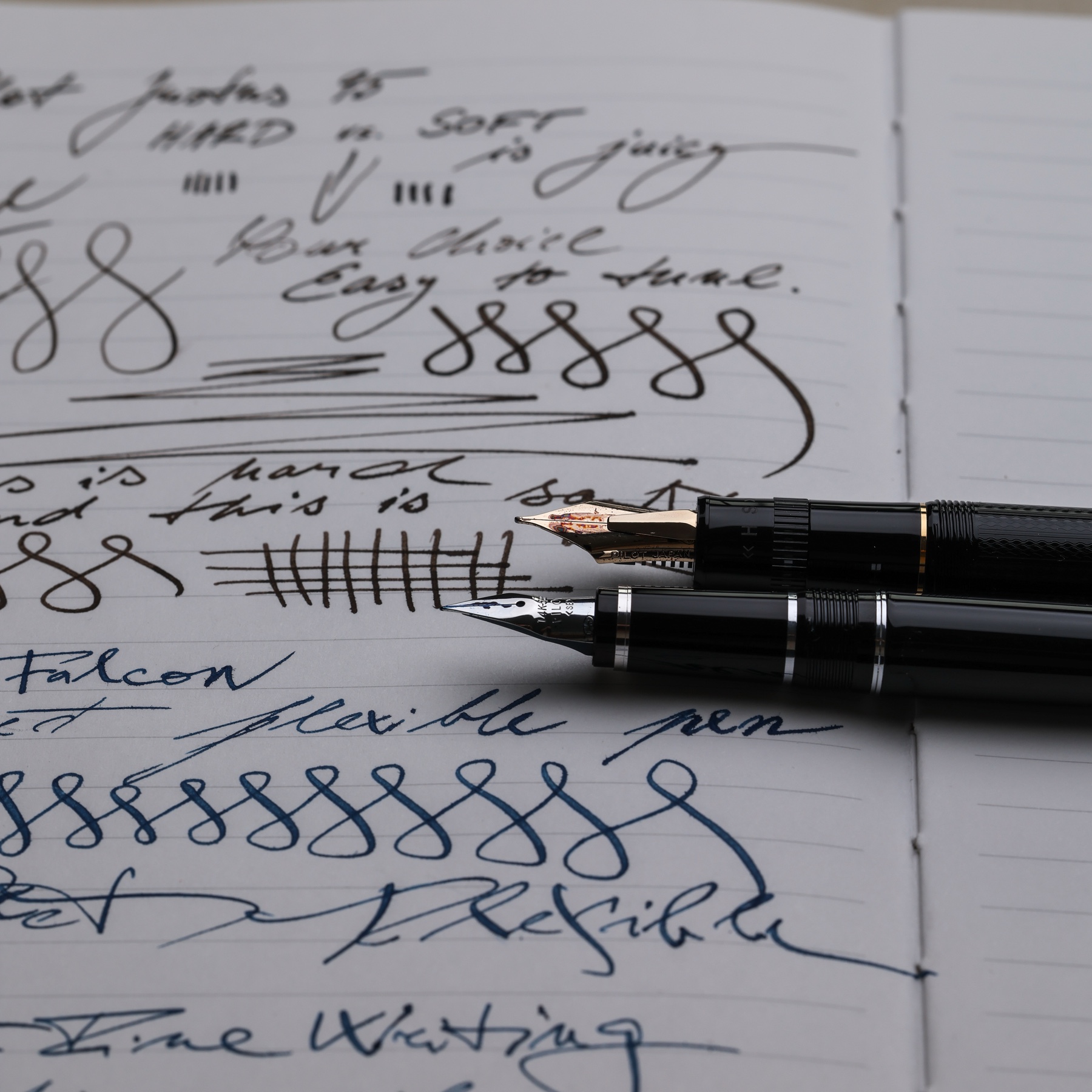
Both pens are made from high-quality resin, complemented by metal trim and 14-karat gold nibs. The most significant structural difference is the Justus 95’s unique adjustment mechanism. By turning the control ring, you can alter the character of the nib from Soft to Hard, with a range of intermediate settings in between. The mechanism adds some weight to the pen, but it also makes the Justus 95 one of the most technically intriguing fountain pens Pilot produces. The Falcon takes a simpler approach, directing all of the attention toward its distinctive, responsive nib.
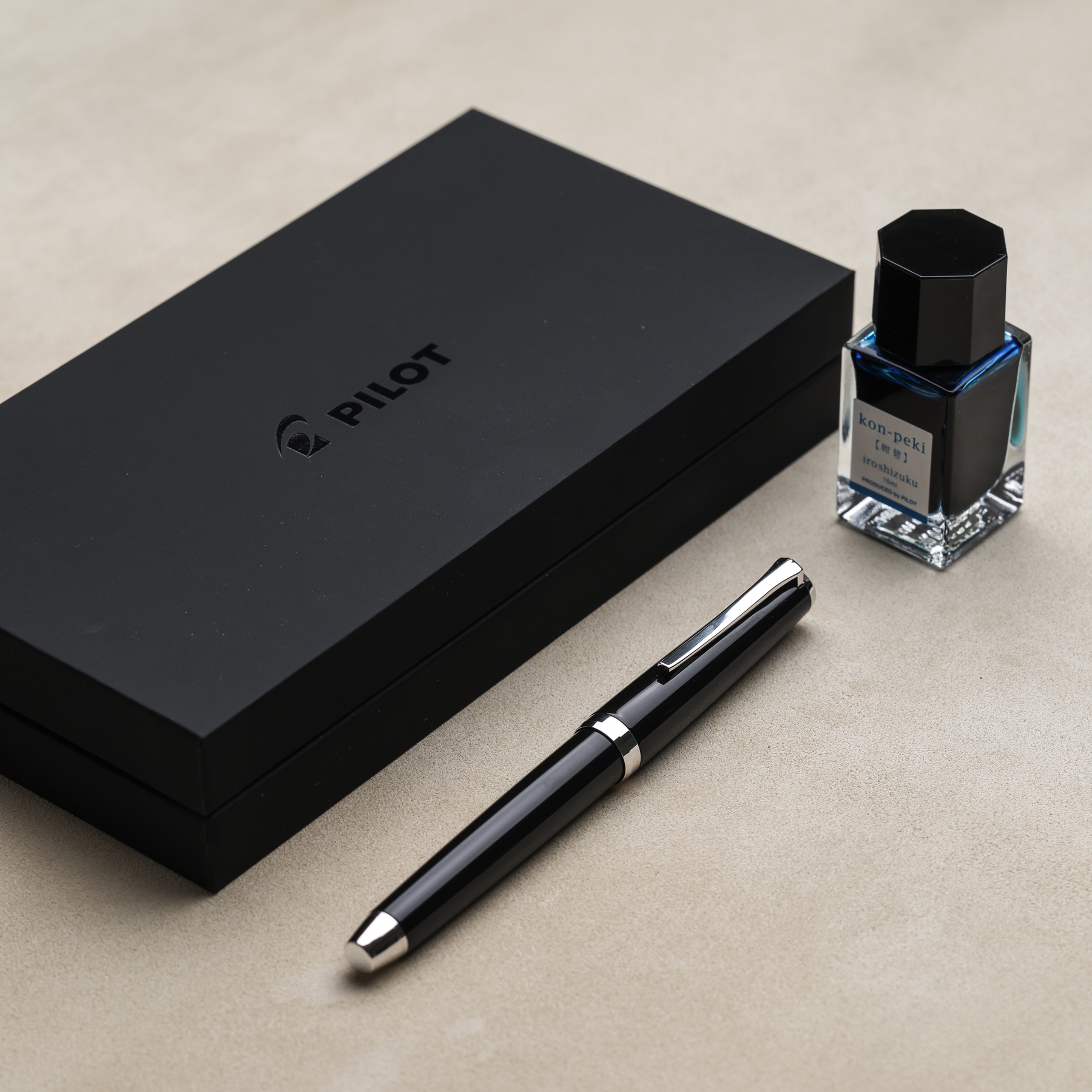
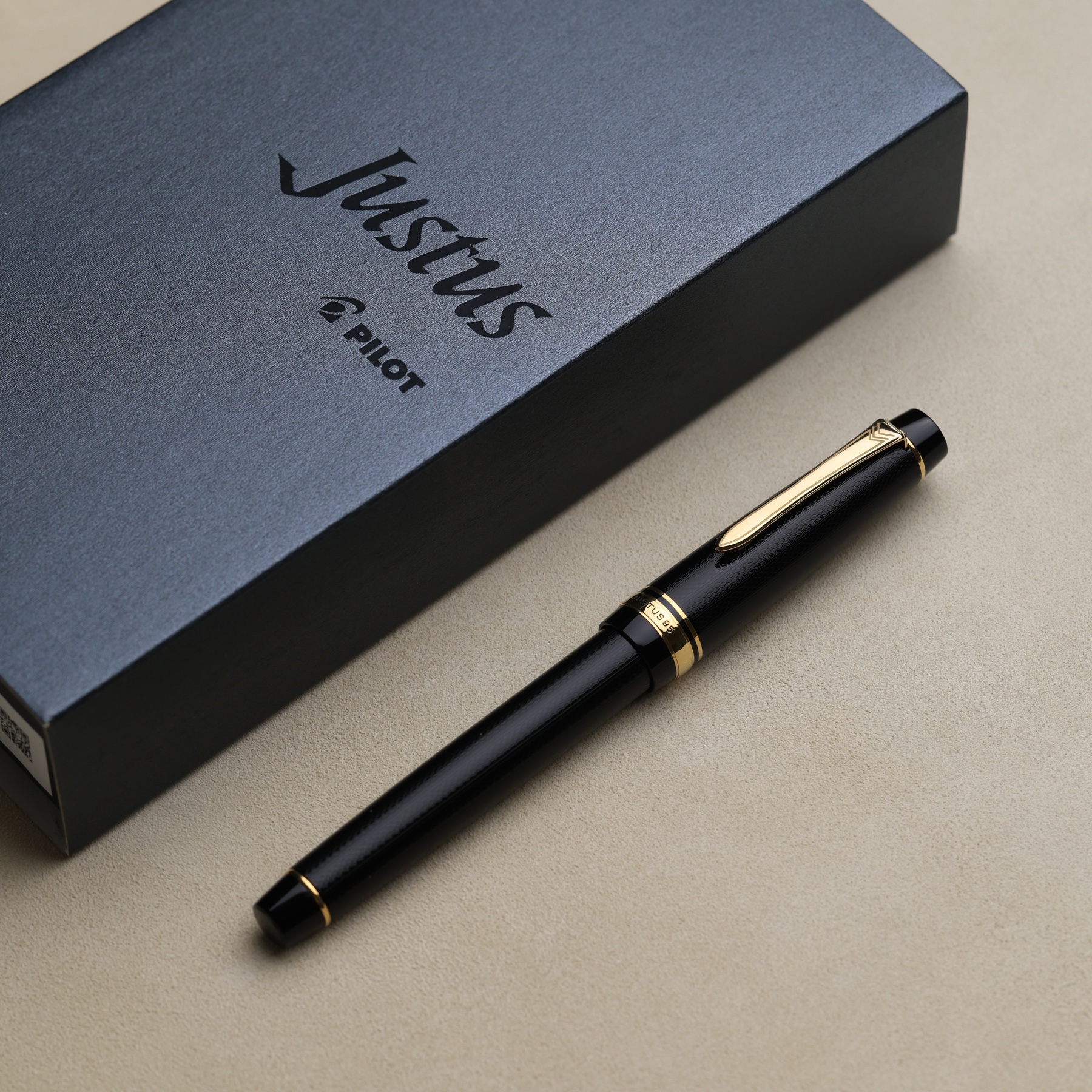

The Falcon feels light, agile, and natural. It almost disappears in the hand, which makes it particularly well suited to long writing sessions or extensive note-taking. The Justus 95 has a more serious and substantial character. Its wider barrel is extremely comfortable to hold and provides a secure, stable grip. Overall, it feels more technical, more engineered, and slightly more luxurious.
Without the caps posted, both pens are very well balanced. The Falcon’s center of gravity sits slightly closer to the nib, complementing its responsive character and helping it move precisely across the page. The Justus distributes its weight more evenly along the length of the pen, giving it a calmer and more stable feel during longer writing sessions.
Posting the cap changes the character of both pens. The Falcon remains easy to control, and most users should be comfortable writing with it either posted or unposted. The difference is more pronounced with the Justus 95. Posting the cap shifts the center of gravity noticeably toward the back, making the pen feel distinctly rear-weighted. I therefore prefer using the Justus unposted, where its balance feels more natural and comfortable during extended writing sessions.
Filling System
The Pilot Falcon and Pilot Justus 95 both use Pilot’s proprietary cartridge-and-converter filling system. This allows you to use either Pilot ink cartridges or a compatible converter for filling the pen from bottled ink. Depending on the specific version and market, converter compatibility may vary, so it is worth checking which converter is supplied with your particular pen.
Nibs and Writing Experience
Falcon
The Pilot Falcon intrigued me before its nib ever touched the page. Its distinctive, beak-shaped profile promised a writing experience unlike that of a conventional fountain pen—and it delivered exactly that.
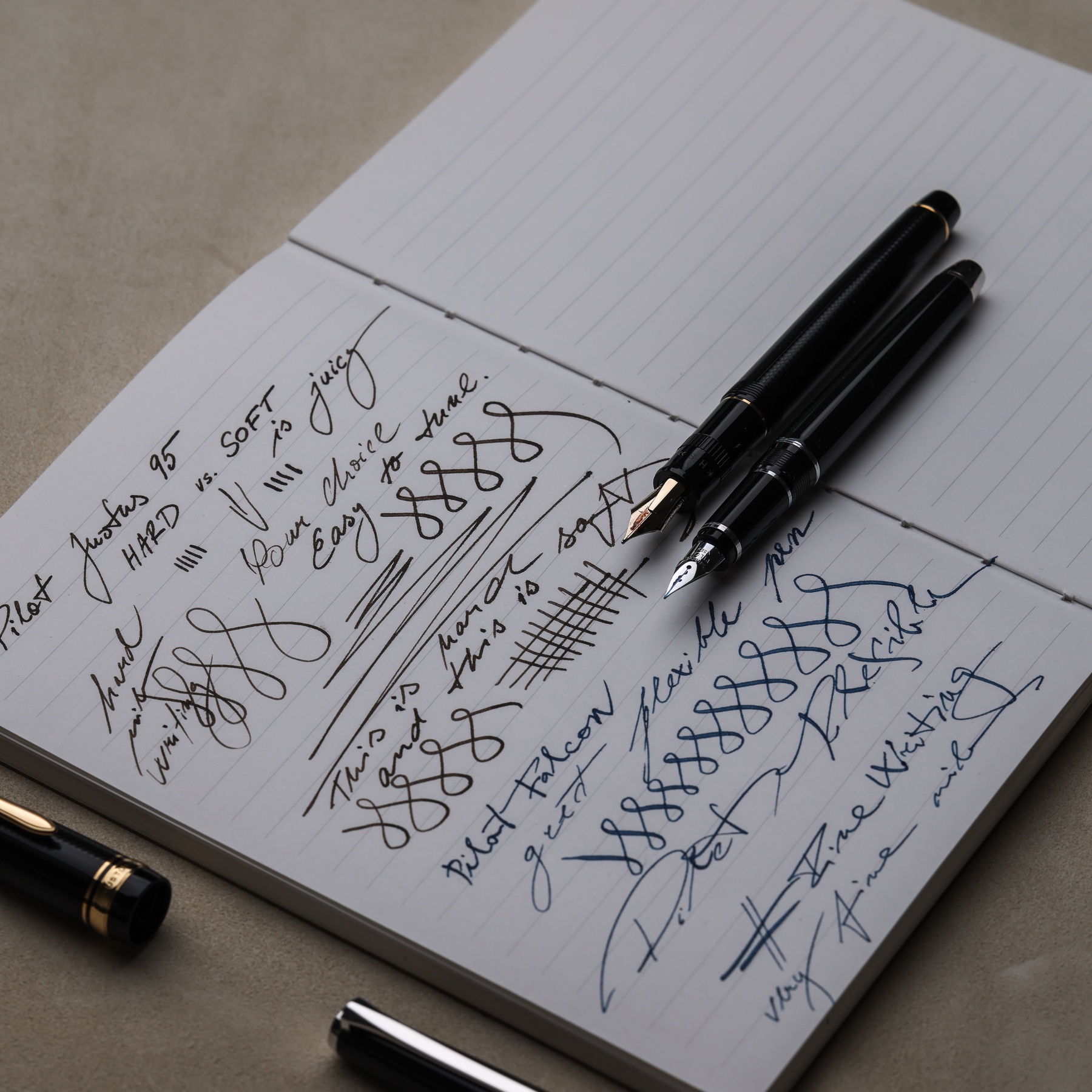
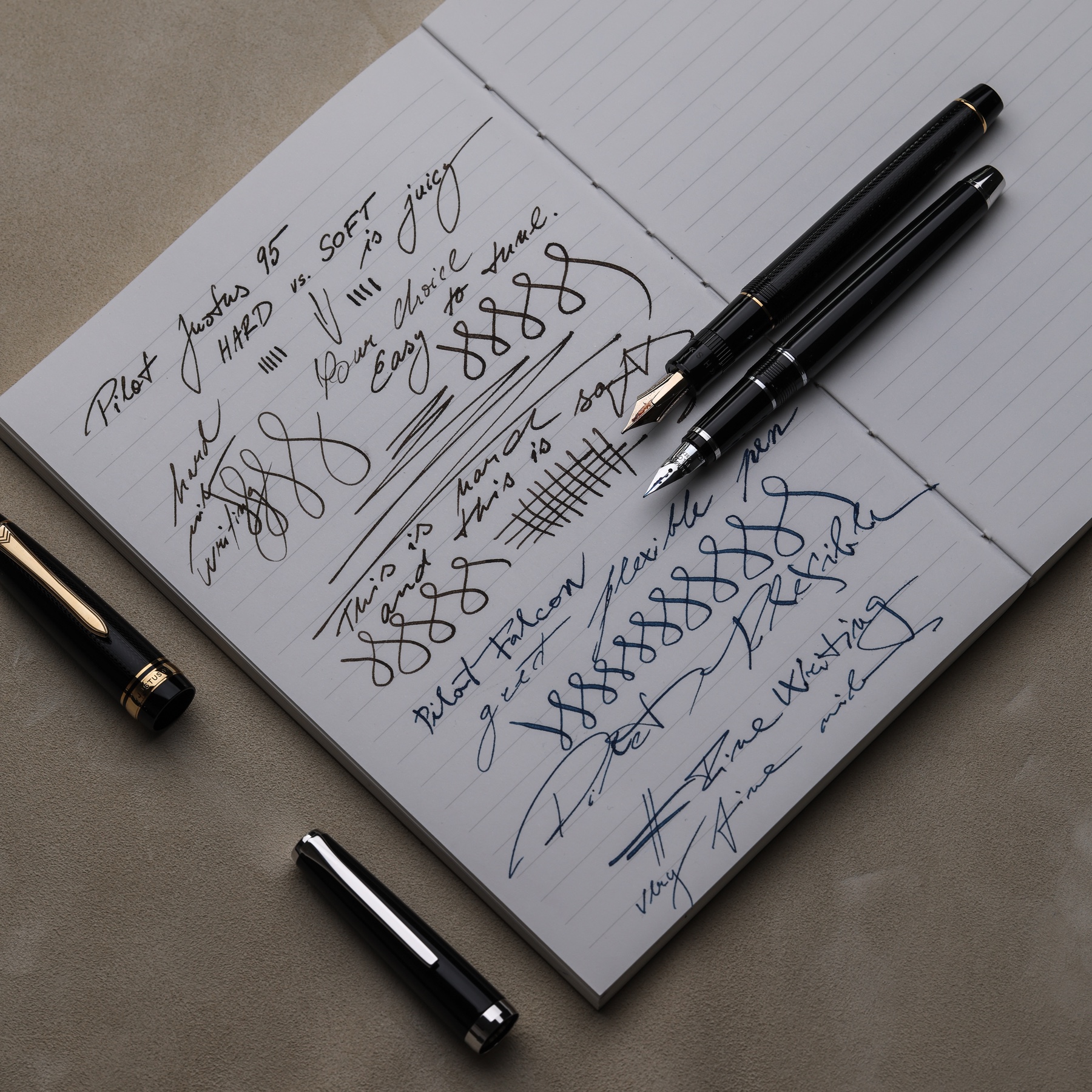
At the heart of the Falcon is its Soft nib. This is not a traditional flexible nib in the sense of those found on vintage fountain pens. Instead, it is Pilot’s modern interpretation of responsiveness and spring. It has beautiful bounce, excellent tactile feedback, and, most importantly, produces natural line variation that turns every word into a small experience of its own. The nib responds to pressure exactly as you expect it to. It never feels nervous or unpredictable. It has a personality, but it remains controlled.
That is precisely why it is so much fun to write with.

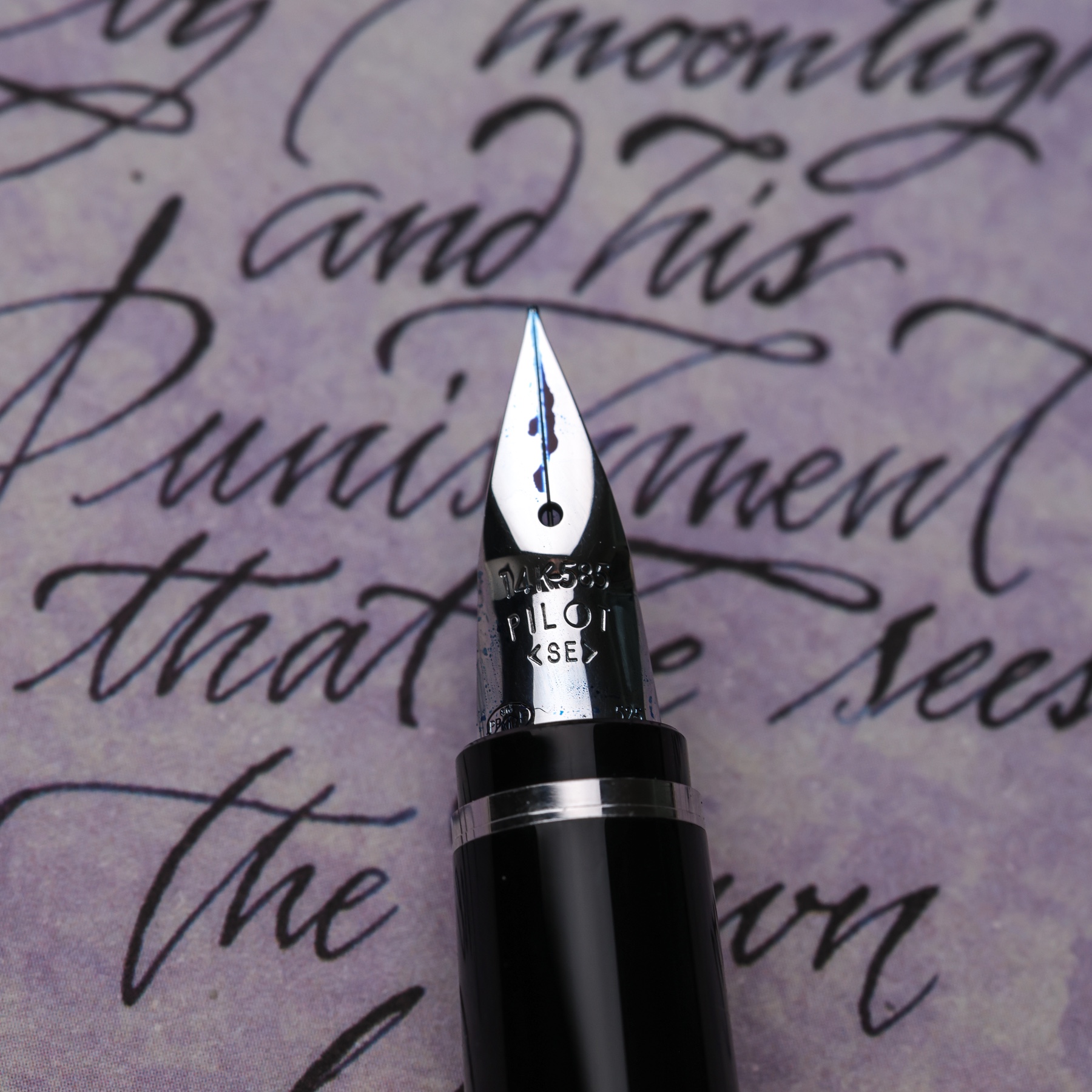
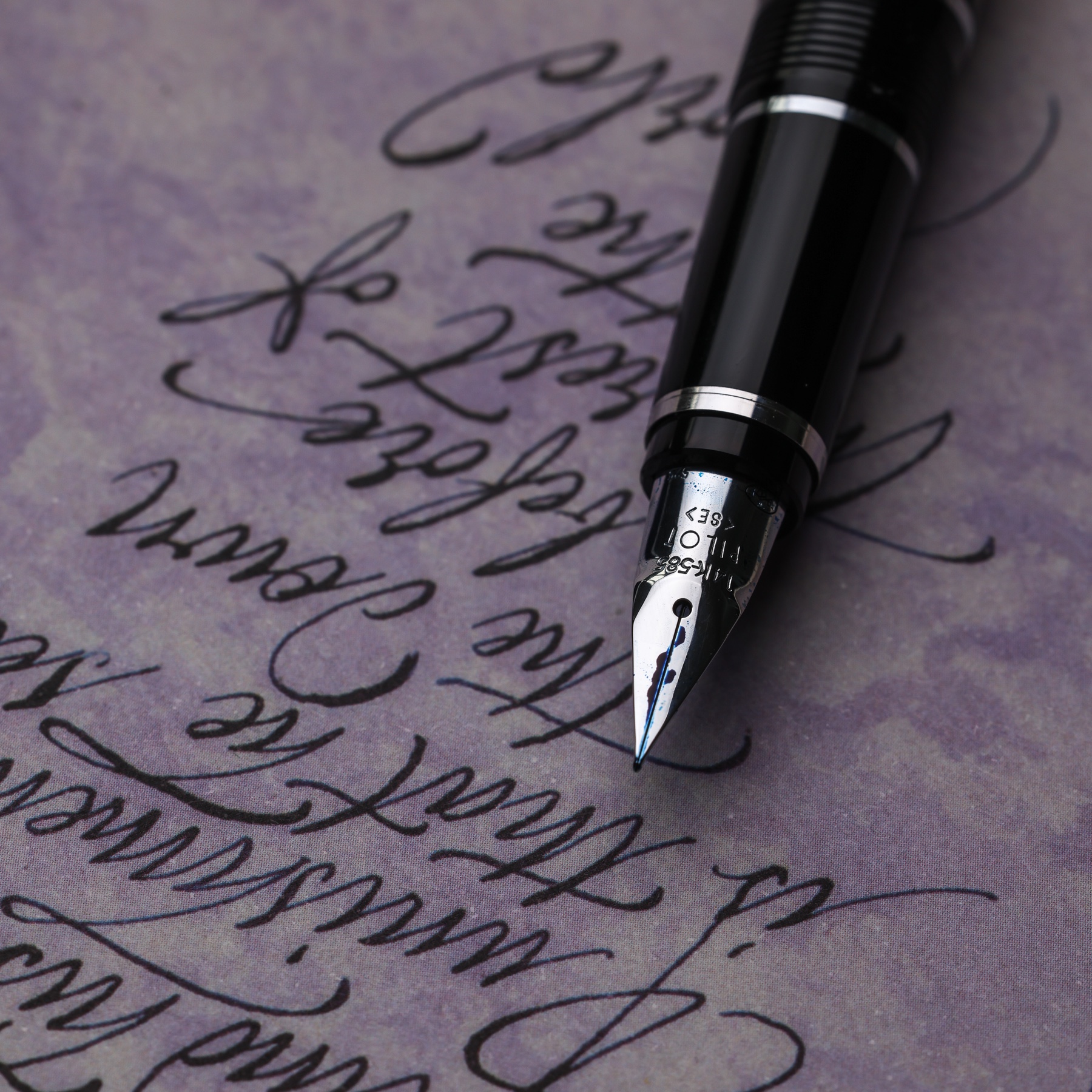
I tested the Fine nib, and it is exceptionally narrow—almost needle-like. Judged purely as a nib for quickly writing ordinary notes, some users might describe it as rather scratchy. In my view, however, that would be an entirely unfair assessment. The Falcon is not a pen designed for hastily scribbling out a grocery list.
Its strengths emerge in expressive writing, signatures, and calligraphy, where the contrast between fine and broad strokes becomes part of the experience. That is when everything begins to make sense. Under pressure, the tines open gently, then return cleanly to their original position. Each letter gains a character and rhythm that a conventional rigid nib simply cannot produce.
I realize that professional calligraphers using specialized pointed dip nibs would probably want to slap me for saying this—and they would have valid reasons. Even so, as a fountain pen, I consider the Pilot Falcon one of the finest tools for calligraphic writing that I have ever used. It produces beautiful contrast between fine and broad strokes without forcing you to sacrifice the comfort and practicality of a fountain pen.
Another major surprise came when I compared it with Montblanc’s flexible Calligraphy nib. Both offer impressive line variation, but the Falcon feels more dependable to me. It maintains a cleaner line, remains more controlled when the tines are opened widely, and is considerably less prone to skipping or running short of ink. With a flexible nib, that detail often determines whether you are enjoying the writing experience or fighting the pen.
What surprised me most, however, was the sense of confidence the nib inspires. With many responsive or flexible nibs, I instinctively hold back, constantly wondering whether I am applying too much pressure. I never experienced that hesitation with the Falcon. The nib feels strong, robust, and trustworthy. Every nib has its limits, of course, but throughout my testing, I never once felt that a firmer stroke might damage it. It looks and feels like a nib built to withstand serious use.
The ink flow deserves equal praise. Despite the extremely fine tipping, the feed keeps the nib consistently supplied with ink. Even when I pushed the nib to create broader strokes, I experienced no meaningful skipping or ink starvation. Pilot did an exceptional job here.
I fell in love with the Pilot Falcon almost immediately. It is not a pen that tries to impress you at first glance with extravagant materials or a flamboyant design. It is an understated instrument with enormous potential—one that reveals its true value only when the nib meets the page. Those are exactly the pens I appreciate most: the ones that do not need to shout in order to earn your respect.
Justus
The Pilot Justus 95 is one of those pens that does not appear particularly remarkable at first glance. Without knowing what lies behind its understated exterior, you might easily place it among the many elegant but otherwise conventional fountain pens on the market. The nib, however, is precisely what makes the Justus one of the most technically intriguing modern fountain pens Pilot produces.
Its defining feature is an adjustable nib-response mechanism. By turning the adjustment collar, you can move gradually across the spectrum from Soft, through the intermediate settings, to Hard. This is neither a marketing gimmick nor a merely visual feature. The mechanism genuinely changes the way the nib behaves on the page.
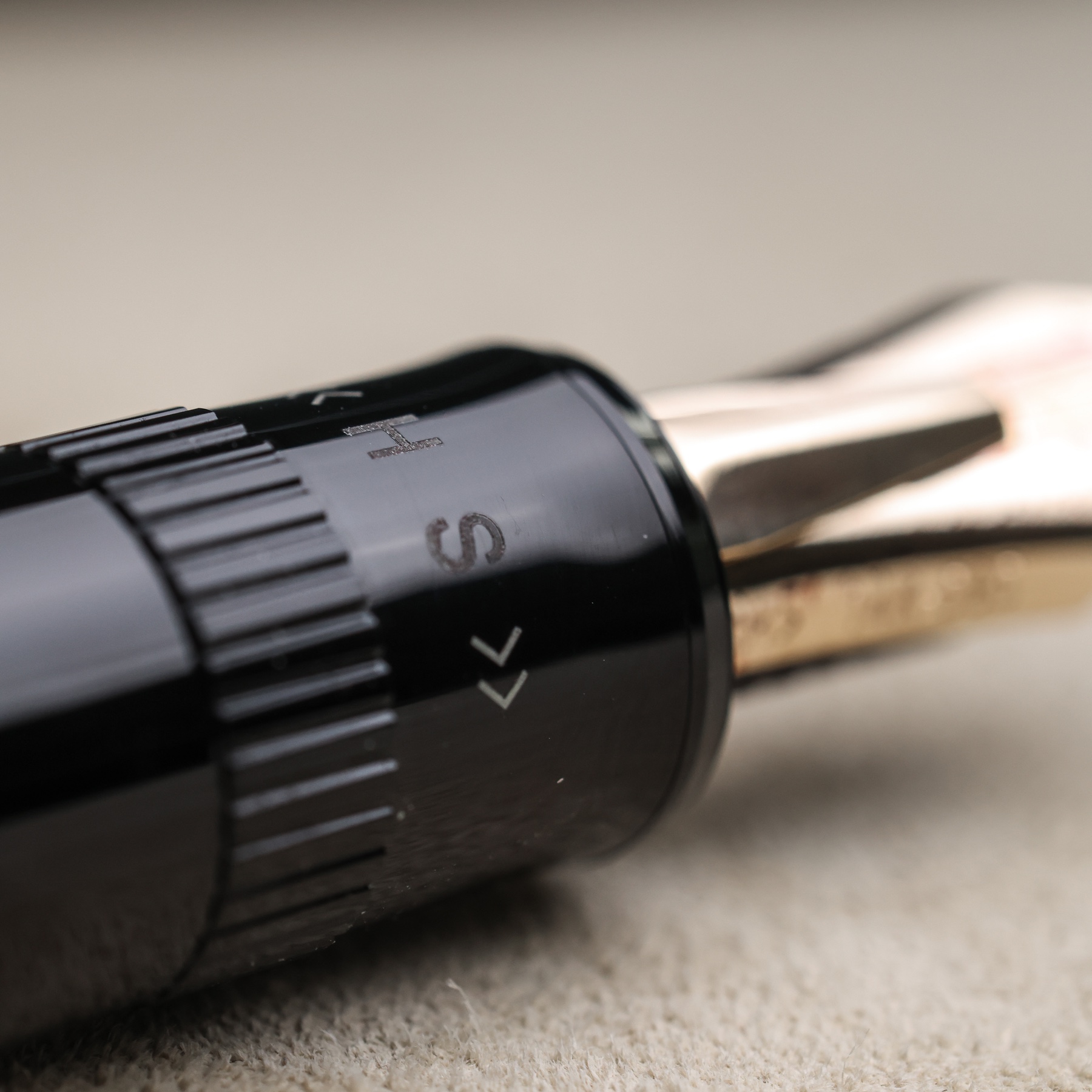
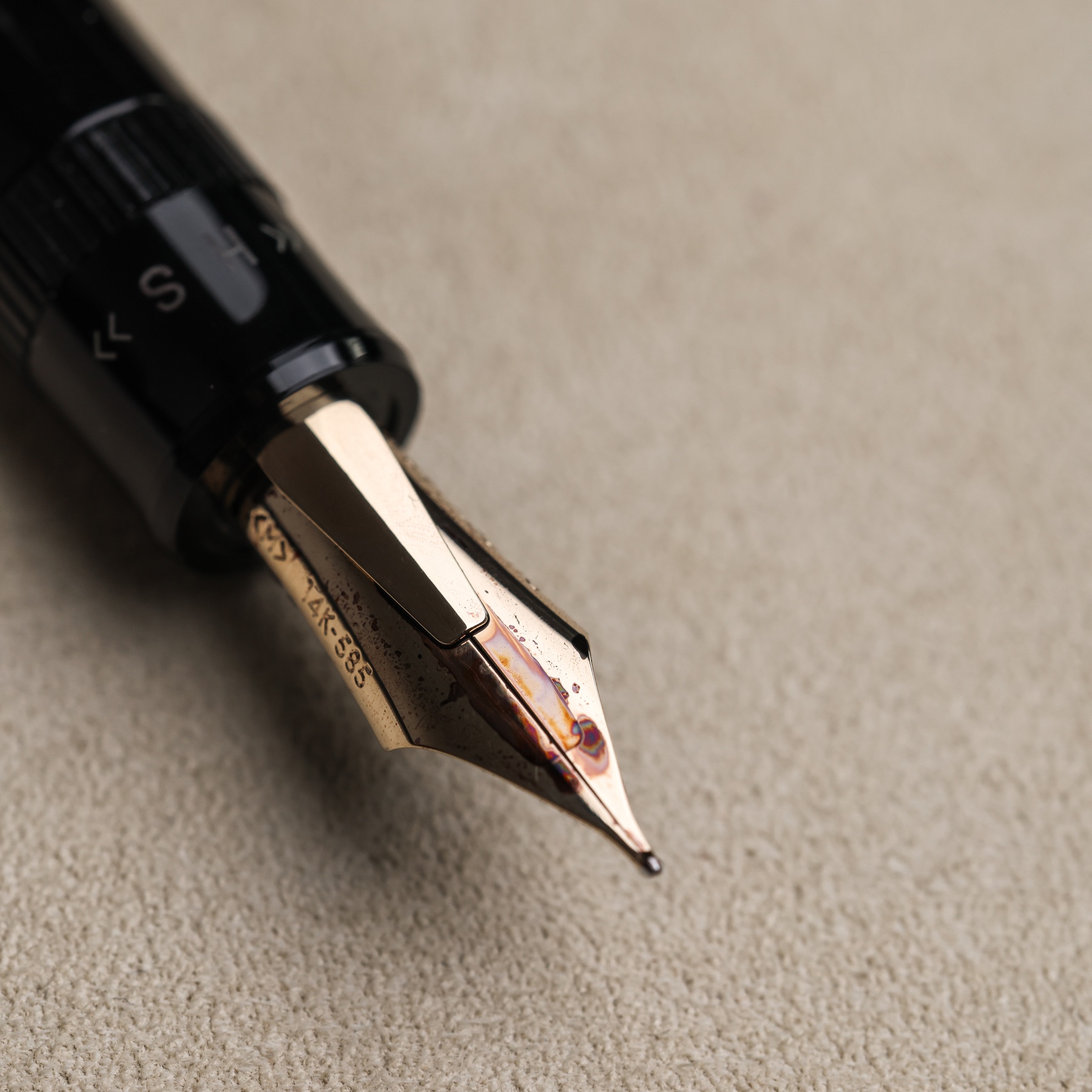
When people first see this system, many assume that the Justus can be transformed into a flexible pen similar to the Falcon—or perhaps even a vintage flex nib. That is not the case. Even at its softest setting, the Justus does not become a true flex nib.
So what actually changes? Primarily, it is the firmness of the nib, its degree of spring, and the feedback it provides. In the Hard setting, the nib feels firmer and more precise, offering greater resistance and a stronger sense of control. In Soft, the nib is allowed to move more freely, making the writing experience smoother, softer, and noticeably more responsive.
What changes very little, however, is the actual line variation. Anyone expecting dramatic differences in stroke width will probably be disappointed. The Justus is not designed to produce substantially broader or finer lines depending on pressure.
During testing, however, I noticed something interesting that is rarely discussed. It seemed as though the ink flow also changed slightly with the adjustment. In the Soft setting, the nib felt somewhat wetter and more generous, while Hard appeared marginally drier. I cannot say with certainty whether the mechanism truly alters the ink flow or whether this was simply a subjective impression created by the different behavior of the nib. Nevertheless, during longer writing sessions, the difference felt quite noticeable to me.
I have to admit that my initial reaction was somewhat uncertain. After writing only a few lines, I even began to wonder whether the mechanism was doing anything at all. The difference was so subtle that I started questioning whether I was experiencing a genuine change or merely a psychological effect. It was only after spending more time with the pen that I began to understand its philosophy.
This is not a pen that impresses you with the first stroke. The difference reveals itself gradually. At some point, you realize that the nib is responding differently, your hand feels more relaxed, and the entire writing experience has taken on a different character. Not because the line has changed dramatically, but because the sensation of the nib meeting the paper has changed.
Personally, I found the Soft setting the most enjoyable. The nib felt noticeably smoother and more natural, almost as though it were floating across the page. The Hard setting, by contrast, would be well suited to slow, deliberate writing or technical notes, where greater control over every stroke may be more important than softness.
My only criticism of the Justus is that I would have preferred the differences between the settings to be slightly more pronounced. The mechanism works—there is no question about that—but its effect is not something that immediately announces itself within the first word. It requires patience and a longer writing session before its benefits become fully apparent.
At the same time, this subtlety is exactly what makes the Justus special. It is not built around a theatrical trick, but around a carefully engineered solution that changes the way the nib interacts with the page.
For anyone fascinated primarily by fountain pen nibs and their construction, I believe the Pilot Justus 95 deserves a place in the collection. Not because it creates the most beautiful line or the most dramatic line variation, but because it offers something increasingly rare: the ability to adjust the character of the writing experience with a single, simple movement.
It is proof that even after decades of development, the fountain pen can still surprise us.
Who Should Choose the Pilot Justus 95, and Who Should Choose the Pilot Falcon?
Choose the Pilot Falcon if you:
- enjoy a soft, responsive nib,
- want a more expressive writing experience,
- value writing feel above everything else.
Choose the Pilot Justus 95 if you:
- want one pen that adapts to different writing styles,
- prefer precision and consistency,
- appreciate mechanical innovation.
Which pen fits each kind of writing?
These are my practical preferences after using both pens. A dot marks the stronger fit, not the only pen capable of the task.
| Use | Pilot Falcon | Pilot Justus 95 |
|---|---|---|
| Journaling | Good for expressive entries | ● Best fit for steady long-form writing |
| Everyday notes | Precise, but the SEF nib rewards care | ● Best fit for control and consistency |
| Long writing | Light and agile | ● Best fit when used unposted |
| Signatures | ● Best fit for visible character | Controlled and formal |
| Drawing | ● Best fit for varied strokes | Useful when consistent lines matter |
| Calligraphic practice | ● Best fit for line contrast | Not designed as a flex nib |
Pilot Falcon vs. Justus 95 technical comparison
Official Pilot Japan specifications for the resin Falcon tested here and the current Justus 95. Metal Falcon models are substantially heavier.
| Feature | Pilot Falcon (resin) | Pilot Justus 95 |
|---|---|---|
| Best for | Expressive writing and line variation | Everyday versatility and adjustable feel |
| Nib | 14K rhodium-plated Soft nib; SEF tested | No. 10 14K adjustable nib; M tested |
| Nib character | Naturally springy, beak-shaped profile | Firmness controlled by an adjustment plate |
| Line variation | Noticeable but controlled | Subtle; feel changes more than width |
| Feedback | Moderate and precise in SEF | Low to moderate, depending on setting |
| Body | Resin with metal trim | Engine-turned acrylic resin with metal trim |
| Length | 137 mm | 148 mm |
| Maximum diameter | 14.4 mm | 16 mm |
| Weight | 18 g | 27 g |
| Nib sizes | SEF, SF, SM, SB | F, FM, M |
| Filling system | Pilot cartridge / CON-40 | Pilot cartridge / CON-40 or CON-70N |
| Recommended for | Expressive writers, artists and signatures | Professionals, journalers and one-pen users |
Specifications checked against Pilot’s official catalogue pages for the resin Elabo/Falcon and Justus 95.
Read next

The Complete Guide to Pilot Fountain Pen Nibs
If you’ve ever wondered why a Pilot pen can feel completely different from anything else on the market, the answer is here—in the nib. If you are someone who truly writes with your pens—not just collects them—then Pilot is a dream come true. The sheer variety of nibs they offer is remarkable, especially considering they..
Read article
A complete overview of all Pilot Iroshizuku inks
Iroshizuku by Pilot is truly a household name in the fountain pen world, and I believe almost every enthusiast is familiar with these inks. I tried my very first Iroshizuku — Ajisai — a long time ago, and my initial experience was actually negative because it feathered heavily on the page. At that time, I..
Read article
Pilot Pen That Stands Out in Any Collection – Pilot Custom Urushi
I recently met with a local pen collector so we could exchange experiences, show each other the pens in our collections, and try them out in person. When he opened his large pen case filled with an impressive selection of Pilots, one pen immediately caught my eye. It was strikingly elegant, standing out from all..
Read article
0 comments
Comments are moderated before publishing, so the conversation stays useful and calm.
No comments yet. You can leave the first note below.