

For a long time, I struggled to find my way to demonstrator pens. At first, they felt cheap to me—almost even a bit tasteless. I’m not sure why I had that reaction. Everything changed with my first demonstrator, the Platinum #3776 Century. The moment I got it, I immediately fell in love with it.
I still don’t fully understand why I disliked them before, but it opened up a completely new dimension for me. Being able to see the entire mechanism, to watch the ink inside the pen—it creates a very different experience. Yes, perhaps demonstrator pens don’t always look as refined or luxurious at first glance. But they have something else. They are, in a way, a bit geeky—and maybe that’s exactly how they are meant to be.
Demonstrator pens are honest. They hide nothing. They reveal exactly what other pens deliberately conceal—ink, mechanics, flow, movement. These are pens that expose the very essence of writing with a fountain pen.
For some, demonstrators are technical tools; for others, visual objects. The truth is, they are both. You watch ink fill the reservoir, see its level change, observe how color reacts to light. Writing suddenly becomes more than just the result on paper—it becomes a process you can witness in real time.
A demonstrator pen also changes your relationship with ink. Color is no longer abstract; it is present, alive, constantly in motion. Every ink choice is visible, every decision has a visual consequence. That is precisely why demonstrators are often both loved and disliked. They do not forgive. They show everything—residue, traces of previous inks, even how well you care for your pen.
And perhaps that is exactly where their charm lies. Demonstrator pens are not about a perfect exterior, but about the truth within. They are for those who want to understand their pen, not merely own it. For those who enjoy watching ink long before it touches the paper.
Here is a list of demonstrator pens that caught my attention. It’s not all of them, but most are included.
Take a look at my selection and overview of demonstrator pens by brand:
Aurora
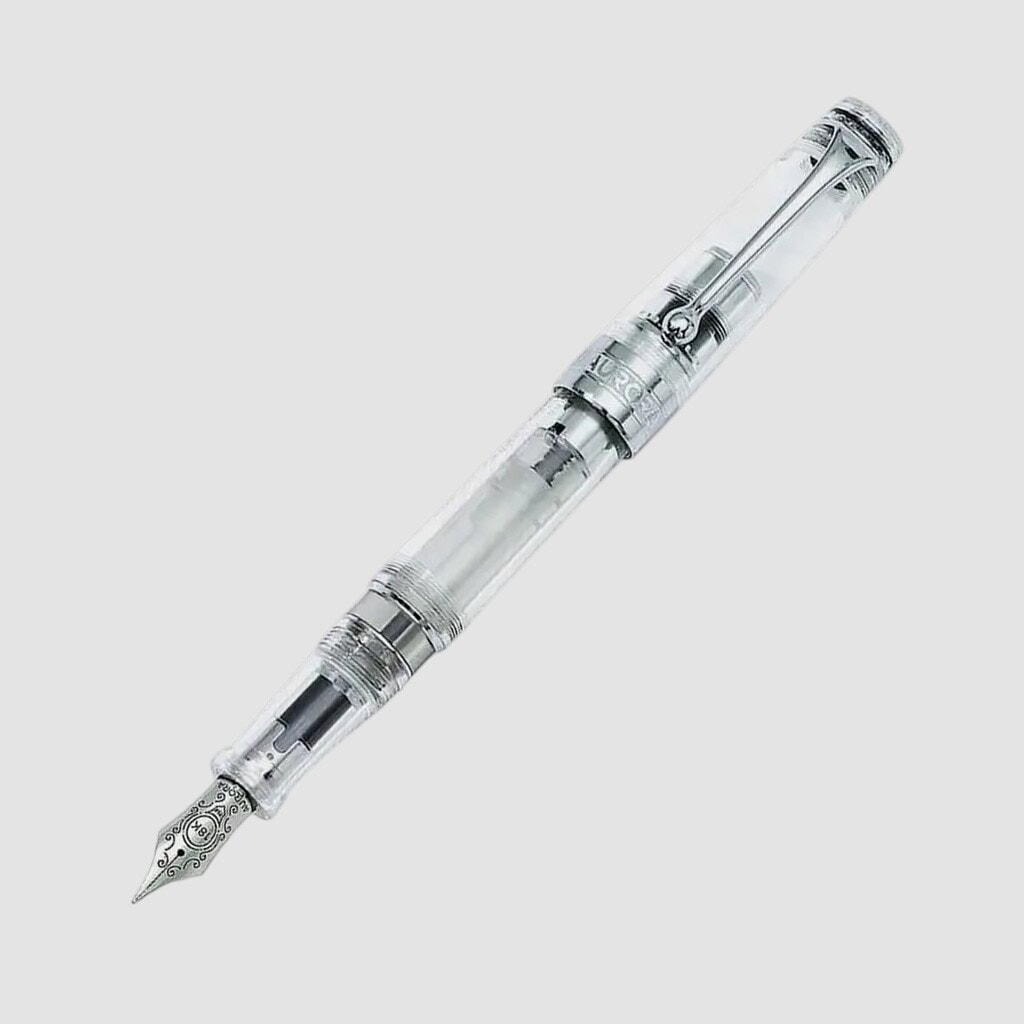
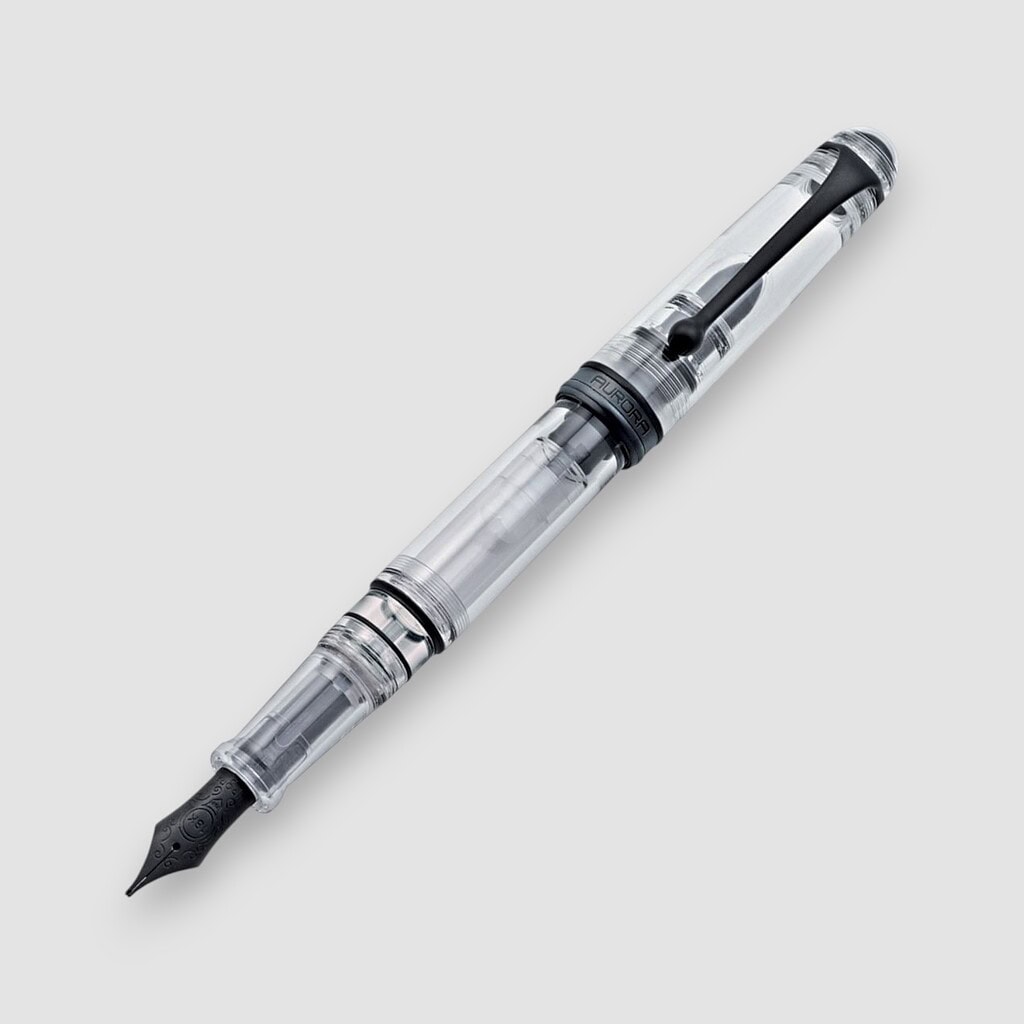
Aurora 88 Demonstrator
The Aurora 88 Demonstrator is a transparent interpretation of one of Italy’s most iconic fountain pens, the Aurora 88, originally introduced in 1947. Staying true to its heritage, the demonstrator version preserves the classic, understated silhouette while revealing the internal mechanics that define Aurora’s engineering. The pen features a piston-filling system developed and manufactured entirely in-house, allowing users to directly observe the movement of the piston as well as the ink level inside the barrel. This transparency is not merely aesthetic—it reflects Aurora’s long-standing emphasis on mechanical integrity and craftsmanship. The nib, typically made of 14k gold (with some variations in 18k), is also produced in-house and is known for its distinctive tactile feedback, offering a writing experience that differs from the smoother feel of many Japanese pens. Constructed from clear resin, the Aurora 88 Demonstrator provides a functional and visual insight into the pen’s inner workings, making it particularly appealing to enthusiasts who value both tradition and technical transparency.
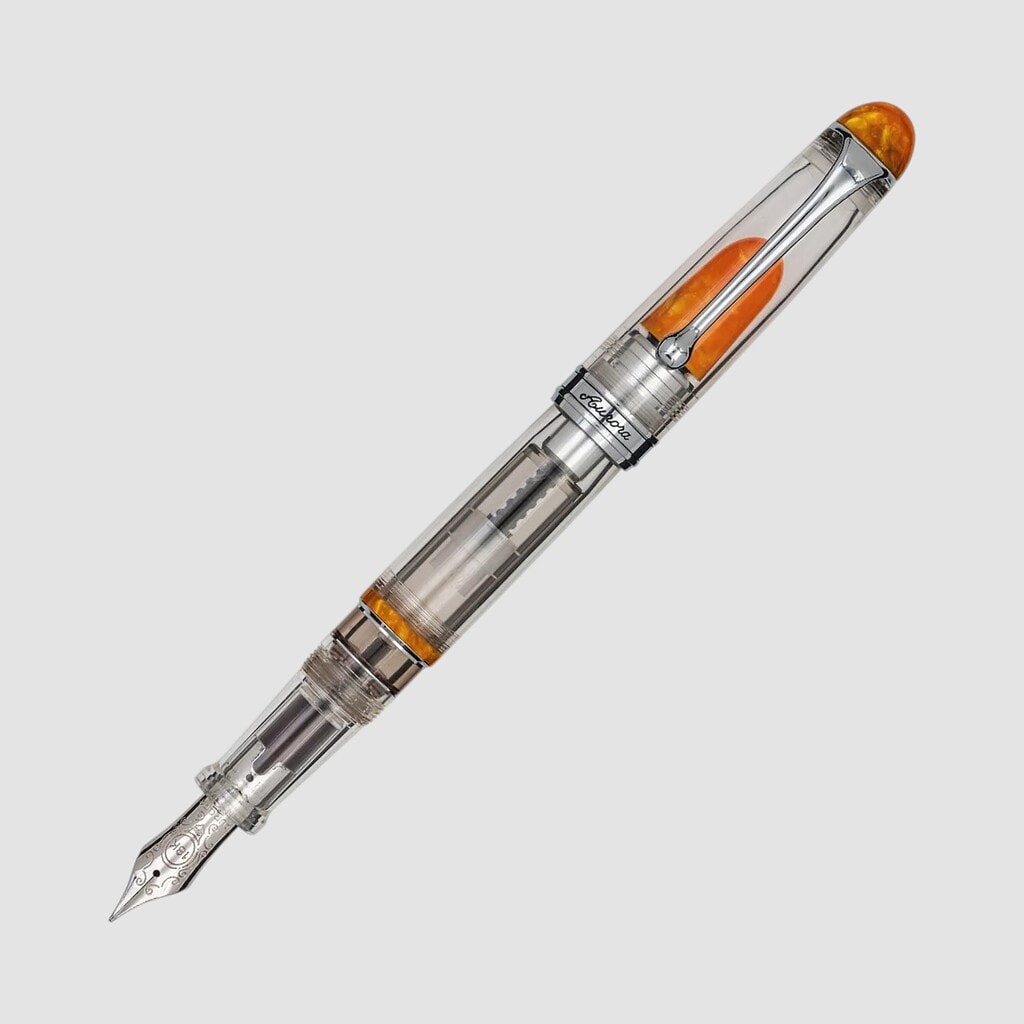
Aurora Optima Demonstrator
The Aurora Optima Demonstrator builds on the design language of the Aurora Optima, a model inspired by Aurora’s archival designs from the 1930s and reintroduced in modern form in the 1990s. Compared to the more streamlined 88, the Optima features a slightly more compact and rounded profile, often described as more vintage in character. In its demonstrator form, the pen showcases the same transparent resin construction, allowing full visibility of the internal piston mechanism and ink reservoir. Like the 88, it uses Aurora’s in-house piston system and is equipped with a gold nib produced by the brand itself, maintaining the recognizable feedback that Aurora is known for. One of the distinguishing visual elements of the Optima is its cap design, often featuring classic proportions and, in some versions, traditional Greek key-style rings that reinforce its historical aesthetic. The demonstrator version combines this vintage-inspired form with modern transparency, offering a balance between heritage design and contemporary appreciation for visible mechanics.
Conid
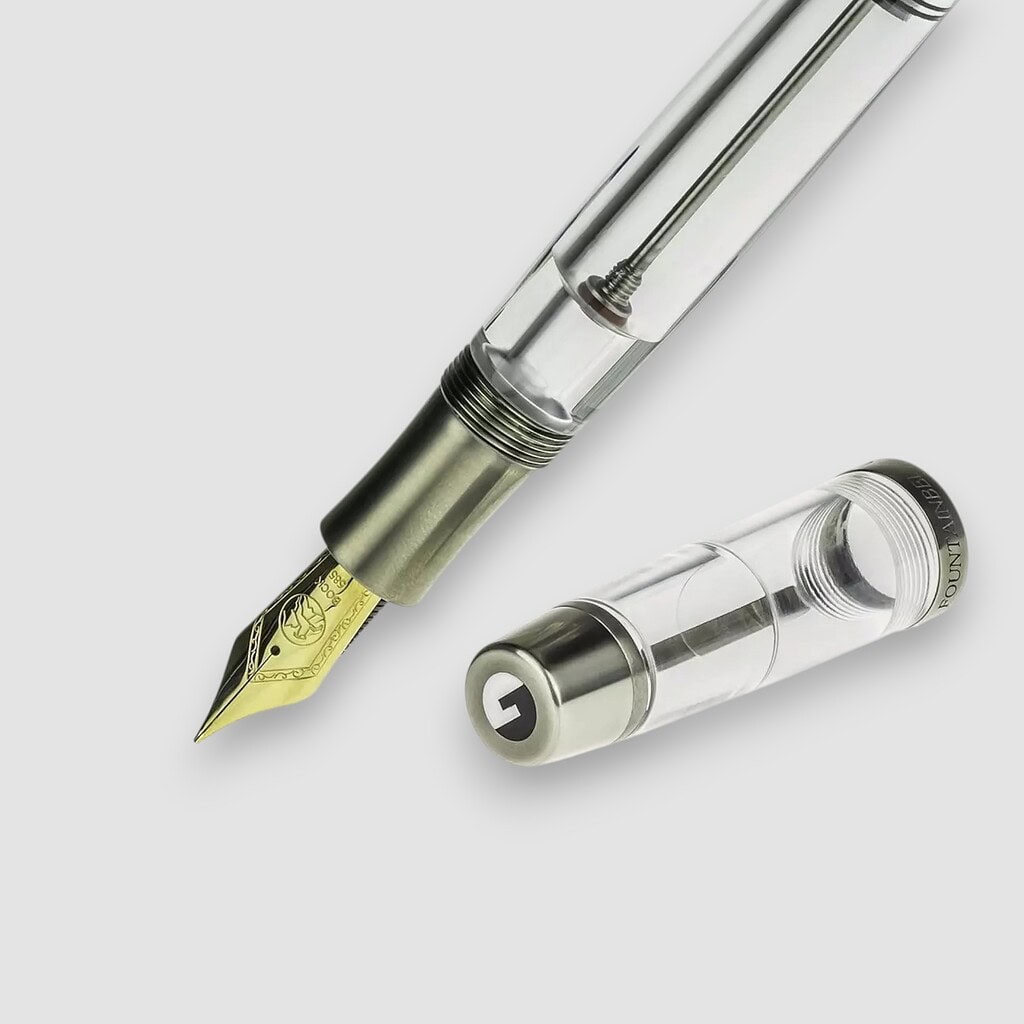
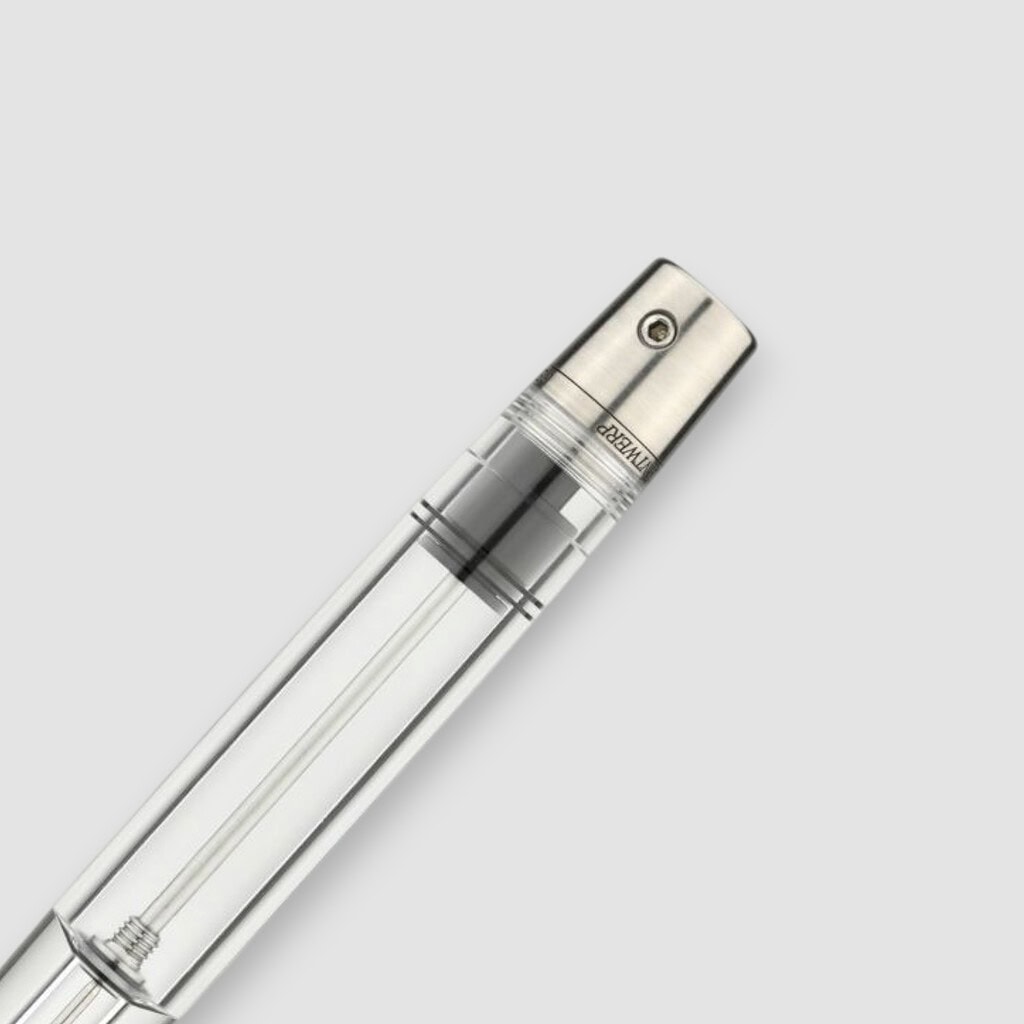
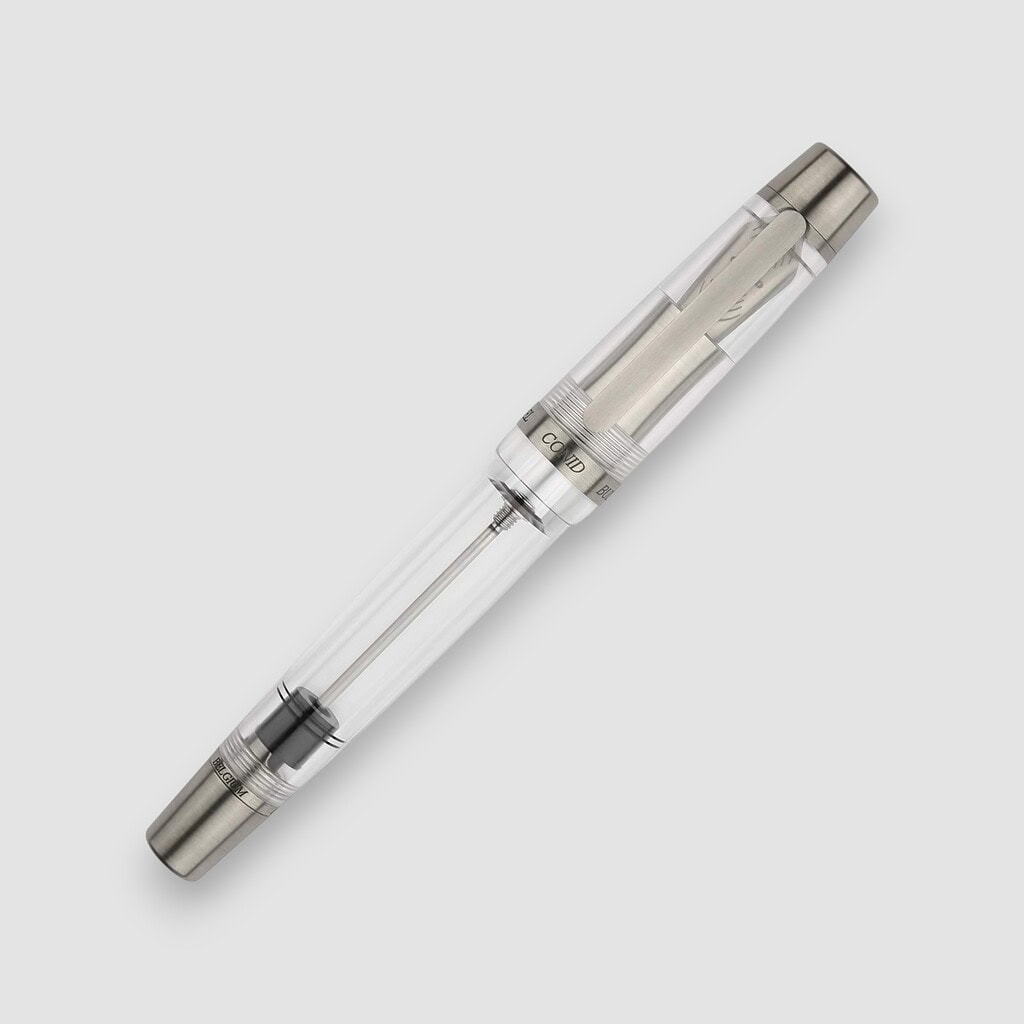
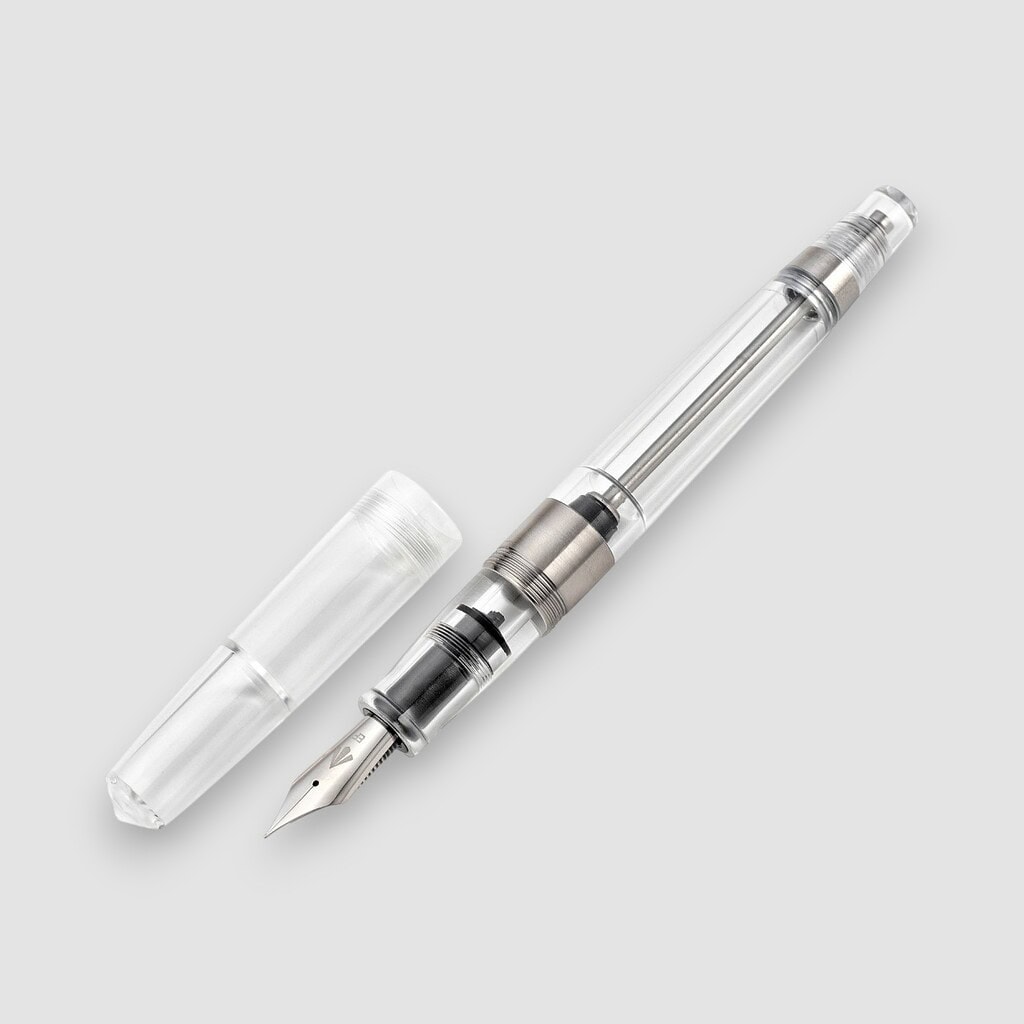
Conid Kingsize Demonstrator Bulkfiller
The Conid Kingsize Demonstrator Bulkfiller represents a highly technical approach to fountain pen engineering. Developed by the Belgian brand Conid, it features a patented “Bulkfiller” mechanism—a hybrid system combining aspects of piston and vacuum fillers. This design allows the pen to use nearly the entire barrel as an ink reservoir, resulting in significantly higher ink capacity than traditional systems.
In its demonstrator form, the pen fully reveals this mechanism, including the plunger rod, seals, and dual-reservoir structure. Beyond aesthetics, this system is functional: when the rear knob is tightened, the ink chamber is sealed, helping prevent leakage during travel or pressure changes. Unlike typical vacuum fillers, the Bulkfiller draws ink on the upstroke, maximizing filling efficiency.
The Kingsize model emphasizes Conid’s engineering-focused philosophy, with larger proportions and precision-machined components, often including titanium elements. Many versions are also user-serviceable, allowing disassembly and maintenance—an uncommon feature in modern fountain pens.
Overall, the Conid Kingsize Demonstrator stands out not just for its transparency, but for exposing a complex and highly optimized filling system, making it as much an engineering object as a writing instrument.
Other available demonstrator versions from Conid
- Conid Regular Demonstrator Bulkfiller
- Conid Maximalistica Demonstrator
- Conid Minimalistica Demonstrator
- Giraffe – Black CONID Bulkfiller – Demonstrator Barrel
Delta
Delta Dolce Vita Clear Demonstrator
The Delta Dolcevita Demonstrator represents a transparent evolution of one of Italy’s most recognizable fountain pen designs. While the classic Dolcevita is known for its distinctive orange-and-black aesthetic, this demonstrator version replaces the traditional resin body with fully transparent material, allowing a complete view of the internal piston mechanism and ink reservoir. The pen is constructed from clear acrylic resin, which requires significantly more finishing work than opaque materials, as both the interior and exterior surfaces must be polished to achieve a clean, distortion-free transparency.
Technically, the pen is equipped with a piston-filling system—one of the key features appreciated by collectors—offering higher ink capacity and a more traditional filling experience compared to cartridge/converter systems. Delta’s piston mechanisms are known for their solid construction, often incorporating a ratcheting system that provides tactile feedback when fully engaged. The demonstrator format makes this mechanism not only functional but also a central visual element of the pen.
From a design perspective, the Dolcevita Demonstrator retains the bold proportions typical of Delta pens, which are generally larger and more expressive than many of their European counterparts. The addition of transparency transforms this traditionally vibrant design into something more technical and introspective, appealing particularly to enthusiasts who value not only aesthetics but also a visible connection to the mechanics of writing instruments.
Gravitas
Gravitas Ultemate vac acrylic
The Gravitas Ultemate Vac Acrylic represents a modern, engineering-driven interpretation of a demonstrator fountain pen. Developed by Gravitas Pens, it is the brand’s first advanced filling system, built around a vacuum mechanism designed for durability and high capacity. Unlike many traditional vacuum fillers, the pen incorporates titanium reinforcement in structurally critical areas, addressing common weak points found in similar designs.
The transparent acrylic body allows full visibility of the internal system, including the secondary ink chamber and shut-off valve. This dual-chamber design not only increases ink capacity—over 2.5 ml plus an additional reservoir—but also improves control during writing and helps prevent leakage during transport. Unlike many modern pens, the Ultemate Vac is assembled using threaded components instead of glue, making it fully serviceable and easier to maintain over time.
Overall, it positions itself less as a traditional demonstrator and more as a technical instrument, where transparency serves to highlight engineering rather than purely aesthetic appeal.
Gravitas Monster
The Gravitas Monster takes a different approach, focusing on scale and presence rather than mechanical complexity. As the name suggests, it is significantly larger and more substantial than standard fountain pens, designed for users who prefer oversized writing instruments. The demonstrator elements—typically a transparent barrel—serve primarily to showcase ink capacity and reinforce the bold, industrial aesthetic of the pen.
Unlike the Ultemate Vac, the Monster is less about innovation in filling systems and more about physical design and writing experience. It is often described as a pen that emphasizes weight, balance, and a wet writing character, appealing to users who favor expressive, heavy-bodied pens.
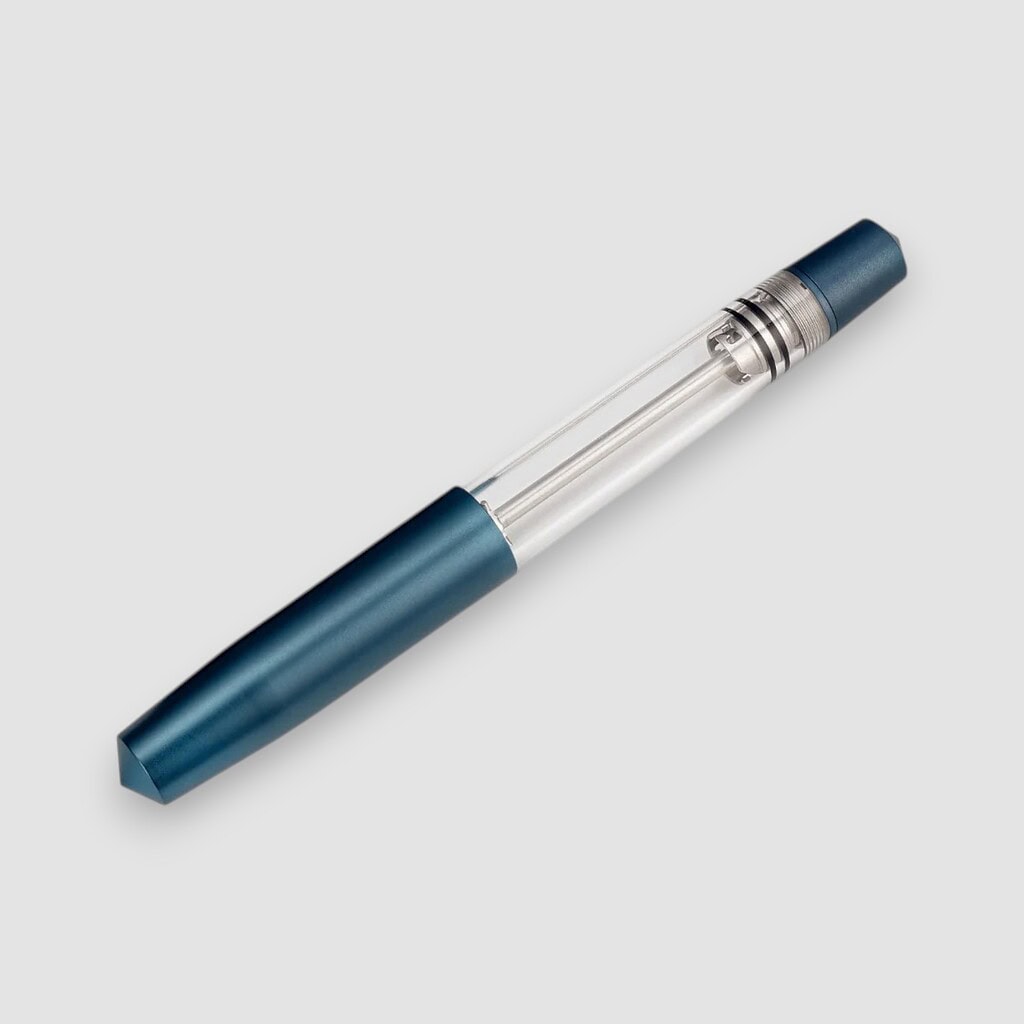
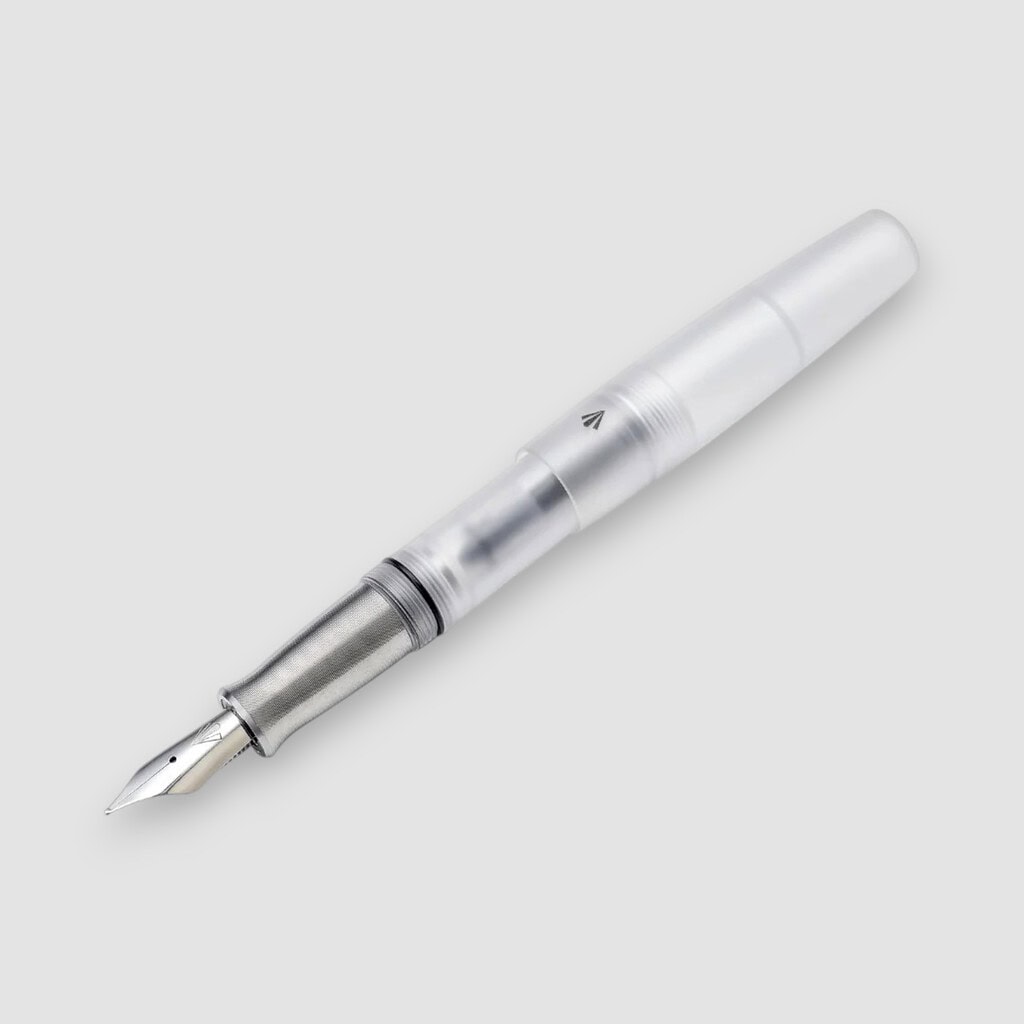
Gravitas Special Edition from Kyuseido
The collaboration between Gravitas and Kyuseido represents a more experimental and niche direction within the demonstrator space. One example is the Kyuseido “Kakari,” developed in collaboration with Gravitas designer Ben Walsh, which explores alternative filling concepts inspired by syringe or bulkfiller-style mechanisms.
These special editions are typically produced in small numbers and often feature unique technical or nib configurations, such as custom grinds and high-flow ebonite feeds. Rather than following traditional European pen design conventions, they lean toward hybrid concepts—combining Japanese nib philosophy with European machining and engineering.
In this context, the demonstrator aspect becomes secondary to experimentation: transparency is used not just to reveal the mechanism, but to emphasize the pen as a prototype-like object, sitting somewhere between collector’s piece and technical exploration.
I had the chance to hold this pen in person, and it felt a bit unusual—something about it just didn’t sit right with me. The lack of a clip was one issue, but also the oversized cap, which fits deeply into the body of the pen. If the cap extended the overall length when closed, it might have worked better, but in this configuration it simply didn’t suit me. That said, it is visually interesting.
Leonardo
Leonardo Momento Zero Grande Nuda Pen Venture Exclusive Demonstrator
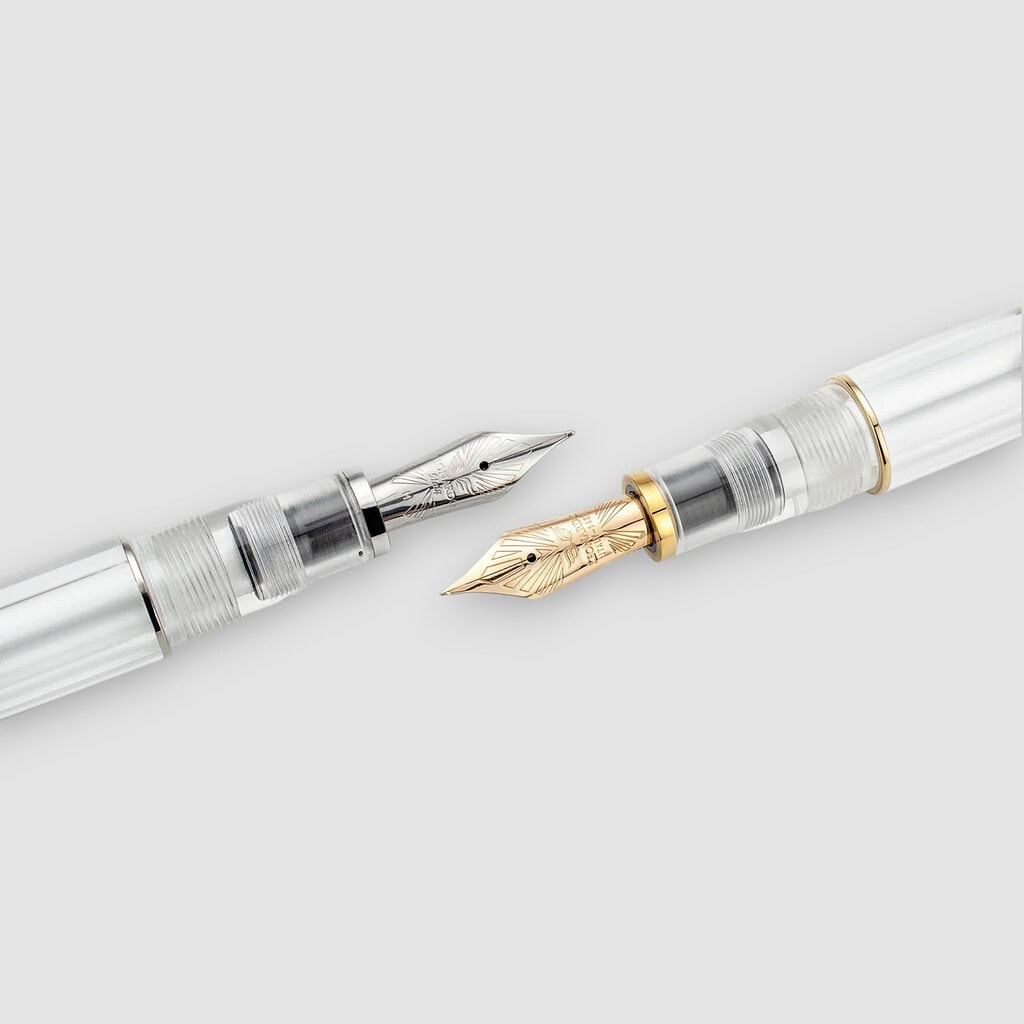
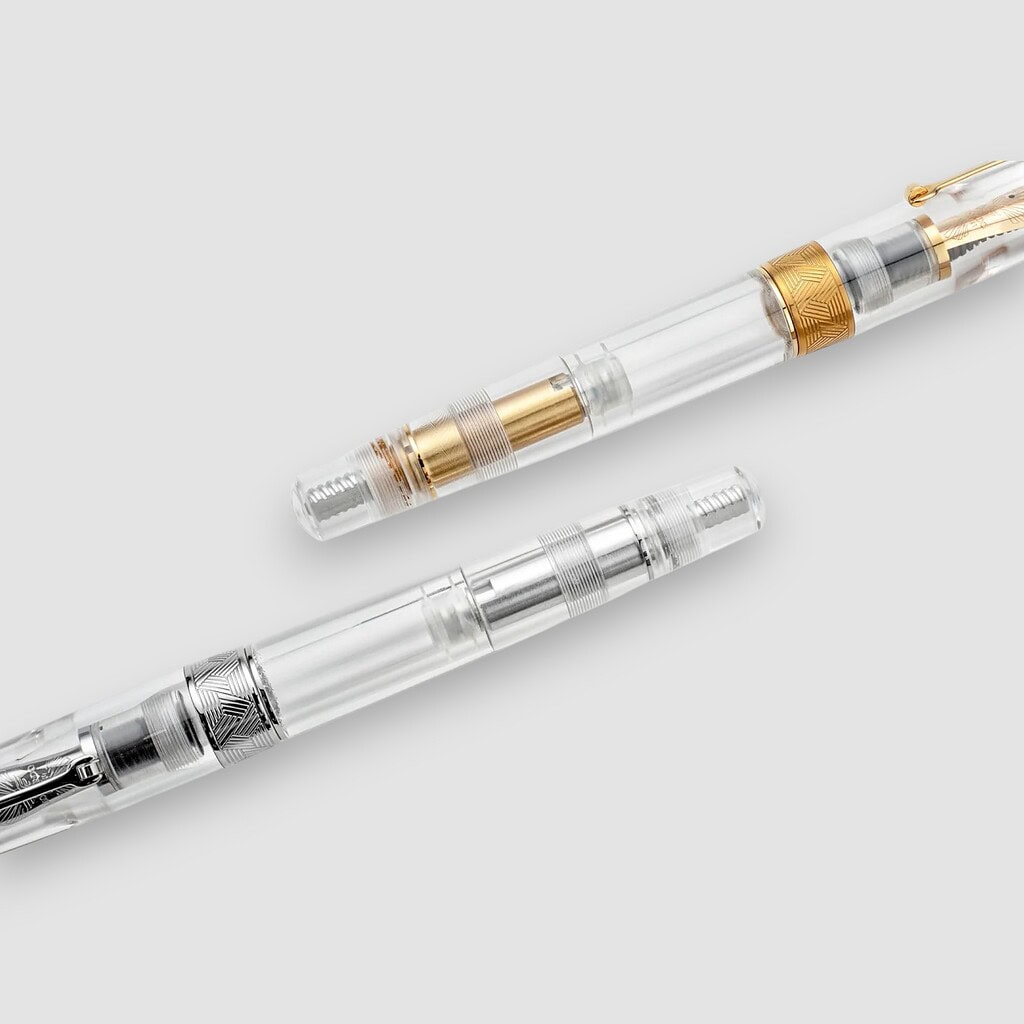
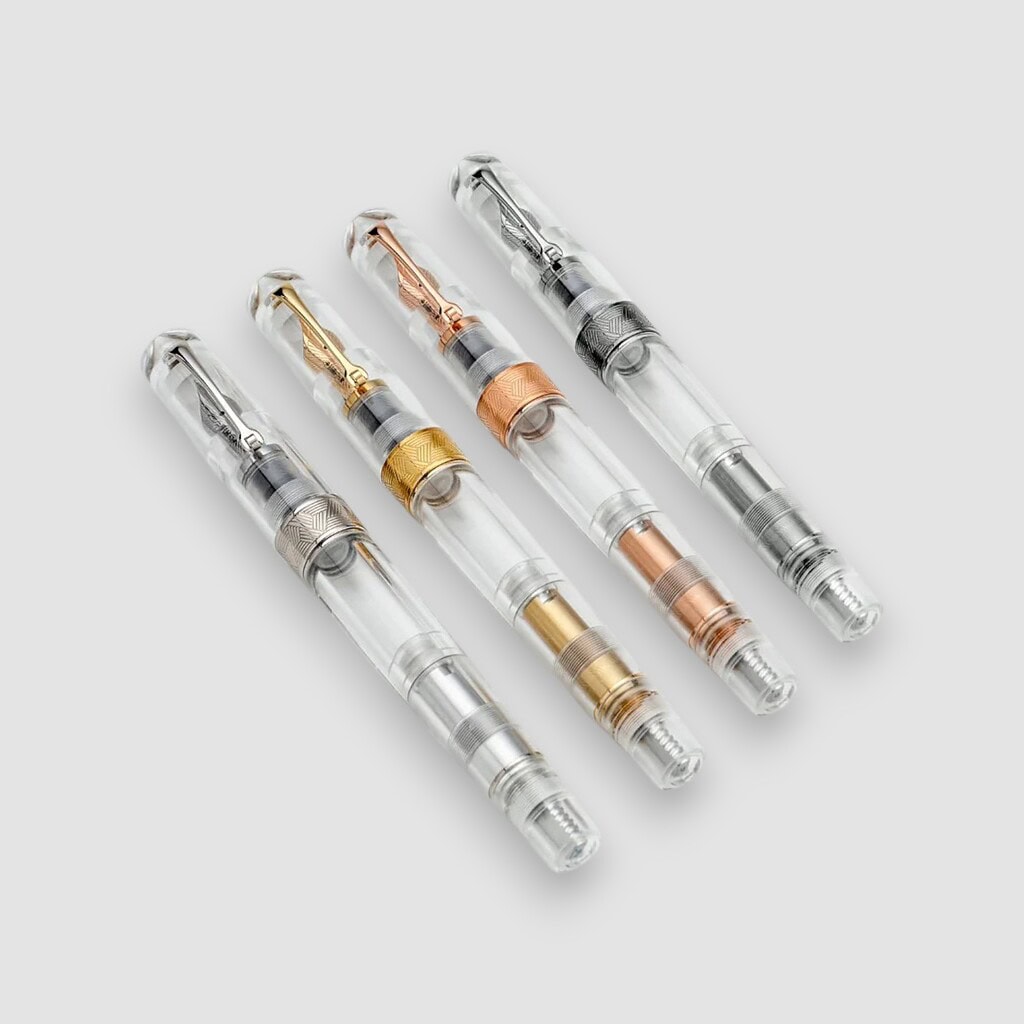
The Leonardo Momento Zero Grande Nuda, created as an exclusive collaboration with Pen Venture, represents a refined and minimalistic interpretation of the demonstrator concept. Unlike many demonstrators that emphasize technical complexity, the Nuda focuses on visual purity—removing color entirely and presenting the pen in fully transparent resin. This approach highlights not only the ink and internal piston mechanism, but also the proportions and craftsmanship of the Momento Zero Grande platform itself.
Technically, the pen is built on Leonardo’s flagship Grande model, featuring an in-house piston filling system with a relatively high ink capacity of around 1.5 ml. The demonstrator body allows a clear view of this mechanism, while maintaining the brand’s signature balance and ergonomics. The pen is equipped with #6 nibs—either steel or 14k gold—paired with different feed materials depending on configuration, reflecting Leonardo’s hybrid approach of combining external nib production with internal tuning and assembly.
What distinguishes the Nuda from other demonstrators is its positioning as a limited, customizable project. Produced in a small run of approximately 200 pieces across different trims, it allowed buyers to configure elements such as nib type and finish, reinforcing its appeal among collectors. The result is a demonstrator that is less about showcasing engineering innovation and more about stripping the design back to its essentials—form, transparency, and material clarity—while still retaining the mechanical reliability of a modern piston filler.
Montblanc
Montblanc Meisterstück 149, 146, old models
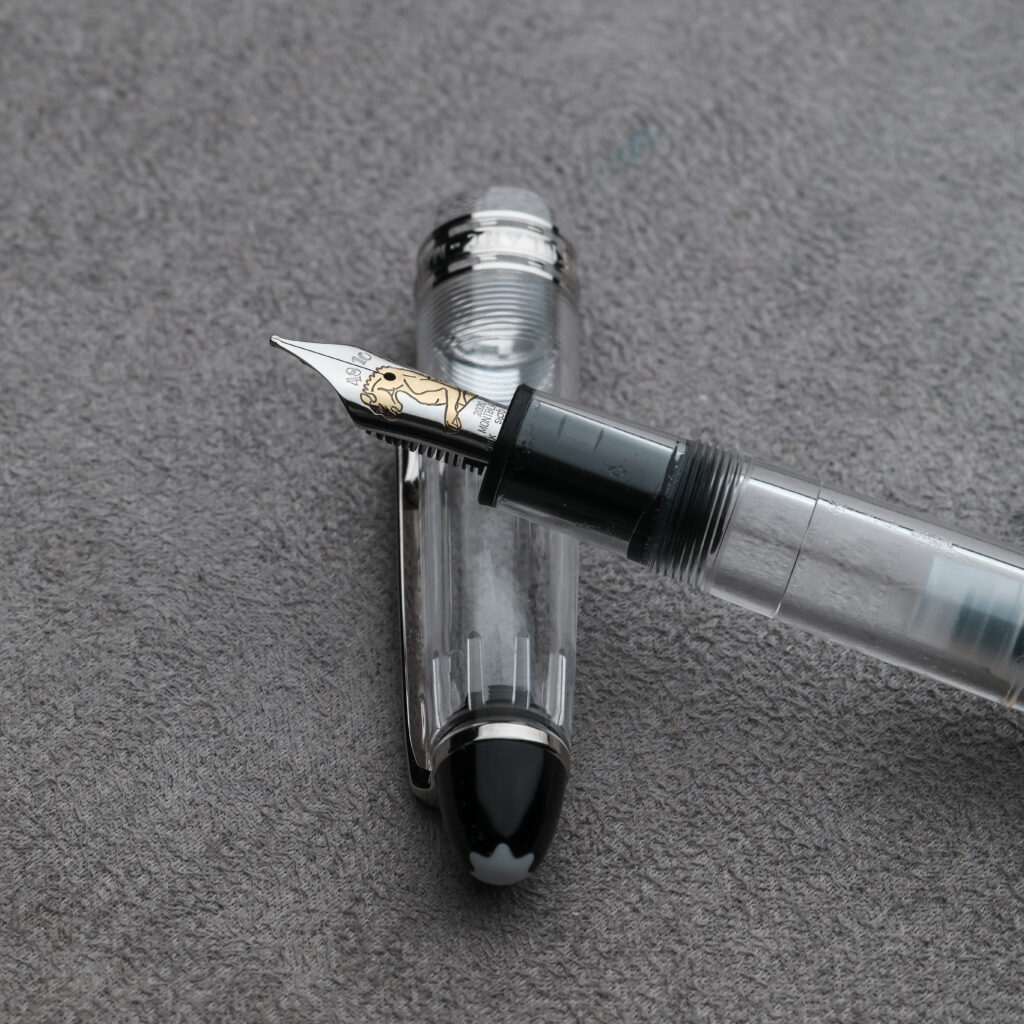
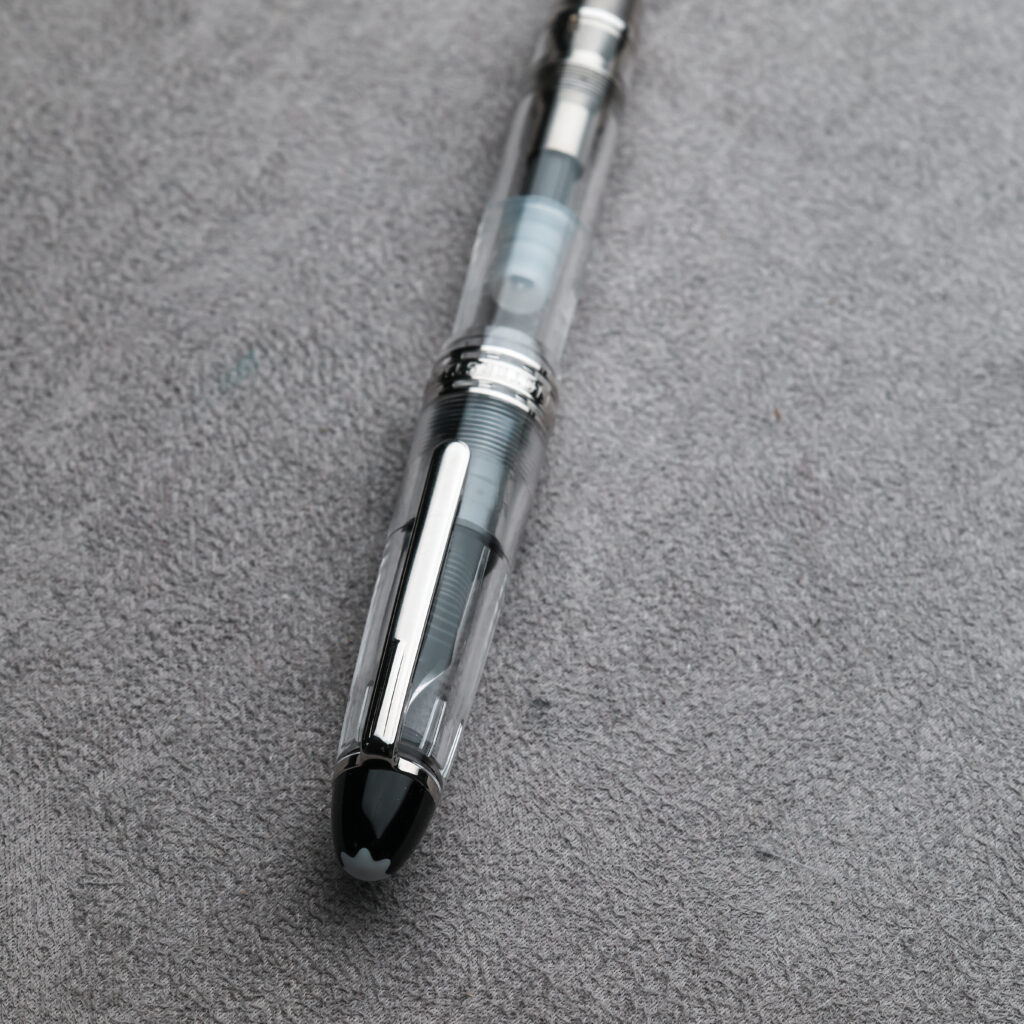
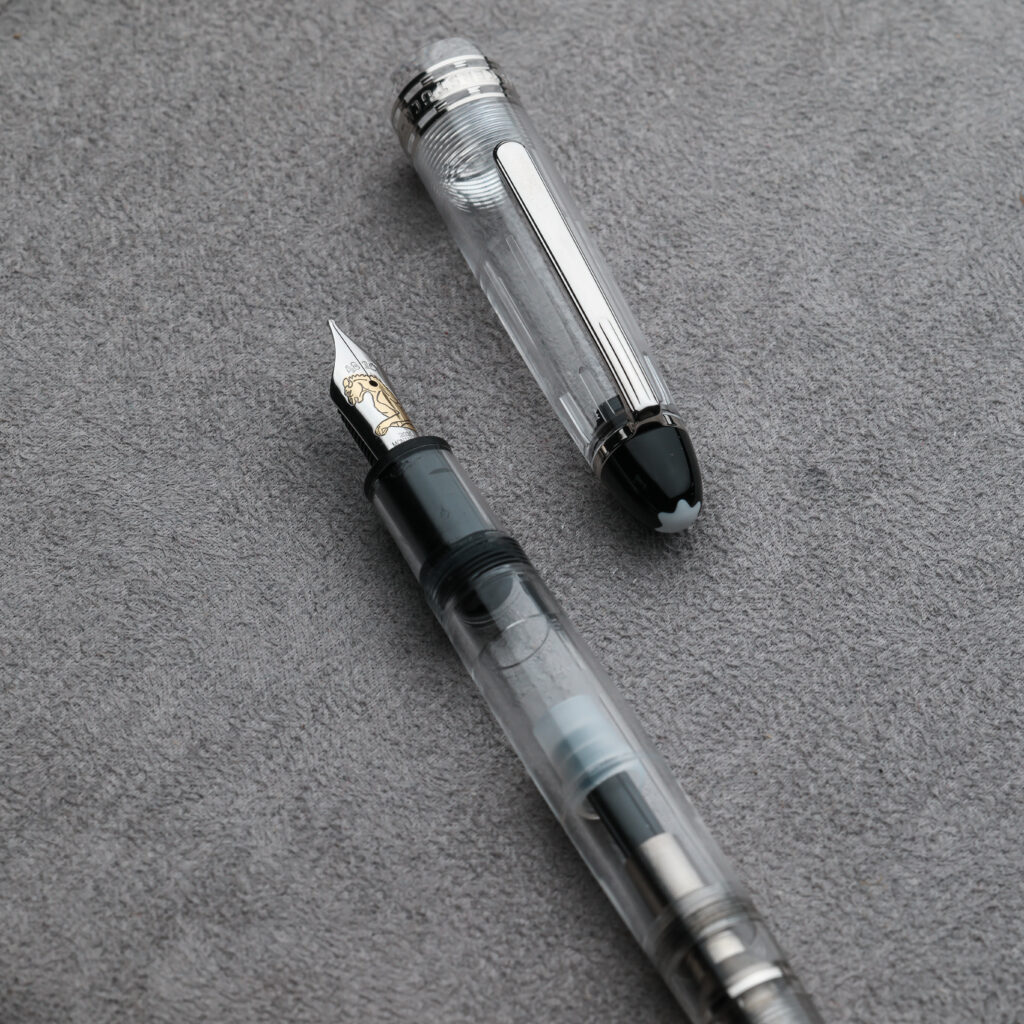
Montblanc has never officially released a transparent demonstrator fountain pen, yet demonstrator models do exist. How is that possible? These pieces were produced in very limited numbers exclusively for boutique use, serving as display models to illustrate how the internal mechanism works and what lies beneath the iconic black resin.
Today, Montblanc no longer produces demonstrator pens. After many years, the closest exception was the Montblanc 149 Traveler, created to showcase a new filling mechanism. As a result, most existing Montblanc demonstrators are now over 20 years old.
What makes them particularly fascinating—beyond their rarity—is the variation between them. They are not only distinguished by model, but also by the degree of transparency. Some feature a white emblem instead of the standard black top, some are fully transparent, while others are only partially so. Even within an already scarce category, there are layers of rarity—from rare to exceptionally rare.
It is somewhat unfortunate that Montblanc has never introduced an official demonstrator model. On the other hand, these pens do have a known drawback: the transparent material can develop cracks over time. While this is typically only a cosmetic issue and does not affect functionality, it is not uncommon—I have experienced it myself with my own Montblanc 146.
Omas
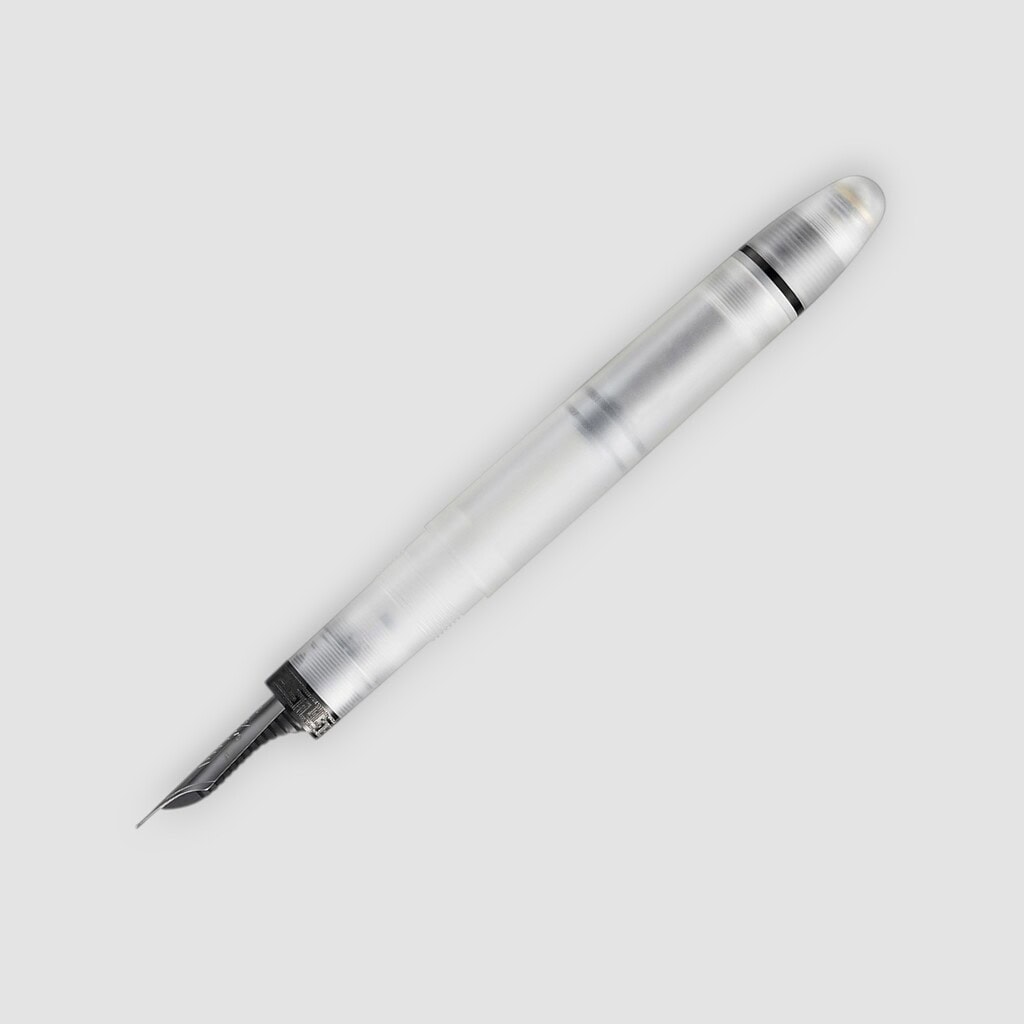
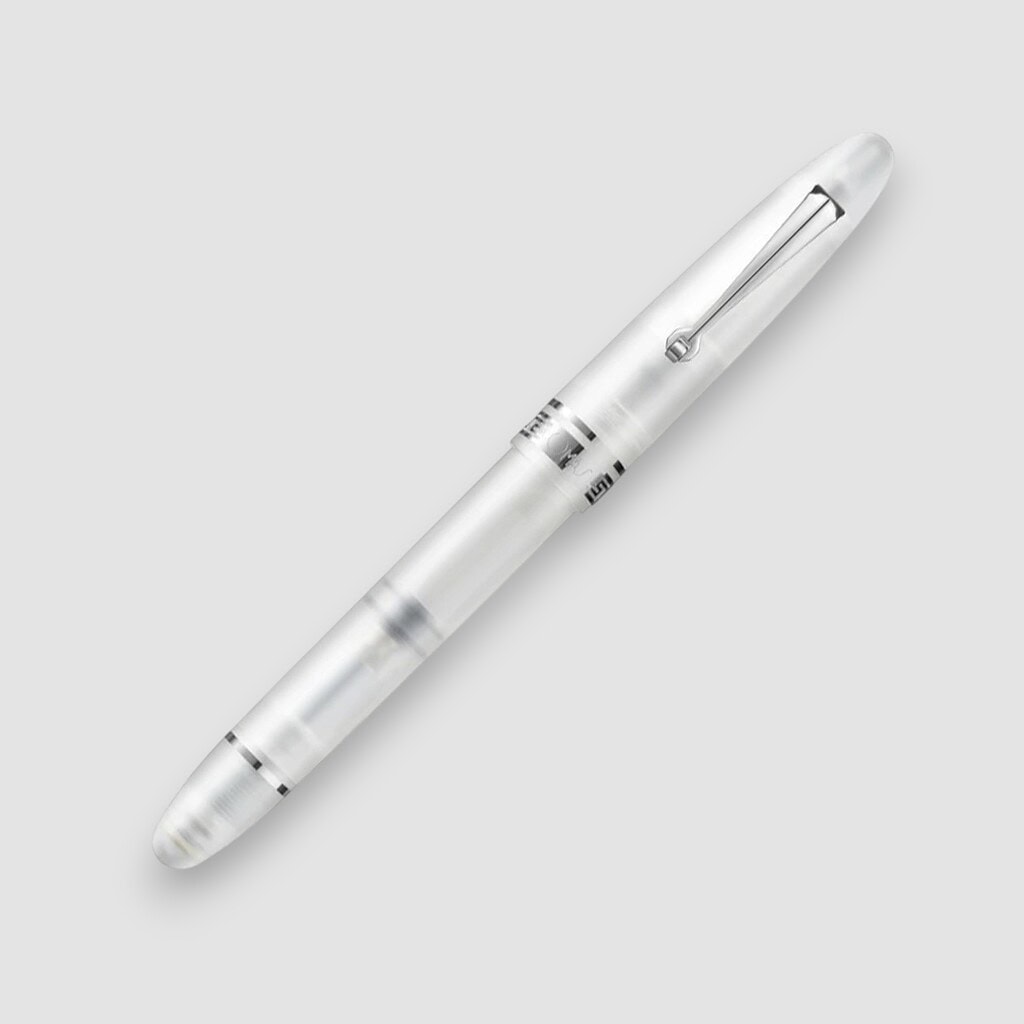
OMAS Ogiva Demonstrator – silver, gold, black trim
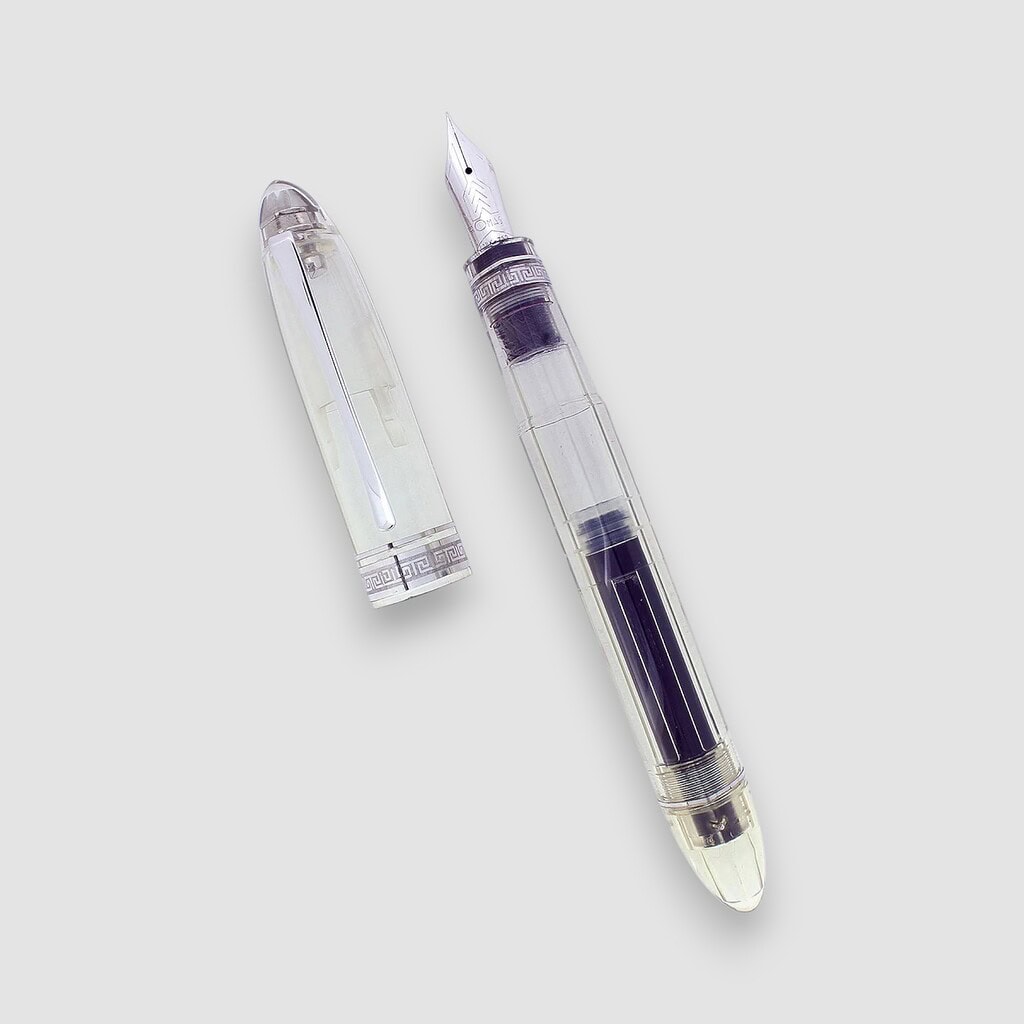
The OMAS Ogiva Demonstrator represents a more traditional and elegant interpretation of a transparent fountain pen. Based on a design lineage dating back to 1927, the Ogiva is characterized by its streamlined, gently tapered silhouette, inspired by the shape of a droplet or projectile. In demonstrator form, the pen uses transparent resin to reveal the internal piston mechanism, offering a classic view into the workings of an Italian-made fountain pen.
Unlike the experimental 360, the Ogiva focuses on balance, proportion, and writing comfort. It typically features a piston-filling system and a gold nib—often paired with an ebonite feed—delivering a smooth and controlled writing experience. The demonstrator versions were produced in various trims, including combinations of gold, silver, and black accents, further emphasizing OMAS’s attention to aesthetic detail.
At the same time, similar to other OMAS demonstrators, the material can be susceptible to discoloration or yellowing over time, particularly with certain inks. Despite this, the Ogiva Demonstrator remains highly regarded among collectors for combining timeless Italian design with the visual appeal of transparency.
Omas 360 Clear vision demonstrator
The OMAS 360 Clear Vision Demonstrator stands out as one of the most unconventional demonstrator fountain pens ever produced. Unlike traditional cylindrical designs, the 360 model is defined by its distinctive triangular shape, engineered to guide the fingers into a natural writing position and maintain a consistent nib angle. In its demonstrator version, this already bold design is combined with transparent material—often cotton resin—allowing a full view of the internal piston mechanism and ink reservoir.
The pen features a traditional piston-filling system, reinforcing OMAS’s commitment to classic fountain pen engineering, while the demonstrator format highlights the mechanical precision inside. Many versions were released as limited editions, which, combined with the brand’s closure in 2016, has made them increasingly collectible.
However, the material used for these demonstrators is known to have certain drawbacks. Cotton resin, while lightweight and visually appealing, can be prone to staining over time, especially if ink is left in the pen for extended periods. This creates a unique paradox: a technically fascinating and visually striking pen that also requires careful use to maintain its clarity.
Onoto
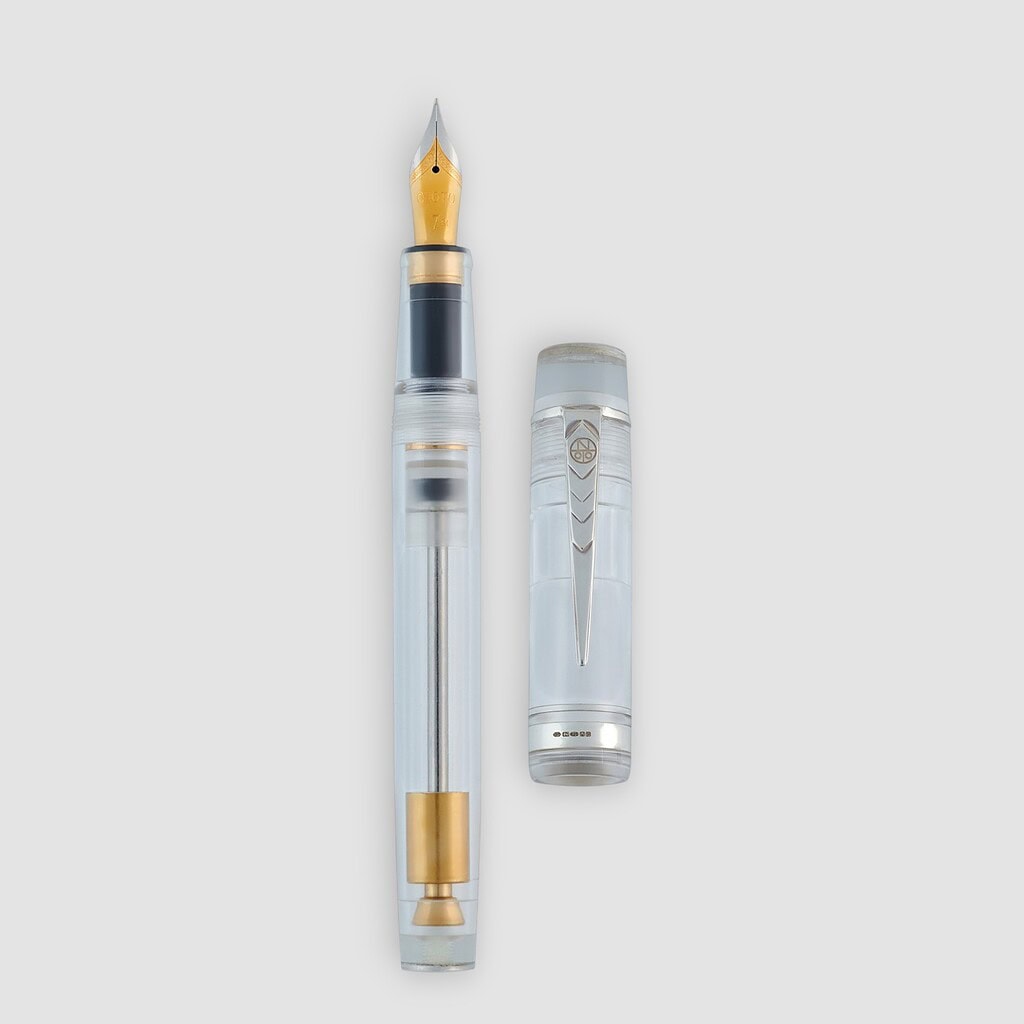
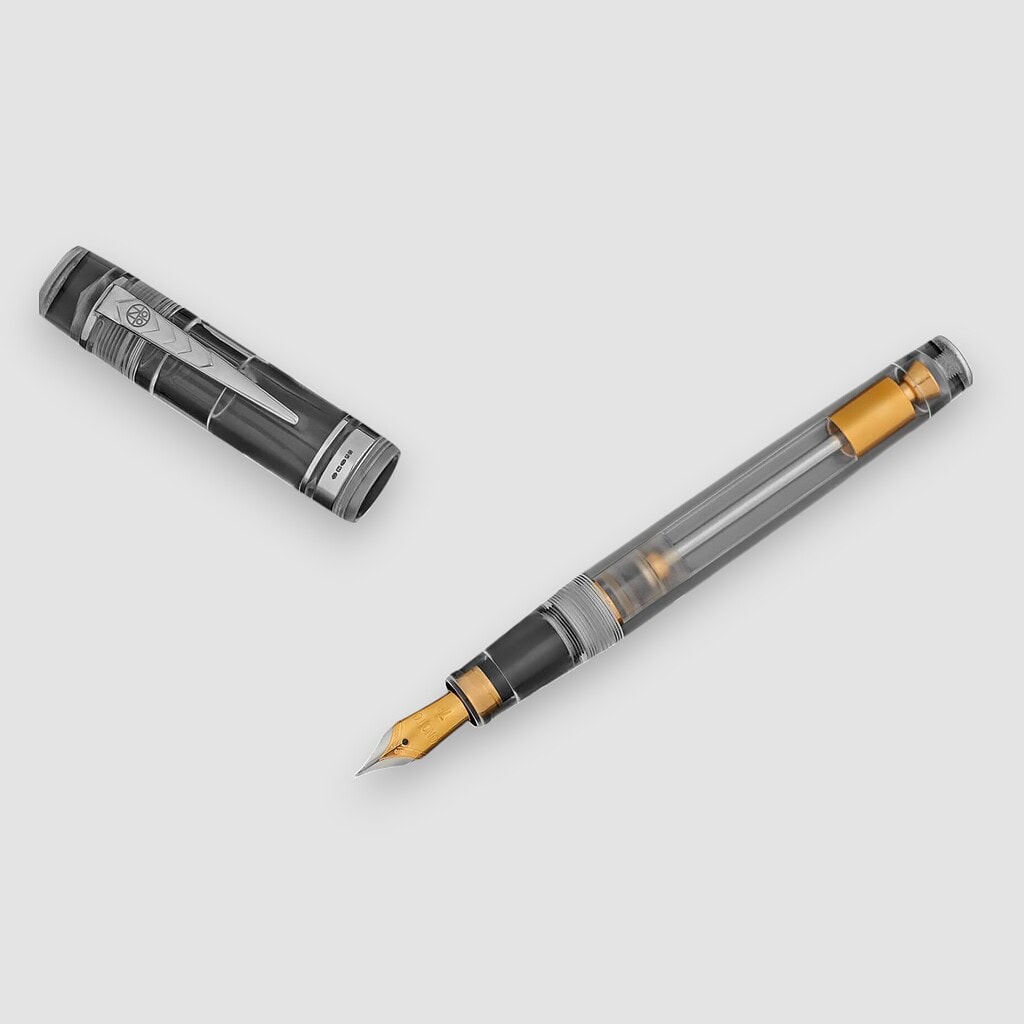
Onoto The Demonstrator
Among all demonstrator fountain pens, few carry transparency with such historical and mechanical legitimacy as those produced by Onoto. While many modern demonstrators lean primarily into aesthetics, Onoto’s approach is structurally rooted in one of the most consequential engineering milestones in early fountain-pen development — the plunger-filling system.
Introduced with the original Onoto pen in 1905, the plunger-filler mechanism represented a significant leap forward at a time when eyedropper filling still dominated the market. Developed from the patent work of George Sweetser and refined through collaboration with De La Rue, the system offered writers a far more reliable, self-contained, and mechanically elegant method of ink intake. Rather than relying on manual barrel filling, the plunger created controlled internal pressure, allowing ink to be drawn efficiently into the reservoir. This innovation rapidly became synonymous with Onoto’s reputation for mechanical ingenuity.
Transparency, in this context, is not decorative — it is didactic.
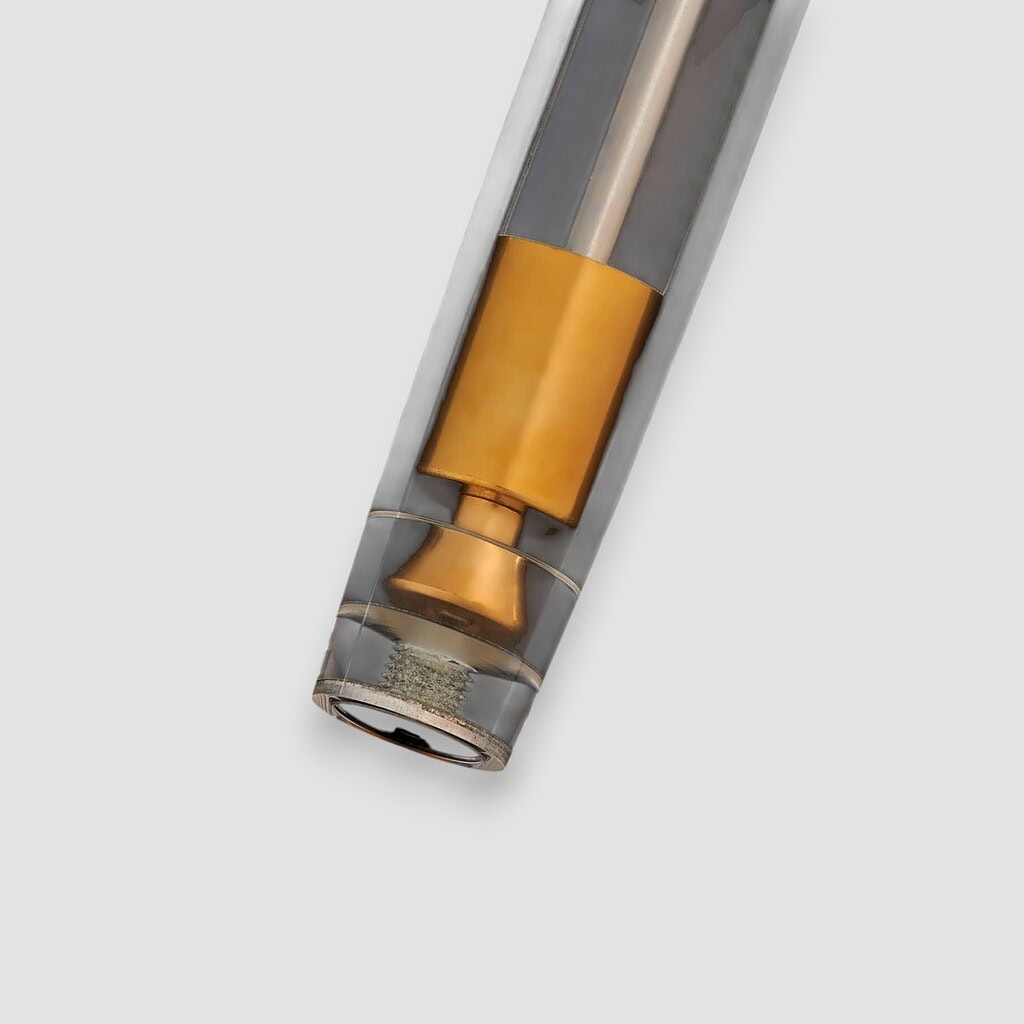
Onoto demonstrator models such as The Demonstrator and the Diffusion Demonstrator make the filling process visible, allowing the user to observe the interaction between plunger rod, seals, chamber, and ink column. The act of filling becomes performative engineering: a live cross-section of early 20th-century invention translated into a contemporary writing instrument. For collectors, this mechanical visibility transforms the pen from tool to teaching object — a working archive of fountain-pen evolution.
There is also a philosophical layer embedded in this transparency. Onoto treats demonstrators as an expression of “mechanical honesty.” Craftsmanship is not concealed behind lacquer or precious resin but revealed — inviting appreciation not only of exterior finishing but of internal architecture. One does not merely use the pen; one witnesses it functioning.
Interestingly, modern Onoto demonstrators extend this heritage through a hybridized filling architecture. While the original plunger patent has long lapsed, allowing widespread adaptation across the industry, Onoto chose not to replicate it verbatim. Instead, the contemporary system is engineered in what the company describes as a “converter style.” The plunger assembly is interchangeable with international standard cartridges or converters, effectively bridging Edwardian engineering principles with modern usability expectations.
This design decision is strategically important. It preserves the symbolic and visual identity of the historic plunger mechanism while acknowledging contemporary maintenance, travel, and ink-compatibility needs. In practical terms, the demonstrator becomes a temporal bridge — connecting the mechanical past with present-day writing culture.
Seen through this lens, Onoto demonstrators are not simply transparent pens. They function as mechanical narratives: instruments that externalize invention, patent history, and British eccentric engineering ethos in a form that remains fully operational more than a century after its conceptual origin.
Opus 88
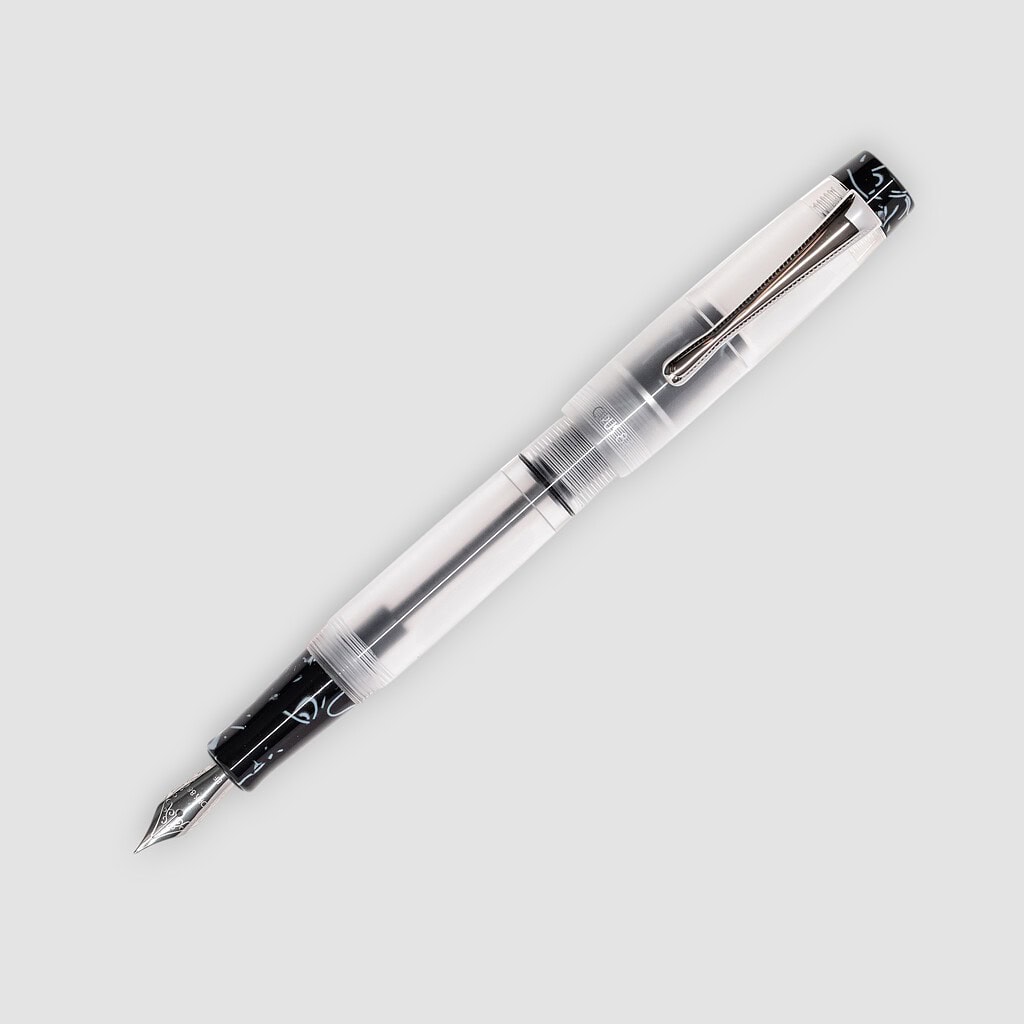
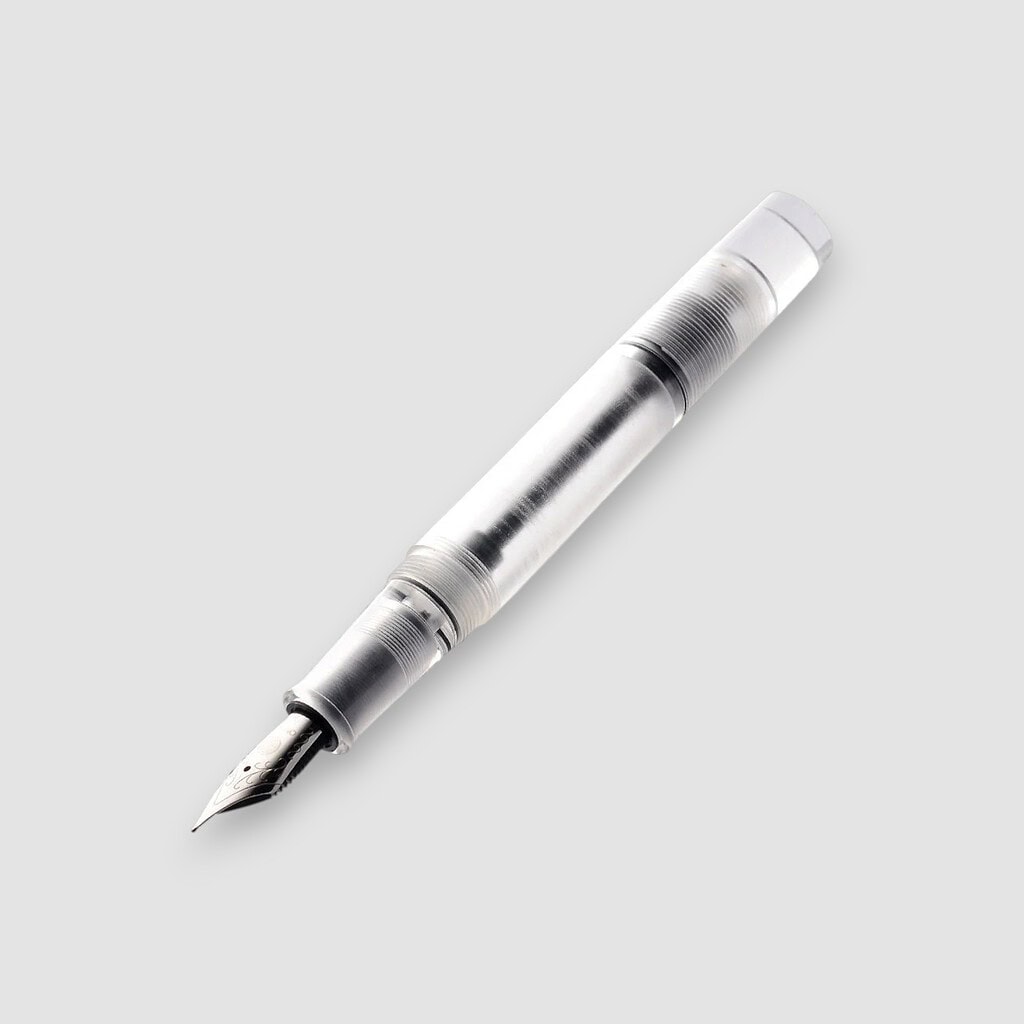
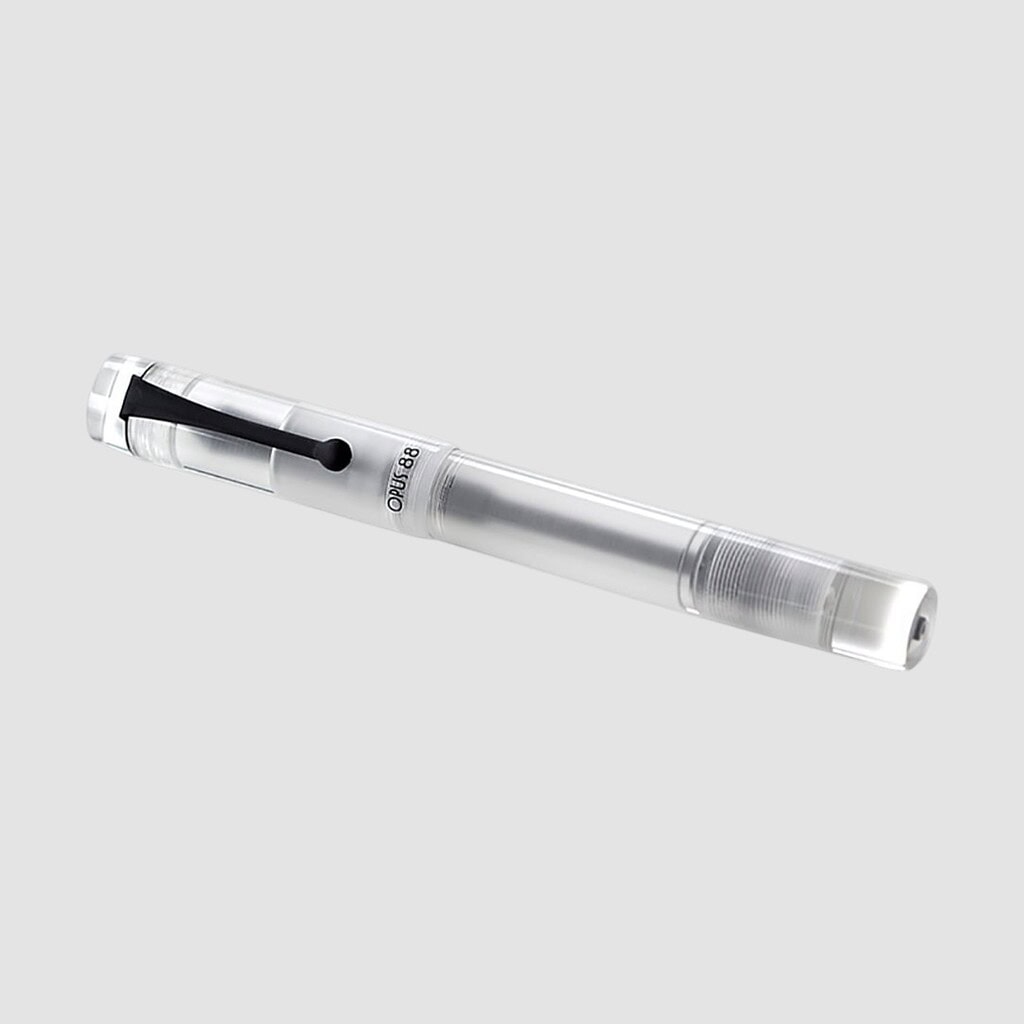
Opus 88 Demonstrator Clear
The Opus 88 Demonstrator represents a fundamentally different approach to demonstrator fountain pens, prioritizing functionality over traditional piston-based aesthetics. Produced in Taiwan, the pen is built as a true eyedropper filler, meaning the entire barrel is filled directly with ink using a pipette or syringe, resulting in significantly higher ink capacity than most standard systems.
What sets the Opus 88 apart is its so-called “Japanese-style eyedropper” system, which incorporates a shut-off valve controlled by a rear knob. This mechanism regulates the flow of ink between the main reservoir and the feed, and when fully closed, effectively seals the ink chamber to reduce the risk of leakage during transport. Unlike traditional eyedroppers, which are prone to “burping” due to temperature or pressure changes, this system introduces a level of control and reliability that was previously found mostly in high-end or vintage pens.
In its demonstrator form, the pen uses clear and frosted acrylic to expose the entire ink reservoir and internal rod system, making the movement of ink and air visible during use. The pen is typically fitted with a standard #6 JoWo steel nib, which also allows for easy replacement or customization.
Pelikan
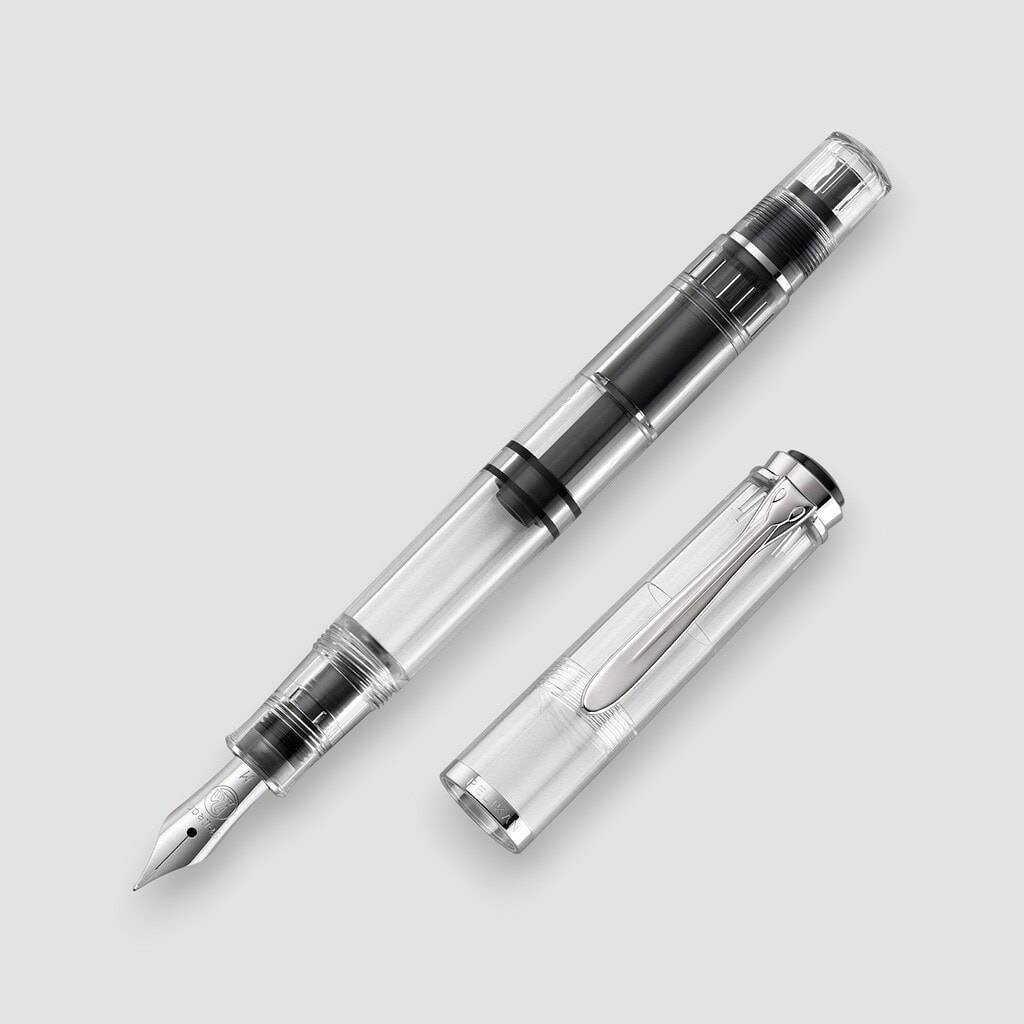
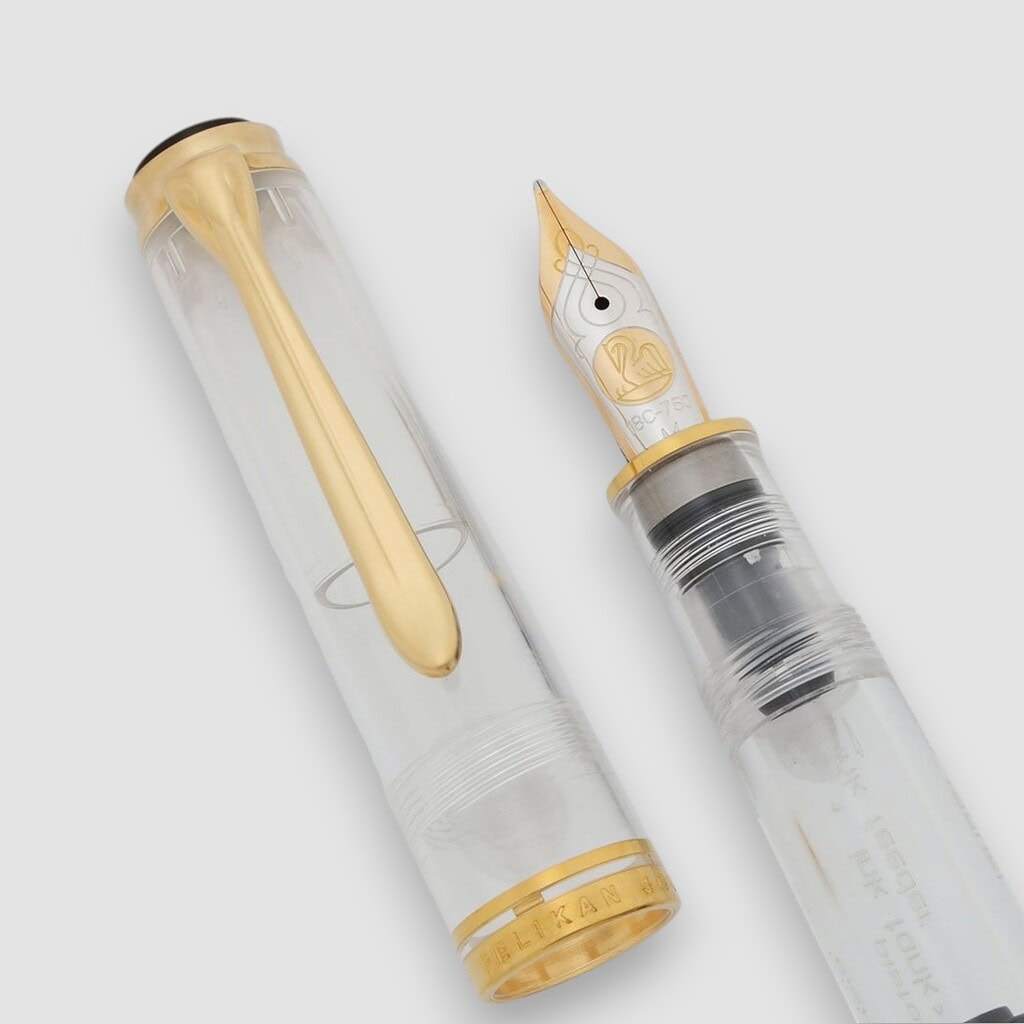
Pelikan M205 Fountain Pen in Clear Demonstrator
The Pelikan Classic M205 Demonstrator offers a clear and accessible introduction to the world of piston-filled demonstrator pens. Based on Pelikan’s long-established M200 series, this model features a fully transparent resin body that reveals the internal piston mechanism and ink movement in real time. As with most Pelikan pens, it uses the brand’s proprietary piston-filling system, known for its smooth operation and reliability, with an ink capacity of around 1.2 ml.
Unlike higher-end Pelikan models, the M205 is equipped with a stainless steel nib, yet it maintains the brand’s reputation for consistent performance. Another practical advantage is Pelikan’s screw-in nib unit, which allows for easy swapping and cleaning—an especially useful feature for demonstrator pens where ink residue is more visible.
While the clear demonstrator version is the most iconic, Pelikan has also released multiple semi-transparent “colored demonstrators” over the years, such as blue, aquamarine, or amethyst editions. These retain transparency while adding a subtle tint, allowing users to still see the internal workings of the pen.
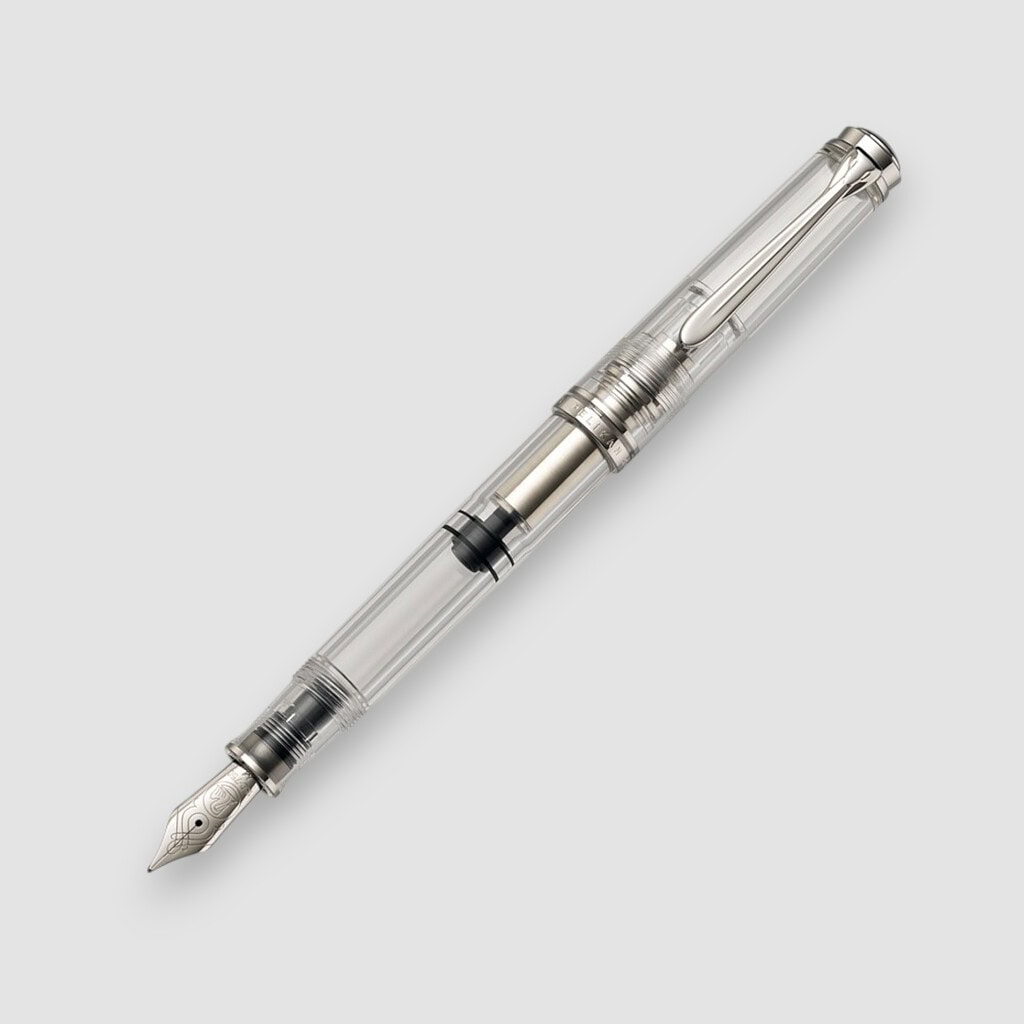
Pelikan M800/M805 clear Demonstrator
The Pelikan M805 Demonstrator represents a more premium interpretation of the demonstrator concept within Pelikan’s Souverän lineup. Larger in size and equipped with an 18k gold nib, the M805 elevates the same core idea—showcasing the internal piston mechanism—into a higher-end writing instrument. Like all Pelikan piston fillers, it relies on a refined internal mechanism that has been a cornerstone of the brand’s success for decades.
The demonstrator concept itself has historical roots at Pelikan, originally used to visually explain how the piston mechanism works, before becoming highly desirable among collectors. The M805 Demonstrator continues this tradition, combining technical transparency with the brand’s signature striped aesthetic and refined proportions.
Similarly to the M205, Pelikan has explored demonstrators beyond fully clear versions. Various M800-series releases feature translucent or partially transparent barrels in different colors, maintaining visibility of the mechanism while adding a more expressive visual identity.
Overall, Pelikan’s approach to demonstrators stands out for its balance between engineering clarity and everyday usability—offering not only a view into the pen’s mechanics, but also one of the most reliable piston systems in the industry.
Pilot
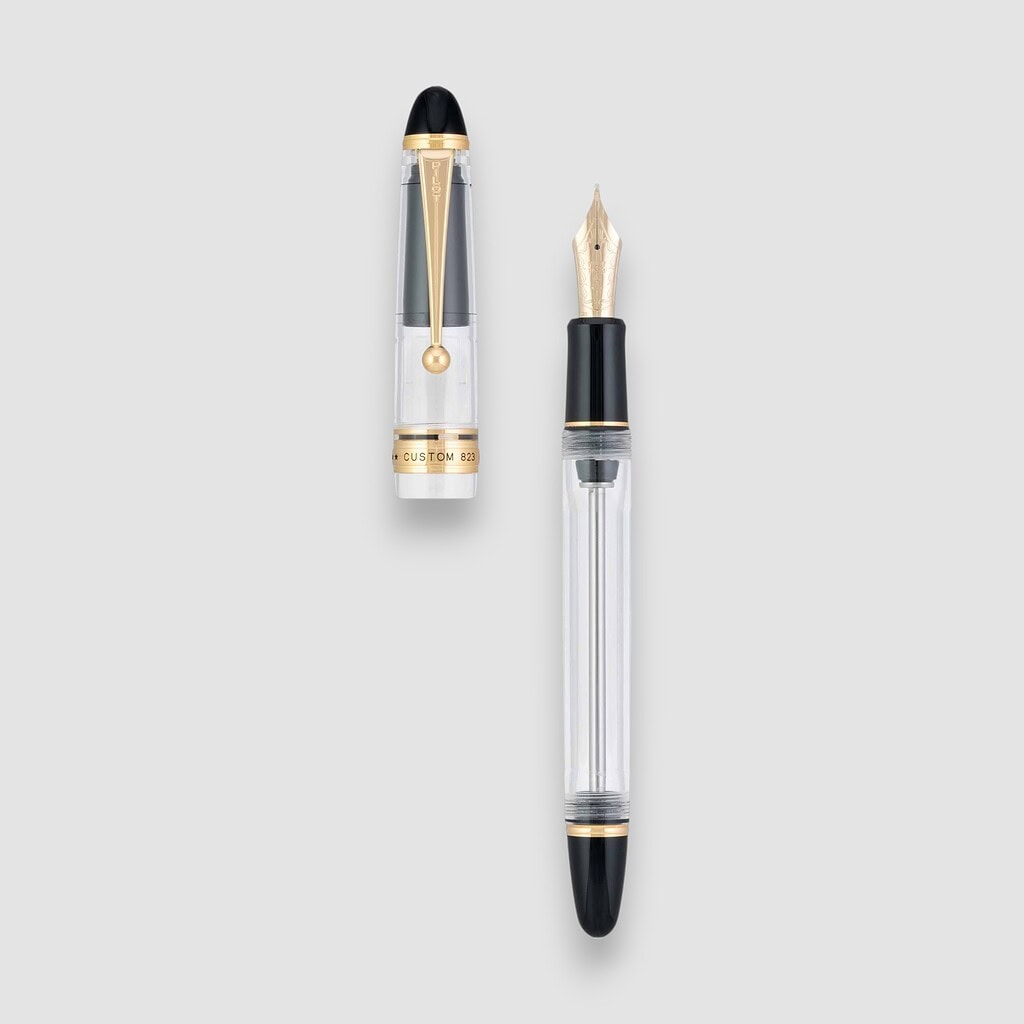
Pilot Custom 823
The Pilot Custom 823 is widely regarded as one of the most complete fountain pens ever made, and in demonstrator form, it becomes even more compelling. Its vacuum filling system is not just a technical feature—it fundamentally changes how the pen is used. With an ink capacity that far exceeds most pens in its class, it is built for long, uninterrupted writing sessions. At the same time, the shut-off valve allows you to seal the ink chamber, making it highly reliable even during travel.
What truly elevates the 823, however, is its #15 14k gold nib. This is where Pilot separates itself from most competitors. The nib is exceptionally smooth, yet controlled, with just enough softness to give the writing a subtle character without ever feeling unstable. It is remarkably consistent across units—something very few brands can match. In practice, the 823 is not just a demonstrator you admire; it is a pen you reach for every day. It combines engineering, capacity, and writing performance at a level that makes it a benchmark in the industry.
Pilot Custom Heritage 93
The Pilot Custom Heritage 93 is a more understated demonstrator, focusing less on mechanics and more on usability. With its flat-top design and transparent or semi-transparent body, it maintains the clean aesthetic of the Heritage line while offering a clear view of the ink reservoir.
Equipped with a 14k gold nib, the pen delivers the same core strengths found across Pilot’s lineup: consistency, precision, and a smooth yet controlled writing feel. Compared to more complex filling systems, the cartridge/converter setup may seem simple, but it brings a significant advantage—ease of maintenance and flexibility in everyday use.
The 93 is not about showcasing engineering; it is about reliability. It is a demonstrator that prioritizes function over spectacle, making it an excellent choice for those who want the visual appeal of transparency without compromising practicality.
Pilot Custom Heritage 92
The Pilot Custom Heritage 92 offers a rare combination: a true piston-filling demonstrator with a distinctly Japanese writing experience. While many piston demonstrators come from European brands, the 92 delivers the same mechanical concept but with Pilot’s signature precision.
Its 14k gold nib is slightly smaller and firmer than the one found on the 823, but it excels in accuracy and control. This makes it particularly well-suited for everyday writing, note-taking, and finer scripts. The piston mechanism is smooth and reliable, and the transparent body provides a clean, uninterrupted view of the ink inside.
What makes the 92 stand out is its balance. It does not try to impress through complexity or size, but through refinement. It is one of the few pens that successfully bridges European filling systems with Japanese nib philosophy, making it a unique and highly practical demonstrator.
Pilot Custom 74
The Pilot Custom 74 is often underestimated, but it remains one of the strongest entry points into gold nib fountain pens. In its demonstrator versions—available in various transparent colors—it offers a clear and approachable introduction to Pilot’s design philosophy.
The 14k gold nib is the highlight here. Even at this level, Pilot delivers exceptional quality, with a smooth, predictable, and highly consistent writing experience. The pen uses a cartridge/converter system, which limits ink capacity but greatly simplifies cleaning and everyday handling.
What makes the Custom 74 stand out is its versatility. It adapts easily to different writing styles and environments, making it a reliable companion rather than a collector’s piece. It may not have the technical complexity of the 823 or the piston mechanism of the 92, but in terms of pure writing performance, it delivers far above its category.

Platinum
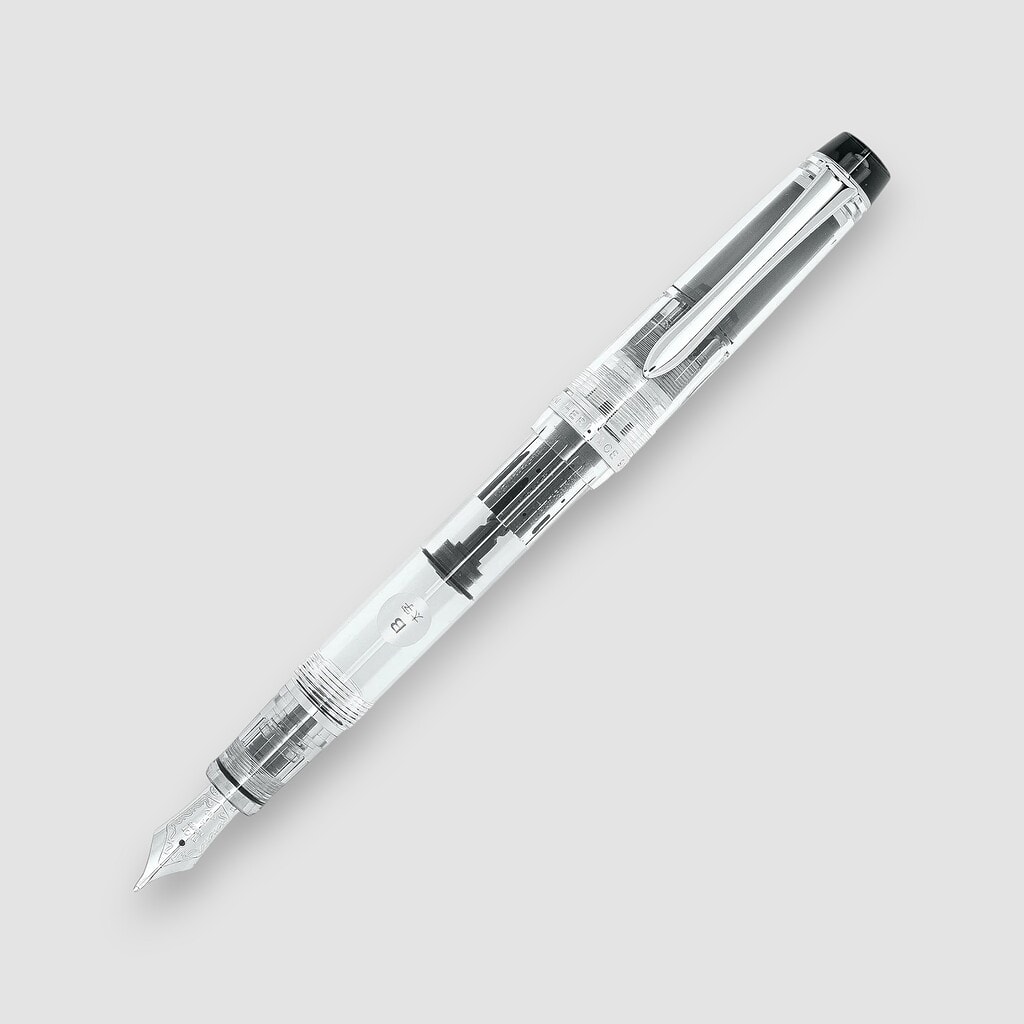
Platinum #3776 Century
The Platinum #3776 Century Demonstrator is one of the most recognizable transparent fountain pens in the Japanese market, combining classic design with practical innovation. Based on the Platinum #3776 Century platform, the pen features a clear resin body that reveals the cartridge/converter system and ink level inside. Unlike many demonstrators that focus on complex filling mechanisms, Platinum keeps the construction simple and reliable, emphasizing everyday usability.
One of the defining technical features of the #3776 Century is the “Slip & Seal” mechanism in the cap, designed to prevent ink from drying out—even after extended periods of non-use. This makes the pen particularly practical compared to many other demonstrators, where evaporation can sometimes be an issue. The pen is typically equipped with a 14k gold nib, known for its precise and slightly feedback-oriented writing feel, very much in line with Japanese nib philosophy.
On a personal note, this is a pen I have a strong connection to. It was my very first demonstrator, and the one that made me truly appreciate transparent fountain pens as a category. There is something uniquely satisfying about seeing the ink inside, understanding how the pen works, and building that connection with the instrument. Even today, it remains one of my favorites—and a pen I simply cannot recommend enough.
Sailor
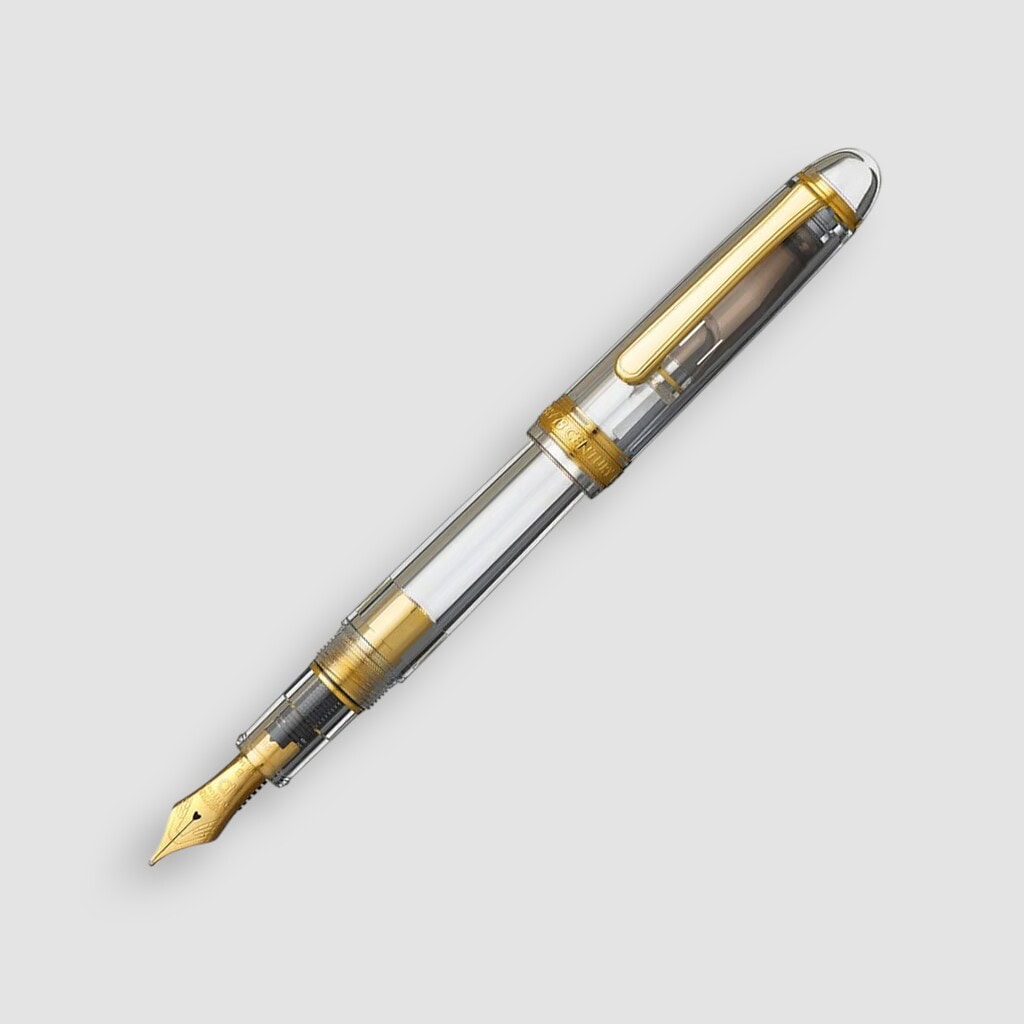
Sailor KOP Professional Gear Demonstrator
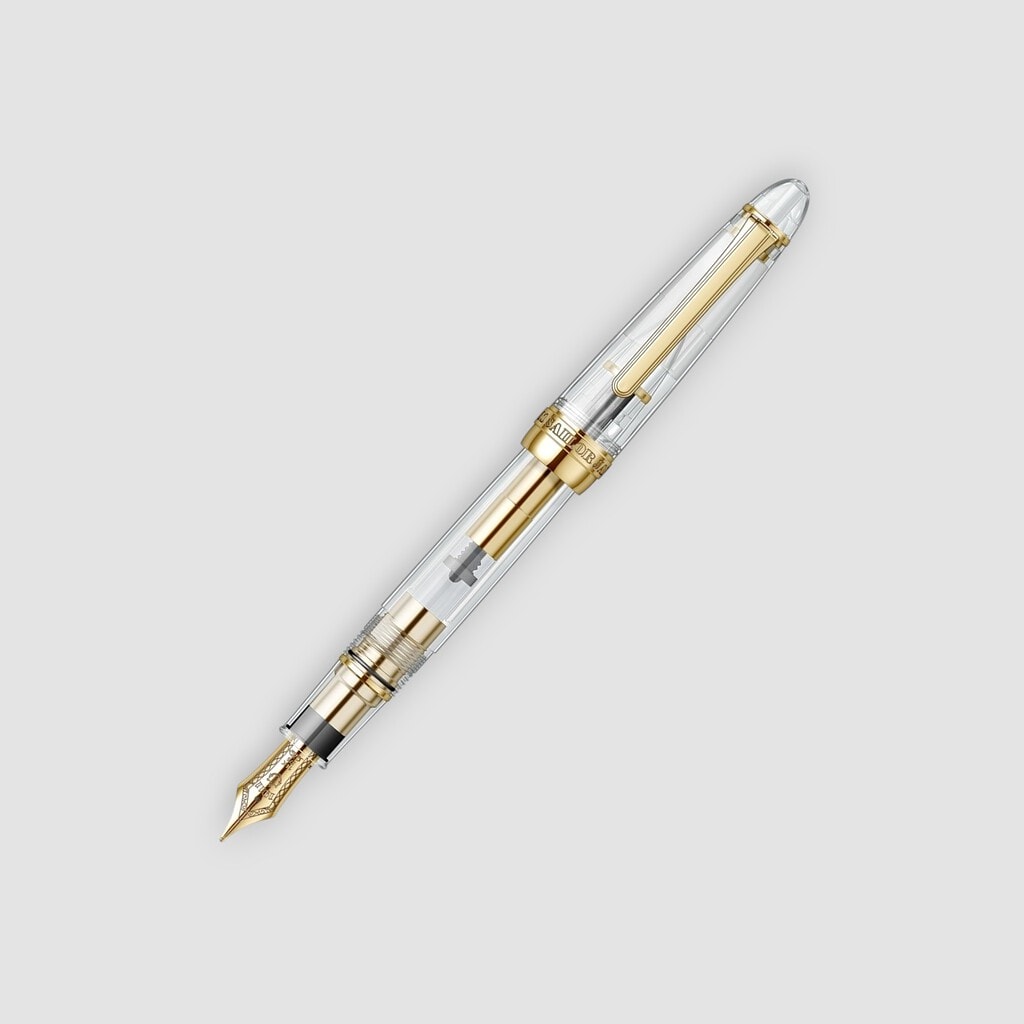
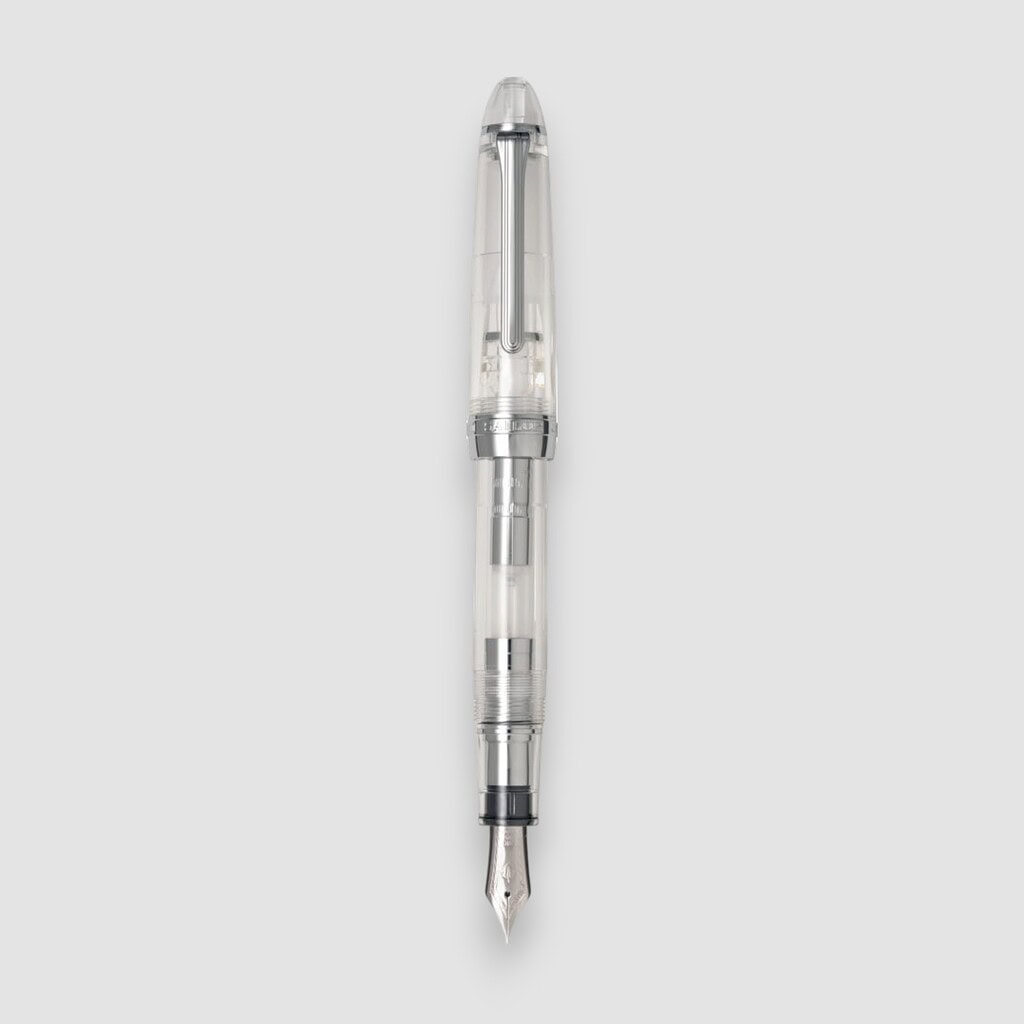
The Sailor King of Pens Professional Gear Demonstrator represents the highest tier of Sailor’s demonstrator lineup, combining the brand’s flagship oversized format with full transparency. Based on the Professional Gear design—recognizable by its flat ends and anchor logo—the demonstrator version uses clear PMMA resin to reveal the internal cartridge/converter system and ink level. Like all King of Pens models, it is equipped with a large 21k gold nib, known for its softer feel and expressive writing characteristics compared to standard Sailor nibs.
What distinguishes this model is not mechanical complexity, but scale and writing experience. Unlike many demonstrators that emphasize filling systems, Sailor focuses on the nib as the core feature. The transparent body therefore serves more as a visual complement, offering a clean view into the pen while maintaining the brand’s minimalist Japanese aesthetic.
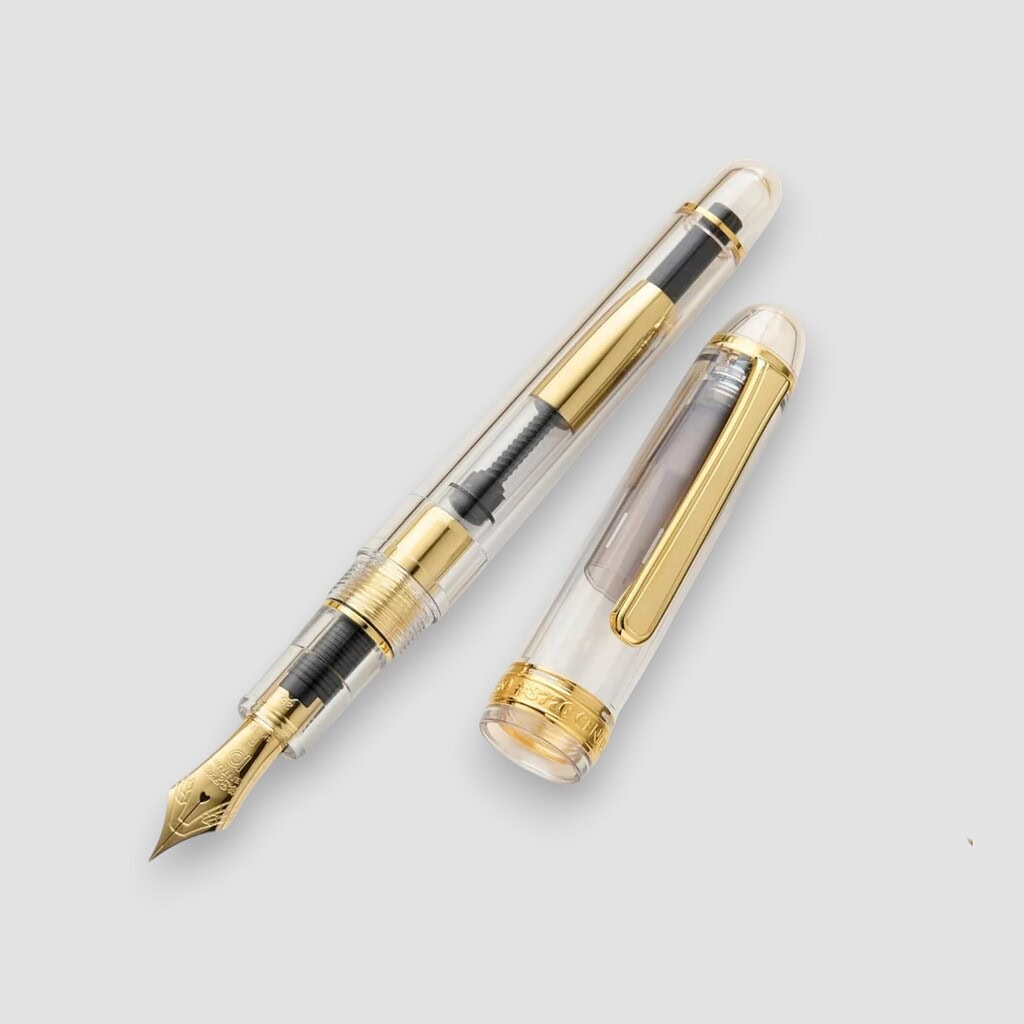
Sailor 1911 L Demonstrator
The Sailor 1911L Demonstrator follows a more classical design language, with a cigar-shaped silhouette inspired by traditional fountain pens. Named after the founding year of Sailor, the 1911 series is one of the brand’s most established lines. The demonstrator version features a transparent resin body, allowing visibility of the converter and ink inside, while preserving the timeless proportions of the model.
Technically, the pen uses a cartridge/converter filling system and is fitted with a 21k gold nib, offering a precise and controlled writing feel. Unlike piston demonstrators, the transparency here is more subtle—focused on ink visibility rather than showcasing complex mechanics. This makes the 1911L Demonstrator a balance between traditional form and modern transparency.
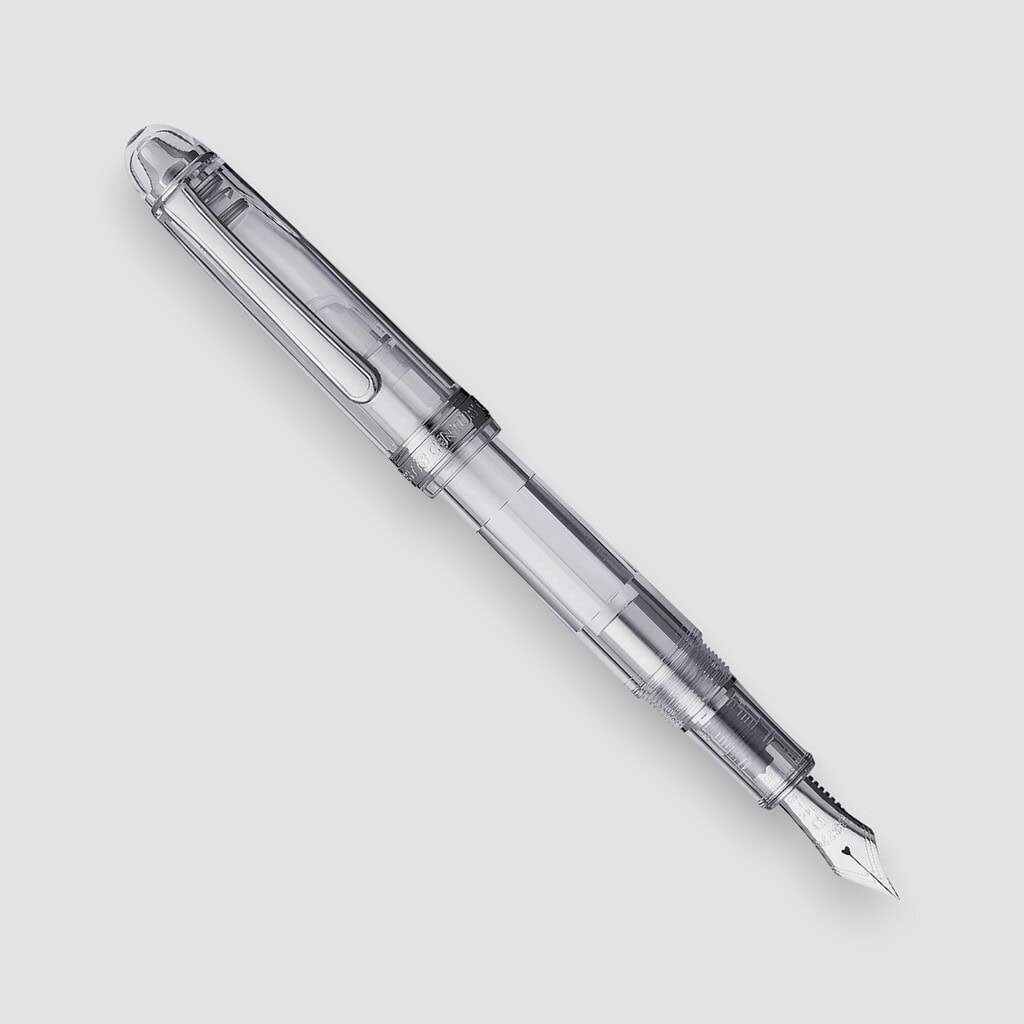
Sailor Professional Gear slim demonstrator
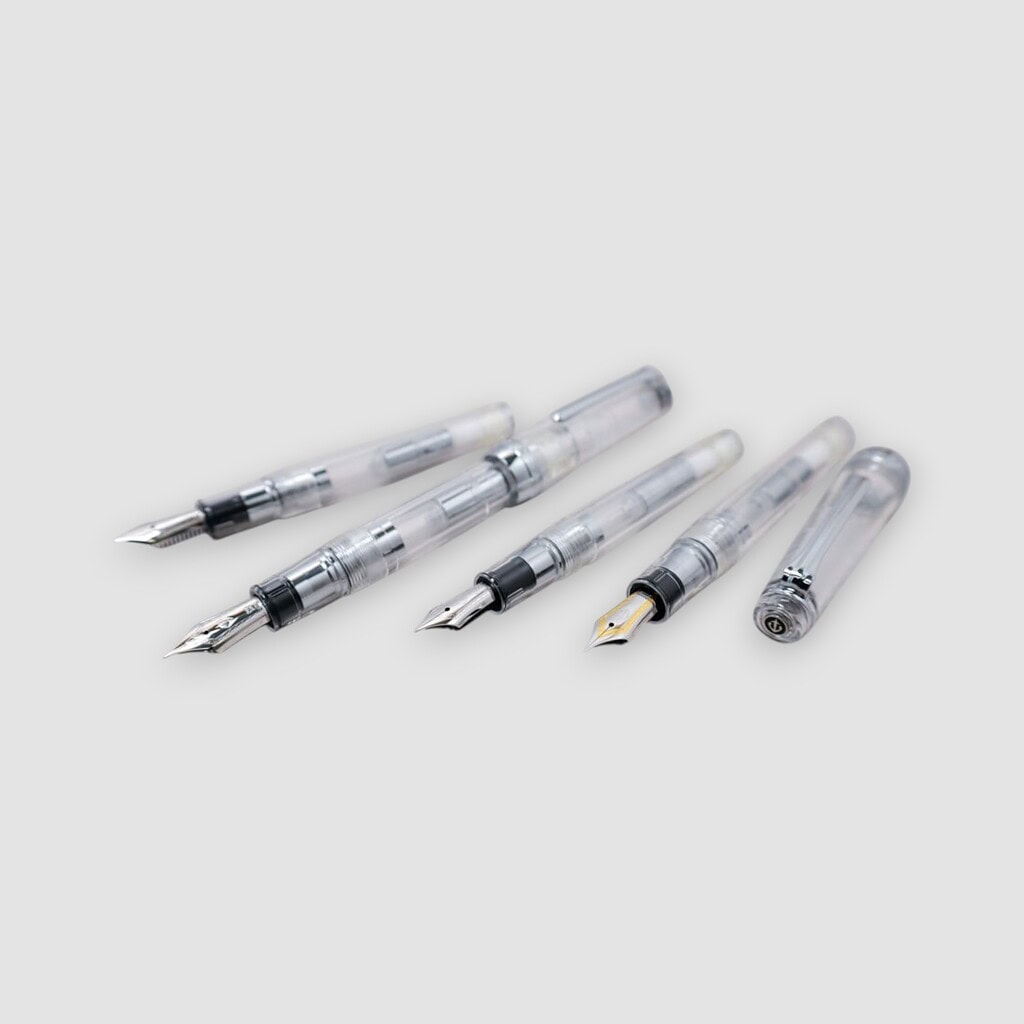
The Sailor Professional Gear Slim Demonstrator is a more compact and accessible version of the Professional Gear series. It retains the flat-top design but in a smaller form factor, making it lighter and more portable. Like other Sailor demonstrators, it is made from transparent resin, allowing users to see the ink level and internal components.
The pen is equipped with a 14k gold nib, which is firmer compared to the larger 21k nibs found in the standard and King of Pens models. It also uses a cartridge/converter system, reinforcing Sailor’s consistent approach across its lineup.
Overall, the Professional Gear Slim Demonstrator highlights Sailor’s philosophy: even in demonstrator form, the focus remains on writing performance and nib precision rather than mechanical exhibition.
Visconti
Visconti 25th Anniversary Opera Crystal Demonstrator Limited Edition Mosquito
The Visconti Opera Crystal Demonstrator, created for the brand’s 25th anniversary, represents one of the earliest and most iconic modern demonstrator interpretations from Visconti. Based on the distinctive Opera model, the pen retains its recognizable squared silhouette—designed to prevent rolling—while introducing a fully transparent body that reveals the internal filling system. Unlike many later demonstrators, the Opera Crystal focuses less on extreme technical exposure and more on balancing transparency with classical Italian design.
The “Mosquito” variant is particularly notable among collectors due to its rarity and subtle detailing. Like other Opera Crystal demonstrators, it typically features Visconti’s high-capacity filling system and emphasizes visual access to the internal structure without compromising the brand’s aesthetic identity. At the time of its release, demonstrators were still relatively uncommon in the luxury segment, making this model an important step in establishing transparency as a desirable feature rather than just a technical tool. Today, these pens are highly collectible, not only because of their limited production but also because they represent a transitional moment where Visconti began merging design, engineering, and storytelling into the demonstrator format.
Visconti Homo Sapiens Fountain Pen Full Demo Limited Edition
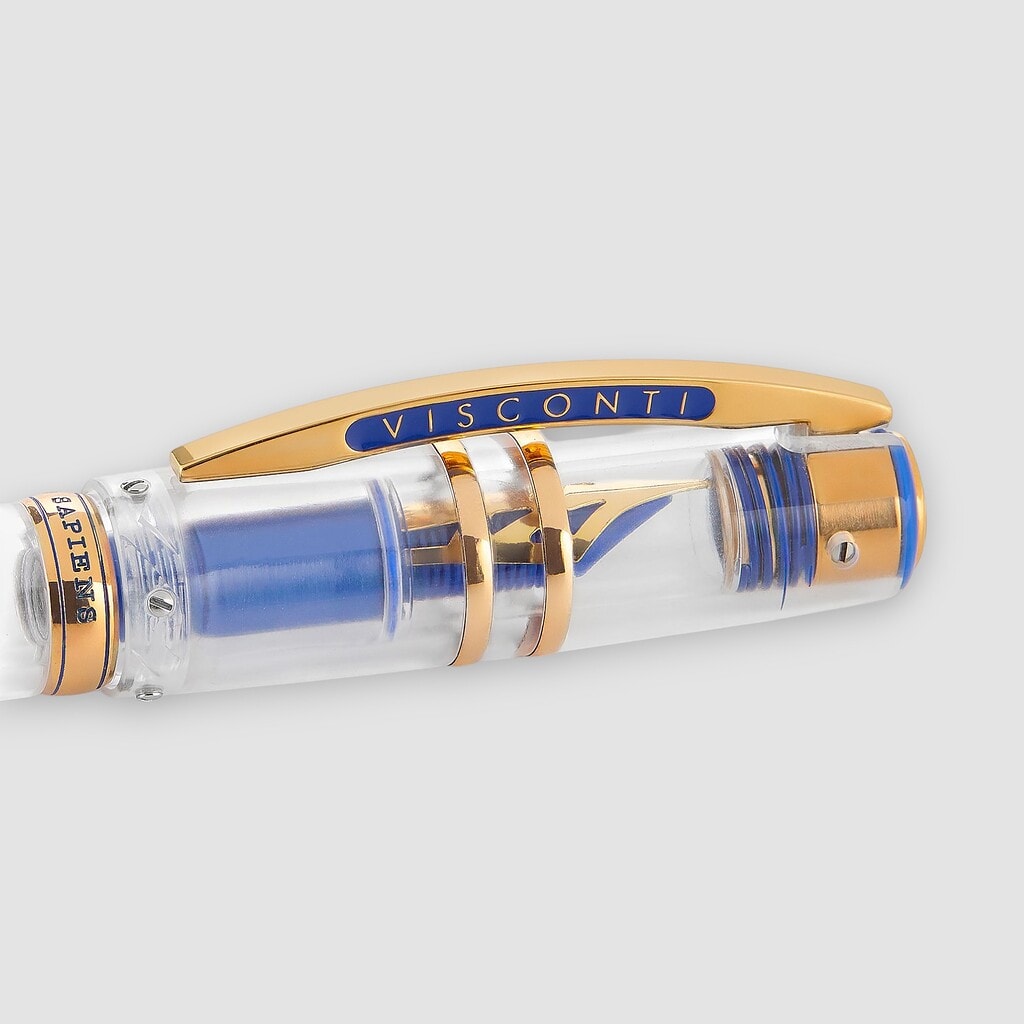
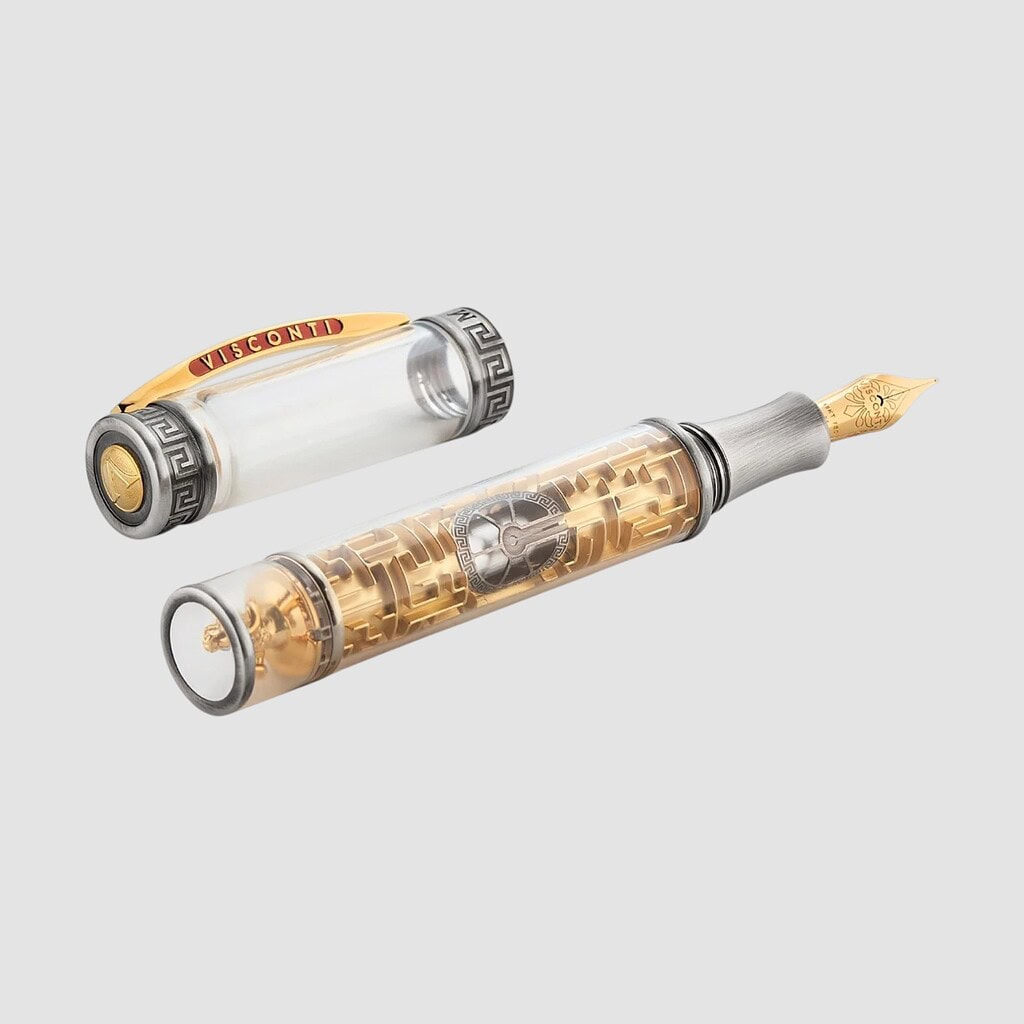
The Visconti Homo Sapiens Full Demo Limited Edition takes the demonstrator concept significantly further, transforming one of Visconti’s most iconic models into a fully transparent showcase of engineering. Unlike earlier demonstrators, this model was designed from the ground up to expose every internal component—not just the ink reservoir, but also seals, springs, and structural elements, all of which become part of the visual experience.
At the core of the pen is Visconti’s patented Double Reservoir Power Filler, a high-capacity vacuum-based system that separates the main ink chamber from the feed, improving flow control and reducing leakage risk during travel. The demonstrator construction makes this system fully visible, reinforcing the pen’s identity as both a writing instrument and a piece of mechanical design.
One of the defining features of this edition is the skeletonized 14k gold nib, which exposes the feed beneath and introduces a more dynamic, expressive writing feel. Combined with blue-tinted internal components and gold or bronze accents, the pen creates a strong visual contrast that highlights both structure and craftsmanship.
Limited in production (for example, editions around 1,088 pieces globally), the Homo Sapiens Full Demo represents a shift in how demonstrators are perceived. Rather than simply revealing the mechanics, it integrates them into the design itself—turning the internal architecture into the primary aesthetic feature.
In this sense, while earlier models like the Opera Crystal introduced transparency, the Homo Sapiens Full Demo fully embraces it, positioning the demonstrator not just as a variation, but as a statement of technical identity and modern luxury.

——
There are many more demonstrator fountain pens out there, but I chose not to include more in this overview.
Demonstrator pens occupy a unique space in the world of writing instruments. They are not just tools for writing, but windows into the mechanics, craftsmanship, and philosophy behind each brand. Whether focused on engineering precision, historical design, or pure visual clarity, each demonstrator tells a slightly different story. And perhaps that is what makes them so compelling—they allow us to see what is usually hidden, turning the act of writing into something more transparent, both literally and conceptually.
2 Comments:
Wasim Says: on 10. April 2026
Great article, thank you! I agree, demonstrators are wonderful pens. The 823 is a perfect example of how beautiful they can be.
One thing I wanted to add, is that Mont Blanc did/ does make official ‘demonstrator’ pens in the form of their ‘Skeleton’ series.
The first being the all gold and then the platinum 333.
filip Says: on 10. April 2026
Thank you very much. Yes, you’re right — they do have skeletonized pens, but I didn’t consider them true demonstrators in this blog. Other brands also feature various forms of skeletonization, but usually only in certain parts of the pen.