What is an icon, or a legend? Montblanc LeGrand 146, or Montblanc 149? The community of Montblanc pen collectors will likely never agree on a single, definitive answer. On one hand, there is the larger model—used in the past and still used today by countless famous personalities. On the other, the smaller 146, introduced later..
What is an icon, or a legend? Montblanc LeGrand 146, or Montblanc 149? The community of Montblanc pen collectors will likely never agree on a single, definitive answer. On one hand, there is the larger model—used in the past and still used today by countless famous personalities. On the other, the smaller 146, introduced later as the more compact counterpart to its bigger brother. Perhaps this is precisely what makes these pens so beautiful: for each person, the most iconic Montblanc pen is a different one.
I write almost everything—yes. My original ambition when I began thinking about this article was to compile a complete list of all LeGrand fountain pens ever made. I admit I even started, but gradually gave up, simply because the number of variants is enormous. Perhaps one day I will complete it and add it here.
The Montblanc Meisterstück collection was introduced in 1924 as the brand’s flagship line and quickly became synonymous with luxury writing. The Meisterstück models were designed to represent the pinnacle of craftsmanship, reliability, and timeless design.
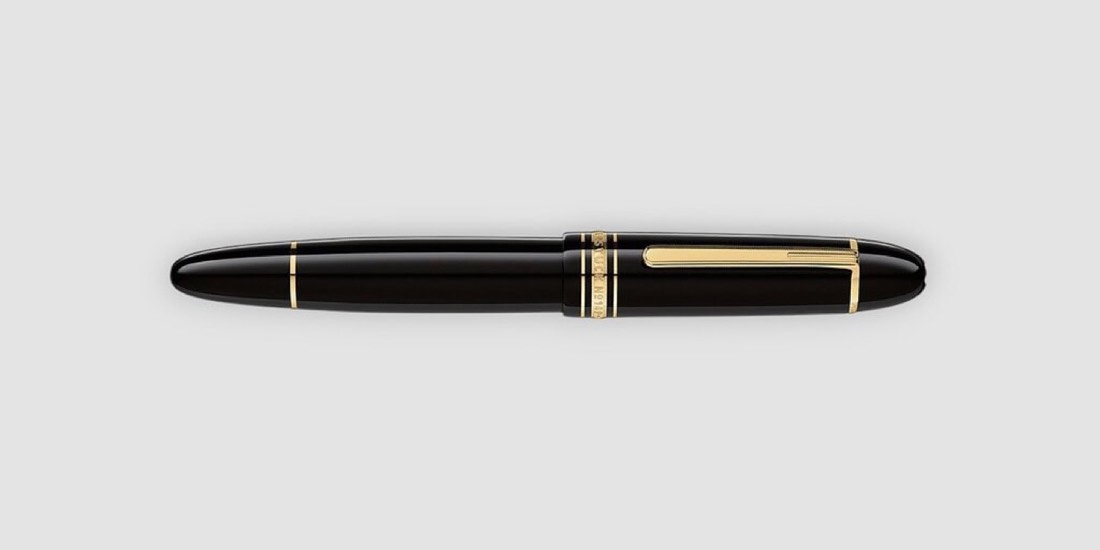
The Meisterstück 149 was launched in 1952 and became an icon thanks to its size, prominent gold nib, and authoritative presence. The slightly smaller Meisterstück 146—often referred to as the LeGrand—followed shortly thereafter, in the first half of the 1950s. It was conceived as a more elegant and practical alternative to the 149, suitable for everyday use, yet without any compromise in quality.
Here is the complete history of the pen:
Montblanc Meisterstück 146 evolution timeline
A cleaner overview of how the LeGrand changed across the decades: material, feed, nib, ink window and piston construction.
1949-1952
Early celluloid 146
Celluloid barrelBi-color 14C nibTelescopic piston
First generation Meisterstück 146 with classic striped ink window and ski-slope ebonite feed. These pens used celluloid construction and the early telescopic piston mechanism.
1950s-1960s
Feed and ink-window transition
Ebonite to plastic feedBlue / grey windows
The 146 moved from flat ebonite feeds to round and later plastic feeds. Ink window colors shifted from yellow-tinted stripes to blue and grey solid designs.
1970s-1980s
Precious resin era
Precious resinUpdated section14K / 18K nibs
Montblanc introduced precious resin barrels and modernized grip, collar and nib configurations. The pen became closer to the modern 146 while keeping the classic silhouette.
1990s
Modern internal construction
Plastic piston partsBrass componentsRefined clip marks
Internal piston parts were modernized with plastic and brass elements, bringing the 146 closer to the construction most collectors know today while retaining its balanced proportions.
2000s-today
Contemporary LeGrand 146
18K nibStriped ink windowSpecial editions
Current Meisterstück 146 models use 18K bi-color nibs, striped transparent ink windows and refined resin construction. Limited editions keep the architecture but add specific engravings, finishes and materials.
A practical collector reference for the main construction details: nib, feed, ink window, barrel, grip section and piston.
Feature
Nib
Material and finish
Early: bi-color 14C gold nibs in the celluloid era
Transition: mono-color yellow 14K gold nibs
Later: bi-color 14K / 18K gold nibs on precious-resin models
Gold mark and bi-color layout are among the fastest dating clues.
Feature
Feed
Ebonite and plastic
Flat ebonite ski-slope feed on very early 146 pens
Round ebonite feed with grooves on face and shank
Later split ebonite and plastic feeds
Feed shape and material are often more reliable than the cap alone.
Feature
Ink window
Color and pattern
Yellowed striped window on early celluloid models
Light-blue and grey windows on certain transitional pens
Modern clear striped window on precious-resin versions
The window is a small detail, but it carries a lot of dating information.
Feature
Barrel material
Celluloid to resin
Early production used celluloid barrels and caps
Later production moved to Montblanc precious resin
This transition separates vintage 146 character from the modern LeGrand feel.
Feature
Grip and collar
Section shape
Curved grip without collar on early pens
Straight grip without collar in the intermediate period
Bulge collar and later trumpet-style collar on modern pens
The section shape is especially useful when the nib has been replaced.
Feature
Piston
Mechanism and knob
Early telescoping piston mechanism
Later solid black plastic piston units
Modern brass piston mechanisms with smoother action
Weight, knob profile and feel help confirm the era of the pen.
This guide is a simplified visual summary for quick reference in the article, not a fully granular year-by-year matrix. Use several clues together before dating a specific pen.
Why the Montblanc 146 Is Exceptional
Over the decades, the Montblanc 146 has retained its fundamental silhouette while undergoing numerous technical and design refinements:
Filling system: originally a telescopic piston, later replaced by a conventional piston mechanism
Nib: 14k gold nibs in earlier versions, later 18k gold, always hand-finished
Ink window: evolving from clear and grey variants to today’s amber-tinted window
Clip and emblem: gradual changes in clip shape, engravings, and the Montblanc emblem itself
The Meisterstück 146 represents an ideal balance between size, comfort, and prestige. It is substantial enough to feel representative and authoritative, yet practical and comfortable for everyday writing.
Montblanc LeGrand Versions
Today, the Montblanc 146 is available in the classic black precious resin in three trim options—platinum, rose gold, and gold—essentially the same pen, allowing you to choose purely based on color preference. Beyond this core model, Montblanc introduces a wide range of special or limited editions each year, often as part of themed or color-focused collections.
Which variants are commonly released?
The LeGrand 146 usually appears in a few recurring Montblanc formats. This overview makes the families easier to scan before diving into individual releases.
01
Recurring themes
Meisterstück Themed Collections
Pens dedicated to stories, cities or cultural moments, for example The Little Prince, Around the World in 80 Days, the Olympics, or the upcoming Romeo and Juliet. Within these collections, the LeGrand often appears in several levels of execution.
Precious resinDouéSolitaire
This is usually the broadest and most accessible category for collectors who want a special 146 without moving into ultra-limited territory.
02
High craft
Meisterstück Great Masters
Among the most refined LeGrand editions, often crafted from more precious materials and finished with elaborate decorative work.
Precious materialsDecorative craft
What makes them interesting is that they preserve the classic Meisterstück line while moving the pen into a more luxurious register.
03
Milestones
Anniversary Editions
Released to mark important Meisterstück anniversaries, such as the 75th, 90th and 100th anniversaries.
Origin editionsSpecial nibs
These often carry distinctive nib or cap details and tend to feel more directly connected to Montblanc history.
04
Pattern work
Geometry Editions
LeGrand variants built around geometric surface patterns, usually giving the classic form a sharper architectural character.
DouéSolitaire
05
Nib focused
Calligraphy Editions
Special models equipped with expressive calligraphy nibs, created for writers who want the Meisterstück line to feel more personal on paper.
Flexible writingSpecial nib
06
Metal bodies
Silver Editions
Historically, Montblanc released various sterling-silver LeGrand models, essentially Solitaire versions with a more substantial and cooler feel in hand.
Sterling silverSolitaire
07
One-off directions
Ad-hoc special editions
Color and theme driven releases such as Blue Hour, Red Hour, burgundy colorways and similar special editions.
Color storiesShort production
Most of these editions are limited by production period rather than a strict numbered edition. Some are clearly limited or ultra-limited, sometimes restricted to as few as 88 or 100 pieces. There are many of them, and at times the release rhythm feels less systematic than the Writers Edition, which follows a clearer annual structure.
This will remain a placeholder section—a reminder to myself to one day complete a comprehensive overview of all LeGrand models that have ever been produced.
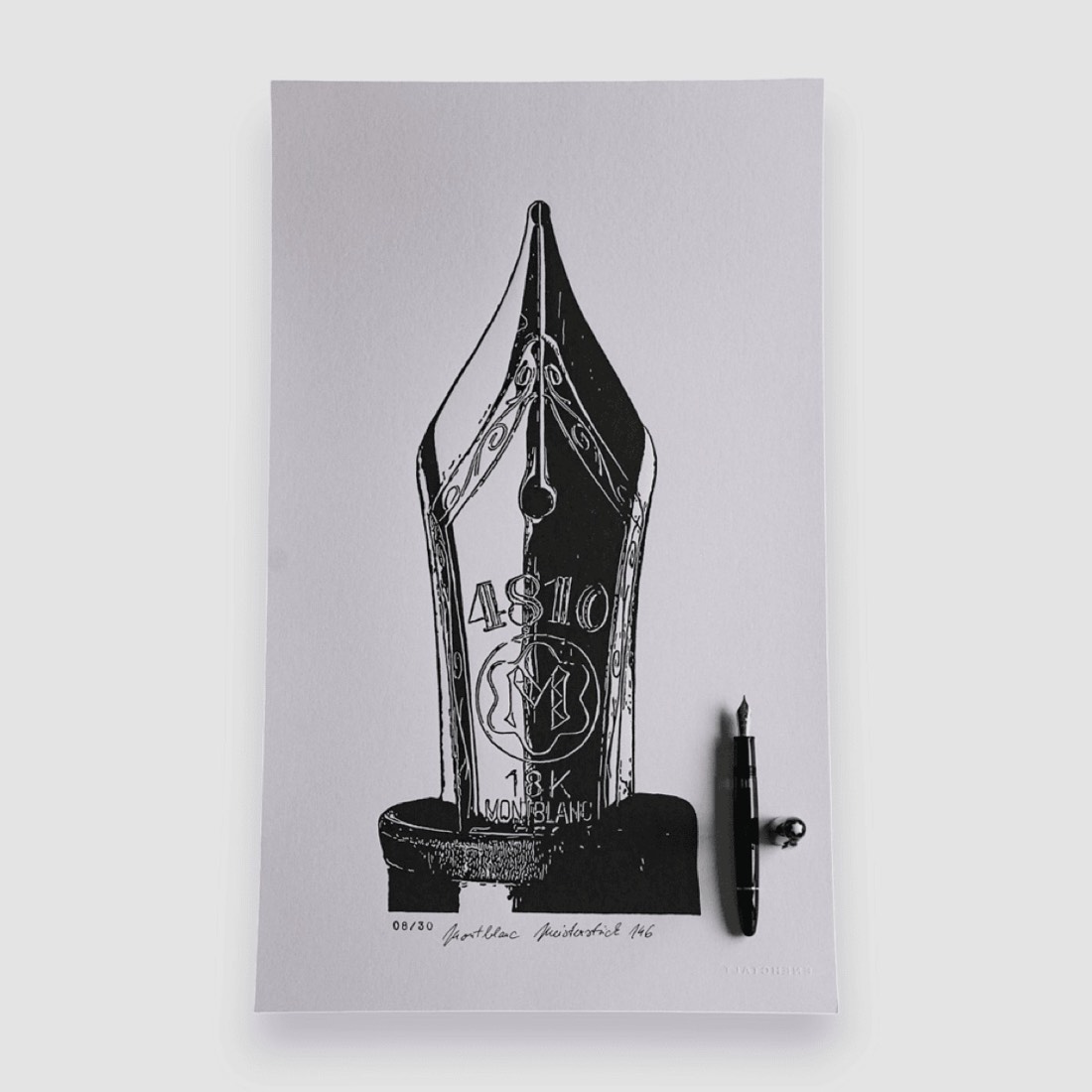
Selected handmade linocut prints connected with the Meisterstück 146, the 4810 nib and Montblanc writing heritage. Open a piece, review the detail or add an available print directly to your cart.
Comments are moderated before publishing, so the conversation stays useful and calm.
J
Julie Heller
Thank you for writing about your Mont Blanc pens. I bought one many years ago, my deceased brother collected pens, and I have one or two ( most of his possessions were stolen) were handed down to me. And then more recently, I have bought a few at auction because I am a dealer, primarily in art, but also in
jewelry. And my interest in jewelry is extensive. I used to make jewelry and did smithing. I. appreciate working in metals. So the Meisterstruck Mont Blanc pens that
showed the chasing ( chase work , or the miiigrrrain work done) I really thought this was just another way Mont Blanc showed
that they had high creative and engineering/technology standards and skills.
Thank you for continuing my journey. I will have a few more questions for you in the future. My brother and I used to go to Farney’s (sp… I think I left out an H) their original store.in D.C…).
Best,
JULIE HELLER
JULIE HELLER GALLERY
F
filip
Dear Julie,
Thank you very much for sharing your story and for your kind words. Your background in metals and jewelry gives a beautiful perspective on Montblanc’s craftsmanship, and I’m honored the article could continue your journey. I truly appreciate you taking the time to write.






2 comments
Comments are moderated before publishing, so the conversation stays useful and calm.
Thank you for writing about your Mont Blanc pens. I bought one many years ago, my deceased brother collected pens, and I have one or two ( most of his possessions were stolen) were handed down to me. And then more recently, I have bought a few at auction because I am a dealer, primarily in art, but also in
jewelry. And my interest in jewelry is extensive. I used to make jewelry and did smithing. I. appreciate working in metals. So the Meisterstruck Mont Blanc pens that
showed the chasing ( chase work , or the miiigrrrain work done) I really thought this was just another way Mont Blanc showed
that they had high creative and engineering/technology standards and skills.
Thank you for continuing my journey. I will have a few more questions for you in the future. My brother and I used to go to Farney’s (sp… I think I left out an H) their original store.in D.C…).
Best,
JULIE HELLER
JULIE HELLER GALLERY
Dear Julie,
Thank you very much for sharing your story and for your kind words. Your background in metals and jewelry gives a beautiful perspective on Montblanc’s craftsmanship, and I’m honored the article could continue your journey. I truly appreciate you taking the time to write.
Warm regards,
Filip